
Table tennis odds, margins and what they really cost the punter
 Available in US
Table tennis is built for short cycles: a game to 11, a match best of five or seven, a fixture list that runs most days of the year. That density is why the sport has become a staple of in-play books, and why the prices on it move faster than on almost anything else a British punter can bet on. The frame on this page is what the odds tell you, what they don’t, and what following the price through a match really costs.

Data current as of 27 October 2026, checked against the Gambling Commission’s public register for each operator named below.
The fixture list that drives the price
Table tennis in Great Britain is not one league, one season and one broadcaster. The ITTF runs the World Table Tennis Championships and the World Cup; the WTT tour has been the top professional circuit since 2021 and stages WTT Contender, WTT Star Contender, WTT Champions and WTT Finals events. Below those sit national leagues, the Setka Cup and TT Cup (Ukraine and Eastern Europe, prolific match-by-match streaming), the WTT Feeder series and Challenger events, plus Olympic and continental championships every cycle. Setka Cup fixtures, in particular, have made table tennis one of the most heavily traded in-play sports on UK-licensed books, because the cards run from morning to late evening with several matches an hour.

The shape of those events shapes the markets. A WTT Finals match between two top-20 players draws the full pre-match card — match winner, set winner, handicap, total points, exact score, player to win a set, race to X points. A Setka Cup rubber, contested in a quieter hall on a single table, typically offers match winner, handicap and a points line, and the price swings further per point than a televised match does, because the liquidity in the book is thinner and a single well-timed bet can move the line. That difference is not a quirk of one bookmaker: it is a property of the event, and it shows up identically on every GB-licensed book.
The Olympic pedigree matters too. Table tennis has been an Olympic sport since 1988, and the singles draw in Paris drew more interest from British punters than any previous Olympics, with team events added to the programme in 2008. When the next Games come around the market for outright, group and individual match prices swells for the two weeks of competition, and a few smaller books price that market more cautiously than the tier-one brands.
How a game is actually settled
A game goes to the first player to 11, with a two-point margin once both reach 10 — so 11-9 closes a game, 12-10 closes a game, and so on. A match is the best of an odd number of games; on the professional circuit, best of five is the default for most matches, best of seven is reserved for team events and the biggest finals. Scoring changed from 21 points to 11 in 2001, and the rule that simplified it is the same rule a price has to settle against today. The serve alternates every two points; once both players reach 10, it alternates point by point. None of this is a curiosity: it is the reason handicap lines in table tennis sit in a tighter band than they do in, say, tennis, where a tie-break can swing a set.
Why the equipment, briefly, is part of the price
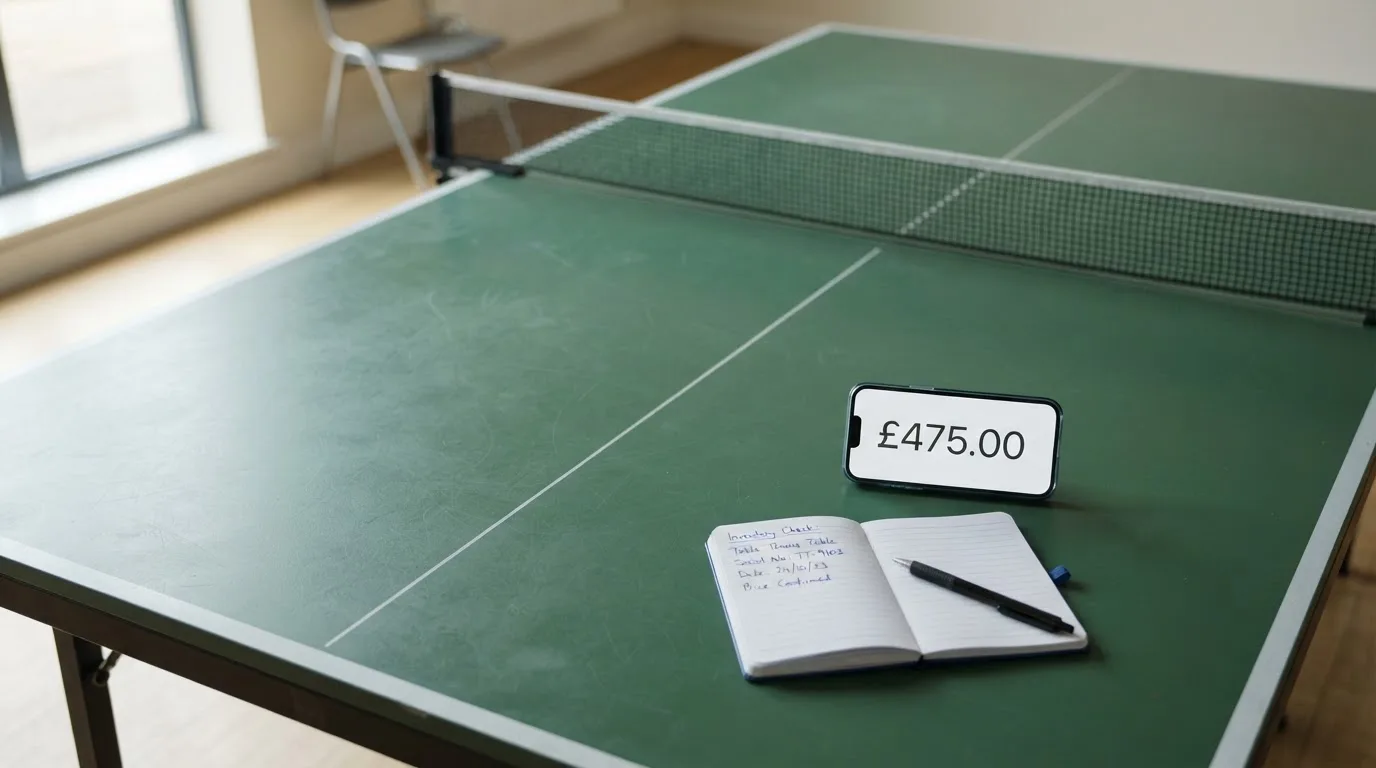
The table is 2.74 m long, 1.525 m wide, 76 cm high, with a 15.25 cm net; the ball is 40 mm in diameter, 2.7 g in weight. The dimensions do not change between a Setka Cup hall and an Olympic final, which is one of the reasons the same player wins at both. A bookmaker cannot blame the surface for a bad price the way a football trader can, and that constraint shows in how stable the favourites are from one event to the next.
The ten bookmakers and how to read them side by side
Every name on this list holds a Gambling Commission remote licence for Great Britain as of the date above, each against the licensee shown in the register. A licence is the floor, not the ceiling: it tells you the operator has passed the Commission’s checks and is part of GAMSTOP, but it tells you nothing about the depth of the table tennis card, the in-play product, the welcome package, or how the book handles a winning punter. The columns below are what the Commission’s register and each operator’s own terms actually say, set out so the differences are visible at a glance.
| Brand | Licence on the public register | What the operator’s own terms state on the key subject |
|---|---|---|
| Fitzwilliam Sports | Remote general betting standard (real events), account 48760, held by SBKI Limited | Dublin bookmaker with capped membership; a “High Stakes Welcome” subject to compliance criteria; instant deposits, fast withdrawals, timeouts and deposit limits on the account; GambleAware, GamStop and Gamblers Anonymous linked from the site |
| BetTom | Remote general betting standard (real events), account 64959, held by Bet Tom Limited | Sports welcome returns 50% as a free bet up to £50, with a matching 50% back as free slot funds for casino play; full terms apply |
| NetBet | Remote general betting standard (real events), account 39170, held by Netbet Enterprises Limited | Daily Boosts, Profit Boosts and free bet offers; a Bet Builder with instant dynamic odds; sports stats for major leagues |
| Paddy Power | Remote general betting standard (real events), account 39439, held by PPB Counterparty Services Limited | App covers football, horse racing, boxing, rugby, tennis, golf, darts, snooker and F1 |
| BetUK | Remote general betting standard (real events), account 39198, held by LeoVegas Gaming PLC | Sports welcome: deposit £10+ and place a sports bet within 7 days for four £10 free bets (two football accas of 4+ selections, two multiples of 2+), valid 7 days, opt-in required |
| BetVictor | Remote general betting standard (real events), account 39576, held by BV Gaming Limited | Best Odds Guaranteed on UK and Irish horse racing; enhanced live race streaming; BetFinder for racing; Smart Stats |
| Geoff Banks | Remote general betting standard (real events), account 54095, held by GB Sports Advisors Limited | Live in-play prices and ante-post prices on future events |
| Ladbrokes | Remote general betting standard (real events) and remote betting intermediary, account 54743, held by LC International Limited | App published by Entain Operations Limited; rated 4.66 from 101,255 ratings in the GB App Store at the snapshot date |
| Kalooki Sportsbook | Remote general betting standard (real events), account 57730, held by Kalooki Sportsbook Limited | GAMSTOP member; company number 12938274 |
| Dabble | Remote general betting standard (real events), account 65677, held by Dabble Sports UK Ltd | Welcome: Bet £10, Get £10 in Free Bets on the first deposit; minimum odds; 7-day free bet expiry; stake not returned |
A point the table is not designed to carry but matters as much as anything in it: the price a punter sees is set by the book, not by the licence. The Commission’s register confirms the operator can take a bet from a customer in Great Britain; it does not tell you the price is sharp, the in-play book is deep, or the withdrawal will be the same speed next Friday. Read the licence column as the price of admission and the terms column as the menu — what each operator is actually putting on the table.
What it means to bet on table tennis in Great Britain
There is no list of permitted sports in the Gambling Act 2005; the Act gives the Commission the power to license categories of betting business, and each operator decides which events and which markets to price under its licence conditions. Table tennis falls under the remote general betting standard (real events) category, the same one that covers football, tennis and boxing, and every operator reviewed above holds that category. That is why a British punter at any of the ten names above can place a single, an acca, a handicap, a set winner, a total points line, an in-play bet, a cash out and a bet builder combination on a WTT or Setka Cup match without stepping outside the licensed market.
The act of placing a bet is not where the regulatory machinery bites the punter. Identity checks do: every GB-licensed remote operator has to verify name, address and date of birth before a customer can deposit or gamble, and that has been the position since 7 May 2019. A free bet or bonus triggers the same check. The two practical consequences are that there is no anonymous play at a licensed site, and a new account takes minutes rather than seconds to open — the book pulls the customer’s details through a verification provider and only then unlocks the cashier. Spreadex, the only one of these brands also regulated by the Financial Conduct Authority for spread betting, reminds customers in its own terms that losses on a spread bet can exceed the deposit, a different and starker warning than the one on a fixed-odds book.
In-play betting is offered by every GB-licensed book above, subject to each operator’s own licence conditions and customer-protection duties. There is no statutory rule that says in-play has to be available, nor one that says it has to be suspended at any particular point in a match; the rule is that the operator’s systems have to settle the bet correctly, and the Commission can require changes when they don’t. The way this surfaces to a punter is that some books auto-suspend the market for a second or two after every point in a Setka Cup match, while others let bets through and then settle the position. Both are licensed behaviour; neither is the regulator’s preference over the other.
What the Commission does and does not do
The Commission licenses the operator and runs the public register that lets a punter check a licence. It does not approve individual markets, the price on a market, or the in-play product. It does not run the welcome offer. It does not adjudicate every dispute; approved alternative dispute resolution (ADR) providers do, and a punter who has lost money and exhausted the operator’s complaints route can take the case to ADR. A Curaçao, Maltese or Gibraltar licence is not a substitute for a Commission licence when a remote book takes bets from a customer in Great Britain; section 33 of the 2005 Act says so, and the (Licensing and Advertising) Act 2014 closed the route of basing the company offshore to avoid it. The Commission’s enforcement against unlicensed operators is disruption work — cease-and-desist notices, search-engine referrals, registrar and payment-provider pressure — not the wholesale blocking of sites. Court-order DNS blocking powers have been granted or are close to being granted; ISP-level blocking as an operational policy has not been written as a fact, and it is not what the page claims.
The honest framing is two-sided. Licensed means the punter is inside the British system: identity checks, GAMSTOP, the bonus cap, ADR, and the operator’s stake-and-credit rules, with the operator paying General Betting Duty at 15% of gross profit on the bets it takes. Unlicensed means none of those: no GAMSTOP coverage, no ADR, no Commission complaints route, no obligation on the book to pay out, and no British consumer protection if funds are withheld. Neither is “the safe choice” by default; each punter decides which trade-off they want to make.
Looking after yourself, and the rule book the book has to follow
A licensed book is not a charity, and a punt on table tennis is a discretionary spend. The protection that the British system does give is worth knowing, because the same set of rules applies whichever of the ten names on the list above you bet with, and because some of those rules are quietly significant in the way the price gets built.
Self-exclusion: GAMSTOP
GAMSTOP is the national multi-operator self-exclusion scheme, and a licence condition for every online operator in Great Britain. The minimum period is six months, and the longest is five years with auto-renewal. Once the minimum is up, the exclusion stays in force for a further seven years unless the punter asks GAMSTOP to lift it. It covers the online site and the app of every participating operator; betting shops run a separate over-the-counter scheme. Every one of the ten brands above is a GAMSTOP member, because every one of them has to be.
Vulnerability and affordability
The financial vulnerability check (LCCP condition 3.4.4) has been in force since 30 August 2024 and applies when a customer’s deposits minus withdrawals cross £150 in any rolling 30 days — the threshold was set from 28 February 2025. The check is a public-record search (bankruptcy, county court judgments, the Gazette), not an income check and not a credit-reference check. The “affordability checks” the press calls financial risk assessments are a separate, later stage, announced in a Commission article of 7 July 2026, with a staged plan and no start date, so the right way to write them is that they are announced and staged, not that they are in force.
Deposit limits
Operators have to offer a gross deposit limit on a fixed time frame. The first RTS 12 changes applied from 31 October 2025; a second phase was postponed to 30 September 2026 and whether that phase is now live is not established. The important point for a punter is that the limit is the customer’s choice: the operator provides the tool, the punter sets the cap, and there is no state-set ceiling. A punter can ask for £10 a day or £10,000 a week, and the operator can refuse or require a further check on a higher number, but the rule is the punter’s call.
Where to get help
GamCare runs the National Gambling Helpline; GambleAware funds treatment and research; NHS gambling clinics run in person; Gamblers Anonymous runs peer-support meetings. Fitzwilliam Sports, one of the ten names above, links to GambleAware, GamStop and Gamblers Anonymous from its own homepage, which is the kind of small signal a punter can read on the operator’s own terms before opening an account.
Crypto, anonymity and the British system
There is no British statutory rule that says a licensed book has to accept or to refuse cryptocurrency deposits; the Commission’s published framework on payment methods is not a closed list, and a licensed operator’s own terms decide the question for that operator. The two facts a punter can rely on, whichever way a particular book goes, are these. First, the identity check the operator runs before the first deposit means that paying in Bitcoin does not buy anonymity at a GB-licensed book: the operator still has to verify the customer’s name, address and date of birth, and a transfer from a self-custody wallet can still be traced through the chain. Second, the credit-card ban for gambling in Great Britain (in force since 14 April 2020, LCCP 6.1.2) covers credit-card-funded payments through an e-wallet, but it does not cover debit cards or bank transfers, and it says nothing about crypto.
The honest version of the choice is that a punter who wants to deposit with Bitcoin and stay inside the British system has to find a GB-licensed book that accepts the coin at the cashier, accept the identity check that goes with a GB licence, and read the operator’s own terms on confirmation time, on-chain fees and conversion. A punter who wants anonymity as the primary feature is being pushed out of the licensed market by the verification rule, regardless of the payment method. There is no way to square that circle on a GB-licensed book; the only place anonymity is the default is an unlicensed book, and the cost of that is everything the licensed market gives.
Bonuses, free bets and what they really cost
The marketing words sound like gifts. A “£10 free bet” is a £10 stake the book will accept on a selection, not a £10 credit that lands in the account; the stake is usually not paid back with a winning free bet, and the difference between a free bet and a cash bonus is the difference between a stake that returns only the profit and a credit that returns stake and profit together. The Commission has tightened the rules: wagering requirements on bonuses are capped at 10x (so a £10 bonus at 50x is no longer allowed under the cap), and mixed-product promotions — an offer that requires the punter to gamble on two or more product types, like “bet on football to get free spins” — are banned outright. Both rules took effect on 19 January 2026.
BetTom’s sports welcome, for example, returns 50% as a free bet up to £50, with a matching 50% as free slot funds for the casino side. The free bet is a free bet in the British sense: a stake the book will accept, profit only on a win. BetUK’s sports welcome returns four £10 free bets (two football accas of 4+ selections, two multiples of 2+) on a £10 deposit and a sports bet within 7 days of registration, with a 7-day free bet validity and an opt-in; the stake is not paid back. Dabble’s welcome is “Bet £10, Get £10 in Free Bets” on a first deposit, with minimum odds, a 7-day expiry, and again the stake is not returned. Fitzwilliam Sports’ “High Stakes Welcome” is gated by compliance criteria, and the cap on the deal is set by those criteria rather than by a headline number. NetBet’s offers are framed as Daily Boosts, Profit Boosts and free bet offers on top of a Bet Builder with dynamic odds.
The question the marketing line does not answer is what a free bet is worth in the hand. A free bet is, on average, worth the free-bet amount multiplied by (odds − 1) and divided by the odds, then multiplied by the payout share of the market the bet is placed on. The lower the price the punter backs, the more of the free-bet value evaporates into the bookmaker’s margin. A £10 free bet at odds of 1.50 is worth less than the same £10 at odds of 5.00, because the smaller the price, the more of the profit the bookmaker’s margin is taking out of it. The same calculation explains why each of the four £10 free bets in the BetUK welcome is split into a 4+ selection acca and a 2+ multiple: the book is steering the punter toward higher-priced bets, because that is where the free bet costs the book less per pound offered. The cap is not the punter’s friend; the price the punter backs is what decides the value of the offer.
The same logic applies to profit boosts. NetBet’s Profit Boosts, BetVictor’s enhanced prices and the daily boosts across the tier-one books all increase the payout if the bet wins, but the boost is paid on the winnings only, not on the stake, and the boost is usually capped in pounds. A boosted £5 acca that returns £80 instead of £65 is a £15 nudge on the price, not a £15 credit to the account. Read the boost line as a higher odds, then run it through the same payout calculation; the headline figure overstates the value by exactly the stake.
The accumulator insurance offers (money back if one leg lets you down) are an insurance product, not a free gift. The book refunds the stake as a free bet, not as cash, on most of the variants on the UK market in 2026. That makes the insurance less generous than the marketing line suggests, because the refunded free bet is then subject to the same stake-not-returned rule and the same minimum odds as the welcome offer.
The mix-and-match welcome, the matched deposit, the “up to £X” headline and the “Bet £X, Get Y” framing are all versions of one underlying transaction: the book pays a real cost (the free bet stake or the matched credit) and recoups it through the margin on the bets the punter has to place to clear the offer. The page’s job is not to talk the punter out of claiming a welcome; it is to make the cost legible. A punter who reads the offer as a price for placing more bets — with the welcome as a rebate on the cumulative cost — sees the same offer more clearly than a punter who reads it as a gift.
In-play, cash out and the speed that punter and book trade at
Table tennis in-play is a different product from table tennis pre-match. The sport’s structure — two points per serve, a game in roughly fifteen minutes, a service change that matters — produces a long, thin stream of small price changes per match. The book has to settle the position on every bet, and the book can suspend the market between points to protect the price, which is why a punt on a Setka Cup match often takes a fraction of a second longer to confirm than a punt on the same player’s match winner pre-match.
Cash out sits on top of the in-play book. A cash out is the book offering to buy the bet back at a price set by the current in-play market and the original odds; the punter either takes the cash out and locks in a smaller win or smaller loss, or lets the bet ride to the end of the match. The price the book quotes is the book’s own: a margin sits inside it, and on a fast-moving sport the cash out price can move several times in a single game. Some books offer partial cash out, where a fraction of the stake is bought back and the rest runs to settlement; the rule is the same, only the size changes.
Bet builders are the other product the in-play market has brought forward. A bet builder is a same-game multi, where the punter combines markets from one event into a single bet at a single combined price; Bet Builder+ on bet365, for example, lets a punter combine markets pre-match or in-play, and the price updates as the punter adds or removes legs. The point the marketing line omits is that the combined price of a bet builder carries the book’s margin on every leg, not on the accumulator as a whole. A bet builder that prices a 1.95 handicap and a 1.85 over on points at a combined 3.20 is, in practice, a multi with a margin larger than the margin on a same-event acca, because the book has priced each leg conservatively before combining them. The bet builder is a convenience and a fun product, not a sharper price.
Live streaming at a licensed book depends on the rights the book has bought for the event. Setka Cup and TT Cup matches are typically streamed on the books that take the bet, because the rights are cheaper and the events are produced to be streamed; WTT events are streamed on the books that hold the WTT rights in the relevant territory. A British punter looking for a specific match on a specific book should not assume the stream is there; the in-play book usually is, the live stream is a separate question.
Forecast, prediction, and the language to be careful with
A “prediction” on a table tennis match is a guess about who wins, and the punter who claims a winning prediction rate is not subject to any audit a regulator or a court would recognise. The right way to read the word is as a synonym for an opinion, and the right way to back an opinion with money is to treat the price on the book as the thing the punter is buying, not the opinion itself. The punter who has an edge is the one whose estimate of the probability differs from the implied probability in the price, and the punter who doesn’t have that edge is paying the bookmaker’s margin on every bet.
The bankroll is the punter’s other moving part. A table tennis bankroll is typically a small, pre-set slice of the total betting budget, sized in units of 1% to 3% of the bankroll per bet; the unit size is what the punter changes when the bankroll moves, not the share. A punter who bets 10% of a bankroll on a single Setka Cup handicap is treating a guess as a tip, and the long-run result of treating guesses as tips is a short-run loss. A flat-staking plan with a stop-loss is dull to write about and consistent in the way the bankroll behaves.
The strategy material in the wider market tends to cluster around the same handful of ideas — back the server in the early game, back the favourite after a slow start, lay the underdog in a tight match, take the handicap when the price is too short on the match winner. The same idea, on the same match, on the same book, can be the right call on Tuesday and the wrong call on Thursday, because the variables that drive the price (recent form, head-to-head, motivation, injury) shift match to match. A strategy is a frame for thinking about a match, not a recipe for a winner.
The bettor who follows tipsters pays a tipster, in the sense that the tipster’s record has to be audited, the staking plan has to be visible, the closing line value has to be measurable, and the sample size has to be large enough to be meaningful. A tipster who claims an 80% strike rate over twenty bets is selling a sample too small to be informative; the right way to think of any tip is as one more input into a punter’s own probability estimate, weighed against the price on the book.
What kind of bet to place, and what each market pays
The match winner is the simplest table tennis market. Two prices, one on each player, and the payout is stake multiplied by the odds. A £10 bet on the favourite at 1.60 returns £16 if it wins, a £10 bet on the underdog at 2.60 returns £26. The two prices do not add up to 100% of probability because the bookmaker’s margin is taken out of the payout, and the size of that margin is the difference between the two prices and a true reflection of the chance each player has of winning.
The set winner market is the same structure, one game at a time, with prices that move on every point. The first set market and the match winner market are different bets: a strong starter who fades in the second set can win the first set and lose the match, and the price on each market has to be read as the price on that market, not as a derivative of the other.
The handicap market is the bookmaker’s way of letting a punter back a strong favourite at a bigger price. A −2.5 game handicap on the favourite means the favourite has to win by three clear games for the bet to win, and the price on the favourite is correspondingly longer than the match winner price. A +2.5 game handicap on the underdog means the underdog has to lose by two games or fewer, or win, and the price on the underdog is shorter than the match winner price. The handicap line is set in half-games, which is the right shape for a sport that is won by the first to 11 (or 11-9, 12-10, etc.).
The total points market, over and under a line set by the book, is the analogue of the football goals market. A line of 76.5 points in a best-of-five match is the bookmaker’s estimate of the median scoreline, and the price on each side of the line is the bookmaker’s price for the over and the under. The market is settled on the total number of points in the match, regardless of who wins.
The exact score market is the bookmaker quoting a price on every plausible scoreline: 3-0, 3-1, 3-2 in a best-of-five, 4-0, 4-1, 4-2, 4-3 in a best-of-seven. The price on each line is the bookmaker’s price for that line; the book has the same margin on this market as on any other, and the longer the line the smaller the probability (and the bigger the price) the book quotes.
The bet builder combines markets from one event into a single bet at a single combined price. A bet builder on the favourite to win, over 76.5 points, and the favourite to win the first set is three selections on one match priced as one. The combined price carries the book’s margin on every leg, which makes the bet builder a more expensive way to back a multi-event view than a same-event acca at the same combined price would be. A punter who has a view on two or three legs of a match can compare the bet builder price with the price of building the bet as a small acca; the difference is the margin the book is taking on the convenience.
The accumulator is a bet on the outcome of two or more independent events, where the prices multiply into a single combined price. A double on the favourite at 1.60 and a second selection at 2.00 is a 3.20 combined price, and a £10 stake returns £32 if both win. A treble, a four-fold and a five-fold extend the same structure. The bet loses on the first selection that does not win; one non-runner usually makes the bet void on that leg, and the rest of the bet runs. The acca insurance offers (a free bet back if one leg lets the bet down) are an insurance product, not a free bet, and the insurance is paid as a free bet, not as cash, on the offers in the UK market in 2026.
Spread betting is a different product, regulated by the Financial Conduct Authority rather than the Commission, where the book quotes a spread (a range, not a price) and the punter’s stake is multiplied by the number of points the outcome sits inside the spread. Spreadex is the only one of the ten brands above that is also regulated by the FCA, and it says in its own terms that losses on a spread bet can exceed the deposit. The point is not that spread betting is worse than fixed-odds; the point is that the loss potential is structurally larger and the FCA’s consumer-protection regime is different from the Commission’s.
The margin, in plain numbers
A two-way market priced at 1.90 / 1.90 (9/10 in fractional form, evens the other way) is a useful illustration. The payout share from those prices is 1 / (1/1.90 + 1/1.90), which is 1 / 1.0526, or roughly 95% of the stake returned on average across both outcomes. The bookmaker’s margin is the other 5% — taken from every unit bet on the market, before any individual punter’s bet is settled, and built into the prices on both sides. The same 5% margin, on the same two-way market, on the same match, is what every other licensed book is taking on that line. The price the punter sees, the price the book pays, and the price the book keeps are three different things, and the gap between the first and the second is the gap the third one fills.
A bookmaker running a 7% margin on a market, and a bookmaker running a 5% margin on the same market, are giving the punter two different edges on the same selection. The 5% book returns 95p on the pound over a long sample, the 7% book returns 93p. That is the entire reason a sharper punter compares margins across books, and the entire reason the price on a heavily bet event is sharper than the price on a thin one: the margin is a function of how competitive the book is on that event. The bet builder market typically carries a margin several points higher than the equivalent same-event multi, because the bet builder is a convenience product, not a competing market.
The calculation is a statistical average. A punter who places one bet on a 5% margin market will not see a 5% loss; they will see whatever the bet paid or did not pay. A punter who places a thousand bets on the same market, with the same staking plan, will see the average loss converge on the margin. The 95% number is a long-run number; the £10 stake is a one-off stake. The difference matters whenever the punter thinks about the offer they have been quoted.
The ten brands, one verdict each
Fitzwilliam Sports
Fitzwilliam Sports is a Dublin bookmaker with a capped membership, and that cap is the first thing to read on the operator. The Commission licence (account 48760, held by SBKI Limited) lets the book take bets from customers in Great Britain, and the operator’s own terms say it offers instant deposits, fast withdrawals, timeouts and deposit limits, and links to GambleAware, GamStop and Gamblers Anonymous. The “High Stakes Welcome” is the headline offer, and it is gated by compliance criteria, so the cap on the deal is the customer’s profile, not a published number. The book is for a punter who wants a smaller, quieter book and who can pass the criteria on the welcome; the price on a thin event may not be as sharp as a tier-one book, and the in-play book is likely smaller than BetVictor’s or bet365’s. The verdict: a niche book with a real licence, a sensible safer-gambling surface, and a welcome that pays more to the punter the more the book knows about them.
BetTom
BetTom’s sports welcome returns 50% as a free bet up to £50, with a matching 50% as free slot funds for casino play. The Commission licence is account 64959, held by Bet Tom Limited. The free bet is a free bet in the British sense: a stake the book will accept, profit only on a win. The matching casino side is a separate product, and the punter is not required to take it. The book is for a punter who wants a sports welcome as a free bet and who is comfortable with the casino side being paid in free slot funds. The verdict: a simple welcome on a licensed book, with the cost of the offer sitting in the free-bet stake-not-returned rule rather than in a high wagering multiple.
NetBet
NetBet runs Daily Boosts, Profit Boosts and free bet offers, a Bet Builder with instant dynamic odds, and sports stats for major leagues. The Commission licence is account 39170, held by Netbet Enterprises Limited. The book is for a punter who likes the boost framing and who wants a Bet Builder that updates the price as the legs are added. The verdict: a product-led book, with the boosts and the bet builder doing the marketing the welcome does on a smaller book.
Paddy Power
Paddy Power’s app covers football, horse racing, boxing, rugby, tennis, golf, darts, snooker and F1. The Commission licence is account 39439, held by PPB Counterparty Services Limited. Paddy Power is a tier-one brand, and the app is the same product the punter sees on Paddy Power’s other markets, with the same in-play book, the same cash out, the same acca insurance, and the same Best Odds Guaranteed on horse racing. The verdict: a tier-one book with table tennis priced on the same in-play engine as the rest of the sports, and a punter who already has an account on the brand will find the table tennis product on the same footing as the other markets.
BetUK
BetUK’s sports welcome is a £10 deposit and a sports bet within 7 days of registration, for four £10 free bets (two football accas of 4+ selections, two multiples of 2+), valid 7 days, with an opt-in. The Commission licence is account 39198, held by LeoVegas Gaming PLC. The two accas of 4+ selections force the punter into a higher-priced bet, which is exactly where the free bet costs the book less per pound. The verdict: a welcome that returns £40 in free bets for a £10 outlay, with the structure of the free bet pushing the punter toward the higher-priced markets.
BetVictor
BetVictor offers Best Odds Guaranteed on UK and Irish horse racing, enhanced live race streaming and a BetFinder feature for finding racing bets, alongside Smart Stats. The Commission licence is account 57576, held by BV Gaming Limited. The racing product is the headline, and table tennis sits inside the same sportsbook. The verdict: this is primarily a racing operator that includes table tennis as a secondary market; while the odds are consistent with the rest of the industry, the Best Odds Guaranteed feature is strictly for horse racing and does not apply to table tennis.
Geoff Banks
Geoff Banks’ app is published by GB Sports Advisors Limited and offers live in-play prices and ante-post prices on future events. The Commission licence is account 54095, held by GB Sports Advisors Limited. The book is small by the standard of the tier-one names, and the in-play book on a thin event may not be as deep as a larger book. The verdict: a niche book for a punter who wants an ante-post product and a smaller in-play book, and who is comfortable with a smaller book running on a real Commission licence.
Ladbrokes
Ladbrokes’ app is published by Entain Operations Limited, holds account 54743 with the Commission (with a remote betting intermediary category in addition to the general betting standard), and the GB App Store snapshot shows a 4.66 rating across 101,255 ratings. Ladbrokes and Coral run under the same licensee, LC International Limited, and the operator’s product is the tier-one bookmaker product.
Kalooki Sportsbook
Kalooki Sportsbook is operated by Kalooki Sportsbook Limited (company number 12938274), licensed by the Commission under account 57730, and is a GAMSTOP member. The book is small by the standard of the tier-one names, and the safer-gambling surface is the headline product feature. The verdict: this smaller, GAMSTOP-registered site is suited to players who prefer a streamlined betting experience and who value the clear safer-gambling commitments stated in the operator’s terms.
Dabble
Dabble’s welcome is “Bet £10, Get £10 in Free Bets” on a first deposit for new customers, with minimum odds, a 7-day free bet expiry, and the stake not returned. The Commission licence is account 65677, held by Dabble Sports UK Ltd. The book has a smaller market depth than the tier-one names, and the welcome is a simple one-line offer. The verdict: this is a straightforward, licensed option for anyone looking for a simple one-line welcome bonus, provided they understand that this book operates with lower market depth than the larger tier-one firms.
Working it out for yourself
A worked example of the price
A £10 stake on a selection at odds of 2.50 returns £25 if the bet wins. The return is the stake plus the winnings, and the net profit is the winnings alone (£15). The formula is the same on a free bet, except that the stake is not returned: a £10 free bet at odds of 2.50 returns £15 if the bet wins, the same £15 net profit, and no stake back. A punter who has read both the welcome and the small print will not be surprised by the difference, because the welcome says “free bet” and the small print says the stake is not returned.
A worked example of the margin
A two-way market priced at 1.90 / 1.90 (9/10) is a useful illustration. The payout share from those prices is 1 / (1/1.90 + 1/1.90), which is roughly 95% of the stake returned on average across both outcomes. The bookmaker’s margin is the other 5%. The 95% number is a long-run average, not a guarantee of any single bet, and the punter who has read the same point in the operator’s own terms will not be surprised by the size of the edge.
What to read before you place a bet
A punter looking at any of the ten names above should check four things before opening an account or claiming a welcome. The Commission’s public register confirms the licence; the operator’s own terms confirm the welcome; the safer-gambling surface confirms the GAMSTOP, the deposit limit and the help line; and the in-play book confirms the table tennis product. The four checks are not a substitute for the punter’s own view on the match, and the punter’s own view is not a substitute for the four checks. The price, the welcome, the safer-gambling surface and the licence are the four things a punter controls; the match is the thing the punter is paying the book to have an opinion on.
Frequently asked questions
How do I win at table tennis betting?
You don’t, not in the sense of a system. The price on the book carries the bookmaker’s margin, and the long-run cost of placing a bet is the margin. A punter who has a sharper probability estimate than the book can be ahead over a large sample, and a punter who doesn’t is paying the margin on every bet.
How do I bet on table tennis?
Open an account with a GB-licensed book, pass the identity check, deposit, find a table tennis event, choose a market (match winner, handicap, total points, in-play), and place the bet. The bet is settled by the book at the end of the match, and the payout is the stake multiplied by the odds, with the stake returned in cash and the profit added on top.
Is there a difference between match winner, set winner and handicap?
Yes. Match winner settles on who wins the match. Set winner settles on who wins a named set. Handicap settles on who wins after the handicap has been applied to the games. The three are different markets, and the price on each is the price on that market, not a derivative of the other.
How do I check a bookmaker’s licence?
The Gambling Commission’s public register lets a punter search by business name, trading name, domain or account number. The register is the whole test of whether a brand holds a GB licence, and the licence number, the licensee and the licence category are all on the register’s entry. A punter who can’t find the brand on the register should not open an account.
How is the payout on a bet worked out?
Return = stake × odds; net profit = stake × (odds − 1). For a free bet, the stake is not returned, so the net profit is the same and the return is the profit alone. For a combination bet, the prices of the legs multiply into one price, and the payout is the stake multiplied by the combined price. The calculation is the same on every market, and the book settles the bet at the price the punter took at the time the bet was placed.
Tennis, darts & cue sports – Darts betting
Content created by the «Darts betting» team
