
Over Under Betting in Great Britain: How Totals Actually Cost You
 Available in US
Over/under betting looks like the simplest market on a sportsbook screen. Two outcomes, a number in the middle, a single decision. That simplicity is misleading. The price on each side carries a margin the bookmaker keeps; the line moves as money comes in; and a few minutes of stoppage time, a single extra-time period or a rain-affected surface can turn a settled bet into a void one. A reader who treats an over/under line as just another market soon treats a £10 stake as just another £10 — and that is exactly when the marketing language starts sounding persuasive.
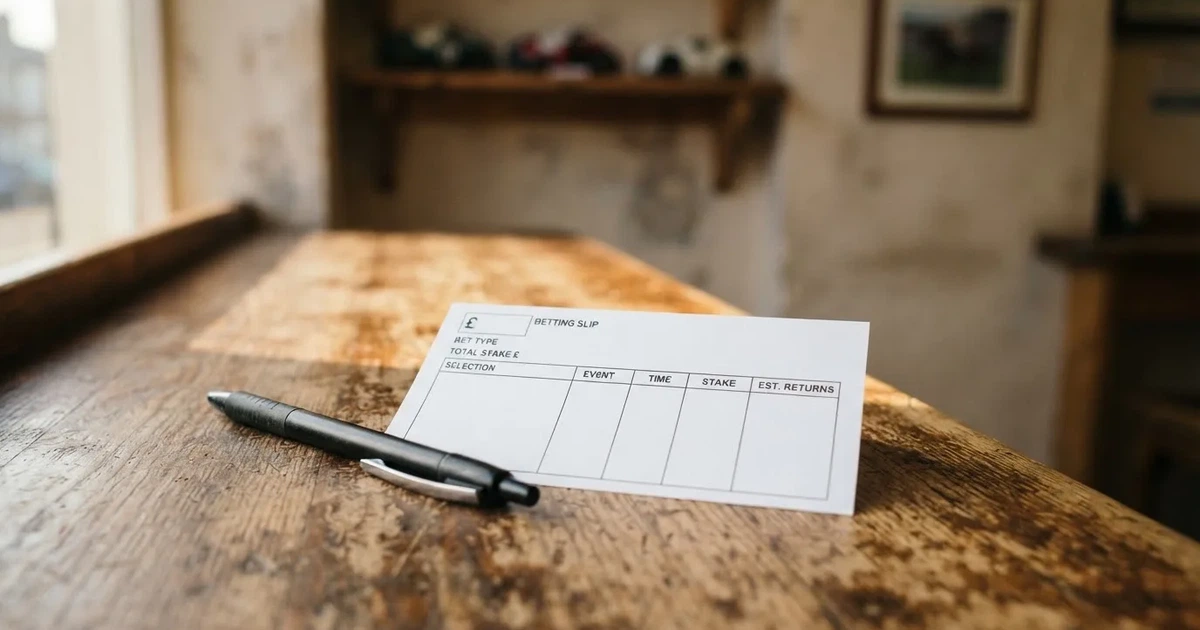
This page is about cost. Every market has one, and on an over/under line the cost is paid four ways: the margin baked into the price, the line the bookmaker chooses to put up, the rules that decide which minutes of football actually count, and the welcome offer that pulls the bettor in the door and dictates how the first stake has to be played through. None of those costs is hidden. Each is in plain text on a betting slip, a market page or the operator’s terms. They are very rarely read together.
The market itself crosses nearly every sport a UK bookmaker covers. Football, tennis, basketball, cricket, American football, rugby, horse racing in a different form, even esports fixtures all carry some version of a total: goals, games, sets, runs, rounds, kills. The arithmetic underneath never changes — pick over or under, accept the price, take the return your stake buys. The examples on this page lean football-heavy because over/under totals were built for football and remain most familiar there, but the same logic travels. What does change by sport is which minutes count, what happens in extra time and how the operator settles a void.
A note on geography before anything else. The bookmakers discussed here hold licences issued by the Gambling Commission for Great Britain — England, Scotland and Wales. Northern Ireland runs under its own older framework and is not regulated by the Commission. A licence on the Commission’s public register is what makes a brand a UK-regulated one; that register is the one place the regulatory status of an operator can actually be checked. Betting winnings in Great Britain carry no player-side tax, so a winning over/under bet returns exactly the amount printed on the slip. That single fact removes a layer of arithmetic unfamiliar to readers used to other markets and is worth keeping in mind through the rest of the page.
The currency stamp at the foot of this section records when the operator data and licence details on this page were verified. Odds and margins age faster than licences; prices quoted below carry the snapshot date research gives them, and the line just under this paragraph records what those figures were checked against. Comparisons across operators and across time depend on those dates lining up, and they are the first thing to check if a number stops looking right.
*Page data current as of 27 October 2026; operator licence and feature claims verified against each operator’s own terms and the Gambling Commission’s public register.*
The Statutory Frame Around an Over/Under Bet in Great Britain
Great Britain does not publish a list of “allowed bets”. The model is licence-led: an operator holds a Gambling Commission licence for a category — for a remote sportsbook that means a remote general betting standard (real events) licence — and offers whatever markets that licence permits under the operator’s own house rules and the Commission’s Licence Conditions and Codes of Practice. There is no state-set menu of permitted sports, no statutory cap on the number of operators and no statutory stake ceiling. What there is, is a regulator, a register and a set of licence conditions the operator has signed up to.

The Gambling Commission itself is a non-departmental public body sponsored by the Department for Culture, Media and Sport. It licenses the commercial market under the Gambling Act 2005 in Great Britain. Since the Gambling (Licensing and Advertising) Act 2014, an operator needs a Commission licence wherever it is based if its remote facilities are reached by customers in Great Britain; sections 33 and 36 of the 2005 Act set the obligation. A Curaçao, Maltese or Gibraltar licence is not an alternative for a bookmaker taking GB customers; it is a licence in a different jurisdiction entirely. Several hundred remote betting licences are currently on the public register, covering far more brands than any single article reviews — a point that recurs through the operator sections on this page, because a name in a comparison is not the same as a name on the register.
The categories of betting licence a remote sportsbook holds matter because they decide which products the operator can offer. Remote general betting standard (real events) covers pre-match and in-play wagering on actual fixtures. Remote general betting standard (virtual events) is a separate category for computer-generated events. Remote pool betting covers pari-mutuel horse and dog racing pools. Remote betting intermediary is the licence for betting exchanges such as Betfair, where one customer backs and another lays at odds they have agreed themselves. The bookmakers covered in the comparison block of this page all operate under a remote general betting standard (real events) licence — pool products and exchange mechanics are a different conversation.
There is a parallel regulator worth keeping in mind. Financial spread betting in the UK is regulated by the Financial Conduct Authority, not the Commission. A spread bet is a contract whose payout depends on how far the underlying index moves, and losses can exceed the deposit. Several firms offering both spread betting and fixed-odds betting make that distinction in their terms. If a reader picks up a spread-betting product beside the regular over/under markets on a sportsbook app, the risk shape is different and so is the regulator; the FCA holds the file rather than the Commission.
The register is the whole test. The Commission’s public register can be searched by business name, trading name, domain or account number. Every licence, every licensed brand and every site a licensee runs against the licence is on it. The register is the answer to “is this brand licensed in GB” — not the marketing copy on the operator’s homepage, not the footer of a betting app, not a comparison table. The same domain extensions carry no weight at all: a GB-licensed operator can serve from a .co.uk, a .com or anything else it has registered. The licensed operator comparison block on this page cross-checks every operator against the public register. Verification is the reader’s responsibility and the register is the place to do it.
What a licence does not do is guarantee a winning bet. The licence guarantees an operator that funds segregated from its own treasury, dispute resolution through an approved route, mandatory participation in GAMSTOP for online operators, and a Commission complaints route a customer can use if the operator’s own service fails. It does not guarantee that the price the operator offers is the best one in the market, that the market structure is fair to the bettor, that an offer does not carry a turnover requirement or a minimum price, or that the bettor ends up ahead. Those are commercial decisions the operator makes.
The legal frame leaks into the betting slip in two ways a careful reader will see for themselves. First, identity verification has to happen before a customer can deposit or gamble at a licensed site (since 7 May 2019), and that holds even when the first product the customer takes is a free bet or a bonus. There is no anonymous play at a GB-licensed sportsbook. Second, since 14 April 2020 credit cards have been banned for gambling in Great Britain, including credit-card-funded e-wallet top-ups; debit cards and bank-based payments are not affected. A stake funded from a credit card is not a stake the operator can accept — and an attempt to use one will be refused at the cashier, not quietly allowed through. Those are both consumer-protection rules, not market rules, and they are the first things a new account will meet before the first over/under bet is even placed.
Offshore brands sit outside every one of those rules and outside every one of those protections, and they take every GB customer’s stake without holding a GB licence. The Commission has used cease-and-desist notices, search-engine referrals, work with registrars and payment providers, and court-ordered disruption powers; court-order DNS blocking powers have been granted or are imminent. Crucially, no offence aimed at a customer who merely places a bet on an unlicensed site has been established in the framework — the offence sits with the operator. The customer’s loss is the absence of protection: no GAMSTOP coverage, no Commission complaints route, no approved dispute-resolution body, no British consumer redress if funds are withheld, no 10x bonus cap and no financial vulnerability check. The right word for that customer-facing state is “unprotected”, never “legal to use”.
Betting duty is the operator’s tax, currently 15% on gross profits under General Betting Duty, with a 25% remote rate inside it from 1 April 2027 for remote bets other than UK horse racing, SSBTs, pool betting and in-person betting. Until 1 April 2027 the remote rate stays at 15%. The player pays no tax on betting winnings in Great Britain — that is general information rather than tax advice, and a professional gambler should ask HMRC or an adviser. Duty is the bookmaker’s problem and is paid out of margin; whether operators pass duty on through the odds they offer is not established. The spread-betting regime has its own rates (3% financial, 10% other) and sits outside General Betting Duty.
Spending Control, Self-Exclusion and the Help Available
GAMSTOP is the national multi-operator online self-exclusion scheme for gambling in Great Britain, and a mandatory licence condition for every online operator since 31 March 2020. A customer who registers with GAMSTOP is excluded from every GB-licensed online sportsbook and casino at once. The available periods are six months, one year, five years, or five years with auto-renewal. After the minimum period elapses, the exclusion stays in place for a further seven years unless the customer asks GAMSTOP to remove it. Betting shops run a separate in-shop self-exclusion scheme; GAMSTOP itself covers online sites and apps.

The £150 rolling-30-days vulnerability check is the rule that bites hardest on a customer who actually bets. Under Licence Conditions and Codes of Practice condition 3.4.4, in force since 30 August 2024, licensed remote operators must run a financial vulnerability check whenever a customer’s deposits minus withdrawals cross £150 in any rolling 30 days. The check became operative on 28 February 2025. The check runs against public records such as bankruptcy and county court judgments — it is not an income check and it is not a credit-reference check. The check is the operator’s job, not the customer’s; the customer experiences it as a pause in deposit or a request for further information, depending on what the public-record result is.
Financial risk assessments — the affordability checks discussed in the press — sit further along the road. The Commission’s plan is staged: full checks were announced on 7 July 2026 with no start date published. Until a date is published and the rules come into force, the £150 vulnerability check is the only check the reader needs to expect. State the situation as “announced, staged, no start date”; the rule is not in force.
Deposit limits under Remote Technical Standards 12 are the third prong. Operators must offer a gross deposit limit on a fixed time frame. The first changes have applied since 31 October 2025. A second phase was postponed to 30 September 2026. The limit a punter sets is the limit the operator offers. There is no state-set ceiling for deposits or losses; limits are always the customer’s own choice within what the operator provides. A £5-a-day limit and a £50,000-a-month limit are both available, depending on what the operator is licensed to offer.
Age sits at the entry door, not after it. Minimum age is 18. Identity checks are run before the first deposit is accepted. That is why a new account at a licensed sportsbook asks for name, address and date of birth before anything else. A reader who does not want to share that data should not open an account at a licensed site — and a brand that does not ask for it is, by that test alone, not licensed in Great Britain. The choice is binary: supply the data, or stay off the licensed product.
Wider support exists around the licensed product. GamCare runs the National Gambling Helpline. GambleAware funds treatment and education. The NHS runs gambling clinics in several regions. Gamblers Anonymous runs peer-support meetings in person and online. None of these is the bookmaker; none of these is the Commission. A bettor whose gambling has stopped being entertainment should reach for one of these rather than continuing to look for the responsible-gambling menu inside an app.
The intersection with an over/under bet is practical. If a £10 over/under wager is not entertainment, the £150 rolling-30-days vulnerability check is the rule that will fire first; the deposit limit is the rule that caps how much can flow into the account; GAMSTOP is the rule that closes the account across every licensed operator at once. None of these is a market rule. All three are the way the regulatory frame holds a reader’s losses inside what the reader chose for themselves, with the regulator’s machinery acting on the operator’s behalf.
Three further points sit alongside the regulator’s machinery and are easy to miss. Customer funds at a GB-licensed operator are kept in segregated accounts, distinct from the operator’s trading funds, so that a customer balance is not available to pay the operator’s creditors in an insolvency. The Commission’s complaints procedure is available when an operator’s own customer-service process fails; an approved alternative dispute-resolution body hears cases the Commission cannot adjudicate. And the Commission’s published enforcement record — financial penalties, licence reviews, operating licence suspensions and revocations — is the place to see how the regulator has actually used its powers against named operators. The register is the front door; enforcement history is the back door.
The cautious framing is honest: licensed means checks, limits, GAMSTOP, bonus cap, but also identity verification before the first bet, a margin built into every price, and welcome offers whose terms have to be read. Unlicensed means none of those protections and possible loss of funds. Neither is “safe” by default; both have a cost the bettor pays; the licensed one pays it on terms the reader can read.
Mobile Apps and Touchscreen Betting on Totals
The over/under market is built for mobile. Two outcomes, a single line, a price on each side, and a decision under a minute — that is the shape of the betting slip on every GB-licensed app reviewed in the operator section of this page. The market itself does not change between desktop and handset. The mechanics of the bet do, in two specific ways the reader should know about.
The first is line movement. A line is a price the operator has published on a market; on an over/under market the price is set as a decimal or fractional pair, and the line — meaning the over/under number itself — is a separate thing that operators publish and move as money and information come in. On a desktop a bettor watches the line move in front of them. On a mobile app the bettor sees the same line, refreshed as often as the app polls the server, and the price at the instant of bet placement is the price that wins. A price that moved once is not the price the bettor receives unless that bettor’s tap landed before the move. Push notifications, where enabled, alert the bettor to significant price or line movements on selected markets; whether a particular movement is “significant” is the operator’s call.
The second is speed of market closure. An in-play over/under market — during a football match, between sets of a tennis match, between overs of a cricket innings — closes the instant the operator suspends the market. Suspended markets are a normal intermediate state: the operator pulls the market to update the line or to remove uncertainty around an event such as a goal or a break point. The bettor’s choice under suspension is to wait for the market to reopen at a new line or to walk away. On the app the suspension is visible; on the website it is the same, but the app’s push notifications and one-tap bet placement make suspension easier to miss.
A third is bet builders and same-game multiples. A bet builder combines several markets from a single event into a single price with a single stake. On a single football match that can include a Result market, a Total Goals market (the over/under line), Both Teams To Score, a Handicap, Anytime Goalscorer markets and player-specific markets such as shots on target. The bet builder’s price is the operator’s combined price across all the legs, with the operator’s margin on top of each leg. A bet builder that includes a Total Goals leg is, mechanically, an over/under bet wrapped in a larger combination. Operators that do not offer a bet builder offer a smaller surface and a slightly different transaction cost; operators that do offer one add the cost of every leg’s margin into a single bet slip.
Cash out is the in-app feature that lets a bettor settle an over/under bet before the event concludes. The bettor receives an offer from the operator — usually below the bet’s current theoretical value and below the stake at risk — and accepts or rejects it. Cash out is not free. It locks in a price set by the operator in real time; that price carries its own margin, on top of the margin baked into the original bet. A reader who routinely takes the cash-out offer on a winning over/under bet will, over many bets, pay a meaningful extra slice of expected value. The same observation holds for the auto cash-out feature, where available, which the bettor sets to trigger at a chosen value.
A fourth is biometric login and stored payment credentials. Biometric login — fingerprint on most modern handsets, face recognition where supported — keeps the app reachable without retyping the password each time. Stored payment credentials, debit-card vaults and open-banking rails through which deposits are pulled from a current account all reduce the friction of placing a stake. Lower friction is also lower friction to chase a losing bet. A reader who sets a session time limit on the app keeps the friction in their own hands; a reader who does not is relying on the app’s own reminders.
In-app account tools do the work the regulator’s framework leaves to the customer. Deposit limits — daily, weekly or monthly — sit on the responsible-gambling page of every licensed app. Reality checks — pop-ups that surface total stake, total time and net position since session start — fire on intervals the customer sets. Time-out, a temporary break of up to several weeks, is the in-app alternative to full GAMSTOP exclusion when a customer wants a shorter pause. The licensed app’s reader-facing message is honest: every tool is opt-in, and reading the app’s own responsible-gambling page first is faster than re-reading this section.
The licensed UK sportsbooks in the comparison block on this page all run on iOS and Android through the Apple App Store and Google Play respectively, with mobile-browser fallbacks. Several of them — including Fitzdares, Betfred, bet365 and Copybet — run apps whose feature list is wider than the mobile browser’s, with full bet builders and live in-play betting available on the app but not always on the browser. The choice on app versus browser is rarely a market choice and almost always a feature choice. The application store pages record the app version, the operator’s published terms and an age rating (17+ or 18+ depending on the publisher’s settings); those pages are an easier verification route than the app itself.
The closing observation on this section is the one the regulator’s framework makes for the reader. The mobile app is a faster, slicker, more personal route through to the operator’s products than a desktop browser ever was. That speed is what the operator built. The reader’s job, where it matters, is to add friction back in: a session time limit, a deposit limit that bites before the month’s end, a friction between an impulse and the bet placement that is long enough for the bettor to read the line again.
Strategy and Prediction Language Around Totals
“Strategy” is a word that travels badly in this market. There is no system that wins at over/under betting; an outcome is settled by what happens in the event, and no model can change that. What a strategy can do is shape the bettor’s relationship to the market: which bets are placed, at what price, on which events, with what stake relative to bank, with what discipline about chasing losses. That is real, and it does something on the page. A search for “best strategy” usually means a search for this — the decisions that frame the wagering.
The first decision is sport choice. Over/under bets are most familiar in football (combined match goals, BTTS and team totals), but the market is offered on a wide range of sports: basketball (combined points, with totals regularly in the 200s), American football (combined points, often totals in the 40s and 50s), tennis (games in a set, sets in a match, including tie-break totals), cricket (combined runs in an innings or across the match), baseball (combined runs, the classic “total”), rugby (combined points), and esports (rounds, kills, maps). Each sport has a different mean, a different variance and a different liquidity pattern. Football over/under 2.5 is the most heavily bet market in the world; an esports totals market can be thinly traded and offer the operator more margin to widen the spread.
The second decision is line vs price. A line is the over/under number the operator has published — over 2.5 goals, under 220.5 points. A price is the decimal or fractional figure the operator has posted on each side of that line. A “strategy” that fixes the line and works the price treats the line as the operator’s estimate of the mean of the relevant statistic; the bettor’s edge is in finding a price that exceeds the bettor’s own mean by enough to clear the margin. A “strategy” that fixes the price and picks the line is closer to picking which totals the operator has mispriced — a different and harder task. Both approaches are published in tipping literature; both rely on the assumption that the bettor’s mean estimate is closer to the truth than the operator’s, after the margin is paid.
The third decision is bankroll. Staking is the single mechanical decision a bettor can make that compounds over many bets. A flat unit — the same stake on every over/under bet — removes the variability of stake size from the calculation; a Kelly-style fractional stake grows the stake with the perceived edge; a tiered stake matches the stake to the confidence level. None of these wins at over/under by itself. What they do is make losses survivable and wins sustainable. The stake a reader wagers on a single over/under bet is the variable they control completely; the line is set by the operator; the price is set by the operator; the outcome is set by the event. Stakes are the bettor’s.
The fourth decision is the closing line. The closing line — the price and the line on the moment the market closes before the event starts — is widely used by sharp bettors as a benchmark. The argument is this: the closing line is the most informed price the operator has published, because all the money has flowed. Beating the closing line over many bets is a sign the bettor is finding mispricings; failing to beat it is a sign the bettor is taking the operator’s offered prices with no edge. The position on the page is the cautious one: closing-line tracking is a tool, not a system. It tells the bettor whether their work is beating the market’s work; it does not produce winnings.
The fifth decision is sample size. A bettor who wins eight over/under bets out of ten on the first weekend is not yet a winning bettor. Variance is the difference between a small sample and a large one. Statistics 101: a 55% strike rate at even money across 100 bets is more informative than a 100% strike rate across 5 bets. A weekly log of every over/under wager — date, event, line, price, stake, outcome — is the cheapest tool a bettor can build, because it is the only data the bettor owns. The log is also the file the bettor can show to themselves on a bad week.
What a tipping article cannot do is name the winner of an event. No model the writer runs can know whether the next match ends 2-1 or 0-0. The arithmetic underneath any “prediction” or “tip” comes down to a probability estimate the tipster holds, expressed in language a reader can use: “over 2.5 goals” is a tip; “I expect both teams to score” is a probability estimate; “strong over” is a position with no number behind it. The right use of a tip is as one input into the bettor’s own decision; the wrong use is to follow it as a system. Tipping is a service the tipster sells; it is not a system that wins.
The closing observation in this section: a “strategy” at over/under betting is the bundle of choices that governs how a bettor interacts with the operator’s market — what to bet on, at what price, with what stake, with what discipline. The operator chooses the line, the price and the offer; the bettor chooses the rest. None of it produces a winning bet for certain. All of it reduces the variable cost of the relationship.
What an Over/Under Bet Is and How It Settles
An over/under bet — sometimes called a total — is a wager on whether a particular statistic in an event will finish higher or lower than the number the bookmaker has set. The bettor chooses over or under; the operator chooses the line. The statistic is most often the combined score of both teams across a game, but the same shape covers games in a set, runs in an innings, rounds in a fight, kills in an esports map, and so on. The bet is settled by the statistic’s final figure once the event has finished, under the rules of the operator and the sport.
The mechanics of settlement are where the cost sits, and the cost is paid four ways.
The first is the line itself. A line is the operator’s choice of the over/under number the bettor is wagering against. A bookmaker that has set the over/under on a football match at 2.5 goals is making a market that wins at any of 0-0, 1-0, 0-1 (under wins), 1-1, 2-0, 0-2, 2-1, 1-2 (over wins — combined three goals), or 2-2 (over wins). The only outcome where neither side wins is one whose combined goals equal 2.5 exactly — which has never happened in association football, because goals are integers. A line of 2.5 is a clean two-outcome market with no push. A line of 2 (over 2, under 2) is a market with a possible push: 2-0 or 0-2 is the dead zone, and the operator refunds the stake on any match that ends with combined goals of exactly 2. A line of 2/2.5 (sometimes called “over 2, 2.5”) is the cheapest way the operator handles the dead zone: half the stake wins on 2, the other half pushes; the rest settles normally.
The push is the second cost. Where the line is set on an integer and the combined statistic hits that integer exactly, all stakes are refunded. A bet that ends in a push is not a win and not a loss; it is a refund. The absence of a push at .5 lines is the reason operators prefer them: every bet has a winner, and the operator’s margin is paid cleanly.
The third cost is the price. A price is the decimal or fractional figure attached to each side. In fractional, 5/1 means a £1 stake returns £5 profit plus the £1 stake, total £6. In decimal, 6.00 means a £1 stake returns £6 total, of which £5 is profit and £1 is the stake. The two formats are interchangeable: a fractional price a/b becomes the decimal a/b + 1. Fractional remains the British convention; decimal is the format the Commission uses and is the format most app displays offer by default. The page quotes prices in decimal, with the fractional shown beside when it matters.
The fourth cost is the margin. The margin is the slice of every pound staked the operator keeps, on average across many bets at the same market. A two-way market priced at 1.90 / 1.90 — both sides at the same decimal price — has a margin. The arithmetic: the payout share of a market at 1.90 / 1.90 is 1 ÷ (1/1.90 + 1/1.90), which is 1 ÷ 1.0526…, or about 0.95. A payout share of 95% and a margin of 5% are the same market seen from two sides, and they add up to 100%. The band’s honest framing here is that a 5% margin on a single market is in the ordinary range for a heavily bet football over/under line at a competitive GB bookmaker. A 7-8% margin is what a less competitive market looks like, usually on second-tier events or where the operator has thinner liquidity. A 10%+ margin is the territory of niche sports and exotic markets; a 2-3% margin is the territory of major football pre-match lines run by operators with the deepest books. The wider the margin, the more of every stake the operator keeps across many bets — and that is a fixed cost on the bettor’s side, paid on every successful and unsuccessful wager alike.
Arithmetic by example. A winning single bet of £10 at decimal odds of 1.90 returns £19.00 — the £10 stake plus £9 profit. The same winning single bet of £10 at fractional 9/10 (decimal 1.90) returns £19.00 in total. A winning double — two legs, both priced at 1.90 — has combined decimal odds of 1.90 × 1.90 = 3.61. A £10 stake returns £36.10 if both legs win, of which £26.10 is profit. Push on one leg: the remaining leg’s price stands alone, and the stake settles at that leg’s price. Push on every leg: full refund. One leg loses: the bet loses.
The rule for football settle-out is the place where the line and the rules most often collide. Over/under markets on football in Great Britain settle on 90 minutes of play including referee-added stoppage time, unless the market states otherwise. Extra time and penalty shoot-outs are excluded. A 1-1 match that finishes 1-1 after 90 minutes is a 1-1 over/under match; a 1-1 match that goes to extra time and finishes 2-1 is, on the over/under market, still a 2-goal match if the second goal comes in extra time, and a 1-2 over/under match if the second goal comes in added time in the second half. A reader betting over 2.5 goals and watching the match end 2-1 in 90 minutes has lost; the same reader watching the match end 2-1 in extra time has won. The bet was on the same line; the rules decided the result. Read the rules every time.
The choice of market matters too. A Combined Total Goals market of over/under 2.5 is the most familiar version. A BTTS market (Both Teams To Score) is a different market that the betting slip can confuse for an over/under, and a stake placed on “BTTS: yes” returns a win when both teams score — independent of how many goals are scored. A Team Total market (Team A over 1.5 goals) is a market on one team’s goals alone, not the combined total. A Result + BTTS + Over/Under combo is a multi-leg bet that includes the over/under leg and other legs; a stake on “Tottenham to win, both teams to score, over 2.5 goals” has three legs and settles on each leg independently. The same number can sit on three markets at once, and which market the bet is on determines the settle-out.
The settle-out for an event that is abandoned or postponed follows the operator’s house rules and the sport’s market rules. Football matches abandoned before kick-off and not rescheduled within the operator’s window — usually 24 to 72 hours — are voided and stakes refunded. Matches abandoned after kick-off are settled by what has happened so far on markets whose result is already determined — for example a first-half over/under market on a match abandoned at half time is settled by the half-time score. Postponed matches and matches moved to a neutral venue are settled by the operator. The rules are different for each sport.
Push is the operator’s word for a market that has ended exactly on the line. A push is not a loss and not a win; it is a refund. On a 2-way line with a half-point (.5), push cannot happen — the line’s fractional increment prevents it. On an integer line, push is normal and is settled as a refund. On a “whole line” — say over 220 points in basketball — push is the most common dead-zone outcome in total-points markets in NBA. A push on a leg of a combination bet voids that leg for purposes of the combination; the stake on the leg is refunded and the remaining legs stand.
In-play over/under betting behaves the same way mechanically but at a faster tempo and with a heavier margin. The line moves as the event unfolds; the price moves; the operator suspends and reopens markets around key events. Over/under markets in-play on football close during the moments around goals, bookings, penalties, sendings-off and stoppage-time announcements; re-open lines are usually wider than pre-match lines, sometimes by 2-3% on margin. In-play betting on a GB-licensed bookmaker is allowed; the controls are the operator’s licence conditions, and the limits and margins sit with the operator, not with the regulator.
The costs summarised: line movement, the dead zone on whole-number lines, the price-margin pair the operator offers, the rules on what counts as the event’s relevant minutes, and the offer the operator ran to bring the bettor to the slip in the first place. None of those costs is hidden. All five are on the slip or in the rules. The reader’s edge is in reading them together.
Over/Under Markets Across Sports and Tournaments
The over/under market travels through every sport a GB bookmaker carries, and the shape it takes changes with the sport. The same arithmetic — pick over or under, accept the price, take the return the slip prints — covers all of them. The differences are in what is counted, in how a settled bet is reached and in how the line is quoted.
Football is the sport that built the market. Over/under markets on football are quoted on combined goals (over/under 0.5, 1.5, 2.5, 3.5, 4.5 goals and the half-points between), team totals (one team’s goals alone), first-half totals, second-half totals, BTTS (a binary yes/no market whose logic looks similar but whose settle-out differs), and combinations that include an over/under leg. Premier League matches most weekends carry an over/under line; Championship, League One and League Two carry the same markets at slightly wider margins. Cup matches — FA Cup, Carabao Cup, the European competitions — carry lines with the same shape. International tournaments — the World Cup, the European Championship, the Copa América, the Africa Cup of Nations — carry over/under markets from group stage through to the final, with the operator’s margin widening slightly as the event gets further from the regular season.
Tennis carries totals on games in a set, sets in a match, and tie-break totals. Best-of-three matches carry over/under lines on total games (over/under 18.5 games is a common line on a short match), on sets (over/under 2.5 sets is the cleanest), and on first-set games (over/under 9.5 games). Best-of-five matches run higher. Tie-break totals — over/under 0.5, 1.5, 2.5 tie-breaks in the match — are a separate market. Not every tennis event carries every market; smaller ATP Challenger or WTA 125 events may carry only the most heavily bet lines. Settle-out: retired players, walkovers, and matches abandoned mid-set settle under the operator’s tennis rules, with most operators voiding the market when a match does not reach a state the line is contingent on.
Basketball carries over/under markets on combined points, team totals, first-half and second-half totals, and quarter totals. NBA games typically carry over/under lines in the 220-235 range; WNBA and EuroLeague carry lower totals. Margins are tight on NBA main lines and wider on lower-tier basketball. Settle-out: matches that go to overtime include overtime points in the over/under total (unlike football’s extra-time exclusion). Abandoned games are settled by what has been played.
American football carries combined points totals, team totals, first-half and second-half totals, and quarter totals. NFL totals are most often in the 40s and low 50s; college football totals are higher because of faster-paced offences. Settle-out is full-game including overtime, with the operator’s rules on abandoned games specifying when the game has gone “far enough” to settle. Super Bowl XXXIX in 2005 carried a Las Vegas over/under of 46.0 points — a line that is often quoted as a reference point in the public literature on totals — and the combined score was 45, so the under won.
Cricket carries runs totals in an innings (over/under 150.5 runs in a T20 innings is a standard line), combined runs across the match, individual batsman totals, and individual bowler totals in some forms. The bet is on runs; wickets do not change the line; rain-affected matches and the Duckworth-Lewis method produce matches whose final figure is set by the operator’s rules. Settle-out: DLS-adjusted totals are the operator’s reference; abandoned innings carry different settle-out rules from abandoned matches; the operator’s house rules are the file the bettor reads.
Rugby carries combined points, team totals, first-half and second-half totals. Rugby league and rugby union have different point totals — league tends to be lower in points per match than union, but both have totals in the 30s and 40s on most professional fixtures. Settle-out: extra time is excluded on most rugby markets, on the same logic as football’s extra-time exclusion.
Baseball carries combined runs (the classic “total” market), team totals and innings totals. MLB totals sit in the 7-10 range. Settle-out: extra innings are included on most markets; tied games that go to extra innings and end with the winning run walk-off produce a higher combined run total than the line, and the line’s inclusion of extra innings is the operator’s decision, published on the market page.
Esports carries round totals, map totals, kill totals and objective totals depending on the game. CS2 carries over/under rounds in a map and over/under maps in a match; Dota 2 and League of Legends carry kill totals; Valorant carries round and map totals in similar shape. Margins on esports totals are wider than on mainstream sports totals, often 7-10%, because liquidity is thinner and the operator has more price-set discretion. Settle-out: walkovers, technical pauses and abandoned series vary by game and operator.
The reader’s work on a sport-by-sport basis is the same: read the operator’s house rules for the sport, find the line and the price, decide whether the price is worth the bet. The variety in this section is about what each sport offers, not what each sport costs. The cost is the same: the line, the price, the margin and the rules. The sport changes the inputs.
Horse racing carries totals in a different form. The most common “over/under” on horse racing in Great Britain is a market on the number of finishers in a race, run by a small number of operators; the more familiar markets are win, each-way and forecast/tricast. Where over/under totals are offered on horse racing, they settle on the operator’s rules for the relevant statistic. Greyhound racing carries similar markets. Pool betting (Tote) is a separate product with its own settle-out, where payouts are determined by the pool and stake split rather than a fixed-odds price.
Boxing carries round totals — over/under 9.5 rounds on a 12-round fight is the most common line — and method-of-victory totals where the market combines result and rounds. UFC carries the same markets. The settle-out: a fight that ends in the tenth round is over 9.5 rounds; a fight that goes to the judges’ decision at the end of 12 rounds is under 9.5 rounds and over 11.5 rounds. The combined figure is the round count from bell to bell. Walkovers and disqualifications settle under the operator’s house rules.
The observation that carries across all of these is the same: the over/under market has the same shape, the same arithmetic and the same cost structure wherever it is offered. The sport changes the rules; the operator changes the price; the bettor’s decision is unchanged. Lines and prices age and move; rules are stable and on the operator’s website; offers rotate through the welcome page. The reader’s working memory for the market is the line, the price and the operator’s rules — and not the sport.
What Actually Happens Between Picking a Bet and Getting Paid
The mechanics of an over/under bet, end to end, look like this. The bettor opens a licensed GB sportsbook — app or browser — completes identity verification if not already done, and deposits via a payment method the operator accepts (debit card, bank transfer, e-wallet, with credit cards unavailable for gambling since 14 April 2020). The bettor navigates to the relevant event, opens the over/under market, sees the line and a pair of prices (over 2.5 at 1.85 / under 2.5 at 1.95, for example), and clicks the side they want. The bet goes on the slip. The bettor enters a stake. The slip shows the potential return (stake × decimal odds) and the potential profit (return − stake). The bettor confirms, and the bet is placed at the price shown.
From there, three clocks run. The bet is confirmed at the price the slip showed at the moment of placement. The operator may move the line and the price between confirmation and the event starting; the bet is unaffected by those moves. Once the event starts, the bet is locked at the price the bettor took. The bet is settled at the event’s conclusion under the operator’s rules.
The settle-out runs through the operator’s settlement engine and updates the bettor’s account within minutes to hours, depending on the sport and the operator. Football match settlements are usually posted within 30 minutes of the final whistle. Settlements on markets that depend on more elaborate data — player props, combination bets with many legs, half-point markets with several pushes — take longer. The bettor’s balance updates with the return where the bet won, with a refund where the bet pushed, and shows no change where the bet lost (the stake is debited at placement).
A withdrawal then runs through the operator’s cashier. Debit cards run on a 1-3 working-day cycle at most GB operators; bank transfers can be same-day or 1-2 days depending on the operator and the bank; e-wallets are usually the fastest route and can be hours. Identity checks, where triggered, can delay withdrawals. Source-of-funds checks at higher spend are normal under the money-laundering rules and are a separate step in the withdrawal process; they do not block small withdrawals.
A disputed settlement is the case the bettor cares about and the regulator’s framework sets up. The bettor’s first move is the operator’s customer service — chat, email or phone. The operator’s customer service has the file on the bet, the market and the data feed the settlement engine used. Where the bettor remains dissatisfied, the operator is required by licence condition to offer an alternative dispute-resolution route through an ADR body the Commission has approved. The Commission’s complaints procedure runs alongside the ADR route and is the regulator’s own channel for cases that warrant it. A failed settlement is rare, but the route through it is on the licence.
What the bettor needs at every step. At placement: confirmation at the price on the slip. At settlement: the rules that govern the market. At withdrawal: the operator’s published timelines per payment method. At dispute: the operator’s customer-service file, the ADR route and the Commission’s complaints channel. None of these requires special knowledge; all of them require the bettor to have read the operator’s terms before placing the bet.
The whole sequence at the level of one bet is short enough to hold in the head: open account; verify identity; deposit; pick line; pick side; enter stake; confirm; wait; settle; withdraw if desired. The whole sequence at the level of many bets is the one the bettor is really running — a betting log, a stake plan, a session discipline and an eye on the cumulative spend against the regulator’s £150 rolling-30-days vulnerability check. That is the level at which the cost structure on this page really compounds.
The Bookmaker’s Margin: How It Sits Inside Every Price
A bookmaker does not make markets out of generosity. Every price the operator offers on an over/under market has a margin built in — a slice of every pound staked the operator keeps across many bets at the same market. The reader’s working understanding of the margin is what lets the reader compare two operators’ over/under 2.5 goals market at the same event without seeing the marketing on either app.
The arithmetic. For a two-way market with prices 1.90 / 1.90 — the example this page runs with — the payout share is calculated as follows. Take the reciprocal of each price: 1 ÷ 1.90 ≈ 0.5263 for each side. Add the reciprocals: 0.5263 + 0.5263 = 1.0526. Divide 1 by the sum: 1 ÷ 1.0526 ≈ 0.95. The payout share is 0.95, or 95%. The margin is 1 minus the payout share: 1 − 0.95 = 0.05, or 5%. A payout share of 95% and a margin of 5% are the same market seen from two sides. They add up to 100%.
Re-run with a wider example — say 1.85 / 1.95. Reciprocals: 1 ÷ 1.85 ≈ 0.5405 and 1 ÷ 1.95 ≈ 0.5128. Sum: 1.0533. Payout share: 1 ÷ 1.0533 ≈ 0.9495. Margin: 1 − 0.9495 = 0.0505, or about 5.05%. The asymmetric price widens the margin by a small but non-zero amount over the symmetric price at the same numbers, because the favourites’ side carries more of the operator’s safety margin. Marginal but compounding over many bets.
Re-run with a tighter example — say 1.95 / 1.95. Reciprocals: 1 ÷ 1.95 ≈ 0.5128 each. Sum: 1.0256. Payout share: 1 ÷ 1.0256 ≈ 0.9750. Margin: about 2.5%. A 2.5% margin on a heavily bet football over/under market is the territory of the deepest books at the most competitive operators. Not every market is that competitive.
Re-run with an esports example — say 1.80 / 1.80. Reciprocals: 1 ÷ 1.80 ≈ 0.5556 each. Sum: 1.1111. Payout share: 1 ÷ 1.1111 ≈ 0.9000. Margin: about 10%. An esports over/under market at 10% margin is roughly twice the margin of a deep football market, and that is a typical place for the operator’s price-set discretion to show.
The reader’s takeaway is the band. A 5% margin on a major football over/under market is in the ordinary range for a competitive GB bookmaker. Margins of 2-3% are the territory of major football pre-match lines at the deepest books. Margins of 7-8% are typical of second-tier football and basketball at most operators. Margins of 10%+ are the territory of niche sports and exotic markets, including esports. The wider the margin, the more of every stake the operator keeps across many bets — and that is a fixed cost on the bettor’s side, paid regardless of whether a particular bet wins or loses. A 5% margin is the average cost a bettor pays to access the market on every unit staked across many bets; on a single bet the figure can look very different from one bet to the next.
The arithmetic appears as a worked illustration on this page and is the cost analysis the page carries: a margin between roughly 5% on a balanced two-way market at 1.90 / 1.90, on the assumption of an evenly priced example. The real margins on offer in the market are not in this section’s worked numbers; they are on the betting slip at the time the bettor is reading the slip. The worked illustration is the way the reader sees the connection between the price and the margin; the price the operator offers in the app is the figure the cost analysis operates on.
The Licensed UK Sportsbooks Reviewed Here
The brands below each hold a remote general betting standard (real events) licence issued by the Gambling Commission and are on the public register. They are listed here not in order of preference; the comparison block at the foot of this section names the columns and is the place to look side by side. None of these reviews is a recommendation; each is a description of what the operator does, what it costs and where it sits relative to the others.
Fitzdares — A Premium-Book Shop Fronted as a Mobile App
Fitzdares holds Gambling Commission remote licence 000400-R-103839-030 under the trading style of Fitzdares Limited, and operates from Fitzdares.com. The Commission’s public register is the place to confirm the licence and the trading name; the account number against the licence is 400. The product is an Apple and Google mobile app with a horse-racing-heavy programme. The features the App Store listing records: cash out, accumulators, Lucky 15s, specials, ante-post markets across horse racing, football, tennis, rugby, cricket, golf and American football, with in-play live odds. There is no claim to a particularly low margin on this listing; margins are tightest on the mainstream markets the operator covers deeply and widen on second-tier events. The product is closer to a premium book than a value book. A bettor who wants a slick app with broad sport coverage and a strong racing product will find it; a bettor hunting the absolute lowest margin on a heavily bet football over/under line is more likely to find it elsewhere, because tight margins live with the books with the deepest liquidity.
Fitzwilliam Sports — A Pricing Site Pricing Off Oddschecker Averages
Fitzwilliam Sports holds Gambling Commission remote licence 048760-R-335434-009 under the licensee SBKI Limited and operates from Fitzwilliam Sports; the Commission’s account number is 48760. The product is an Apple and Google app and a website whose main proposition is price: the operator publishes prices based on Oddschecker’s average price for each selection on the relevant market. The implication for an over/under bettor is a price that should be near the median across UK-licensed operators at the moment the bet is placed, without the underlay the operator’s own book might apply. The product is otherwise a sportsbook with a narrower sport range than the larger operators; margins on the markets it does carry are tight, and the licensed-book status gives it the regulator’s protections. A reader who values the price over the product range finds the proposition here; this app prioritises competitive pricing models over the feature-rich betting suites found at larger competitors.
London Bet — A Thistle-Backed UK Sportsbook
London Bet holds Gambling Commission remote licence 066162-R-340278-004 under Thistle Bet Limited and operates from London.bet; the Commission’s account number is 66162. The product is a UK-themed sportsbook and casino brand with an Apple app carrying a 17+ App Store rating. The proposition is a familiar UK sportsbook experience: pre-match and in-play markets on mainstream sports, a casino attached, and gambling under the Commission’s rules. The app’s age rating is worth a moment of attention because the rating is a function of the publisher’s settings and is not, on its own, a confirmation of regulatory standing — the register is the test for that, and the register lists London Bet against the licence above. The product offers nothing especially distinct in the over/under market relative to the bigger operators, but it is a licensed product and the regulator’s protections apply.
BetUK — A LeoVegas-Backed UK Sportsbook
BetUK holds Gambling Commission remote licence 039198-R-319450-029 under LeoVegas Gaming PLC and operates from Betuk.com; the Commission’s account number is 39198. The product is a UK-targeted sportsbook whose app’s free-bet terms exclude virtual sports, esports and non-UK/IE horse racing, with minimum odds applying to qualifying bets. Those exclusions are the kind of condition a reader meets only on the operator’s own terms page; missing them in the small print turns a winning free bet into a stuck stake. The proposition is a familiar UK sportsbook experience with the weight of a large parent group (LeoVegas Gaming PLC) behind the licence. A reader comparing operators by what an offer *does not* cover will look at this exclusion list; this provides a familiar UK-targeted experience for those who prefer working with established parent groups like LeoVegas Gaming PLC.
Lottoland — A Lottery Betting Site That Also Runs a Sportsbook
Lottoland holds Gambling Commission remote licence 038991-R-319408-020 under EU Lotto Limited and operates from lottoland.co.uk; the Commission’s account number is 38991. The product is a lottery betting site with a sportsbook and casino attached; the App Store listing records the combination explicitly. The proposition to a UK bettor is a one-app approach to lottery betting alongside a regular sportsbook, with the Commission’s protection covering all three products under the licence above. Lottery betting is regulated separately from sports betting in some ways and the Commission’s licence categories are distinct; Lottoland’s licence above covers the sportsbook side. A reader who wants lottery betting alongside a sportsbook finds it here in one product; those looking for a dedicated sportsbook experience might prefer alternative providers that focus purely on the fixed-odds market without the integrated lottery layer.
Betfred — The High-Street Legacy Brand With a Feature-Heavy App
Betfred holds Gambling Commission remote licence 039544-R-319290-010 under Petfre (Gibraltar) Limited and operates from Betfred.com; the Commission’s account number is 39544. The product is the mobile app and online sportsbook of one of the high-street legacy bookmakers in Great Britain. The App Store listing records Bet Builder, Sub Switch, Racing Post data, Extra Places, live casino and bingo. The proposition is broad: a long-established UK bookmaker with a feature-heavy app, deep sports coverage and the regulator’s protections. A reader who wants one of the better-known UK sportsbook brands with a feature-rich mobile app finds it here. Margins on heavily bet markets are competitive and sit in the ordinary band for the segment.
Tote — The Pool-Betting Operator with a Fixed-Odds Book Attached
Tote holds Gambling Commission remote licence 054779-R-331321-008 under TDCO Limited and operates from tote.co.uk; the Commission’s account number is 54779. The product is the UK Tote pool product alongside fixed-odds sports betting. Pools work differently: payouts are determined by the pool of money staked and the stake split, not by a fixed-odds price, and pool betting is a separate licence category from the fixed-odds betting standard. The fixed-odds side of the product carries the same regulator’s framework as the rest of this page. A reader interested in the pool product specifically — horse racing and greyhound racing — finds it here under the operator that has run UK pool betting for decades; a reader who wants to learn over/under markets on a fixed-odds product has the rest of this page to read.
bet365 — The Deepest UK Sportsbook App
bet365 holds Gambling Commission remote licence 055148-R-331498-002 under Hillside (UK Sports) ENC and operates from Bet365.com; the Commission’s account number is 55148. The product is the mobile app and online sportsbook of one of the largest UK-licensed operators. The App Store listing records Bet Builder+ (combining markets from a single event into a single bet, available pre-match and in-play), Super Boosts, Winnings Boosts on Bet Builders and selected singles, and daily Bet Boosts. The proposition is the deep liquidity and broad product coverage bet365 has built over years of operation in the UK. The reader’s interest is the work the operator has put into features that touch over/under bets directly: Bet Builder+ lets the bettor place an over/under leg inside a same-event combination; Super Boosts and Boosts are price enhancements on selected markets.
Hollywoodbets — A South African Bookmaker with a UK Licence
Hollywoodbets holds Gambling Commission remote licence 053028-R-330019-013 under Hollywoodbets International UK Limited and operates from hollywoodbets.co.uk; the Commission’s account number is 53028. The product is the UK-facing arm of a South African betting group. The current welcome product recorded on the App Store listing: new players who deposit £10 or more by card get their stake back as a free bet of up to £30 on their first qualifying losing accumulator (stake £10+, 3+ legs, odds of 4/1 or greater, settled within 7 days); one free bet per customer. The proposition is the standard welcome-offer structure used across the segment — a loss-back as a free bet — with conditions most readers will want to read before claiming. A free bet whose stake is not paid back with a win is the familiar shape across UK bookmakers, and the qualifying conditions (deposit amount, accumulator leg count, minimum price, settle window) are the part that costs.
Copybet — A Tipster Platform with a Fixed-Odds Book Attached
Copybet holds Gambling Commission remote licence 053774-R-330743-010 under Copybet UK Limited and operates from Copybet.com; the Commission’s account number is 53774. The product is a sportsbook whose headline feature is tipster copy-trading. The App Store listing records Best Odds Guaranteed all day, every day on all UK and Irish racing, and a “first past the post” settlement that pays on horse racing even if the winner is later disqualified. The proposition is the BOG extension (most UK operators offer BOG from 8am on race day; “all day, every day” is a wider version) and the tipster follow feature, on top of a sportsbook product with the regulator’s framework behind it. The reader’s question on this product is whether the tipster follow layer is worth the spread on top of the underlying market — and that is a question the operator’s own terms and the user’s own observation of tipster performance will have to settle.
Licensed Operator Comparison: Over/Under Coverage at a Glance
The table below sets out the figures this page has been carrying across the operator reviews. The first column is the brand, the second column is the Commission’s account number and licence holder name, and the third column is what the operator’s own terms state on this page’s subject: the markets on which the operator offers over/under bets, the app features that touch over/under bets directly, and any condition the operator’s terms attach to a stake or an offer.
| Brand | Gambling Commission licence | Operator terms on over/under and product shape |
|---|---|---|
| Fitzdares | Account 400 (Fitzdares Limited); remote general betting standard (real events) | Cash out, accumulators, Lucky 15s, specials, ante-post on horse racing, football, tennis, rugby, cricket, golf and American football; in-play live odds |
| Fitzwilliam Sports | Account 48760 (SBKI Limited); remote general betting standard (real events) | Prices based on Oddschecker average price for each selection; Apple and Google mobile apps |
| London Bet | Account 66162 (Thistle Bet Limited); remote general betting standard (real events) | UK sportsbook and casino brand; App Store rating 17+ |
| BetUK | Account 39198 (LeoVegas Gaming PLC); remote general betting standard (real events) | Free bets exclude virtual sports, esports and non-UK/IE horse racing; minimum odds apply to qualifying bets |
| Lottoland | Account 38991 (EU Lotto Limited); remote general betting standard (real events) | Casino, lottery betting, sports betting and scratchcards in one product; GB-licensed product under the licence above |
| Betfred | Account 39544 (Petfre (Gibraltar) Limited); remote general betting standard (real events) | Bet Builder, Sub Switch, Racing Post data, Extra Places, live casino and bingo on the app |
| Tote | Account 54779 (TDCO Limited); remote general betting standard (real events) | UK Tote pool product alongside fixed-odds sports betting under the licence above |
| bet365 | Account 55148 (Hillside (UK Sports) ENC); remote general betting standard (real events) | Bet Builder+ on one event pre-match and in-play, Super Boosts, Winnings Boosts on Bet Builders and selected singles, daily Bet Boosts |
| Hollywoodbets | Account 53028 (Hollywoodbets International UK Limited); remote general betting standard (real events) | Welcome offer covers stake on a first qualifying losing accumulator (3+ legs, odds 4/1+, stake £10+, refund as a free bet up to £30, settled within 7 days) |
| Copybet | Account 53774 (Copybet UK Limited); remote general betting standard (real events) | Best Odds Guaranteed all day every day on UK and Irish racing; first past the post payout on horse racing including later disqualifications |
A footnote on the table’s third column. The cells above carry only what the operator’s own terms say or what the App Store listing records against the operator’s own product. Cells where research did not return a specific term on the over/under subject (settlement rules, the line range offered, in-play availability, payment-method cap or stake ceiling) sit blank, and a reader wanting that detail goes to the operator’s terms page rather than to a comparison that fills nothing in. The comparison is the cost-shape the page carries, not the operator-by-operator feature list; the operator reviews just above carry the operating texture.
The Operators and the Over/Under Picture by Sport
The over/under market is wider than any single operator’s offer. The segment of GB-licensed operators reviewed above covers the mainstream sports the UK bettor would expect, with several product features that touch over/under bets directly: bet builders that include an over/under leg (Betfred, bet365), Best Odds Guaranteed on UK and Irish racing from 8am on race day (a feature most large operators offer, with Copybet extending to all-day BOG), cash out on most products at most operators, and in-play betting on selected markets with the operator’s wider margin on in-play lines. Where an operator’s terms are silent on a specific market — a half-point line on a deeper prop, the margins on lower-tier events — the bettor reads the operator’s own market page rather than inferring from the segment.
The same operator pool’s absence on a particular sport or market is worth noting. Not every operator covered above offers every market a major UK bookmaker offers; some sit deeper in mainstream sports, others sit broader in lottery or pool products. The reader choosing an operator on the basis of an over/under product alone finds the widest coverage among the deepest UK operators (bet365, Betfred, bet365) and a narrower but licensed product from the rest. The licensed status is what is consistent; the product surface is what varies.
What Comes First in This Market
An over/under bet is a wager on whether a statistic will be higher or lower than a number the operator has set. The bet settles on the statistic the operator defines, at the figure the operator defines, on the rules the operator publishes for the sport. The mechanics — line, price, margin, settle-out — are the four costs the bettor pays, on every stake and on every bet. The offers and the conditions around them are additional costs the bettor pays on the first deposit and on the welcome offer that follows.
What to take from this page, in three points. The over/under market is the cleanest two-way market a UK bettor can place, because the line and the price are the only inputs and the statistic decides the result; this same cleanliness is what makes the margin the operator keeps the clearest cost on the slip. The licensed UK sportsbooks reviewed here all hold a remote general betting standard (real events) licence from the Gambling Commission and have their licences on the public register; the registered account number is the figure worth keeping — it is the line a regulator’s search-engine takes to confirm a licence. The reader’s edge over many bets is the discipline of staking and the discipline of offers — the line and the price are the operator’s, the stake is the bettor’s, and the welcome offer is the first place most readers over-pay.
The work the regulator’s framework does for the bettor is plain: identity check at the door; no credit card funding; GAMSTOP available across every licensed operator at once; £150 rolling-30-days financial vulnerability check; deposit limits on every licensed app; winnings tax-free for the player. The work the operator does is plainer: a margin built into every price, a line set on every market, and a welcome offer on the front page to bring new accounts in. The reader’s job is the part in between.
Frequently Asked Questions About Over Under Betting
What is an over under bet?
An over/under bet — also called a total — is a wager on whether a specific statistic in an event finishes higher or lower than a number the bookmaker has set. The most common statistic is the combined score of both teams. Bettors back the over if they expect more, the under if they expect less. The bet is settled at the figure the event reaches on the operator’s published rules.
How to bet on tennis over under?
Open a licensed UK sportsbook, navigate to the relevant tennis match and open the totals market. The market shows a line (over/under 18.5 games in a set, 2.5 sets in a match) and a price on each side. Pick over or under, enter a stake, confirm. The bet settles at the statistic the event reaches. Walkovers and retirements are settled under the operator’s tennis rules.
What does over under mean in betting?
The over under number is the line the operator has set on a statistic in an event. Over wins when the final figure is higher; under wins when it is lower; an exact match to the line on an integer figure voids the bet and stakes are refunded. A line of 2.5 has no dead zone; a line of 2 has. The market is offered on most major sports at GB-licensed bookmakers.
How can a reader check that a bookmaker holds a Gambling Commission licence?
Use the Commission’s public register — searchable by business name, trading name, domain or account number. Every remote general betting standard (real events) licence on the register shows the licence holder’s name, the trading names, the sites registered against the licence and the date. The register is the whole test; marketing copy on the operator’s own site is not.
How is the return on a bet worked out from the stake and the odds?
Return on a winning single is stake × decimal odds. Profit is stake × (decimal odds − 1). A £10 stake at decimal odds of 1.90 returns £19, of which £9 is profit. Combination bets multiply the odds of the legs into one combined price. Push on a leg voids that leg for the combination and the rest settles at the remaining legs’ prices.
What is the bookmaker’s margin and how can it be seen in the odds?
The margin is the slice of every unit staked the operator keeps on a market, on average across many bets. For a two-way market at 1.90 / 1.90, the payout share is 1 ÷ (1/1.90 + 1/1.90) ≈ 95%. The margin is 100% minus that, about 5%. A 5% margin is in the ordinary range for a competitive football over/under line. Wider margins sit on smaller markets and exotic events.
Bet types & in-play – Darts betting
Content created by the «Darts betting» team
