
What is a Super Heinz bet? The 7-selection full-cover wager explained
 Available in US
The Super Heinz is a multiple bet that asks for seven selections and lays 120 separate bets across every combination from doubles upwards. It sits in the middle of the full-cover family: one line longer than a Heinz (six selections, 57 bets), one shorter than a Goliath (eight selections, 247 bets), and considerably busier than a Lucky 15 or a Yankee. Punters pick it because a single winning leg does not waste the ticket — at least two of the seven must win for any return to land — but the staking costs are real, and the bookmaker’s margin sits inside every line. This page works through how the Super Heinz is built, settled and paid out, what it costs a punter to play, and which GB-licensed bookmakers actually take it.
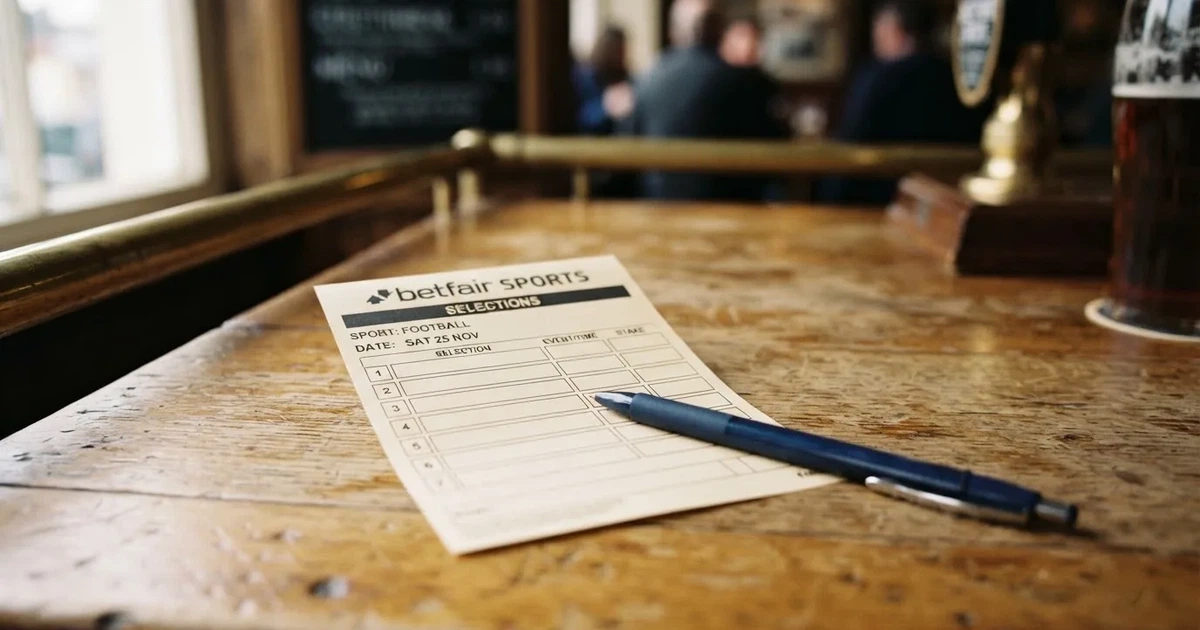
Current as of 27 October 2026, checked against the Gambling Commission’s public register of remote betting licences.
How a Super Heinz is built
The basic structure of a Super Heinz
A Super Heinz is a full-cover bet — a wager that covers every possible combination bet of a given size — over seven selections. There are no singles in it. The full breakdown of those 120 bets is 21 doubles, 35 trebles, 35 four-folds, 21 five-folds, 7 six-folds and one seven-fold accumulator. To arrive at those numbers, the bet works through combinations: a seven-selection double is seven taken two at a time (7 × 6 ÷ 2 = 21), a treble is seven taken three at a time (35), and so on up the chain.
Each line stakes the same unit, and the unit stake is set per line, not per bet. A £2 unit stake across 120 lines costs £240 in total, regardless of how many legs win. A £10 unit stake costs £1,200. That is the figure to plan around: the Super Heinz is a high-volume bet, and the staking adds up before a single selection has run.
Where the Super Heinz sits in the full-cover family
The full-cover family grows in size with the number of selections. A Lucky 15 is four selections and 15 bets, a Yankee is four selections and 11 bets, a Canadian (also called a Super Yankee) is five selections and 26 bets, a Heinz is six selections and 57 bets, a Super Heinz is seven selections and 120 bets, and a Goliath is eight selections and 247 bets. The Super Heinz is the second-largest standard full-cover combination in the regular menu, and the staking reflects it: at the same £2 unit, a Lucky 15 is £30 of exposure, a Heinz is £114, a Super Heinz is £240, and a Goliath is £494.

What the Super Heinz excludes
The Super Heinz is full-cover, not full-cover-plus-singles. It does not contain any single bets on the seven selections, and that is what makes it cheaper than a Lucky 15, which adds four singles to its 11 combination bets. The exclusion matters when a punter expects most selections to win: a single pays out at the full price with no need for other legs to come in, and the Super Heinz never offers that. Conversely, a Super Heinz punter is buying exposure to multi-leg combinations in a way a Lucky 15 punter is not.
How a void selection is handled
When one of the seven selections is voided — a non-runner in horse racing, for example — the Super Heinz collapses around it. The bet then settles as the next smallest combination bet that does not need the missing leg, and that line’s stake is returned. A treble that loses a leg becomes a double on the two remaining winners; an accumulator becomes one fewer fold. With seven selections, a single void still leaves 120 lines that include at least one other selection, so the ticket continues to settle rather than collapse to zero — though the number of paying lines shrinks sharply.
The cost and the return of a Super Heinz
How staking works in practice
Staking on a Super Heinz is set per line. The punter picks a unit stake (also called a “line stake”) and multiplies it by 120 to reach the total outlay. The bet is settled independently on each line: doubles settle as doubles, trebles as trebles, and so on. A line that wins pays out at the multiplied odds of its selections; a line that loses pays nothing. There is no bonus for getting every selection right beyond the seven-fold accumulator paying out at the combined price.
The return on a winning line
The arithmetic is the same as for any other combination bet. Return = stake × odds. On a single line at decimal odds of 6.00, a £2 line returns £12, of which £2 is the stake returned and £10 is the profit. On a treble of legs at 2.00, 3.00 and 4.00, the multiplied odds are 24.00, and a £2 line returns £48. A Super Heinz’s full payout is the sum of every winning line, with the total stake subtracted to arrive at profit.
Worked example: illustrative odds and stake
Three illustrative odds — 1/2 (1.50), evens (2.00) and 6/4 (2.50) — show how a single combination line pays. A treble of those three selections multiplies to 1.50 × 2.00 × 2.50 = 7.50, and a £2 line returns £15 (profit £13). The same three legs as a double — 1/2 and 6/4 multiplied — is 3.75, returning £7.50 on a £2 line (profit £5.50). For a full Super Heinz using a £2 unit across all 120 lines, the total exposure is £240; on a ticket where every selection wins, the seven-fold leg alone pays 1.50 × 2.00 × 2.50 × 1.50 × 2.00 × 2.50 × 1.50 = 50.625, returning £101.25 from a £2 line, and the smaller combinations add further small returns.
The band a punter actually plans around is wide. A Super Heinz with seven short-priced favourites at 1.50 each has a seven-fold multiplied odds of about 17.09; the same seven at 3.00 each reaches 2,187. The number of legs that win matters as much as their prices. A ticket with five winners out of seven pays out on every line of two, three, four and five selections that fits inside the winners — a sizeable fraction of the 120 — while a ticket with three winners out of seven pays only on the combinations built from those three.
How the bookmaker’s margin sits inside the price
Every price carries the bookmaker’s margin (also called the overround). For a market with three outcomes priced at decimal odds of 2.10, 3.40 and 3.40, the payout share is 1 ÷ (1/2.10 + 1/3.40 + 1/3.40) ≈ 0.939, and the margin is about 6.1 %. Multiply that margin across the selections of a Super Heinz and the cumulative take on the seven-fold accumulator alone is well above 30 % in many markets. The shorter the prices, the smaller the per-line margin in absolute terms — but the more lines the ticket carries, the more often the margin is paid. A Super Heinz at short prices is a margin-heavy bet, and a punt on long-priced outsiders is a margin-light bet by comparison.
Legality and regulation in Great Britain
The licence framework
Great Britain regulates commercial betting under the Gambling Act 2005, and the Gambling Commission is the regulator. Since the Gambling (Licensing and Advertising) Act 2014, an operator whose remote facilities are used in Great Britain needs a Commission licence wherever the operator itself is based, so a Curaçao or Malta licence is not a substitute for a GB one. The Commission’s public register lists every licensed operator by business name, trading name, domain or account number, and is the single source for checking whether a brand holds a remote betting licence.
The register distinguishes licence categories. The relevant one for a sportsbook is remote general betting standard (real events); a betting exchange such as Matchbook carries a remote betting intermediary licence on top of the general betting standard. Pool betting and virtual events sit in their own categories. A Super Heinz is settled under the general betting standard licence at every GB bookmaker reviewed here, with Matchbook’s exchange licence covering the back-and-lay structure alongside it.
What the licence means for the punter
A GB licence carries obligations the punter feels at the cashier. Identity is verified before the first deposit — name, address and date of birth — and the check applies to free bets and bonuses too, so anonymous play is not on the menu at a licensed site. Since 31 March 2020, online operators have been required to take part in GAMSTOP, the national multi-operator self-exclusion scheme, which is the standard route for a punter to block themselves across every GB-licensed site at once.
There is no state cap on stakes in sports betting, and there is no state ceiling on deposits either. Operators set their own maximum stakes and may restrict individual customers. The Commission has announced staged financial risk assessments but, as at the time of writing, no start date is in force, so the relevant rule today is the financial vulnerability check that applies when deposits minus withdrawals exceed £150 in a rolling 30 days — a public-record check rather than an income or credit check. Deposit limits are a customer-set tool rather than a state-set ceiling.
What the licence does not cover
A GB licence is not a guarantee of solvency, and a licence to advertise is granted separately through the CAP Code (Committee of Advertising Practice) for non-broadcast and the BCAP Code (Broadcast Committee of Advertising Practice) for broadcast, with the ASA (Advertising Standards Authority) enforcing. Promotion rules in force since 19 January 2026 cap wagering requirements on bonuses at 10× — a £10 bonus with a 50× requirement no longer passes the test — and ban mixed-product promotions that require play across two or more product types, but a cap on the money value of a bonus or on free bets without a wagering condition is not established.
The player pays no tax on betting winnings in Great Britain, which is one of the cleaner parts of the rule book. General Betting Duty sits with the operator on gross profits at 15 % today, rising to 25 % for remote bets from 1 April 2027 (except on UK horse racing, self-service betting terminals, pool betting and in-person betting, which stay at 15 %). The duty is the operator’s tax, and whether it is passed through into the odds is not established; the punter sees it as tighter prices, never as a line on the betting slip.
The offshore position
A Curaçao- or Malta-licensed bookmaker taking GB customers without a Commission licence is breaking section 33 of the Gambling Act 2005; enforcement is aimed at the operator. There is no offence aimed at the customer who simply bets on such a site, but the protection disappears: no GAMSTOP, no approved dispute resolution, no British consumer redress if funds are withheld, no £150 vulnerability check, and no 10× bonus cap. Describing an unlicensed site as “legal to use” mis-states the picture — the customer loses access to every British safeguard that the licence exists to provide.
Safer gambling and the Super Heinz
Why a Super Heinz punter should set a budget before staking
A Super Heinz exposes the punter to 120 lines and a wide range of outcomes. With seven selections priced at evens (2.00) each, the expected loss across the seven-fold accumulator on its own is positive for the operator, and the smaller combinations carry their own margin too. A punter who plans around the staking — total outlay = unit stake × 120 — sets a clear ceiling before the bet goes on, and that ceiling is what the staking screen enforces. A punter who plans around “what each line might win” tends to chase after a bad day.
The punter’s own deposit limit is the practical brake. GB-licensed operators are required to offer one, and the limit is the punter’s. A weekly or monthly cap is set in the account settings and enforced at the cashier; lifting it usually triggers a cooling-off period. For a Super Heinz punt specifically, the punter is planning around the £240 exposure of a £2 unit (or £1,200 at £10), and the deposit ceiling is the envelope that envelope has to fit inside.
The self-exclusion routes
GAMSTOP is the multi-operator route and covers every GB-licensed online bookmaker. The self-exclusion periods are six months, one year, five years, or five years with auto-renewal; after the minimum period the exclusion stays in place for a further seven years unless the customer asks GAMSTOP to remove it. A punter can register themselves at any time without going through the operator.
Operator-level tools add another layer. Most GB bookmakers offer time-outs (a short pause, typically 24 hours to six weeks) and self-exclusions at the brand (six months to five years), on top of deposit limits and reality checks that flag session length. Betting shops use a separate land-based self-exclusion scheme rather than GAMSTOP.
Where to find help
GamCare runs the National Gambling Helpline (0808 8020 133, daily). GambleAware funds treatment and provides information. Gamblers Anonymous runs peer-support meetings across the UK. NHS gambling clinics operate in several regions. These services are free, confidential and not tied to a single operator.
Bonuses and free bets on a Super Heinz
The shape of a free bet on a full-cover ticket
A free bet at a GB bookmaker is typically a bet credit — a token that pays the profit only, with the stake not returned. On a Super Heinz, that token behaves differently depending on where the punter puts it. A free bet used as the unit stake on all 120 lines returns profit on every winning line and ignores the stake on those lines, so a £2 free-bet unit returns the profit on each winning combination. A free bet staked as a single £120 line, by contrast, behaves like any other single bet — it pays profit only and forfeits the stake on a loss.
The other key number is odds eligibility. A free bet at a GB bookmaker usually carries a minimum odds rule and an expiry. QuinnBet, for example, credits free bets valid for seven days at minimum odds of 1/2 (1.50) and a maximum of 50/1, with straight accumulators permitted but Trixies, Patents and Yankees excluded. The exclusions matter for a Super Heinz punter: a free bet token that excludes combination bets can still be staked as a single accumulator, but cannot be split across the 120 lines in the way a cash stake can.
The 10× cap and what it means for Super Heinz bonuses
Promotion rules in force since 19 January 2026 cap wagering requirements on bonuses at 10×. A £10 bonus with a 50× requirement is no longer permitted, and any bonus that requires the punter to roll the bonus amount over more than ten times at minimum odds has to be removed or restructured. Whether the cap applies to free bets with no wagering condition is not established, so a free-bet token is best checked on its own terms.
The 10× cap interacts with a Super Heinz punter in two ways. First, a bonus whose wagering is met by a Super Heinz punter still has to be cleared at minimum odds that are typically short — 1/2 or evens — and a Super Heinz built from short-priced favourites clears wagering faster than one built from outsiders. Second, mixed-product promotions (a free-bet offer that requires casino play, for example) are banned, so a Super Heinz punter cannot be steered into slots by the bonus terms.
What a price boost does and does not change
A price boost raises the odds on a single line and leaves the staking alone. On a Super Heinz, a price boost on one of the seven legs improves every combination that includes that leg — the doubles, trebles, four-folds, five-folds, six-folds and the seven-fold all benefit. The boost is a margin-side adjustment: the bookmaker is paying more on the winning line than the headline price would, and the punter’s staking cost is the same. The boost rarely applies to combination bets in practice, but where it does, it is the cleanest improvement to a Super Heinz ticket.
An acca insurance offer refunds the stake as a free bet if one leg of an accumulator lets the punter down. Acca insurance generally applies only to accumulators — not to a Super Heinz — and a Super Heinz punter that wants this cover places an accumulator instead. The distinction is worth keeping in mind: a Super Heinz is a different product from an accumulator with insurance, and the marketing tends to blur them.
Bonus terms the punter should read
A bonus that looks generous on the headline can cost more than it returns through the terms. Three numbers to check: the wagering requirement (multiplier on the bonus base, capped at 10× under the 2026 rules), the minimum odds for qualifying bets, and the deadline for using the bonus. A £10 bonus at 10× on minimum odds of 1/2 clears at £100 of qualifying bets, and a Super Heinz with a £2 unit (£240 total) clears the wagering in one ticket if every line qualifies.
Free-bet winnings caps are a separate point: a free bet that wins £200 in profit and is then capped at £50 takes the rest of the value away. The cap is in the small print, and a free-bet offer that looks large on the headline is not always worth the headline on settlement.
Strategy and staking for a Super Heinz
Picking the seven selections
The Super Heinz punter’s first job is the seven selections themselves. Every leg matters: each leg appears in a fixed share of the 120 lines, and a losing leg knocks out every combination that contains it. A seven-fold accumulator needs all seven; a double needs any two of the seven; a treble any three. The mix of prices across the seven shapes the shape of the payout: a ticket of short-priced favourites returns steadily on the doubles and trebles but little on the seven-fold, while a ticket of outsiders returns heavily on the seven-fold and rarely on the small combinations.
A practical rule: build the seven from prices that are independently strong, not from prices that are correlated. Two selections from the same football match, for example, are not independent — the result of one shapes the likelihood of the other — and a Super Heinz punter who loads the ticket with correlated legs is paying margin twice for the same event. The same applies to horse racing: a non-runner voids the leg, and a voided leg in a correlated ticket is small consolation.
Bankroll and unit stake
The Super Heinz punter plans around the unit stake. A £1 unit across 120 lines costs £120 of exposure; a £2 unit costs £240; a £5 unit costs £600. The unit should be small enough that a worst-case ticket (every line loses) is a normal bad day, not a bankroll-breaker. The bookmaker’s margin sits inside every line, so a punter’s edge — if any — has to beat that margin across enough lines to come out ahead.
The other stake the punter encounters is the each-way stake, which doubles the unit on a Super Heinz with horse racing. Each-way betting splits the stake into a win portion and a place portion, both at the same unit; the total exposure on an each-way Super Heinz is therefore 240 × unit, not 120 × unit. The doubling is the practical reason each-way Super Heinz tickets are expensive.
When the Super Heinz is the wrong product
A Super Heinz punter who only sees the seven-fold accumulator is paying for 119 lines that will not return unless two or more legs come in. If the punter’s real view is on a single outcome — one match, one race — a single bet is the right ticket. If the view is on a four-fold combination, a standalone accumulator on those four is cheaper than the Super Heinz, which pays for combinations the punter does not want. The Super Heinz is the right product when the punter has a strong view on multiple selections and is happy to back every combination across them.
Bet types and odds: where the Super Heinz sits
The combination bet family
A combination bet covers every permutation of selections across multiple bets. The standard menu runs from doubles (two selections, one bet) and trebles (three selections, one bet) up through accumulators of any size, with full-cover variants that add combinations: Trixie (3 selections, 4 bets), Patent (3 selections, 7 bets), Lucky 15 (4 selections, 15 bets), Yankee (4 selections, 11 bets), Canadian/Super Yankee (5 selections, 26 bets), Heinz (6 selections, 57 bets), Super Heinz (7 selections, 120 bets), Goliath (8 selections, 247 bets). The Super Heinz is the second-largest standard combination in the menu.
Full cover versus full cover plus singles
A full cover bet includes every combination bet from doubles upwards. A full cover plus singles bet adds the singles on top — Lucky 15 (4 selections), Lucky 31 (5 selections) and Lucky 63 (6 selections) are the main variants. The Super Heinz is full cover with no singles, which makes it cheaper than the equivalent Lucky 63 on six selections at the same unit (£120 vs £126), but the missing singles cost the punter those standalone payouts.
How the multiplied odds work
The multiplied odds of a combination are the product of the decimal odds of the selections. Two legs at 2.00 each give combined odds of 4.00; three legs at 1.50, 2.00 and 2.50 give 7.50. The multiplied odds apply per line: a treble at 7.50 returns 7.50 × stake on a win. The Super Heinz’s seven-fold leg is the product of all seven decimal odds, and that product governs the headline payout. The smaller combinations settle in parallel, and a Super Heinz ticket rarely wins only the seven-fold — the doubles, trebles and four-folds pay out alongside it whenever the selections win in clusters.
Odds format: fractional and decimal in Great Britain
GB bookmakers display odds in fractional form (5/1, 11/4, evens) and decimal form (6.00, 3.75, 2.00) side by side. A fractional price of 5/1 means a £1 stake returns £6 in total (£5 profit plus £1 stake), and the decimal equivalent is 6.00; evens (1/1) is 2.00; 11/4 is 3.75; 6/4 is 2.50. Decimal odds show the full return per unit stake, while fractional odds show the profit per unit stake. A shorter-than-evens price (an “odds-on” price like 4/6) is one where the stake is larger than the potential profit; a longer-than-evens price is one where the profit is larger than the stake.
The margin inside the price
Every price carries the bookmaker’s margin. For a market with three outcomes priced at decimal odds of 2.10, 3.40 and 3.40, the payout share is 1 ÷ (1/2.10 + 1/3.40 + 1/3.40) ≈ 0.939, and the margin is about 6.1 %. That margin is the bookmaker’s expected take per unit staked across all outcomes. On a Super Heinz, the margin compounds across the combinations: a treble priced out of three independent 6 % markets has a payout share of about 0.939³ ≈ 0.827 and a margin of about 17.3 %. The Super Heinz punter pays margin on every line, and the total margin across the 120 lines is a real cost.
Cash out and the Super Heinz
A cash out lets the punter settle a ticket early at a price the bookmaker offers. On a Super Heinz, the cash-out figure is a function of the remaining selections and the current prices of those selections — the bookmaker is pricing the value of the in-play combinations as if they were a new ticket. Cash out on a Super Heinz is meaningful when several legs have won and the remaining legs are running: the punter can lock in a profit rather than wait for the final leg. The cash-out price is the bookmaker’s price, with the bookmaker’s margin, and the punter who cashes out trades a future upside for a certain return now.
Top 10 GB bookmakers for a Super Heinz bet
The list below is built around the public register of remote betting licences. Every brand holds a Gambling Commission remote licence for general betting standard (real events), and every brand is reviewed here on the basis of its own published terms. The list is not a ranking by quality — no single brand is “the only” licensed one — and the verdicts sit at the foot of each write-up.
1. Ladbrokes
Ladbrokes runs under Gambling Commission account 54743 (remote general betting standard, real events, plus remote betting intermediary), with LC International Limited as the licence holder. The brand’s sportsbook publishes odds boosts on horse and greyhound bets, Best Odds Guaranteed on UK and Irish horse racing, in-play betting across major sports, and Acca Boosts on accumulators. The Super Heinz is offered in the standard combination menu alongside the Heinz and the Goliath, and each-way staleness is available on the horse racing legs.
The Best Odds Guaranteed promise is the headline feature: the punter gets the starting price or the price taken, whichever is higher, and the rule applies to UK and Irish racing. For a Super Heinz built around the day’s racing, that promise improves the doubles, trebles and upwards whenever the starting price drifts up. The acca boost runs in parallel, and the in-play book is deep enough to cover football, tennis and the major US sports.
Verdict: Ladbrokes is a strong choice when Best Odds Guaranteed and a deep in-play book are needed, as the operator integrates these features smoothly within its combination menu.
2. BetMGM
BetMGM runs under Gambling Commission account 39198 (remote general betting standard, real events), with LeoVegas Gaming PLC as the licence holder. The sports welcome offer for new UK customers who deposit £10 or more and place a sports bet within seven days is four £10 free bets, structured as two football accumulators of four or more selections and two sports multiples of two or more, valid for seven days with minimum odds and opt-in required. The Super Heinz sits in the combination menu as a standard product.
The structure of the welcome offer is shaped around accumulators and multiples, which fits a Super Heinz punter who places a small combination ticket on the side. The free bets are valid for seven days, the minimum-odds gate is in the small print, and the free-bet winnings are paid as profit (the stake is not returned with a win). The mobile app carries the same product set as the desktop site, and the bet builder is on the same betting slip as the Super Heinz.
Verdict: BetMGM works well for those targeting accumulators via the welcome package, although the seven-day timeframe requires discipline during the selection process.
3. NetBet
NetBet runs under Gambling Commission account 39170 (remote general betting standard, real events), with Netbet Enterprises Limited as the licence holder. The sportsbook publishes Daily Boosts, Profit Boosts and free-bet offers, a Bet Builder with instant dynamic odds, and sports stats for major leagues. The Super Heinz is in the standard combination menu, and the bet builder can be used as one of the seven legs where the operator allows it.
The Profit Boost is the relevant feature for a Super Heinz punter: a token that multiplies the winnings on a qualifying line, applied as a percentage on top of the price. The bet builder with dynamic odds means the price of a same-game multi updates as the punter adds legs, which is useful for a Super Heinz punter who wants a leg that prices in front of them. The Daily Boost runs alongside, and the stats layer is useful when picking the seven.
Verdict: NetBet provides a flexible environment where Profit Boosts can enhance the overall return, making it a viable option for those who incorporate bet builders into their multi-leg strategy.
4. Fitzwilliam Sports
Fitzwilliam Sports runs under Gambling Commission account 48760 (remote general betting standard, real events), with SBKI Limited as the licence holder. The sportsbook bases its prices on Oddschecker’s average price for each selection, and provides Apple and Google mobile apps. The Super Heinz is offered in the standard combination menu.
Pricing on the average rather than the bookmaker’s own line is unusual in the GB market. For a Super Heinz punter, that pricing model means the headline prices on each leg are close to the wider market’s average, and the margin is held in the spread rather than the headline. The mobile app covers the standard product set, and the combination menu is the same one the other GB bookmakers use.
Verdict: Fitzwilliam Sports provides an alternative approach to traditional margin-based pricing, making it a noteworthy platform for participants prioritizing market-aligned odds.
5. Fitzdares
Fitzdares runs under Gambling Commission account 400 (remote general betting standard, real events), with Fitzdares Limited as the licence holder. The mobile app offers cash out, accumulators, Lucky 15s, specials and antepost markets on horse racing, football, tennis, rugby, cricket, golf and American football, with in-play live odds. The Super Heinz is offered in the combination menu.
The product set leans towards horse racing and football, and the in-play book covers the same sports. Cash out on a Super Heinz is available where the betting slip supports it, and the antepost market is deeper than the standard day’s card. For a Super Heinz punter with a horse racing ticket, the antepost depth is the book’s strongest feature.
Verdict: Fitzdares is tailored toward racing enthusiasts, where the deep antepost markets and accessible cash-out tools offer significant control throughout the event.
6. Kwiff
Kwiff runs under Gambling Commission account 44448 (remote general betting standard, real events), with Eaton Gate Gaming Limited as the licence holder. The Supercharge feature can instantly boost the odds on a bet — for example from 2/1 to 20/1 — and it can apply to single or multi bets on any sport. The Super Heinz is in the combination menu, and the Supercharge can apply to the ticket’s lines where the operator’s mechanics allow it.
Supercharge is the headline feature: a randomly triggered price boost on a placed bet, applied after staking. For a Super Heinz punter, the boost lands on a random line of the 120 rather than the whole ticket, and the punter who catches it on a high-priced combination gets a sharp payout. The mobile app carries the same product set as the desktop, and the brand is positioned as a casual-friendly book with the GB licence underneath.
Verdict: Kwiff appeals to those interested in random volatility, with the Supercharge boost capable of significantly altering payout structures on a line-by-line basis.
7. Octobet
Octobet runs under Gambling Commission account 62545 (remote general betting standard, real events), with Octopus Game Limited as the licence holder. The sportsbook offers Best Odds Guaranteed on UK and Irish horse racing, up to £150 per customer per race. The Super Heinz is in the standard combination menu, and the BOG applies to the racing legs of the ticket.
The £150-per-race ceiling is a real cap. A Super Heinz punter building the ticket around one big race has to plan around the ceiling, since the punter’s stake on the winning leg at the starting price is paid at the higher of the price taken or the SP, and the £150 cap limits the BOG payment. The mobile app carries the same product set, and the in-play book covers the major sports.
Verdict: Octobet remains a competitive environment for racing followers, though the £150-per-race cap is a specific constraint that must be factored into strategic planning.
8. Matchbook
Matchbook runs under Gambling Commission account 39504 (remote general betting standard, real events, plus remote betting intermediary), with Triplebet Limited as the licence holder. The platform is a betting exchange, where customers bet against other users rather than against the bookmaker. The product set includes Bet Builder, multiples, in-play betting and live streaming of horse racing and greyhounds.
A betting exchange is a different model: the punter backs a selection at odds set by another backer, or lays a selection at odds set by another layer, and the exchange takes a commission on net winnings. For a Super Heinz punter, the exchange carries the combination menu but the mechanics are back-and-lay rather than book-vs-punter. The commission model and the depth of the exchange are the differentiators, and the live streaming of horse racing and greyhounds is a useful add-on for an in-running Super Heinz.
Verdict: Matchbook stands out if exchange-based mechanics are desired, as the back-and-lay approach fundamentally alters the bet’s operation compared to a standard sportsbook.
9. Betfred
Betfred runs under Gambling Commission account 39544 (remote general betting standard, real events), with Petfre (Gibraltar) Limited as the licence holder. The mobile app carries Bet Builder, Sub Switch, Racing Post data, Extra Places, live casino and bingo. The Super Heinz is in the standard combination menu, and the racing features — Racing Post tips and Extra Places — are relevant for a horse racing ticket.
Extra Places extends the place terms of a horse race beyond the standard each-way terms, paying out on additional finishing positions. For an each-way Super Heinz with a horse racing ticket, Extra Places on one of the legs improves the place portion of the relevant lines. The Sub Switch feature lets the punter swap a player in a pre-built bet builder, and Racing Post data is a useful input for the seven selections.
Verdict: Betfred is ideal for the Super Heinz punter who values extra racing utility, as the inclusion of Racing Post data and Extra Places on the ticket can add depth to the selection process.
10. QuinnBet
QuinnBet runs under Gambling Commission account 61011 (remote general betting standard, real events), with QuinnBet (Gibraltar) Limited as the licence holder. Free bets are valid for seven days from credit and can be used on any market at odds of 1/2 (1.50) or greater, with maximum odds of 50/1; straight accumulators are allowed but Trixies, Patents and Yankees are not. The Super Heinz is in the combination menu.
The exclusion of Trixies, Patents and Yankees from the free-bet terms is a sharp line. A Super Heinz punter who wants to use a free-bet token on the ticket should check whether QuinnBet’s terms cover a Super Heinz specifically, since the listed exclusions are the three smaller combinations rather than the full-cover family. The 1/2 minimum odds and 50/1 maximum are typical of the GB market, and the seven-day expiry is short. The mobile app carries the same product set, and the sportsbook covers the major sports.
Verdict: QuinnBet is a suitable option for the Super Heinz punter who prefers accumulator-based free-bet usage, provided that the exclusion list is reviewed in advance of staking.
Bookmaker licence comparison
The table below sets the licences side by side. The columns are the matters each operator’s terms page carries on the licence: the Gambling Commission account number, the licence holder named on the register, and the categories under which the licence was granted.
| Brand | Commission account | Licence holder | Primary Licence |
|---|---|---|---|
| Ladbrokes | 54743 | LC International Limited | Real events & Intermediary |
| BetMGM | 39198 | LeoVegas Gaming PLC | Real events |
| NetBet | 39170 | Netbet Enterprises Limited | Real events |
| Fitzwilliam Sports | 48760 | SBKI Limited | Real events |
| Fitzdares | 400 | Fitzdares Limited | Real events |
| Kwiff | 44448 | Eaton Gate Gaming Limited | Real events |
| Octobet | 62545 | Octopus Game Limited | Real events |
| Matchbook | 39504 | Triplebet Limited | Real events & Intermediary |
| Betfred | 39544 | Petfre (Gibraltar) Limited | Real events |
| QuinnBet | 61011 | QuinnBet (Gibraltar) Limited | Real events |
Two patterns stand out. The first is that several licence holders are not British: Petfre (Gibraltar) Limited and QuinnBet (Gibraltar) Limited are Gibraltar-registered companies, and LeoVegas Gaming PLC is Maltese. The Commission’s regime permits that — a GB licence is required at the point of consumption, not the point of incorporation — and the register is the source for the holder’s name on the day of the check. The second is that only Ladbrokes and Matchbook carry a remote betting intermediary category in addition to general betting standard; that category is the licence type for platforms that match customers against each other rather than running a traditional sportsbook, and Matchbook is the only pure exchange on this list, with Ladbrokes’ exchange activity running alongside its sportsbook.
The punter’s check on any of these licences is the Commission’s public register. The search by domain, business name, trading name or account number returns the licence status, the licence holder and the categories; a licence that does not appear there is not a GB licence.
Frequently asked questions
What is a Super Heinz bet?
A Super Heinz is a full-cover combination bet on seven selections, comprising 120 separate bets. As noted in the structure section, this includes doubles, trebles, and higher multiples up to a seven-fold accumulator, with no singles in the ticket. A unit stake is set per line and the total outlay is 120 times that unit; on a £2 unit the total stake is £240. The bet pays out independently on each winning line, and a single losing leg knocks out every combination containing it. A Super Heinz needs at least two winners for any line to return.
What is a Heinz bet?
A Heinz is the same idea one selection smaller: a full-cover combination bet on six selections, comprising 57 separate bets (15 doubles, 20 trebles, 15 four-folds, 6 five-folds and 1 six-fold). There are no singles, and the total outlay is 57 times the unit stake. The Heinz pays out on every combination of two winners or more, and a £2 unit costs £114 in total. The Super Heinz extends the Heinz by one selection and adds 63 further lines.
How many bets are in a Super Heinz?
A Super Heinz contains 120 bets in total, broken down into doubles, trebles, and larger accumulators. The exact composition follows standard combination mathematics: 7 selections taken 2 at a time is 21, taken 3 at a time is 35, taken 4 at a time is 35, taken 5 at a time is 21, taken 6 at a time is 7, and taken 7 at a time is 1.
How can it be checked that a bookmaker holds a Gambling Commission licence?
The Commission’s public register is the single source. It can be searched by business name, trading name, domain or licence account number, and returns the licence status, the licence holder and the licence categories. A licence that does not appear on the register is not a GB licence. The register is the test for the Super Heinz punter who wants to confirm that the bookmaker is licensed for remote general betting standard (real events) before staking.
How is the return on a bet worked out from the stake and the odds?
The return on a winning bet is stake × odds. On a £10 single at decimal odds of 3.00, the return is £30 (profit £20). On a combination, the odds of the legs are multiplied together: a treble at 2.00, 3.00 and 4.00 has multiplied odds of 24.00, and a £5 line returns £120 (profit £115). For a Super Heinz, each line settles on its own, and the ticket’s payout is the sum of every winning line.
What is the bookmaker’s margin and how can it be seen in the odds?
The margin (or overround) is the bookmaker’s expected take per unit staked across all outcomes of a market. For a market with three outcomes priced at 2.10, 3.40 and 3.40, the payout share is 1 ÷ (1/2.10 + 1/3.40 + 1/3.40) ≈ 0.939, and the margin is about 6.1 %. The margin is the gap between the sum of the implied probabilities and 100 %, and it sits inside every price the bookmaker offers. On a Super Heinz, the margin compounds across the combinations, and a treble priced out of three independent 6 % markets carries about 17.3 %.
Bet types & in-play – Darts betting
Content created by the «Darts betting» team
