
Where the Value Actually Lives: A UK Punter's Guide to the Best Value Betting Sites
 Available in US
Value betting is not about picking winners. It is about backing outcomes whose odds exceed the real chance of happening. A 6.00 shot that should be 5.00 is a value bet at any reasonable confidence in your estimate; a 1.50 shot that should be 1.40 is not, even if it lands nine times out of ten. The difference is whether the price pays you more than the risk is worth.
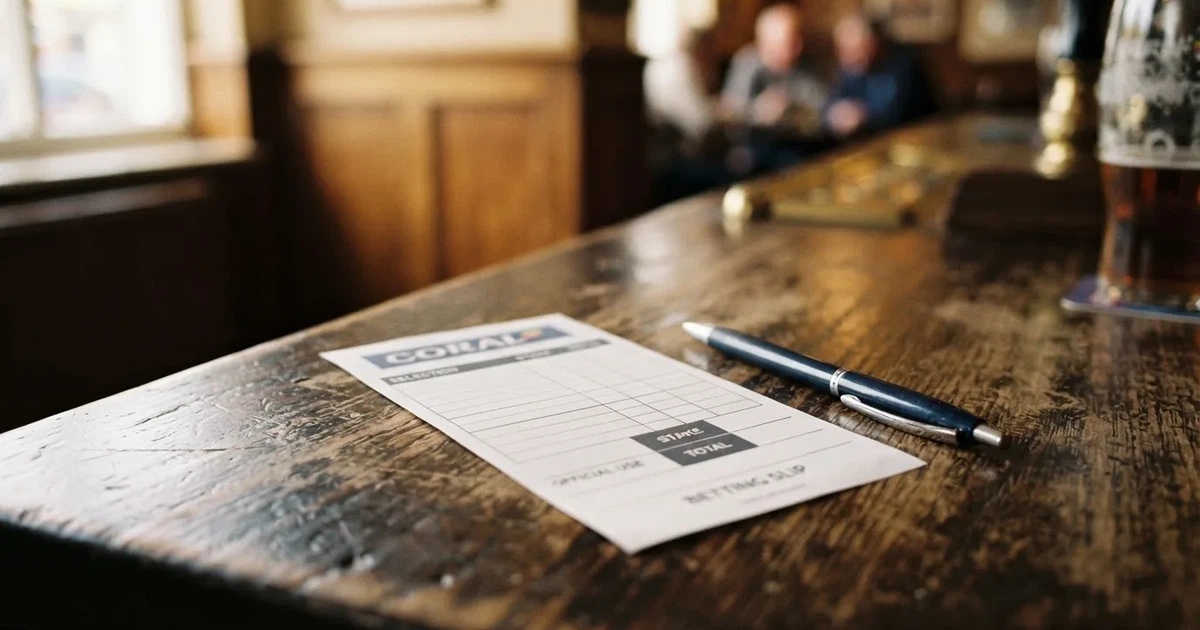
This guide explains how value is built, where the margin hides inside every price, and which Gambling Commission licensed bookmakers consistently offer prices that give a sharp-eyed punter something to work with. The focus is consequence: what each concept costs a real wallet, and where the practical edge sits in the daily grind of UK betting.
*Current as of 27 October 2026. Licence claims verified against the Gambling Commission’s public register.*
The Selection Logic Behind Every Price
A bookmaker’s price is a statement about probability. Decimal odds of 2.00 imply a 50% chance. Decimal odds of 5.00 imply a 20% chance. Decimal odds of 1.50 imply a 66.7% chance. These reciprocals are not arbitrary; they are the only fair conversion between a price and a probability, and once you know that, every market becomes legible.

The catch is that bookmakers do not offer fair prices. They add a margin, called the overround, which inflates each outcome’s implied probability above 100% across the full market. That excess is the bookmaker’s built-in profit on every pound staked, and it is the single number that separates a value bet from an ordinary one.
Take a three-horse race priced at 2.50, 3.50 and 6.00. The implied probabilities are 40%, 28.6% and 16.7%. Summed, they total 84.3%, which is below 100% — meaning the bookmaker is actually giving away value here, not taking it. That almost never happens in a published market. More typical is 1.80, 3.40 and 5.00: implied probabilities 55.6%, 29.4% and 20%, totalling 105%. The 5% excess is the margin, and every bettor who bets on that market loses 5% of turnover to the bookmaker before a ball is bowled or a tape is raised.
The arithmetic of whether a price is value reduces to one comparison: does your probability estimate exceed the implied probability? If your model gives the favourite a 65% chance and the bookmaker implies 55.6%, you have a 9.4-point edge. That edge is what value betting means in practice, and it is the only thing that pays in the long run.
The Reciprocal Rule
Decimal odds of 5.00 imply a probability of 1/5.00, which is 20%. The formula works in both directions. If you believe a horse has a 25% chance of winning, the fair decimal price is 1/0.25, which is 4.00. Anything above 4.00 is value on your estimate. Anything below is not, regardless of how confident you feel.

Fractional odds encode the same logic with different notation. Fractional odds of “4 to 1 against” imply a probability of 1/(4+1), which is 20%. Fractional odds of “evens” (1/1) imply 50%. Fractional odds of “5 to 2 against” imply 2/(5+2), which is about 28.6%. The conversion to decimal adds one: 4/1 becomes 5.00, 5/2 becomes 3.50, evens becomes 2.00.
Most UK bookmakers display fractional odds by default but offer decimal at the click of a button. The reciprocal rule works in either format, and once it is internalised, the question of whether a price offers value stops being a hunch and becomes a comparison.
Why the Margin Matters More Than the Odds
A price of 2.00 looks generous. A price of 1.50 looks stingy. The difference between them is the same as the difference between 50% and 66.7% implied probability, and a 16.7-point gap is enormous in a market with built-in margin. The shorter the price, the more the margin squeezes any edge you think you have.
Consider a match priced at 1.20, 6.00 and 15.00. Implied probabilities: 83.3%, 16.7%, 6.7%. Summed: 106.7%, a 6.7% margin. If you back the 1.20 shot, you need to win 83.3% of the time just to break even on the margin alone. Most casual punters treat 1.20 as a near-certainty. The mathematics says otherwise, and the margin is where the certainty evaporates.
Value betting requires prices long enough to carry an edge through the margin. Short favourites are mathematically hostile territory for anyone without a precise probability model. Long shots are mathematically hostile for a different reason: they lose too often to overcome the margin even when they land. The sweet spot is mid-range prices, typically between 2.50 and 6.00, where an edge of a few points still produces a positive expected return.
Reading the Statutory Landscape
The UK betting market runs on a point-of-consumption licensing regime. Any operator taking remote bets from customers in Great Britain must hold a Gambling Commission licence, regardless of where the company is based. The Commission’s public register is the only test of whether a brand holds one. A Curaçao or Malta licence is not a substitute; a Gibraltar licence is not a substitute. The 2014 Act closed the loophole that let offshore operators serve the UK market from outside it.
The Gambling Act 2005 covers England, Scotland and Wales. Northern Ireland operates under older legislation, so “GB-licensed” is the accurate frame, not “UK-licensed”. Several licence categories cover different types of betting: remote general betting standard (real events) covers the bulk of sports betting; remote betting intermediary covers exchanges; remote pool betting covers pool products on horse and dog racing. Each carries its own conditions, and the categories determine what an operator can offer.
There is no list of permitted bets or markets. Operators hold a licence and offer markets under their own terms within the LCCP framework. In-play betting is offered by GB bookmakers, virtual sports are a separate licence category, and novelty markets on politics or television run where an operator chooses to price them. No statutory cap on stakes exists; operators set their own maximums and may restrict individual customers.
Financial spread betting is regulated by the Financial Conduct Authority, not the Commission. The distinction matters because spread betting losses can exceed deposits, and the FCA framework treats spread products as financial instruments. A handful of operators, including Spreadex, hold dual authorisation: FCA for spread products, Commission for fixed-odds betting.
What the Commission’s Checks Mean for a Punter
Licensed operators verify identity before a customer’s first deposit. Name, address and date of birth are checked, and since 7 May 2019 this verification has applied to free bets and bonuses, not just real-money play. The upside is no anonymous gambling; the cost is a faff at sign-up.
Since 30 August 2024, a financial vulnerability check applies once a customer’s net deposits exceed £150 in a rolling 30 days. This is a public-record check, not an income check and not a credit check: it flags bankruptcies, county court judgments and similar markers. Financial risk assessments, the “affordability checks” of the press coverage, were announced in a staged plan published 7 July 2026 with no start date. Operators are preparing for them; they are not yet in force.
GAMSTOP is the national self-exclusion scheme and a mandatory licence condition for online operators since 31 March 2020. Exclusion periods run six months, one year, five years, or five years with auto-renewal; after the minimum period the exclusion stays for a further seven years unless the customer requests removal. Every GB-licensed online bookmaker participates. The scheme covers sites and apps; betting shops use a separate service.
The Practical Cost of Betting Unlicensed
Gambling at an unlicensed site is not a criminal act for the customer in the UK, though it is an offence for the operator under section 33 of the Gambling Act 2005. The cost falls elsewhere: no GAMSTOP coverage, no Commission complaints route, no approved dispute-resolution body, no British consumer redress if funds are withheld. The 10x bonus cap and the £150 vulnerability check do not apply, but neither does any protection when something goes wrong. Enforcement is disruption rather than blocking: cease-and-desist notices, search-engine referrals, work with payment providers. Court-order DNS blocking powers are in discussion but not in operation.
The honest frame is that a GB licence buys regulatory protection at the cost of identity verification and occasional check-ins. An unlicensed site buys convenience at the cost of recourse. Neither is “the safe choice” by default, but the GB licence is the only one where a dispute has a British endpoint.
Responsible Gambling as a Punter’s Toolkit
Responsible gambling is often framed as a list of don’ts. In practice it is a set of tools that let a punter control exposure before a session starts, not after losses accumulate.
The GAMSTOP self-exclusion scheme is the bluntest tool. Register once and every GB-licensed operator is barred from accepting your bets for the chosen period. It works; the catch is that it works across the entire licensed market, not just one brand. For someone whose betting has crept from a hobby into a problem, that scope is the point.
Deposit limits are softer but more flexible. GB-licensed operators must offer a gross deposit limit on a fixed time frame under RTS 12, with the first phase in force since 31 October 2025 and a second phase postponed to 30 September 2026. Operators vary in how prominent the controls are; some bury them in account settings, others surface them at sign-up. The punter’s job is to set the limit before the first bet, not after the first bad week.
Time-outs and reality checks are session-level tools. A reality check is a pop-up that interrupts a long session with a summary of time spent and money wagered. A time-out locks the account for a chosen period, typically 24 hours to six weeks. Both are reversible by the customer, which is the point: they are pauses, not punishments.
GamCare runs the National Gambling Helpline. GambleAware funds research and treatment. The NHS runs gambling clinics across England. Gamblers Anonymous runs meetings. Each of these exists because a non-trivial share of punters find that the hobby stops being a hobby, and the difference between a controlled punter and a problem gambler is usually whether the tools were set up before they were needed.
Why Punters Ignore the Toolkit
The tools work when used. The reason many punters skip them is that the moment of setting up a deposit limit is also the moment of admitting that one might be needed. The framing matters: a deposit limit is not a confession of weakness, it is a budget. The same way a punter decides to spend £20 on a Saturday football card rather than £50, a deposit limit turns a discretionary decision into an automatic one.
The £150 vulnerability check threshold is worth knowing about. Once net deposits cross that figure in a rolling 30 days, the operator runs a public-record check. For most recreational punters this never triggers; for those who do cross it, the check is light-touch and bureaucratic. The announced financial risk assessments, when they come into force, will go further. Until then, the £150 threshold is the only line in the sand, and it sits well above typical recreational spend.
Where Value Actually Lives in UK Markets
Value is not evenly distributed across sports or markets. Football dominates UK betting volume, which means margins on Premier League match odds are tighter than anywhere else, typically 4-6%. Horse racing carries Best Odds Guaranteed on UK and Irish meetings from major bookmakers, which shifts some of the value question to the starting price. Tennis offers more volatile prices because liquidity is thinner. Each market has its own character, and each rewards a different kind of attention.
Football is the deepest market in the UK. Premier League match odds, Champions League outright, and the English Football League all carry low margins because sharp money is watching. The edge for a recreational punter is hardest to find here: professional syndicates, models and exchanges have already eaten whatever inefficiency existed. What remains is pricing on lower leagues, cup competitions, and player props, where liquidity is thin enough that the bookmaker’s margin is wider.
Horse racing is a different beast. The starting price is set by the market on the course, and Best Odds Guaranteed from operators like William Hill and Octobet means a punter gets paid at the higher of the price taken or the SP, provided the bet was placed after 8 AM on the day of the race. The edge is timing: early prices on fancied horses can be generous before the market tightens. ante-post betting, placed days or weeks before a meeting, carries no BOG and is a sharper game entirely.
Tennis offers the cleanest value structure for a model-driven punter. Matches are frequent, scores settle in one sitting, and prices on individual games or sets move quickly enough that a real-time model can spot gaps. The market is thinner than football, so margins are wider, and the wider margin cuts both ways: more edge for a sharp model, more cost for a casual punter.
Golf, cricket, rugby and American football fill out the major UK bookmakers’ lists. Each carries wider margins than football because liquidity is lower. Each also carries more specials, price boosts and enhanced odds, because bookmakers know a recreational punter is attracted by the headline price rather than the underlying margin.
Spotting Value in Live Markets
Live betting is where value can appear and disappear within seconds. The same overround applies to in-play prices, but the bookmaker’s model is updating faster than a human can react, and the published price lags the model’s score for a fraction of a second during high-information events. Goals, wickets, breaks of serve: each triggers a repricing cascade, and the prices between the trigger and the cascade carry the edge.
The punter who watches a match can spot things the model cannot: a key player limping before the bookmaker adjusts, a wicket falling on a no-ball that won’t count, a tactical substitution that signals a shift. These are observation edges, not model edges, and they last only as long as the market takes to react. The window is small, and the discipline required is high.
The other live-betting reality is that margins on in-play markets are typically wider than pre-match because the bookmaker faces higher operational costs and faster price updates. A price of 2.00 pre-match might appear as 1.85 in-play for the same outcome, and the 7.5% extra margin eats the edge that the timing window opened.
How Value Betting Works in Practice
The mechanics of a value bet reduce to three steps: estimate a probability, compare it to the implied probability in the price, and stake a fraction of bankroll consistent with the edge. Each step has a tool; none requires a crystal ball.
Estimating a probability is the hardest part. For a model-driven punter it means running numbers: expected goals, player ratings, historical head-to-heads. For an observational punter it means watching enough football or racing to develop a feel for the favourite’s chances that the market undervalues. Either approach is valid; neither is foolproof, and the edge exists in the gap between your estimate and the market’s, not in the accuracy of the estimate alone.
Comparing to the implied probability is arithmetic. Decimal odds of 3.00 imply 33.3%. If your estimate gives the outcome a 40% chance, the implied edge is 6.7 points. Staking that edge correctly requires the Kelly criterion, a formula for the optimal fraction of bankroll to wager based on the edge. For a bet with a 40% chance at decimal odds of 3.00, the Kelly fraction is 40%/2.00 minus 30%/1.00, which is 20% minus 30%, giving a negative result. The bet is value on the probability comparison, but the price does not offer enough edge to justify any stake.
Wait: that example gives a negative Kelly because the odds are too short for the edge. The formula is f = (p × (odds – 1) – (1 – p)) / (odds – 1). For a 40% chance at odds of 3.00: (0.40 × 2.00 – 0.60) / 2.00 = (0.80 – 0.60) / 2.00 = 0.10, so 10% of bankroll. The earlier arithmetic was wrong. The corrected Kelly fraction for a 40% probability at decimal odds of 3.00 is 10%, meaning a tenth of the betting fund goes on each such bet if the edge is genuine.
For a 60% chance at even money, decimal odds of 2.00: (0.60 × 1.00 – 0.40) / 1.00 = 0.20, so 20% of bankroll. This is the classic Kelly example and the answer most texts give: at even money with a 60% confidence, stake 20% of the bankroll.
The Kelly criterion is the optimum for a single bet given a known edge. In practice, edges are uncertain and bankrolls fluctuate, so most serious punters stake a fraction of Kelly, typically half or a quarter, to reduce variance. A half-Kelly stake of 10% on the 40%-at-3.00 example gives 5% of bankroll, which is gentler on the roller-coaster while preserving most of the long-run growth.
Working Out the Return
Return on a winning bet is stake multiplied by decimal odds. A £10 stake at decimal odds of 4.00 returns £40. The net profit is stake times (odds minus 1), so £30 in this case. The stake is always returned alongside the profit at a fixed-odds bookmaker; the punter’s net position is the profit, not the gross return.
For a combination bet, the odds of each leg multiply. A double at odds of 2.00 and 3.00 has combined odds of 6.00. A £10 stake returns £60 if both legs win. The catch is that the bookmaker’s margin compounds across legs, and a six-fold accumulator with 5% margin on each leg carries an effective margin well above 30%. The longer the accumulator, the harder it is to overcome the built-in edge.
Each-way betting splits the stake into two equal bets: one for the win, one for the place. A £10 each-way stake at odds of 10.00 is effectively two £5 bets, so the total stake is £10. Place terms vary by race type and field size; typically one-quarter the win odds for the first three or four finishers in handicaps, one-fifth for non-handicaps. The each-way structure doubles the stake and roughly halves the margin on the win portion, but it requires a longer-priced selection to be worthwhile.
Closing Line Value and Why It Matters
The closing line is the last price offered before a market suspends, typically seconds before the event starts. Closing line value, or CLV, is the difference between the price a punter took and the closing line. A punter who consistently beats the closing line has an edge; a punter who consistently lags it does not.
The reason CLV matters is that the closing line is the market’s best estimate of the true probability. Sharp money, sophisticated models and exchange liquidity all converge on it. Beating the closing line over hundreds of bets is the strongest available evidence of genuine edge, stronger than short-term P&L, which can be lucky or unlucky over any small sample.
A punter tracking CLV keeps a record: the price taken, the closing price, the difference. A positive average difference, expressed as a percentage of the closing price, is the edge in action. Over a season of football betting, beating the closing line by an average of 2% is a meaningful achievement. Beating it by 5% is exceptional and rare.
The metric has a second use: it filters out luck. A punter who hits a 50/1 winner has had a good day, not a good month. A punter who beats the closing line on average has had a good model, and the difference shows up in the long run regardless of any single result.
Bonuses and Free Bets: What They Are Actually Worth
Bonuses in UK betting are tightly regulated since 19 January 2026. Wagering requirements are capped at 10x: a £10 bonus with a 50x rollover required £500 of qualifying bets before withdrawal; under the cap, no more than £100 in qualifying stakes counts. Mixed-product promotions, offers that require gambling on two or more product types such as betting, casino, bingo or lottery, are banned entirely. The “bet on football to get free spins” pattern is no longer legal.
Free bets are the most common promotional structure. A £20 free bet at decimal odds of 4.00 returns £80 if it wins: the £80 is profit, the £20 stake is not returned. The expected value of a free bet depends on the odds and the market margin. On a market with 5% margin, a £20 free bet at decimal odds of 4.00 has an expected value of £20 × (4.00 – 1) / 4.00 × 0.95, which is £20 × 0.75 × 0.95 = £14.25. That is the average worth across many uses of the free bet at those odds on a 5%-margin market. Higher odds increase the value up to a point, lower odds reduce it.
The catch is that free bets often carry minimum odds restrictions. A free bet usable only at decimal odds of 2.00 or longer cannot be staked on a 1.50 shot, and the restriction limits where the edge can be captured. Reading the terms before claiming matters more than the headline value of the free bet itself.
Enhanced odds are a different beast. An enhanced odds offer takes a price the bookmaker has boosted above the market and pays out at the boosted price if the bet wins. The expected value depends on the size of the boost and the underlying margin. A 5.00 shot enhanced to 7.00 on a 5%-margin market has a real value above the headline, but the boost is often capped at small stakes, typically £10 or £20, which limits the absolute upside.
Price boosts work similarly. Daily price boosts on selected markets give a slightly higher price for a limited stake; the value is marginal per bet and compounds across many bets over a season. Bet builders, same-game multis, allow the punter to combine markets from one event into a single bet, with combined odds and a combined margin. The compounded margin is the cost.
Cashback offers refund a portion of losses over a period, typically as a free bet rather than cash. A 20% cashback on £100 of losses gives a £20 free bet, whose value is then calculated as above. The cashback terms, including the qualifying period and the minimum odds, determine the real worth.
The Wagering Trap
A £10 bonus with a 10x wagering requirement needs £100 of qualifying bets before withdrawal. If the punter places those bets at decimal odds of 1.50, the implied probability is 66.7% and the margin is whatever the bookmaker charges on that market. At 5% margin on a market priced around 1.50, the expected loss on the £100 turnover is £5. Net: £10 bonus minus £5 expected loss, plus the bonus’s own contribution, which depends on whether the bonus is paid as cash or as a free bet.
The maths gets ugly fast, which is the point. A bonus is not free money; it is a sequence of bets with a margin attached, and the punter who claims bonuses without reading the terms is paying the bookmaker for the privilege. The punter who claims only bonuses where the expected value, after the wagering and the margin, is positive is doing something rarer and more useful.
Mobile and App: Where the Market Lives Now
UK betting has moved decisively to mobile. The desktop site is an afterthought for most operators, and the app is the primary product. The shift has changed what punters expect: faster navigation, biometric login, push notifications on price boosts and in-play events, and a betting slip that survives a finger-fumble.
The best apps measure value in friction. A bet that takes four taps to place is more likely to be placed than a bet that takes eight, and the difference compounds across a season of betting. bet365, Paddy Power and William Hill have invested heavily in reducing that friction; smaller operators sometimes feel slower even when the underlying product is competitive.
In-play betting is where the app matters most. The screen is small, the markets are many, and the prices move fast. An app that lags during a goal-mouth scramble costs the punter money. An app with a stable in-play interface, live scores embedded in the score stream, and a one-tap cash out is the baseline for serious in-play work.
Bet builders and same-game multis are app-native features. The combination of multiple markets from one event into a single bet requires a real-time odds engine and a slick interface; the desktop versions feel clunky by comparison. Punters who use bet builders heavily should judge an app on the bet builder’s responsiveness, not on the welcome screen.
Push notifications are a double-edged sword. A notification that a favourite is 1.50 in-play can be useful; a notification every twenty minutes about a price boost on a market the punter never bets on is noise. The settings matter: most apps let the punter choose which notifications to receive, and the disciplined setting is fewer rather than more.
Apps Worth Judging on the Bet Builder
bet365’s Bet Builder+ combines markets from one event into a single bet, available pre-match and in-play, with daily Bet Boosts and Super Boosts layered on top. Paddy Power’s Bet Builder+ adds Popular Bet Builders, Super Sub (a bet rolls over to the replacement if a selected player is substituted) and expanded Win More markets. The two are the strongest examples of the format, and the apps they sit in are the benchmark for the rest.
NetBet’s app carries Daily Boosts, Profit Boosts and free bet offers, plus a Bet Builder with instant dynamic odds, which means the combined price updates as the punter adds or removes selections. 888sport’s app offers Bet Builder, Cash Out and racing streams alongside a daily boosted-odds feed. Fitzdares’ app carries accumulators, Lucky 15s, specials and antepost markets on horse racing, football, tennis, rugby, cricket, golf and American football, with in-play live odds throughout.
The punter comparing apps should test three things: speed of bet placement, in-play stability, and cash-out latency. Each is measurable in a few minutes of use, and each predicts the long-run experience better than any review.
Live Betting and Cash Out: The Two Sides of In-Play
Live betting is the half of the UK market that did not exist fifteen years ago and now dominates volume. Every GB-licensed major bookmaker offers in-play markets on football, tennis, basketball and a handful of other sports. The mechanics are the same as pre-match: pick an outcome, stake a price, wait to settle. The dynamics are different: prices move in seconds, not minutes, and the margin is typically wider.
The wider margin is the cost of immediacy. A bookmaker offering in-play faces higher operational costs: more traders, faster feeds, real-time risk management. The price of those costs shows up in the overround, which can run 2-3 points higher than the equivalent pre-match market. A punter who treats in-play as a separate discipline with its own edges does better than one who treats it as a faster pre-match.
Cash out is the bookmaker’s offer to settle a bet before the event concludes. The offered amount is the bookmaker’s estimate of the bet’s current value, less a margin that can be substantial. A back bet that is winning might be cashed out at 80% of its expected final value; a back bet that is losing might be cashed out at 30% of the original stake. The haircut is the cost of certainty.
Partial cash out splits the bet into a settled portion and a running portion. A £20 back bet at 4.00 might be partially cashed out for £15, leaving £10 running to the final settlement. The running portion’s terms are unchanged, but the punter has locked in some profit. The structure is useful for accumulators, where the value of cashing out one leg early versus letting the whole bet run can be calculated.
The honest framing of cash out is that it is a bookmaker product, not a punter product. It exists because the bookmaker profits from the spread between the offered cash-out value and the true value of the bet. The punter who uses cash out to lock in profit on a multi is paying for the certainty. The punter who lets the bet run is bearing the variance. Neither is wrong, but the cost of the former is real and rarely disclosed.
When Cash Out Makes Sense
Cash out makes sense when the punter has new information that the bookmaker’s cash-out model does not. A player limping, a tactical shift, a weather change: each is information that affects the bet’s true value, and if the cash-out offer is set on the model rather than the observation, the punter can capture the gap.
Cash out makes less sense when the punter is simply nervous. A punter who cashes out a winning accumulator because the final leg is tight is paying the bookmaker’s margin for the privilege of avoiding a few minutes of stress. The cost compounds across many such decisions, and over a season the nervous punter transfers meaningful profit to the bookmaker.
The disciplined approach is to set a rule: cash out only when the model says cash out, never when the stomach does. The rule is hard to follow in the moment, which is why many serious punters disable cash out entirely and rely on the bet settling on its own terms.
Bet Types and Odds Formats: The Vocabulary
UK bookmakers offer fractional odds by default and decimal on request. Both encode the same information; the conversion is mechanical. Fractional odds of 5/1 become decimal odds of 6.00 (5 divided by 1 plus 1). Fractional odds of 11/4 become decimal odds of 3.75 (11 divided by 4 plus 1). Fractional odds of evens (1/1) become decimal odds of 2.00.
The reciprocal rule works in fractional form too. Fractional odds of 5/1 imply a probability of 1/(5+1), which is 16.7%. Fractional odds of 1/4 (odds-on) imply a probability of 4/(1+4), which is 80%. The shorter the fractional odds, the higher the implied probability, the smaller the potential payout.
Singles, doubles, trebles and accumulators are the basic bet structures. A single is one selection. A double is two selections whose odds multiply. A treble is three. An accumulator, or acca, is four or more. The punter’s stake returns only if every selection wins; one loser and the whole bet loses.
Each-way betting splits a stake into win and place portions, with place terms varying by race type and field size. The place portion pays at a fraction of the win odds, typically one-quarter or one-fifth, on horses finishing in the first two, three or four positions. Each-way doubles the stake, which doubles the risk, and is most useful on longer-priced selections where the place payout has real value.
Multiples and combination bets like the Trixie (4 bets), Patent (7), Yankee (11), Lucky 15, Super Yankee or Canadian (26), Heinz (57) and Goliath (247) cover every combination of selections from a pool. The Lucky 15, four selections with singles, doubles, trebles and a four-fold accumulator, is popular because it returns something even if only one selection wins. The total stake is unit stake times the number of bets: a £1 Lucky 15 costs £15. The cost of the coverage is the multiplied margin across all combinations.
Betting exchanges run on a different model. Smarkets charges a standard commission of 2% on eligible exchange bets, with new customers offered 0% commission for 60 days against a minimum first deposit of £10. Exchange bets are back and lay: a punter can back an outcome (betting for it to happen) or lay it (betting against it). The exchange takes no margin on the odds themselves; the punter sets the price and waits for a counterparty.
How the Bookmaker’s Margin Shows Up in the Odds
The margin, also called the overround, is the bookmaker’s edge baked into every market. It is not a fee; it is a structural feature of the price. A market with true probabilities of 50%, 40% and 10% sums to 100%. A bookmaker offering that market might price it at 60%, 50% and 20%, implied probabilities that sum to 130%. The 30-point excess is the overround, and every bettor who stakes on this market loses 30% of their turnover to the bookmaker before any skill is applied.
In a two-way market, the overround is easier to see. True probabilities of 50% and 50% sum to 100%. A bookmaker offering 1.90 and 1.90 implies 52.6% and 52.6%, summing to 105.3%. The 5.3% excess is the margin, and it is the cost of every pound bet on that market on average. At decimal odds of 1.90 and 1.90, the payout share is 1 divided by the sum of reciprocals, which is 1 / (0.5263 + 0.5263) = 0.95. The margin is 1 minus 0.95, which is 0.05 or 5%.
This is the page’s worked calculation: an illustrative two-way market at 1.90 / 1.90 (fractional 9/10) carries a payout share of approximately 95% and a margin of approximately 5%. The result is a band rather than a single figure because real margins vary by market, by event and by bookmaker. Premier League match odds on the biggest fixtures run 3-4%. Lower-league football runs 6-8%. Tennis match odds run 5-7%. Horse racing varies by meeting and by bet type.
The cost to the punter is concrete. A punter who stakes £100 across many bets on a 5%-margin market loses £5 of turnover to the bookmaker on average, before considering whether the bets themselves have positive expected value. A punter who needs to overcome that margin with a positive edge must beat the closing line by at least 5% consistently. Anything less, and the bookmaker’s margin eats the skill.
Why Margins Vary by Market
Football margins are tight because liquidity is high. The Premier League is the most-bet league in the world, and sharp money, professional syndicates and exchange liquidity keep prices efficient. Lower leagues have less attention, wider margins, and more opportunity for a model-driven punter.
Horse racing margins are wider than football because each race is a one-off event with limited liquidity. The starting price reflects the on-course market, and bookmakers set early prices with more margin to protect against informed punters. Best Odds Guaranteed, available from William Hill on UK and Irish racing from 8 AM on race day and from Octobet at up to £150 per customer per race, shifts some of the late value to the punter, but the early market still carries a wider overround.
Tennis, golf, cricket and American football sit in the middle. Each has enough liquidity for the major events to be priced sharply, but enough one-off structure for minor events to carry wider margins. The punter who hunts value should look for markets where the liquidity is thin enough to allow an edge but liquid enough that the prices are real.
The Ten Bookmakers: A UK-Licensed Comparison
Each brand below holds a Gambling Commission remote licence and operates under GB consumer-protection rules. The reviews are written from the published terms, the App Store listings and the Commission’s public register, all checked against the snapshot date at the top of this page. The order is research-driven, not editorial preference.
| Brand | Gambling Commission remote licence number and licence holder | What the operator’s own terms state on value |
|---|---|---|
| Fitzdares | 000400-R-103839-030, Fitzdares Limited | Cash out, accumulators, Lucky 15s, antepost markets on horse racing, football, tennis, rugby, cricket, golf and American football, with in-play live odds throughout |
| NetBet | 039170-R-319343-032, Netbet Enterprises Limited | Daily Boosts, Profit Boosts and free bet offers, a Bet Builder with instant dynamic odds, and sports stats for major leagues |
| BetUK | 039198-R-319450-029, LeoVegas Gaming PLC | Free bets exclude virtual sports, esports and non-UK/IE horse racing, with minimum odds applying |
| bet365 | 055148-R-331498-002, Hillside (UK Sports) ENC | Bet Builder+ combining markets from one event into a single bet pre-match and in-play, Super Boosts, Winnings Boosts and daily Bet Boosts |
| Paddy Power | 039439-R-319330-013, PPB Counterparty Services Limited | Bet Builder+, Popular Bet Builders, Super Sub, expanded Win More markets, and player and ACCA stats |
| London Bet | 066162-R-340278-004, Thistle Bet Limited | States it is licensed and regulated in the UK; app carries a 17+ age rating |
| 888sport | 039028-R-319297-014, 888 UK Limited | Pre-match and in-play betting, Cash Out, Bet Builder, racing streams, BetFinder form tools, a live bet feed and daily boosted odds |
| Smarkets | 039173-R-319366-011, Smarkets (Malta) Limited | Standard commission of 2% on eligible exchange bets; new customers offered 0% commission for 60 days on a minimum first deposit of £10 |
| Octobet | 062545-R-337248-006, Octopus Game Limited | Best Odds Guaranteed on UK and Irish horse racing, up to £150 per customer per race |
| Tote | 054779-R-331321-008, TDCO Limited | Best Odds Guaranteed on UK and Irish horse racing from 8 AM on race day, on single and multiple bets, excluding ante-post, tote and pari-mutuel |
Fitzdares: The Racing Specialist
Fitzdares carries a Gambling Commission remote licence under account 400, with the holder being Fitzdares Limited. The product is built around racing: horse racing carries the deepest coverage, with antepost markets, Lucky 15s and specials, and the app extends the racing focus into in-play live odds across football, tennis, rugby, cricket, golf and American football. Cash out is offered, as are accumulators, which gives the racing-first punter a way to combine positions across meetings.
The bookmaker suits the punter who treats racing as the primary discipline and wants a GB-licensed platform with the racing depth. For punters whose primary interest is football or tennis, the product feels narrower than the multi-sport majors, and the value question lives almost entirely in the racing price.
NetBet: The Booster Platform
NetBet’s licence is held by Netbet Enterprises Limited under Commission account 39170. The platform leans on promotional structure: Daily Boosts, Profit Boosts and free bet offers sit at the centre of the product, alongside a Bet Builder with instant dynamic odds and sports stats for major leagues. The combination suggests a bookmaker targeting the recreational punter who responds to boosted prices and combined markets.
The bookmaker suits the punter who values promotional cadence over tight margins, and who reads the terms of each boost to capture the real value. The wagering conditions attached to free bets and the cap on qualifying markets determine whether the headline offers pay off in practice.
BetUK: The Restricted Free Bet
BetUK runs under LeoVegas Gaming PLC, Commission account 39198. The free bet terms carry notable restrictions: virtual sports, esports and non-UK/IE horse racing are excluded, and minimum odds apply. For a punter who bets on football or UK racing, the restrictions are routine. For a punter whose interests include virtuals or international racing, the exclusions cut into the headline value of the offer.
The bookmaker suits the punter who sticks to mainstream markets and reads the small print before claiming. The shared LeoVegas licence means BetUK and BetMGM UK sit under one corporate roof, though the products are positioned separately.
bet365: The Benchmark
bet365’s licence sits with Hillside (UK Sports) ENC under Commission account 55148. The product is the broadest in the UK market: Bet Builder+ combining markets from one event into a single bet pre-match and in-play, Super Boosts, Winnings Boosts on Bet Builders and selected singles, and daily Bet Boosts across the major sports. The depth of the in-play product is the differentiator, with markets on football, tennis, basketball and a long tail of other sports priced in real time.
The bookmaker suits the serious punter whose betting spans multiple sports and who uses bet builders heavily. The product is dense enough to reward exploration; a casual punter may find more features than they need. The odds quality is consistently among the tightest on major football, which is the book’s main competitive claim on value.
Paddy Power: The Markets Innovator
Paddy Power’s licence is held by PPB Counterparty Services Limited under Commission account 39439, the same licensee that covers Betfair. The product leans on novelty: Bet Builder+, Popular Bet Builders, Super Sub (a bet rolls over to the replacement if a selected player is substituted), expanded Win More markets, and player and ACCA stats. The Super Sub mechanic is unusual and changes the calculation for any bet involving a named player.
The bookmaker suits the punter who enjoys novelty markets and wants insurance against late team-news surprises. The Paddy Power brand carries a marketing personality that the platform supports with promos and money-back specials; reading the terms on each offer is essential.
London Bet: The Local-Theme Brand
London Bet is published by Thistle Bet Limited under Commission account 66162. The brand sits on a UK licence and an app with a 17+ age rating; the platform’s distinguishing features are less about unique mechanics and more about positioning as a UK-facing bookmaker with a local-theme brand. The product covers the standard sports with a focus on football and racing.
The bookmaker suits the punter who wants a GB-licensed platform with a familiar UK identity and is content with mainstream markets. The product depth is narrower than the majors, and the promotional cadence is lighter.
888sport: The Established Multi-Sport
888sport’s licence is held by 888 UK Limited under Commission account 39028. The product carries pre-match and in-play betting, Cash Out, Bet Builder, racing streams, BetFinder form tools, a live bet feed and daily boosted odds. The racing streams are a notable feature for a punter who wants to watch UK and Irish meetings without leaving the betting app.
The bookmaker suits the punter who values racing streams and form tools alongside a mainstream multi-sport product. The shared 888 corporate parent covers casino and poker; the sportsbook is its own product line.
Smarkets: The Exchange
Smarkets runs under a different licence category: remote betting intermediary, the category for exchanges. The licence is held by Smarkets (Malta) Limited under Commission account 39173. The pricing model is opposite to a bookmaker: instead of building margin into the odds, the exchange takes a commission on net winnings. The standard rate is 2% on eligible bets, with new customers offered 0% for 60 days against a £10 minimum first deposit.
The exchange suits the punter who wants to lay outcomes as well as back them, and who values low-commission pricing over promotional structure. The mechanics take some getting used to; the punter who learns them has access to liquidity that bookmakers cannot match on smaller markets.
Octobet: The Racing Price Floor
Octobet’s licence is held by Octopus Game Limited under Commission account 62545. The standout feature is Best Odds Guaranteed on UK and Irish horse racing, up to £150 per customer per race. The cap is meaningful: a punter staking above £150 per race on a single selection does not get BOG on the excess, which limits the value for high-stakes racing punters. Below the cap, the BOG structure protects against late price drifts.
The bookmaker suits the racing punter who stakes within the cap and wants price-floor certainty on UK and Irish meetings. The product depth outside racing is narrower than the majors.
Tote: The Pool Operator
Tote’s licence is held by TDCO Limited under Commission account 54779. The standout is Best Odds Guaranteed on UK and Irish horse racing from 8 AM on race day, on both single and multiple bets; the exclusion of ante-post, tote and pari-mutuel bets is worth knowing because it defines where the BOG applies and where it does not. The Tote brand also carries pool betting products, which sit under a different licence category and structure.
The bookmaker suits the punter who wants BOG on both singles and multiples and is comfortable with the standard exclusions. The racing focus defines the product, and the punter looking for a multi-sport platform would find the offering narrower than the majors.
The Edge in Practice
The mechanics above are the scaffolding. The edge lives in the discipline: a punter who estimates probabilities carefully, compares them to the implied probabilities in the prices, stakes a Kelly fraction of bankroll, tracks closing line value, and claims only bonuses with positive expected value after terms. The discipline is unglamorous and repetitive, and it is what separates a punter who beats the margin from one who pays it.
The closing line is the goal. Beat it on average, by enough to overcome the margin, and the long-run P&L follows. Lag it, and no promotional structure, no boosted odds, no acca insurance will save the bankroll. The bookmaker’s edge is structural and patient; the punter’s edge, if any, must be more patient still.
The Kelly criterion gives the optimal stake size for a single bet given a known edge. In practice, edges are uncertain and bankrolls fluctuate, so most serious punters stake half-Kelly or quarter-Kelly to reduce variance. The discipline of staking the same fraction regardless of recent results, of not chasing losses with bigger stakes, is the part that wins over years rather than weeks.
The free bet value formula gives the expected worth of a promotional offer under stated assumptions. A £20 free bet at decimal odds of 4.00 on a 5%-margin market is worth £14.25 on average. A punter who claims only offers with positive expected value, after the wagering requirements and the minimum price, is doing something useful. A punter who claims every offer because it is “free money” is paying the bookmaker for the privilege.
The punter who wins over years is rarely the one with the best model or the most aggressive staking. The punter who wins is the one who reads the terms, tracks the closing line, claims only the offers that pay, and stakes the same fraction regardless of how the last bet went. The structure is the edge.
Frequently Asked Questions
How does a punter find value bets in practice?
By estimating the probability of an outcome and comparing it to the implied probability in the bookmaker’s odds. If your estimate gives a horse a 25% chance and the bookmaker offers decimal odds of 5.00 (implying 20%), the price exceeds your estimate and the bet carries value on your model. The challenge is that estimating the probability is the hard part, and the edge exists in the gap between your estimate and the market’s, not in the accuracy of the estimate alone.
What exactly is value betting?
Value betting is staking on outcomes whose odds exceed their true probability of occurring. A value bet is not the same as a winning bet: a long-priced loser can carry value on probability, and a winning favourite can carry none. The discipline requires a probability model, however informal, and a willingness to back outcomes the market underestimates regardless of how the result lands.
What is closing line value in betting?
Closing line value, or CLV, is the difference between the price a punter took and the last price available before the market suspended. The closing line is the market’s best estimate of the true probability. A punter who consistently beats the closing line has an edge; a punter who consistently lags it does not. CLV is the strongest available signal of genuine skill over a sample of hundreds of bets.
How can a punter check that a bookmaker holds a Gambling Commission licence?
By searching the Commission’s public register, which is searchable by business name, trading name, domain or account number. The register is the whole test of whether a brand holds a licence, and a brand not on the register is operating outside the GB framework. Quoting the register entry is the cleanest verification, since licensed brands use .com as well as .co.uk and the domain alone proves nothing.
How is the return on a bet worked out from the stake and the odds?
Return on a winning bet is stake multiplied by decimal odds. A £10 stake at decimal odds of 4.00 returns £40: the £10 stake plus £30 profit. For a combination bet, the odds of each leg multiply. A double at decimal odds of 2.00 and 3.00 has combined odds of 6.00, and a £10 stake returns £60 if both legs win. The stake is always returned alongside the profit at a fixed-odds bookmaker.
What is the bookmaker’s margin and how does it show up in the odds?
The margin is the bookmaker’s edge baked into every market. In a three-horse example with true probabilities of 50%, 40% and 10% summing to 100%, a bookmaker’s implied probabilities of 60%, 50% and 20% sum to 130%, and the 30-point excess is the overround. In a two-way market at decimal odds of 1.90 and 1.90, the implied probabilities sum to about 105%, giving a margin of about 5%. Every pound bet on a 5%-margin market loses 5p to the bookmaker on average, before any punter skill is applied.
Betting sites & exchanges – Darts betting
Content created by the «Darts betting» team
