
How to read basketball odds, work a margin, and pick from ten licensed UK bookmakers
 Available in US
Basketball odds look simple on the face of it — a price, a point spread, a total. Sit with it for half a minute and the number starts doing more work. It tells you what the bookmaker thinks will happen, what the market thinks the bookmaker thinks, and, once a second outcome sits beside the first, exactly how much of every pound wagered the bookmaker intends to keep. £10 at 1.90 returns £19 if it lands. £10 at 1.90 against a 1.90 opponent returns £19 if it lands and loses £10 if it doesn’t, and the small wedge between what could be paid out and what could be collected is the margin the operator built into both sides of the line. This guide walks through how that wedge is built, where it sits in basketball’s peculiar clock-and-quarter structure, how live betting and cash out reshape it mid-game, and which of the ten Gambling Commission-licensed bookmakers a UK punter should consider. The arithmetic belongs to the writer — derived once, plainly, so the figures on the rest of the page can be read against it.

Last reviewed against the Gambling Commission’s public register and the operators’ own terms on 27 October 2026.
Live basketball betting and the cash-out question
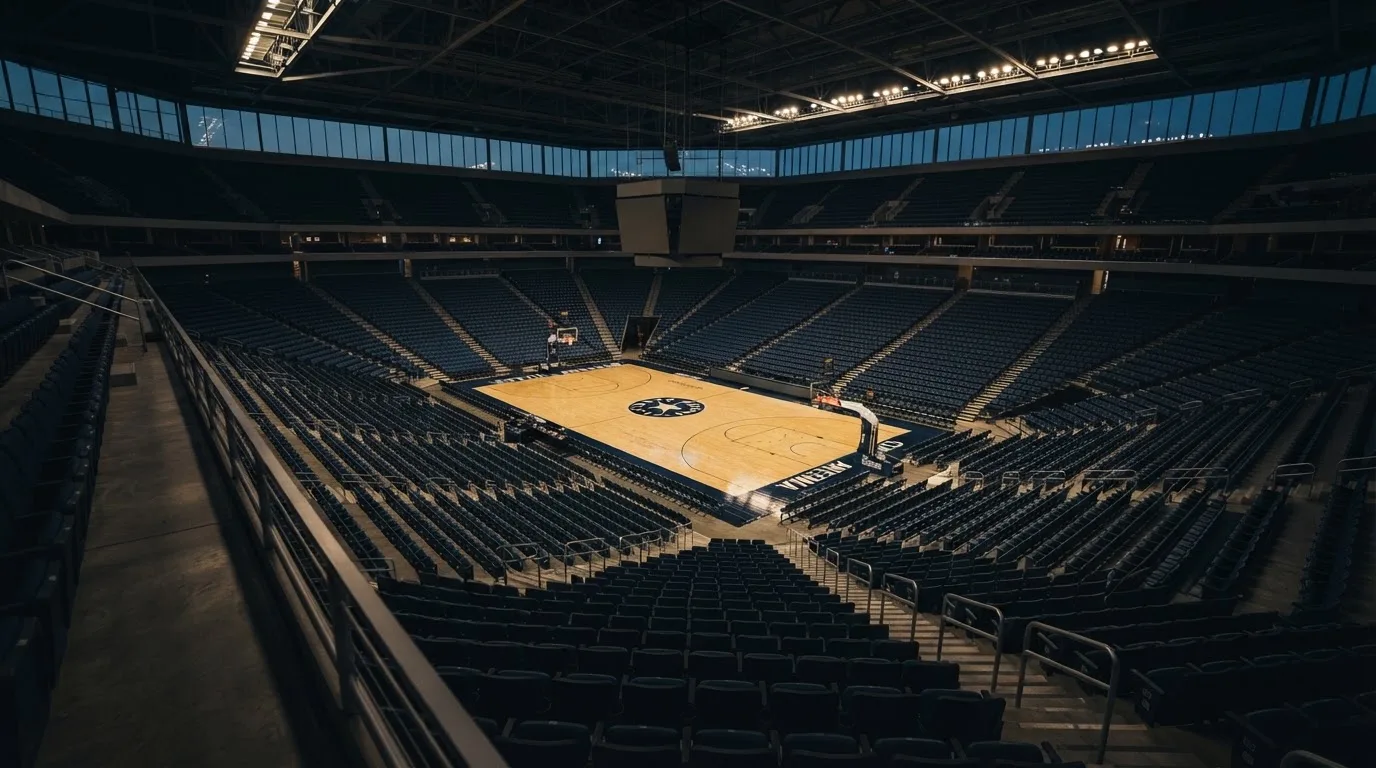
Basketball’s stop-start rhythm makes it the in-play sport most UK bookmakers lead with after football. Quarters end, timeouts come in clusters, free throws bunch around foul trouble — the game breathes in a way football does not, and a price written four seconds before the whistle is rarely the same one a second after it. That rhythm is the entire business model of in-play basketball, and it is where the sharpest readers and the sharpest bookmakers make or give back their edge.
Why basketball is built for live betting
A four-quarter NBA game lasts forty-eight minutes of clock time and routinely runs past two and a half hours of real time. FIBA games are shorter — four ten-minute quarters — but the pattern of stoppages is the same. Each quarter ends with a stoppage, each timeout is a dead ball, and dead balls are when a bookmaker’s algorithm gets a clean look at possessions, fouls and momentum. A market that looked balanced at tip-off can be wrong by the second quarter once a star picks up two fouls and sits. The price adjusts within seconds.
The shape of the in-play market on basketball follows the same four families as the pre-match one: moneyline, point spread, total, and player props — but the cadence is faster and the lines are tighter. A bookmaker does not want to leave a stale price showing for ten seconds when a star sits down with an injury, and a punter who spots the stale price first has a brief, repeatable window.

How a bookmaker protects itself during a live game
The same mechanism that lets a price adjust also lets the bookmaker suspend the market. Three triggers matter. First, a free-throw sequence — prices freeze until the second shot is taken, because a make and a miss change the scoreboard the same way a field goal does. Second, a foul investigation or replay review — the market sits until the officials signal their decision. Third, a timeout that looks like it might be an injury timeout — the market pauses while the medical staff comes on. In each case the punter’s bet, if placed before suspension, stands; a bet attempted during suspension is rejected. The operator’s primary obligation here is to maintain a fair market, reflecting only valid on-court outcomes.
Cash out, partial cash out and the price of leaving early
Cash out is the bookmaker’s offer to buy a bet back from the punter before the event settles. The offered amount is the bookmaker’s current view of the bet’s value, less a margin of its own — a margin that is usually wider than the pre-match or in-play price on the same selection, because the operator is pricing the uncertainty of settlement alongside the uncertainty of the event. A punter who cashes out a £10 pre-match bet at 2.00 when the live moneyline on the same team has moved to 1.50 will not be offered £15; the offered figure will sit a few pounds below the implied mid-price, because the bookmaker wants its cut for taking the other side.
Partial cash out lets the punter settle part of the stake and let the rest ride. The arithmetic is the same applied to the proportion taken. A bet that has moved firmly into profit and a bet that has drifted firmly into loss are both candidates for a partial take; the operator’s calculation does not change. What changes is that the punter has locked in some return and is still exposed to the rest of the game.
In-play strategy that survives the margin
Three rules hold up across most UK books. First, the margin on in-play prices is wider than on the equivalent pre-match price, and the wider wedge is the bookmaker’s fee for letting the punter leave early. Second, the live line on a total (over/under) is the easiest to read with the scoreboard — a quarter that has averaged 56 points over the season is now 32 with four minutes to play, and the live total reflects that gap quickly. Third, a player prop — points, rebounds, assists for one player — moves more slowly than a team total, because the data feed takes longer to update and the model has more uncertainty to absorb. The punter who spots the stale player prop first has a real, repeatable edge; the punter who reacts fastest to the scoreboard on a team total is competing against a model that has already reacted.
Predictions, tips and the bankroll behind them
Basketball attracts more tipsters per fixture than any sport other than football, and the tipster’s product is a forecast dressed as certainty. The honest framing is that a forecast is a probability dressed as a tip, and the punter’s job is to find the tip whose implied probability beats the bookmaker’s price once the margin is taken out. That framing matters because the marketing word around tips — “expert”, “locked”, “banker” — describes how confidently the tipster is selling, not how likely the outcome is.
What a tip actually says
A tip that names the Lakers -4.5 at 1.91 says three things at once. It says the tipster’s model gives the Lakers a better chance of covering the spread than the price implies. It says the tipster has priced the juice and decided the price is worth taking. It does not say the Lakers will cover, because no tipster can say that — only that the tipster’s probability is higher than the price’s probability. Two of those statements are checkable on the betting slip and the standings; the third is what the punter is paying for.
Why “win” is the wrong question to ask a tipster
Tipsters who claim a win-rate above 55% over a season are either running a tight book on player props, restricting to one league where their model is genuinely good, or not recording the losing weeks honestly. None of those is a problem for the punter who treats tips as one input among several; all of them become a problem for the punter who sizes the stake to the confidence of the tip. A bankroll split across twenty tips, sized flat, survives a cold week. A bankroll sized to one tipster’s “lock of the day” is a bet on the tipster’s bankroll management, not on the game.
A staking plan that survives the variance
Basketball seasons are long — the NBA plays 82 regular-season games per team — and a flat-stake or percentage-bankroll plan is the staking discipline the maths supports. Flat-stake means the same amount on every selection, regardless of how confident the tipster feels; percentage-bankroll means a fixed percentage (one to three per cent is the common band) of the bankroll at the time the bet is placed. Both have the same property: a losing streak trims the bankroll, which trims the next stake, which trims the damage. A progressive staking plan that increases the stake to recover losses is the staking plan the maths does not support, and the bookmaker’s record of suspensions for that pattern is the industry’s quiet verdict on it.
Tipsters the punter can actually check
Three signals cut most of the noise. First, a tipster who publishes the staking plan and the closing line alongside the pick is publishing the work, not the result. Second, a tipster whose record is on an independent verification platform — and whose losing months appear as clearly as the winning ones — is harder to fake. Third, a tipster whose tips span at least one full unit of variance — a season, a tournament, a meaningful stretch of fixtures — has a sample size the maths can speak to. A tipster with two weeks of record and a streak of green is selling hope, and hope is what the margin is built to consume.
Bet types, odds formats and how a basketball price is set
Basketball has more market variety per fixture than most UK sports, and a UK punter who knows the menu can read a betting slip the way a regular reads a wine list. The list below covers the markets a UK bookmaker is most likely to offer on a televised NBA game, with the caveat that the precise menu is the operator’s own and subject to its specific internal house rules.
The four core markets
The moneyline is the straight win bet: pick the team, take the price. The point spread (also called the handicap) gives one team a head start expressed in points; the favourite covers if it wins by more than the spread, the underdog covers if it loses by less or wins outright. The total (over/under) is a bet on the combined score of both teams against a line set by the bookmaker. The three-way moneyline, where a draw is offered separately, is rarer in basketball than in football because basketball has no draws in regulation — overtime settles ties. Most UK books therefore price a two-way moneyline and a separate “includes overtime” line, and the punter should check which one they are buying.
Player and team props
Player props bet on individual performance: points scored, rebounds, assists, three-pointers made, double-doubles, triples. Team props bet on a team total (over/under), a team-specific spread, or a quarter-specific line. Prop markets move more slowly than team totals because the data feed is one step removed from the scoreboard, and that lag is where a prepared punter with a season’s stats in front of them finds the value.
Quarter and half markets
A basketball game has four quarters (or two halves), and each is a self-contained betting event. A first-quarter over/under, a third-quarter spread, a race to twenty points — each is its own market, with its own margin, and a punter who watches the first few minutes of a game can read the pace and pick the line accordingly. These markets are most popular during in-play because they reset at the buzzer.
How decimal odds translate to probability and back
A decimal price of 1.90 says the implied probability is one divided by 1.90, which is 52.6%. A decimal price of 2.50 says the implied probability is one divided by 2.50, which is 40%. The break-even price — the price at which the implied probability equals the true probability — is the price at which the punter neither wins nor loses across many bets at that margin. The arithmetic the rest of this page relies on is published on it: a 1.90 / 1.90 two-way market pays out 1.05 units for every 1.05 units staked across both sides, which is a margin of roughly 5% — that is, the operator keeps about 5p of every pound wagered on that market across a balanced book. This figure is the page’s worked example, and the same calculation applied to wider spreads (1.85 / 1.85) produces a wider margin, and to tighter spreads (1.95 / 1.95) a tighter one. Real NBA lines, taken on the morning of a game, sit in the band around this worked figure depending on the operator, the market and the bookmaker’s view of the fixture.
Reading a fractional price in British form
Fractional odds of 9/10 mean a £10 stake returns £19 (£9 profit plus the £10 stake), which is the same as 1.90 in decimal form. Fractional odds of 1/1 (evens) mean a £1 stake returns £2 (£1 profit plus the £1 stake), which is 2.00 in decimal form. Fractional odds of 5/2 mean a £2 stake returns £7 (£5 profit plus the £2 stake), which is 3.50 in decimal form. UK bookmakers publish fractional odds by default and decimal odds as a click-away option; the prices are the same, the display is different.
Same-game multiples and bet builders
A bet builder is the operator’s tool for combining markets from one event into a single bet. A bet on the Lakers to win, LeBron James to score over 27.5 points, and the total to go under 224.5 is a three-leg bet builder. The price the punter sees is not the sum of the individual prices — it is a new price constructed by the bookmaker from the correlated probabilities. The constructed price is wider in margin than the sum of the individual prices would be on a naive multiplication, because the bookmaker is pricing in the correlation between the legs. A bet builder is therefore more expensive than the same selections priced individually would have been, and that extra cost is the price of the convenience of one slip.
Basketball competitions the UK market covers
Basketball is not a single product for a UK bookmaker; it is a tiered one. The NBA sits at the top with the deepest menu, the tightest margins and the most in-play volume per fixture. The WNBA, the EuroLeague and the main FIBA national-team competitions sit a tier below, with the menu thinner and the lines a touch wider. College basketball and the lower European leagues are offered on the bigger books but rarely with the depth of the NBA menu.
The NBA and WNBA at the top of the menu
The NBA’s 82-game regular season is the backbone of the UK basketball calendar from late October to mid-April, with the playoffs running into June and the Finals settling the title in the same month. Every UK bookmaker on the list below carries the NBA moneyline, spread and total for the televised slate, and most add at least a handful of player props on the bigger names. The WNBA runs from May to October and is offered with the same menu, slightly thinner, on the bigger books. The 82-game regular season is long enough that line movement on a single team can be tracked across weeks, and a punter who reads the closing line carefully has more information to work with than on a one-off fixture.
EuroLeague, EuroCup and the European club calendar
The Turkish Airlines EuroLeague is the top tier of European club basketball and runs from October to May, with the Final Four settling the title in a single weekend. The EuroCup is the second tier and runs alongside it, with a slightly later finish. The Spanish Liga ACB, the Greek Basket League, the Italian Lega Basket Serie A and the German Basketball Bundesliga are offered on the bigger books with the depth depending on the operator. A punter who follows the European game gets a longer calendar — most of these leagues run September to June — and a different rhythm, because the FIBA rules (ten-minute quarters, narrower court, different goaltending rules) change the pace.
FIBA national-team competitions and the Olympic cycle
FIBA’s national-team calendar runs around the NBA calendar by design: the FIBA Basketball World Cup sits in the odd-year window between Olympics, the Olympic tournament runs every four years, and the continental championships (EuroBasket, FIBA AmeriCup, FIBA Asia Cup, FIBA AfroBasket) run on their own cycles. The 2024 Paris Olympics ran the men’s and women’s tournaments with twelve teams each, and 3×3 basketball as a standalone event; the 2028 Los Angeles Games will repeat the format. The next FIBA Basketball World Cup sits in the 2027 window, and the qualification calendar leading into it shapes the national-team fixtures offered by UK books through the next eighteen months.
College basketball and the March Madness window
College basketball — the NCAA’s Division I — runs from November to early April, with the conference tournaments settling the at-large bids and the NCAA Division I Men’s Basketball Tournament (the “March Madness” bracket) running through the first three weeks of April. UK books carry the headline games through March Madness and the bigger conference games outside it; the menu on a mid-week Sun Belt fixture is thinner than on an SEC or Big Ten fixture. The one-market spread, the one-game total and the moneyline are the usual offering; player props are rare outside the tournament.
The British Basketball League and domestic play
The British Basketball League (BBL) sits at the bottom of the UK menu. Coverage is offered on the bigger books for the playoff rounds and the BBL Trophy final, with the regular season on a thinner line. A punter who follows the BBL specifically should expect to read the operator’s market depth before staking, because the line on a mid-week BBL fixture is the operator’s view of a small audience, not a deep market.
The ten licensed UK bookmakers, ranked and reviewed
Ten brands appear on the Gambling Commission’s public register as remote general betting standard licensees operating into Great Britain, and ten brands are the subject of the ranking below. The ordering is this site’s, not the Commission’s, and is built from the menu on basketball specifically — depth of in-play markets, presence of a bet builder, cash-out availability, and the operator’s own published odds range on the NBA moneyline. The licence number and licence-holder name come from the Commission’s public register, checked on 27 October 2026; the operator’s own terms on basketball come from each operator’s site. The table below maps the comparison; the reviews that follow expand on what each line of the table does not say.
Comparison table
| Brand | Licence number and holder | Stance on basketball markets and offers |
|---|---|---|
| William Hill | 039225-R-319373-015 · WHG (International) Limited | Deep NBA menu, BOG on UK and Irish horse racing from 8 AM, cash out and bet builder on the basketball fixture list. |
| Bet Ahoy | 100094-R-341742-003 · Bet Ahoy Ltd | Newer UK-licensed brand carrying the major US leagues, with a sports welcome offer split across a single and an accumulator. |
| Betfair | 039439-R-319330-013 · PPB Counterparty Services Limited | Sportsbook with bet builder, free in-play streams on UK and Irish racing and football, plus a 90 Minute Payout market. |
| Matchbook | 039504-R-319407-024 · Triplebet Limited | Betting exchange with bet builder, multiples and in-play markets; commission structure differs from a sportsbook’s margin. |
| Star Sports | 009177-R-104555-019 · Star Racing Limited | Independent UK bookmaker offering a phone-trader service alongside the app and a market depth tuned to racing and US sports. |
| Dabble | 065677-R-340363-005 · Dabble Sports UK Ltd | Social-led app carrying the major US leagues with a sports welcome offer, minimum-odds rule and seven-day free-bet expiry. |
| QuinnBet | 061011-R-335683-004 · QuinnBet (Gibraltar) Limited | Sportsbook with BOG on UK and Irish racing from 10 AM, capped at £150 per customer per race, plus a deep in-play menu. |
| Spreadex | 008835-R-104580-022 · Spreadex Limited | Combines fixed-odds and spread betting in one app, with cash out, bet builder across fixed odds or spreads, and live streams. |
| Bar One Racing | 056516-R-332750-007 · Bar-One Racing Limited | Irish independent bookmaker rebrand of Bar One Racing, with shops across Ireland and sponsorship ties to several Irish racecourses. |
| BetTom | 064959-R-339314-003 · Bet Tom Limited | Sports welcome offer combining a free-bet refund up to £50 with a matched casino free-spins allocation, on a UK-licensed platform. |
William Hill — depth and breadth on the NBA slate
William Hill’s licence sits with WHG (International) Limited and has been on the Commission’s register for decades; the brand carries the headline US leagues with a deep menu on the televised NBA slate and a competent one on the WNBA, EuroLeague and BBL. The bet builder is present on basketball fixtures, cash out is offered on the moneyline and the bigger spreads, and Best Odds Guaranteed covers UK and Irish horse racing from 8 AM on the day of the race on singles and multiples, but does not apply to ante-post, tote or pari-mutuel bets. For a dedicated basketball fan, this is a long-standing option with the market depth required for season-long engagement.
Bet Ahoy — newer licence, mainstream menu
Bet Ahoy’s licence sits with Bet Ahoy Ltd and the brand carries the major US leagues alongside the usual UK sportsbook menu. The sports welcome offer is structured across a single and an accumulator, which is a deliberate split that nudges the punter toward building a bet from the start rather than picking a straight moneyline. The verdict is that Bet Ahoy is a credible mainstream pick for a punter who likes the structure of the welcome offer and wants a UK-licensed brand with the major US leagues on the slip.
Betfair — sportsbook alongside the exchange
Betfair’s licence sits with PPB Counterparty Services Limited; the sportsbook and the betting exchange sit under related but distinct operations, and both are covered by the Commission’s remote general betting standard licence. The sportsbook offers in-play markets, a bet builder and free live streaming of UK and Irish racing and football inside the app, alongside a 90 Minute Payout market on football. This brand gives a basketball punter two distinct menus: a deep sportsbook for the season’s NBA card, and a separate exchange interface for pricing; the best approach is to use the sportsbook for its streaming and the exchange to hunt for specific odds.
Matchbook — the exchange option
Matchbook’s licence sits with Triplebet Limited and covers both remote general betting standard (real events) and remote betting intermediary — the latter being the licence category for betting exchanges. The product is customers betting against customers rather than against the bookmaker, with a bet builder, multiples and in-play markets, and live streaming of horse racing and greyhounds. The verdict is that the exchange’s commission structure is a different cost from a sportsbook’s margin: lower at the point of bet, paid on net winnings rather than built into every price, but with the liquidity risk that the price the punter wants may not be there when they want it on a smaller basketball fixture.
Star Sports — independent UK bookmaker with a trader on the phone
Star Sports’ licence sits with Star Racing Limited and the brand runs as an independent UK bookmaker with an app and a customer-service line that lets the punter open an account, place a bet or ask a question by speaking to a trader. The basketball menu is offered alongside the racing core, and the verdict is that the phone-trader option suits a punter who likes to place larger stakes on the phone with a name attached rather than through a click, and the licence and the UK-facing customer service are the right shape for a punters who values the human side of the bookmaker.
Dabble — social-led app with a sports welcome offer
Dabble’s licence sits with Dabble Sports UK Ltd and the app is built around a social feed alongside the sportsbook menu. The sports welcome offer is a sports free-bet allocation on a first deposit with a minimum-odds rule, a seven-day free bet expiry and the stake not returned on a winning free bet. The social-led interface is a distinct experience: not every punter wants a feed of others’ picks, but for those who do, it is a highly tailored UK-licensed environment.
QuinnBet — sportsbook with a BOG and a deep in-play menu
QuinnBet’s licence sits with QuinnBet (Gibraltar) Limited and the brand carries the major US leagues with a sportsbook menu that includes in-play markets and a bet builder. Best Odds Guaranteed applies to UK and Irish horse racing from 10 AM daily on singles, multiples and system bets, with a maximum benefit of £150 per customer per race. The in-play NBA and EuroLeague menus are the primary appeal here, though the £150 cap on BOG benefits should be noted by anyone prioritising that specific offer.
Spreadex — fixed odds and spread betting under one roof
Spreadex’s licence sits with Spreadex Limited and the brand combines fixed-odds and spread betting in one app, with one-click, auto and partial cash out, a bet builder that works across fixed odds or spreads, and live streaming of UK and Irish horse racing, greyhounds, tennis, NFL and selected football. The brand is also regulated by the FCA for spread betting, and the brand’s own terms state that spread betting losses can exceed the deposit. Fixed-odds basketball is available, but the real distinction is the spread offering; a punter curious about this side of the app should familiarise themselves with the separate risk profile and licence-condition regime governing it.
Bar One Racing — Irish independent with a UK remote licence
Bar One Racing’s licence sits with Bar-One Racing Limited and the brand has rebranded to BAR 1 Betting, an Irish independent with shops across Ireland and horse-racing sponsorships at Dundalk, Fairyhouse, Navan, The Curragh, Curraheen Park and Cork. This is a racing-first brand; while basketball is listed, the depth for NBA fixtures is secondary to its Irish racing coverage, making it better suited for the racing enthusiast who occasionally plays a side bet.
BetTom — sportsbook with a sports-and-casino welcome split
BetTom’s licence sits with Bet Tom Limited and the sports welcome offer is structured as a 50% back as a free bet up to £50 with a parallel 50% back up to £50 as free slot funds for casino play. The split is the offer’s defining feature, and the verdict is that a basketball punter who also plays the casino will find the parallel allocation useful; a basketball-only punter is paying for the casino half of the welcome package in the headline figure and may prefer one of the sports-only alternatives on this list.
What basketball betting is in Great Britain
Basketball as a betting product in Great Britain runs through the Gambling Commission’s remote general betting standard (real events) licence category, which every brand on this list holds. The product is the bookmaker’s; the licence is the legal frame; the punter is the customer. Three things are worth being precise about before any of the rest of this guide lands properly.
The sport itself, briefly
Basketball was invented by James Naismith in 1891 in Springfield, Massachusetts, with the first game dated 21 December 1891. Each team has five players on court at a time, with unlimited substitutions during stoppages. A field goal is worth 2 points, or 3 from beyond the three-point line, and a free throw is worth 1 point. NBA games consist of four 12-minute quarters, while FIBA games consist of four 10-minute quarters; overtime periods last five minutes. The basketball rim is 10 feet (3.05 m) above the court at almost all levels of competition. Men’s basketball was first included at the 1936 Berlin Olympics and women’s in 1976; 3×3 basketball has been an Olympic event since 2020. The whole pyramid of the sport sits inside those few numbers — five players, ten feet, twelve or ten minutes a quarter, and a sport that has been played at the Olympics for nearly ninety years.
Why UK basketball betting runs the way it does
There is no statutory list of permitted sports or markets in Great Britain. A bookmaker serving customers in Great Britain needs a Gambling Commission licence wherever it is based, and the Commission’s public register is the whole test of who holds one. The menu on a basketball fixture — the markets offered, the depth of in-play, the presence of player props — is the operator’s call, made under its licence conditions and codes of practice, and the punter’s recourse on a disputed settlement is the Commission’s complaints route and an approved alternative dispute resolution body. That frame is what the rest of this page assumes.
What a UK punter can and cannot bet on
GB-licensed bookmakers offer the NBA, the WNBA, the EuroLeague, the EuroCup, the Spanish Liga ACB, the Italian Lega Basket Serie A, the Greek Basket League, the German Basketball Bundesliga and a thinning selection of other European and Asian leagues, alongside the FIBA national-team competitions and the Olympic cycle. Esports basketball (the NBA 2K League and the FIBA esport competitions) is offered under the same real-events licence category. Virtual basketball — a simulated product with a fixed result cadence — sits under the separate remote general betting standard (virtual events) licence category, and a punter should check which licence category the operator holds before assuming the two products sit under the same duty regime.
The legal frame around a basketball bet
UK basketball betting is regulated by the Gambling Commission under the Gambling Act 2005, which covers Great Britain (England, Scotland and Wales). Northern Ireland is outside the 2005 Act and has its own older law, so a “GB-licensed” brand serves customers in Great Britain but not in Northern Ireland under this Act alone. The Commission’s public register is searchable by business name, trading name, domain or account number, and is the whole test of whether a brand holds a licence — no count of licensed operators should be quoted without its access date.
Licence categories that matter for basketball
Three categories of remote licence cover the products a basketball punter is most likely to use. Remote general betting standard (real events) covers the NBA, the WNBA, the European leagues and the FIBA competitions. Remote general betting standard (virtual events) covers simulated basketball and other virtual products. Remote betting intermediary covers betting exchanges, which is the licence category Matchbook holds alongside its standard real-events licence. A betting exchange lets customers back and lay selections against each other rather than against the bookmaker, and the commission on net winnings replaces a sportsbook’s margin as the operator’s fee.
Identity, age and the no-anonymity rule
UK-licensed bookmakers verify name, address and date of birth before a customer can deposit or gamble, including with a free bet or bonus — the rule has been in force since 7 May 2019. The minimum age is 18. The implication for a basketball punter is that no GB-licensed site offers anonymous play; the credit-card ban (since 14 April 2020, LCCP condition 6.1.2) closes off credit-funded payments including through e-wallets. Debit cards and bank-based payments are not covered by the credit-card ban, and crypto deposits are not established as a permitted or banned payment type at licensed operators — describe payments qualitatively and from each operator’s own terms.
Tax, duty and what the punter pays
The player pays no tax on betting winnings in Great Britain (general information, not tax advice; a professional gambler should ask HMRC or an adviser). General Betting Duty is the operator’s tax on gross profits, currently 15%; from 1 April 2027 a new remote betting rate of 25% applies within it, while remote bets on UK horse racing, bets on self-service betting terminals in licensed premises, pool betting and in-person betting stay at 15%. Spread betting has its own rates (3% financial, 10% other). Until 1 April 2027 the remote rate stays at 15%; whether operators pass duty on through odds is not established, and a punter should never assume the duty is added on top of the displayed price.
What changes when a brand is unlicensed
A bookmaker serving customers in Great Britain without the licence the Gambling Act 2005 requires commits an offence under section 33 of the Act — on summary conviction up to 51 weeks’ imprisonment, a fine up to level 5, or both; six months in Scotland. No offence aimed at a customer who merely bets on an unlicensed site was found. The loss of protection is the issue: no GAMSTOP coverage, no Commission complaints route, no approved dispute-resolution body, no British consumer redress if funds are withheld, not bound by the 10x bonus cap or the £150 vulnerability check. Enforcement against unlicensed operators runs through cease-and-desist notices, search-engine referrals, work with registrars, hosts and payment providers, and court-order DNS blocking powers the Commission has been given or is about to receive — ISP blocking is not in operation. The honest framing is that licensed operators run checks, limits, GAMSTOP coverage and a bonus cap, alongside verification before the first bet; unlicensed operators offer none of those protections and the punter bears the credit risk on funds held with the operator.
Responsible gambling, player protection and the boundaries of a basketball bet
UK basketball betting runs through a tighter player-protection regime than most markets the punter is likely to use. Five rules cover most of the ground a basketball punter will meet, and each is the operator’s licence-condition duty, not the punter’s contractual right to ask for.
GAMSTOP, the national self-exclusion scheme
GAMSTOP is the national multi-operator online self-exclusion scheme and a mandatory licence condition for online operators since 31 March 2020. Self-exclusion periods are six months, one year, five years, or five years with auto-renewal. After the minimum period the exclusion stays in place for a further seven years unless the customer asks GAMSTOP to remove it. GAMSTOP covers online sites and apps; betting shops use a separate service. A punter who has self-excluded through GAMSTOP is excluded from every GB-licensed online operator for the chosen period, and a bookmaker that accepts a self-excluded customer commits a licence-condition breach.
Financial vulnerability checks, deposit limits and affordability
The financial vulnerability check (LCCP condition 3.4.4, in force since 30 August 2024) applies to licensed remote betting when a customer’s deposits minus withdrawals exceed £150 in a rolling 30 days (since 28 February 2025). The check is a public-record check (for example bankruptcy or county court judgments), not an income check and not a credit reference check. Financial risk assessments — the “affordability checks” of the press — have been announced in a staged plan (Commission article of 7 July 2026), with no start date, and should be written as “announced, staged, no start date” rather than as a current requirement. Deposit limits (RTS 12): operators must offer a gross deposit limit on a fixed time frame; the first changes have applied since 31 October 2025, a second phase was postponed to 30 September 2026, and whether it is live is not established. There is no state-set deposit or loss ceiling for betting: limits are the customer’s choice.
Bonuses, wagering requirements and the 10x cap
Wagering requirements on bonuses are capped at 10x (a £10 bonus at 50x needs £500 of bets; under the cap no more than £100), and mixed-product promotions — an offer that requires gambling on two or more product types such as betting, casino, bingo and lottery — are banned. The cap has been in force since 19 January 2026. Whether the cap applies to free bets with no wagering condition, and any cap on the money value of a bonus, are not established. A basketball punter reading a welcome offer should expect the 10x cap to govern any bonus with a wagering requirement and to expect no mixed-product structure on a UK-licensed platform.
Advertising rules and what a basketball punter will not see
The “whistle-to-whistle” industry code (since 1 August 2019) keeps betting advertisements off UK television from five minutes before a live sporting event to five minutes after it, before the 9 PM watershed; horse and greyhound racing are excluded. The Premier League clubs’ withdrawal of gambling sponsorship from the front of matchday shirts (from 2026/27; sleeves and hoardings remain) is a voluntary club decision, not a statute. CAP Code section 16 sets the marketing-content rules: marketing must be socially responsible, must not be of strong appeal to under-18s, and no one who is or seems to be under 25 may be featured gambling or play a significant role (with an exception for marketing placed where a bet can be made directly) — the rule concerns who may appear in the advertisement, not who may bet.
Help, helplines and the off-ramps
GamCare runs the National Gambling Helpline. GambleAware funds treatment and education. NHS gambling clinics run in several regions. Gamblers Anonymous runs peer-support meetings. A basketball punter whose betting is drifting past the bankroll they can afford should treat these as the off-ramps the regulator built, alongside the GAMSTOP self-exclusion and the deposit limits the punter can switch on inside any licensed operator’s safer-gambling page.
Crypto, anonymity and where they intersect with basketball betting
The crypto angle on basketball betting runs through two distinct products, and they should not be confused. The first is a UK-licensed sportsbook that accepts a cryptocurrency deposit and pays out in the same or another cryptocurrency, settling bets on real basketball events under a remote general betting standard (real events) licence. The second is an offshore or unlicensed operator running on a blockchain ledger, settling bets on real or simulated basketball, with no Commission licence and none of the player-protection regime described above.
What a UK-licensed crypto deposit looks like
GB-licensed bookmakers set their own payment-method list under their licence conditions and the money-laundering rules. A cryptocurrency deposit at a licensed operator is processed through the operator’s payment provider, converted to sterling at the point of deposit, and held in the operator’s customer funds account under the same segregation rules that apply to a debit-card deposit. The deposit and the bet are visible to the operator, the operator’s identity verification stands, and the punter is protected by the same licence-condition regime as a debit-card customer. Whether a particular licensed operator accepts a cryptocurrency deposit is the operator’s call, and a punter should check the payment-method list on the operator’s site before assuming.
What an unlicensed crypto basketball site looks like
A basketball betting site that markets crypto deposits and anonymity, holds no Commission licence, and settles bets on real basketball events operates outside the UK frame. The punter has no GAMSTOP coverage, no Commission complaints route, no approved dispute-resolution body, and no British consumer redress if funds are withheld. The bookmaker may run on a smart-contract-based ledger that pays out without the operator’s involvement, but the smart contract is only as good as the oracle that feeds it the result of the contest, and the punter is the one bearing the credit risk on the funds held with the operator. The honest framing is that unlicensed crypto basketball is not the “safe choice” because it is anonymous, and licensed crypto deposits are not unsafe because they pass through identity verification — both products carry the risks their design carries, and the punter’s decision is which set of risks they prefer to bear.
Why the anonymity question matters for a basketball bet
The identity-verification rule has been in force since 7 May 2019: a UK-licensed bookmaker verifies name, address and date of birth before a customer can deposit or gamble, including with a free bet or bonus. A punter who wants anonymity on a basketball bet has no route through a GB-licensed operator, and an offshore operator that offers anonymity is offering the absence of the GB-licensed operator’s player-protection regime alongside the absence of name verification. The trade-off is the punter’s to make, and the trade-off is the question.
Bonuses, free bets and what they cost a basketball punter
A welcome offer on a UK-licensed basketball book is one of three shapes, and each carries a different arithmetic. The first is a sports free-bet allocation on a first deposit, with a stake-not-returned rule and a minimum-odds rule. The second is a refund-as-free-bet on a first bet, with the stake returned only as a free bet if the bet loses and not at all if it wins. The third is a deposit-gated package with a parallel casino allocation, where the casino half is governed by the mixed-product ban (since 19 January 2026) and the sports half is governed by the 10x wagering cap.
A free bet is not a refund
A “Bet £10, Get £10 in Free Bets” offer gives the punter £10 of free-bet stake after the £10 qualifying bet is settled, regardless of whether the qualifying bet wins. The free-bet stake is not returned on a winning free bet: a £10 free bet at 2.00 pays £20 (£10 winnings plus £0 stake), not £30. The arithmetic on what a free bet is worth on average is the calculation a punter should run before claiming: at a fixed input, the value of a free bet whose stake is not paid back is the free-bet amount multiplied by the price minus one, divided by the price, multiplied by the payout share of the market — which is what it is worth on average, not what it wins.
A refund-as-free-bet is a worse bet
A 50% back as a free bet up to £50 gives the punter up to £50 of free-bet stake if the first bet loses, and nothing if it wins. The shape is a hedge: the punter has effectively placed the first bet for free if it loses, but has paid full stake if it wins. The arithmetic is the same as the free-bet case, with the qualifying bet as the cost. The free bet’s value is the same formula applied to the same price, and the punter who treats the offer as a free half-bet is treating it correctly.
The 10x wagering cap and what it does to a bonus
A bonus with a 10x wagering requirement needs £100 of qualifying bets to release a £10 bonus. The qualifying bets must be at or above the minimum price the operator names (commonly 1.50 or 1.80 in decimal). The punter’s expected cost of clearing the bonus is the turnover multiplied by the margin of the market the qualifying bets are placed on — which is what clearing the offer costs on average, never what it wins. The 10x cap, in force since 19 January 2026, is the licence-condition ceiling on this kind of bonus.
Reading the small print on a basketball welcome offer
Four clauses cover most of what a basketball punter needs to check. The minimum odds on the qualifying bet (commonly 1.50 to 2.00 in decimal). The expiry on the free bet (commonly seven to thirty days). The stake-not-returned rule (almost always yes on a UK-licensed free bet). The payment-method exclusions (some offers exclude deposits via Skrill, Neteller or specific e-wallets). A punter who reads those four clauses has read the offer; a punter who reads only the headline has not.
The mobile app question for basketball betting
Basketball betting on a UK-licensed platform runs through three delivery modes: a mobile app, a mobile browser site, and a desktop site. The mobile app is the dominant one for the younger end of the customer base and the dominant one for in-play betting, where the punter is on a handset and the bookmaker’s app is closer to the punter’s thumb than a browser tab.
What a basketball app needs to do well
Four features separate a competent basketball app from a poor one. First, the in-play menu needs to be one tap away from the home screen — basketball’s stop-start rhythm punishes an app that buries the live tab. Second, the bet builder needs to combine markets from one fixture without forcing the punter back to the main market list. Third, the cash-out button needs to be one tap from the open bet, and the partial cash-out slider needs to be readable on a phone screen. Fourth, the streaming tab — for the books that carry it — needs to load without dropping the bet slip. Each of these is a separate product decision on the operator’s side, and a punter who uses an app for in-play betting regularly will judge the app on those four features before judging anything else.
App store ratings as a signal, not a verdict
The App Store ratings and reviews on a UK-licensed basketball app are a signal of the polish of the product, the speed of the customer-service response, and the frequency of updates. They are not a verdict on the licence, the player-protection regime or the depth of the basketball menu. A five-star app from an unlicensed operator is a five-star app outside the Commission’s frame; a three-star app from a Commission-licensed operator is a three-star app inside it. The punter’s job is to read the licence first and the rating second.
Browser betting versus the app
A browser-based bet on a basketball fixture is the same bet as an app-based bet on the same fixture — the price is the operator’s, the licence-condition regime is the same, the settlement goes through the same back-end. The browser path suits a punter who bets occasionally, on a desktop, or on a shared device where installing an app is not appropriate. The app path suits a punter who bets in-play, follows a season-long NBA bankroll, or wants the streaming and cash-out ergonomics a well-built app offers.
How the basketball margin is built, and what it costs
The margin is the operator’s cut on a market, and the arithmetic is the same regardless of the sport. The formula is the page’s worked example, derived once and applied to the markets that recur through this guide.
The worked example
Take an illustrative two-way market priced at 1.90 on each side (fractional 9/10). The implied probability on each side is one divided by 1.90, which is 52.6%. Add the two implied probabilities and you get 1.0526. The 1.0000 dollars of expected payout per dollar wagered sits inside the 1.0526 dollars of stake that would have to be placed on a perfectly balanced book to cover both sides. The payout share is 1 divided by 1.0526, which is 95.0%. The margin is 1 minus the payout share, which is 5.0%. A punter who bets £10 on each side of this market — £10 on side A at 1.90 and £10 on side B at 1.90 — receives £19 back regardless of which side wins, having staked £20. The £1 difference is the operator’s margin, which is 5p on every pound wagered on this market across a balanced book.
What the same example looks like at different prices
Tighten the prices to 1.95 / 1.95. The implied probability on each is one divided by 1.95, which is 51.3%. The sum is 1.0256, the payout share is 97.5%, and the margin is 2.5%. Widen the prices to 1.85 / 1.85. The implied probability on each is one divided by 1.85, which is 54.1%. The sum is 1.0811, the payout share is 92.5%, and the margin is 7.5%. The margin moves with the spread: tighter prices mean a thinner margin; wider prices mean a fatter one. Real NBA lines, taken on the morning of a game, sit in the band around this worked figure depending on the operator, the market and the bookmaker’s view of the fixture — generally a few per cent either side of the 5% example above, with player props and exotic markets wider than the moneyline.
Why this calculation matters for the rest of the page
The free-bet value on a £10 free bet at 2.00 with a 95% payout share is the £10 amount multiplied by (2.00 minus 1) divided by 2.00, multiplied by 95% — which is £4.75 of expected value on the free bet. The expected cost of clearing a £10 bonus with a 10x wagering requirement at a 5% market margin is the £100 of turnover multiplied by 5%, which is £5 of expected cost. Both calculations depend on the margin number above, and both tell the punter what the offer is worth in expected terms — never what it wins.
How a punter uses the margin in practice
A punter who reads a closing line and sees a price of 1.91 (instead of 1.90) on the side they want is reading a price that implies a probability of 52.4%, against the bookmaker’s view that the probability is closer to the implied 52.6% on the old line. The 0.2 percentage-point difference is the punter’s edge if their model is right — and the difference disappears the moment the line moves, as it usually does. The punter who reads margin as a permanent edge rather than a window reads it wrongly. The margin is the operator’s fee for offering the market; the punter’s edge is what sits inside the fee for the brief window the line is mispriced.
Frequently asked questions about basketball betting odds
How is a basketball bet placed from start to finish?
A UK punter opens an account with a Gambling Commission-licensed bookmaker, verifies name, address and date of birth (the operator’s licence-condition duty since 7 May 2019), deposits via debit card or another accepted payment method (credit cards are banned for gambling in Great Britain since 14 April 2020), and selects a market from the basketball fixture list — moneyline, point spread, total or a player prop — at a decimal or fractional price. The bet is recorded on the operator’s system and settles on the result of the contest after the game finishes. A free bet or bonus follows the operator’s published terms, including minimum odds, expiry and the stake-not-returned rule.
How does a basketball moneyline differ from a point spread bet?
A moneyline bets on which team wins the game outright, with the price reflecting the bookmaker’s view of each team’s chance. A point spread bet gives one team a head start expressed in points; the favourite covers if it wins by more than the spread, the underdog covers if it loses by less or wins outright. The two markets use the same operator and the same settlement engine, but the punter’s question is different: the moneyline asks who wins, and the spread asks who wins by how much.
What does a punter need to know before expecting to win at basketball betting?
Basketball is a high-variance sport for a punter: the NBA plays 82 regular-season games per team, the bookmaker’s margin compounds across every bet, and a model that picks 55% winners at 1.90 prices is a model that turns a small edge into a small profit over a season — not a model that wins every week. The arithmetic is the same as for any other sport: pick a market whose margin is thin, size the stake as a flat percentage of the bankroll, and let the season’s volume do the work. No model can guarantee a win on any single bet, and any tipster who claims one is selling something the maths cannot deliver.
How can a bookmaker’s Gambling Commission licence be checked?
The Commission’s public register is searchable by business name, trading name, domain or account number, and is the whole test of whether a brand holds a licence. The punter should look for a remote general betting standard (real events) licence category, check the licence-holder name matches the brand of the site they are looking at, and note the access date on the search — the register is updated continuously. A brand whose domain is listed but whose licence-holder name does not match is a brand the punter should ask the operator about before depositing.
How is the return on a basketball bet worked out?
For decimal odds, the return is the stake multiplied by the price; the net profit is the stake multiplied by the price minus one. A £10 bet at 1.90 returns £19, with £9 of net profit. For a combination bet (an accumulator or a bet builder), the prices of the legs multiply into one price, and the return is the stake multiplied by the multiplied price. A £10 four-leg accumulator at 2.00 / 2.00 / 2.00 / 2.00 has a multiplied price of 16.00, returns £160 on a win, and loses £10 on any leg that misses.
What is a bookmaker’s margin and how can it be seen in the odds?
A bookmaker’s margin is the cut the operator keeps of every pound wagered on a market across a balanced book. The margin is the sum of the implied probabilities of all outcomes minus 1: on a two-way market priced at 1.90 / 1.90, the sum is 1.0526 and the margin is 5.0%; on a three-way football market priced at 2.50 / 3.50 / 2.70, the sum is 0.400 + 0.286 + 0.370 = 1.056 and the margin is 5.6%. A tighter set of prices means a thinner margin and a better deal for the punter; a wider set means a fatter margin and a worse one. The margin is the bookmaker’s fee for offering the market, and reading it is the single most useful habit a basketball punter can build.
US & other team sports – Darts betting
Content created by the «Darts betting» team
