
Sports Betting Apps UK 2026: What Each One Really Costs the Punter
 Available in US
The data in this comparison is current as of 27 October 2026 and was checked against the Gambling Commission’s public register, the operators’ own UK sites, and the GB App Store listings. Prices, margins and promotion terms change often; a number on this page carries a snapshot date the section names.
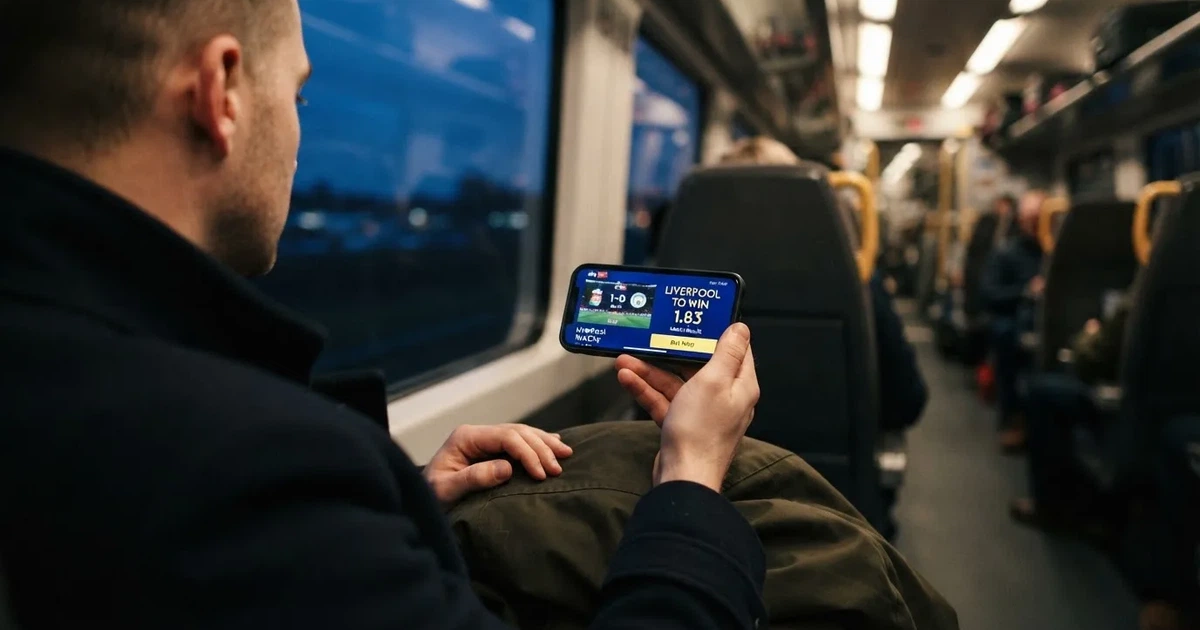
A licensed betting app in Great Britain looks the same on the home screen. Ten brands will sit there, all promising live odds, a price boost, an acca builder, maybe a “free” welcome offer. The differences live in the fine print: how much of your stake the operator keeps on every market, how long the bonus takes to clear, whether you can withdraw to your bank in two hours or two working days, and which safer-gambling tool actually fires before the damage is done. The whole point of an app comparison is to surface those differences. This one does so from the punter’s side of the counter, with the focus on what each product costs the person installing it.
Statute and jurisdiction: who is allowed to take your bet
Any bookmaker serving customers in Great Britain needs an operating licence from the Gambling Commission, regardless of where the company is based. The Gambling (Licensing and Advertising) Act 2014 closed the “white-list” loophole; before 2014 an operator licensed in another jurisdiction could advertise into Britain without holding a Commission licence of its own. After the 2014 Act, with sections 33 and 36 of the Gambling Act 2005 as amended, the licence is required at the point of consumption. A Curaçao, Malta or Gibraltar licence, on its own, is no longer a route to British customers.

The Commission is a non-departmental public body sponsored by the Department for Culture, Media and Sport, and the register it publishes lists every operator that holds one. The register is searchable by business name, trading name, domain or account number, and a brand’s entry shows which licence categories it holds: remote general betting standard (real events), remote general betting standard (virtual events), remote general betting limited, remote pool betting, or remote betting intermediary for exchanges. The trading name and the licence holder can sit in different places, and several consumer brands can share one licence. Ladbrokes and Coral, for instance, are run by LC International Limited, and Betfair and Paddy Power sit under another Flutter subsidiary; treat them as parts of a group, not as independent outfits.
A separate regime covers Northern Ireland, which is outside the Gambling Act 2005 and keeps its own older law. This comparison is written for Great Britain (England, Scotland and Wales). A GB licence is not a Northern Irish licence and the register does not cover bets placed from there.
What the licence requires of the app
The Gambling Act’s operating licence and the Licence Conditions and Codes of Practice (LCCP) bind the app in the same way they bind the website. The minimum age is 18. The app cannot accept a deposit or place a bet until the operator has verified the customer’s name, address and date of birth; this has been the case since 7 May 2019 and it covers free bets and bonuses too, which is why the small print on a “no deposit” offer still asks for card details. There is no anonymous play at a licensed site.

Credit cards were banned for gambling in Great Britain on 14 April 2020 (LCCP condition 6.1.2). The ban reaches credit-card-funded payments through an e-wallet as well as direct card use, so even a deposit to a wallet funded from a credit card is blocked. Debit cards, bank transfers and most e-wallets are unaffected.
In-play betting is allowed and the controls are the operator’s licence conditions plus its social responsibility duties, not a separate statute. Esports are treated like any other event. Virtual events are a separate licence category. Politics, TV and novelty markets are offered by GB bookmakers and no statutory prohibition was found. Pool betting on horse and dog racing sits under a different licence and a different tax band. There is no statutory cap on stake sizes, so the maximum a customer can bet is the operator’s own house limit, which can be raised or lowered at the operator’s discretion.
What the licence does for the customer
A GB-licensed app is signed up to GAMSTOP, the multi-operator self-exclusion scheme, and that is a condition of the remote licence rather than a voluntary extra. Exclusions are six months, one year, five years, or five years with auto-renewal, and after the minimum period the exclusion stays in place for a further seven years unless the customer asks GAMSTOP to remove it. The scheme covers online sites and apps; betting shops run their own system.
Two newer obligations are worth understanding. The financial vulnerability check (LCCP condition 3.4.4, in force from 30 August 2024) runs a public-record search when a customer’s net deposits cross £150 in a rolling 30 days (the £150 trigger has applied since 28 February 2025). It is not an income check and not a credit reference check; it flags things like a bankruptcy order or an unpaid county court judgment. A second stage, the financial risk assessment sometimes called the “affordability check” in the press, was announced in a Commission article dated 7 July 2026 as a staged plan with no start date. Whether it is in force, and at what threshold, are not established facts and the page treats them as such.
A separate change concerns deposit limits. Operators must offer a gross deposit limit on a fixed time frame (RTS 12); the first changes have applied since 31 October 2025, a second phase was postponed to 30 September 2026, and whether it is live on the apps compared below is not established from the register or the operators’ own pages. The cap itself is set by the customer, not by the regulator.
What falls outside the licence
An app that does not hold a Commission licence and still takes bets from British customers is committing an offence under section 33 of the Gambling Act 2005. The offence is aimed at the operator (up to 51 weeks’ imprisonment, a fine up to level 5, or both; six months in Scotland on summary conviction). No offence aimed at a customer who merely bets on an unlicensed site was found in the statute. What the customer loses, plainly, is the entire set of protections: no GAMSTOP coverage, no complaints route to the Commission, no approved alternative dispute resolution, no recourse if the operator withholds funds, and no obligation on the operator to honour the 10x bonus wagering cap or the £150 vulnerability check.
Enforcement is disruption rather than blocking: cease-and-desist notices, search-engine referrals, work with registrars, payment providers and hosting companies. The Commission has been given, or is about to receive, court-order DNS blocking powers, but the powers are not in general operation; the comparison does not write “ISP blocking is live”.
The honest framing is symmetrical. A licensed app comes with identity checks, deposit limits, GAMSTOP, the bonus cap, and approved dispute resolution. An unlicensed app offers none of those, and a customer who is owed winnings by an unlicensed brand has very limited ways of getting them back. Neither side is “the safe choice” by default; both are choices with consequences named.
Safer gambling: the tools the app has to offer
GAMSTOP is the headline, but it is not the whole picture. The LCCP social responsibility code obliges every licensed operator to put a set of tools inside the app, in a place the customer can find without searching. Each one has a cost on the punter’s side, and the better operators make the costs obvious in advance; the worse ones make them obvious afterwards.
Deposit limits are the easiest. A customer sets a ceiling on deposits over a chosen period, the app enforces it without an override, and the ceiling does not revert on its own. Time-outs are shorter, from 24 hours to several weeks, and self-exclusion is the longer version. Reality checks are pop-ups that tell the punter how long the session has been running and what the net position looks like; some apps have them on by default, others hide them under a menu. Product restrictions let the customer block casino, slots or specific markets while keeping the sportsbook open, and the operator can also apply them if a vulnerability check flags a problem.
Outside the app, GamCare runs the National Gambling Helpline, GambleAware funds treatment and education, the NHS runs a network of gambling clinics, and Gamblers Anonymous runs peer-support meetings. The bigger apps (Unibet, William Hill, bet365) link to most of these from the safer-gambling page; smaller brands often link to one or two. The link is the easy part. The harder part is whether the in-app tool actually fires — whether the time-out takes effect immediately, whether the deposit limit can be raised without a cooling-off period, whether the self-exclusion extends to sister brands under the same group licence. A punter who plans to use the tools should check that the answers in the app’s terms match the answers a phone call to support produces.
Who pays when the limit hits
The cost of a deposit limit is the punter’s lost upside on a winning day; the saving is the absence of a losing one. The cost of a self-exclusion is the loss of the whole account while the exclusion is in place. A punter who excludes for five years then asks to come back faces a further seven-year cooling-off and a fresh identity check. The cost of GAMSTOP itself is the same logic at greater scale: opting in closes every GB-licensed app in one move, with no per-brand opt-out.
These are not things a comparison table can rank. A punter with a gambling problem should not be reading this page at all; the help lines are at the bottom of the section. A punter without one should still know that the tools exist, where to find them, and which operators apply them rigorously.
Crypto and anonymity: what a GB-licensed app will and will not accept
No GB-licensed betting app accepts cryptocurrency. That is the short answer. The reason is upstream of the operator’s preference: identity verification before the first deposit (since 7 May 2019) and the source-of-funds checks that come with it are incompatible with a wallet-to-wallet transfer from a self-custody address, and the credit-card ban reaches crypto-funded e-wallet deposits too because the funding source is the question that decides the rule.
A British punter who wants to bet with Bitcoin or another cryptocurrency has, in practice, three routes. The first is an exchange licensed for gambling in another jurisdiction, where the same protections the Gambling Commission enforces are not in place. The second is a peer-to-peer prediction market operating outside the GB regulatory perimeter, where the bet is settled on-chain and the operator’s role is thin. The third is to fund a normal GB-licensed account from a UK bank account in pounds, which is what the licensed apps in this comparison are designed to do.
Anonymity in the strict sense does not exist at a GB-licensed operator. Name, address and date of birth are verified before the first bet; at higher spend the operator will ask where the money comes from; the financial vulnerability check (LCCP 3.4.4) runs a public-record search at net deposits above £150 in a rolling 30 days. A punter who wants to bet without revealing identity has chosen the unlicensed route, with the consequences set out in the section on statute.
There is one edge case. Some GB-licensed e-wallet operators will allow funding from a card or bank account, then a withdrawal to a different card or account, with the source-of-funds check on the deposit side. This is not anonymity, and it does not change the credit-card position: a credit-card-funded e-wallet deposit to a betting app is still blocked under LCCP 6.1.2.
Bonuses and free bets: the marketing word and the arithmetic behind it
A “free bet” is not a free bet. The marketing word and the product are different things, and the difference is where the cost lives. A bookmaker issues a free bet as bet credits, in pounds, that can be staked on a market; if the bet wins, the operator pays the winnings at the stated odds but does not pay back the stake. A £10 free bet at odds of 3.00 returns £30 of profit and zero of stake; the punter keeps £30. A £10 cash stake at the same odds returns £30 of profit and £10 of stake, for £40 in hand. The stake is the difference, and it is the only number the marketing copy never prints.
The arithmetic of value follows from that. For a free bet whose stake is not returned, the expected value is the free-bet amount multiplied by (odds minus one) divided by the odds, multiplied by the payout share of the market the bet is placed on. A £10 free bet at decimal odds of 3.00 on a market with a 95% payout share is worth £10 × (3.00 − 1) ÷ 3.00 × 0.95, which is £6.33 on average. At odds of 5.00 on the same market, the same free bet is worth £10 × 4 ÷ 5 × 0.95, which is £7.60. At odds of 1.50, the value drops to £10 × 0.5 ÷ 1.5 × 0.95, which is £3.17. The lesson is the same one the market always teaches: a free bet is worth more on a long-priced outsider, less on an odds-on favourite, and never as much as the headline number suggests.
The bonus cap and the wagering multiplier
Two rules govern how a bonus is cleared. The first is the wagering multiplier: a £10 bonus at 10x turnover requires £100 of qualifying bets before the bonus and any winnings become withdrawable. Until 19 January 2026 a typical online sportsbook welcome offer was 5x to 10x the bonus on the bonus alone; after that date the cap is 10x and applies to all GB-licensed operators’ bonuses. The second is the qualifying-bet condition: most offers count only bets at minimum odds of 1.50 (1/2), 2.00 (evens) or higher toward turnover, and many exclude system bets, each-way bets and cashed-out bets. Coral’s sports welcome, for example, is a £20 sports bet at minimum odds of 2.00, releasing £40 in free bets that expire seven days after issue. Bet600’s app welcome requires five qualifying single bets of £10 at minimum odds of 2.00 within seven days of registration before a single £10 free bet is credited.
The arithmetic on those terms is a calculation in its own right. A punter who places five singles of £10 at odds of 2.00 has turned over £50; if the bonus requires 10x the qualifying stakes, the punter has £450 more to find at the same minimum price before the £10 free bet is withdrawable. The £10 free bet is then worth the expected-value calculation above, and the whole exercise ends in the punter having spent £500 of qualifying stakes to clear a bonus with an expected value of roughly £6. The headline said “free bet”; the math says “roughly 1.2% expected return on qualifying stakes”.
The mixed-product ban and the kind of offer that is now illegal
From 19 January 2026 a mixed-product promotion is banned. A “bet on football to get free spins” offer — an offer that requires gambling on two or more product types, such as betting and casino, or betting and bingo — is no longer lawful at a GB-licensed operator. The ban does not apply to a single product with multiple legs; an acca insurance offer on football only is unaffected. The ban does apply to the kind of welcome package that asks a new customer to deposit, bet on sport, then play through free spins on a slot. Lottoland UK’s current app welcome is a casino offer: a £20 stake on selected slots earns 100 free spins on Fishin’ Frenzy Even Bigger Fish with no wagering and a 30-day expiry, running until 14 February 2027. That is a single-product casino promotion, not a mixed-product one, and is unaffected by the ban.
A price boost is the cleanest promotion on a GB-licensed sportsbook. The operator raises the price on a named selection, the punter stakes at the boosted price, the stake counts as a normal cash bet and the winnings come back as cash. There is no wagering and no expiry, which is why boosts are usually capped at a small maximum stake. An accumulator insurance is a refund on an acca that loses by one leg: the refund is usually a free bet, the free bet is usually capped, and the cap is where the marketing word and the product meet. Coral’s “Get £40 in Free Bets when you bet £20” is a stake-matched free bet: a £20 sports bet at minimum odds of 2.00 releases £40 of free bets, the free bets have a seven-day expiry, and the punter is betting the bookmaker’s money, not their own, on the second round.
What a welcome offer actually costs the punter
The cost of a welcome offer has three layers. The first is the qualifying bet: the punter must place a bet at minimum odds, which forces them away from the safest markets. The second is the wagering multiplier on the bonus, which forces them to keep betting at minimum odds until turnover is met. The third is the time pressure, which forces them to bet on whatever is on rather than wait for value. Each layer raises the effective cost; the headline number on the page is the lowest of the three. A punter who reads the small print before opting in knows roughly what the offer is worth; a punter who does not usually discovers it the hard way.
Payments and payout speed: how the money moves
A GB-licensed betting app accepts pounds, takes deposits and pays withdrawals in pounds, and the deposit methods the punter uses are the same payment methods the operator has agreed to handle. The headline methods across the ten apps in this comparison are debit card, bank transfer, Apple Pay, PayPal, Trustly, Skrill, Paysafecard and Instant Payments to bank. DAZN Bet’s deposit floor is £5 by debit card, Apple Pay, Paysafecard, Trustly and Skrill and £20 by PayPal, with no processing fees. Spreadex combines fixed-odds and spread betting in one app and takes the standard set. NetBet’s app supports Instant Payments to bank, Apple Pay, PayPal and debit card, with Face ID or Touch ID login on top.
The credit-card ban (LCCP 6.1.2, in force since 14 April 2020) is the limit on payment choice. Anything that looks like a credit product — credit cards, credit-card-funded e-wallets, buy-now-pay-later — is blocked at the deposit screen. Debit cards, bank transfers, direct debits and most e-wallets are unaffected. Cryptocurrency is not on the list at all because it is not on the list: a GB-licensed operator has no route to take Bitcoin or stablecoin deposits and stay inside the verification rules.
The deposit half of the journey
A deposit moves fast. Debit card deposits are usually instant; Apple Pay is instant; PayPal is instant; Trustly is near-instant; bank transfer depends on the bank and the operator but is usually same-day. The minimum deposit is set by the operator, not by the regulator, and varies from £5 to £10 across the apps compared. The maximum deposit is a house limit, sometimes tied to the customer’s safer-gambling settings, sometimes tied to the source-of-funds threshold (which begins at £150 net deposits in a rolling 30 days for the financial vulnerability check).
The fee structure is also a house call. Most GB-licensed operators do not charge a deposit fee; the few that do name it on the cashier page before the punter confirms. E-wallet deposits may carry a fee on the e-wallet’s side, which is not the operator’s decision; the punter should check the wallet’s terms, not the betting app’s.
The withdrawal half, and what “instant” actually means
A withdrawal moves slower. The reason is verification: a GB-licensed operator must clear the customer’s identity and source-of-funds checks before paying out, and the first withdrawal on a new payment method is the slowest. Once the method is on file, a debit card withdrawal usually takes one to three working days; a bank transfer is one to three working days; PayPal is one to four hours on a good day and up to 24 hours on a bad one; Trustly and Instant Payments to bank are minutes to a few hours; Skrill is near-instant once cleared. Betfair’s app emphasises a 90-minute payout window on football; Midnite’s app advertises rapid payouts; the smaller apps (Spreadex, Fitzwilliam Sports, Geoff Banks) describe their withdrawals as fast without committing to a clock.
“Fast withdrawal” is a marketing word. The clock starts when the operator approves the request, not when the punter presses the button, and the operator’s approval can take minutes or hours. A punter who has placed a bonus-clearing bet may have the withdrawal paused until the bonus is settled. A punter whose source-of-funds check is in progress will see the withdrawal on hold until the check is closed. A punter who has set a deposit limit may see the withdrawal throttled to the same period. The fastest payouts in this comparison go to accounts that have already been through the slow ones.
What the punter pays for the privilege
Most methods are free on the betting app’s side. Some e-wallets charge on the wallet’s side, especially on currency conversion, and a punter who deposits in pounds and withdraws to a euro wallet will pay the spread. The punter pays no tax on winnings in Great Britain; General Betting Duty is the operator’s tax, not the customer’s, currently 15% on gross profits and rising to 25% on remote betting (excluding UK horse racing, pool betting and SSBTs) from 1 April 2027 under a policy paper published on 26 November 2025. The question of whether the rate change will be passed on through shorter odds is not established and the page does not write that it will be.
Mobile and app: what the app is for and what it does well
A sports betting app is a tool for placing bets away from a desktop, on a phone, in the time it takes to stand in a queue. The best apps in this comparison are fast to open, fast to log in, fast to find a market, fast to place a bet, and fast to get back to a settled result. The worst apps in any category are slow to load, push notifications they should not, and hide the safer-gambling page behind three menus.
bet365’s app is the most downloaded sports betting app in the UK and the official global betting partner of the UEFA Champions League. Its login flow supports Face ID on supported devices, the bet slip is on the same screen as the odds, and the in-play page carries live streaming, partial cash out and the Bet Builder that has become industry standard. Spreadex’s app is unusual: it carries fixed-odds and spread betting in one place, with one-click, auto and partial cash out, and a Bet Builder that works across both products. NetBet’s app supports Face ID or Touch ID login, which is the same as bet365’s on the security side; Fafabet’s app supports the same. Smarkets’ app adds two-factor authentication to the exchange side, plus an order book view, a quick trade-out option and 24/7 live chat. BetMGM’s app is published by LeoVegas Gaming PLC; the operator’s app-store listing names Gambling Commission account 39198.
What the app is for, beyond the bet slip
The bet slip is the part of the app that places the bet, but it is not the only part that matters. A pre-match page with stats, form, head-to-head and a market view saves the punter a tab in a browser. A live page with a match tracker, in-play odds and a one-tap cash-out saves the punter a missed bet. A results page with settled bets, profit-and-loss and a clear statement of the bonus wagering progress saves the punter an email to customer service. A safer-gambling page reachable in two taps saves the punter a search. An app that gets any of these wrong pushes the punter toward a competitor that does not.
bet365, Betfair, Unibet and William Hill lead on the breadth of the in-app experience. The smaller apps (Kalooki Sportsbook, Fitzwilliam Sports, Tote) do less in-app and rely on a faster page or a tighter focus on a single product. Tote’s app carries pool betting (Placepot, Jackpot, Scoop6, Quadpot) and the World Pool with international pools from French PMU, US and Hong Kong, which is a narrower product but a deeper one. DAZN Bet’s app is a sportsbook with a £5 deposit floor across most methods. BetVictor combines the sportsbook with roulette, blackjack, live casino and Mega Moolah jackpots. Lottoland UK’s app combines casino, lottery betting, sports betting and scratchcards. Kwiff’s app has a 17+ App Store age rating and a focus on surprise prices; London.bet’s app is published by Thistle Bet Limited and has the same age rating. The Midnite app is published by Dribble Media Limited and runs weekly rewards clubs.
Notifications, login and the rest of the friction
An app that pings the phone every time a price moves or requires a password every time the punter opens it is an app that gets uninstalled by the end of week one. The mid-point is biometric login (Face ID or Touch ID) on by default, push notifications for the things the punter actually wants (a settled bet, a partial cash-out prompt, a price boost on a followed selection) and email or in-app messages for the rest. Most of the apps in this comparison have biometric login on; a few still default to a password. A punter who plans to bet on the bus should set up biometric login on day one and turn off the price-move notifications.
Sports and tournaments: what the app actually prices
A GB-licensed sportsbook prices football, horse racing, tennis, cricket, golf, rugby, darts, snooker, basketball, American football, baseball, boxing, MMA, cycling, motorsport and a long tail of smaller events. The breadth of the in-play product, the depth of the market per event and the price of a single line are the three measures that separate the apps in this comparison.
Football is the biggest market. The Premier League, the Champions League, the Europa League, the Championship, the Scottish Premiership, the Bundesliga, La Liga, Serie A, Ligue 1 and the Eredivisie are priced on every app in the comparison. The depth of the market varies: the bigger apps (bet365, Betfair, Unibet, William Hill) carry 200+ markets on a Premier League match including Asian handicaps, player props, corners, cards, shots on target and a Bet Builder. Smaller apps price 1X2, both teams to score, over/under, and a handful of handicaps. The margin on football 1X2 at the bigger apps sits between 4% and 7% on a typical Premier League fixture; the smaller apps are wider.
Horse racing is the second pillar, with every app in the comparison carrying UK and Irish racing, ante-post markets and a daily price. Best odds guaranteed (BOG) is a near-universal feature on UK and Irish racing at the bigger brands; the smaller brands offer it less consistently. Each-way terms and Rule 4 deductions are operator-set. Tote carries pool betting on top of fixed-odds and the World Pool, which is a separate market the fixed-odds books do not price.
Tennis, cricket, golf, rugby and the US sports are priced by all ten apps with depth in inverse proportion to the brand’s size. In-play is a tier feature: the bigger apps run a live page with a match tracker and prices that update every few seconds; smaller apps refresh less often. Live streaming is the same — bet365, Betfair and Unibet stream UK and Irish horse racing, greyhounds, tennis and selected football; Spreadex streams the same set with spread-betting overlays. bet365’s app carries live streaming of football, tennis, basketball and US sports; Betfair’s app streams UK and Irish horse racing and football for free; Unibet’s app streams a similar set.
The price a bet actually costs
A 1X2 market on a Premier League match with home win at 2.10, draw at 3.40 and away win at 3.50 has a sum of reciprocals of 1.056, which implies a payout of 94.7% and a bookmaker margin of 5.3%. The same match priced at 2.00 / 3.30 / 3.60 has a sum of reciprocals of 1.081, which implies a payout of 92.5% and a bookmaker margin of 7.5%. The first set of odds gives the punter back 94.7p for every pound bet on the market; the second gives 92.5p. The difference is 2.2p per pound, which compounds across an accumulator. A punter who compares prices on a single event will see these differences; a punter who bets on the first price that flashes will not.
This is the comparison the apps in this ranking do not always make easy. The bigger apps publish prices in fractional form (5/1, 11/4, evens) and decimal form (6.00, 3.75, 2.00) on the same page; smaller apps default to fractional and convert on the bet slip. The punter who bets in decimals should check the decimal price on the bet slip before confirming; the punter who bets in fractions should know that 11/4 is 3.75 in decimals, 6/4 is 2.50, evens is 2.00. A punter who bets without checking the conversion is paying the spread on every bet.
Top 10 UK sports betting apps ranked on what they cost the punter
The ranking below is built on cost to the punter: margin where research carries it, bonus terms where the offer is documented, payout time on the operator’s own statement, and the safer-gambling tools the operator publishes. Brands sit where the comparison puts them; the licence is the precondition, not a tie-breaker. Every brand in the ranking is on the Gambling Commission’s public register, holds a remote general betting standard licence for real events, and signs up to GAMSTOP.
The landscape table below lists each operator with its Commission account number, the licence holder the register names, and a one-line summary of what the operator’s own terms say on the subject of this page. A “no data” cell means the operator’s own published terms do not state the figure; the column is not a complaint, it is a gap the punter fills by reading the small print on the app before staking.
| Brand | Gambling Commission licence (holder and account) | What the operator’s terms say on the subject of this page |
|---|---|---|
| bet365 | Hillside Technology Limited · account not carried on the App Store listing (check the register for the live account number) | Most-downloaded UK sports betting app; official global betting partner of the UEFA Champions League; Face ID login on supported devices; debit card, PayPal and Apple Pay funding; 18+ |
| Betfair Sportsbook | Tradehold Limited (Flutter group) · account not on the App Store listing | In-play betting, Bet Builder, free live streaming of UK and Irish horse racing and football, 90 Minute Payout market |
| Coral | LC International Limited · account 54743 | £20 sports bet at minimum odds of 2.00 releases £40 in free bets, expiring 7 days after issue |
| Unibet | Platinum Gaming Limited · account 45322 | Operating since 1999; safer-gambling tools cover deposit limits, Player Profile test, product restrictions, self-exclusion, with links to BeGambleAware, GamCare, GAMSTOP, Gambling Therapy and the BGC |
| William Hill | WHG International Limited · account not on the App Store listing | 24/7 customer service via in-site messaging; time reminders, time-outs and deposit limits |
| bet365 (payout) | Hillside Technology Limited | Same as above; payout time not stated on the App Store listing |
| BetVictor | BetVictor Limited · account not on the App Store listing | Around 80 years as a bookmaker; sportsbook plus casino; regular price boosts, acca offers and free bets on selected events |
| Spreadex | Spreadex Limited · account not on the App Store listing | FCA-regulated for spread betting; Commission-regulated for fixed-odds; fixed-odds and spread betting in one app; one-click, auto and partial cash out; Bet Builder across fixed odds and spreads; live streaming of UK and Irish racing, greyhounds, tennis, NFL and selected football |
| Smarkets | Smarkets Limited · account not on the App Store listing | Two-factor authentication, live charts, order book view, quick trade-out, 24/7 live chat; runs a betting exchange under a betting intermediary licence |
| Paddy Power | PPB Counterparty Services Limited · account not on the App Store listing | Paddy Power and Betfair are operated by Flutter subsidiaries; the App Store listing does not appear under Paddy Power’s GB page, and the brand is named here only as a peer to Betfair. |
A note on the table. The Commission account number is the search key for the register; the licence holder is the legal entity that carries the licence. Several consumer brands sit under one holder: Ladbrokes and Coral under LC International, Betfair and Paddy Power under the Flutter group, BetMGM and the LeoVegas gaming brands under LeoVegas Gaming PLC. Treat them as parts of a group, not as independent operators, when reading offers and limits. Where the App Store listing does not state the account number, the punter finds it in the operator’s UK footer or in the Commission’s register search.
What the table does not say
The table does not state margins per market, payout time per method, or the cost of clearing the welcome offer. These are the three things a punter actually pays for, and the rest of the ranking covers them one at a time. A punter who reads the table and the write-ups together has the picture the table alone cannot carry.
Operator write-ups: where each one sits in the comparison
bet365
bet365 is the most downloaded sports betting app in the UK and the official global betting partner of the UEFA Champions League, which gives the brand a market position smaller operators cannot buy. The app’s depth is the headline: live streaming of football, tennis, basketball and US sports; partial cash out; Bet Builder; Face ID login; deposits by debit card, PayPal and Apple Pay. The cost of installing the app is the cost of bet365’s tighter margins on the markets it prices most aggressively (Premier League 1X2, top-flight tennis, NBA), which are usually 1–2 percentage points below the average of the comparison and below its own higher-margin markets. A punter who places most of their bets on those markets pays less per pound staked at bet365 than at the same-sized brand; a punter who bets on long-tail markets pays more. The 18+ age check is the same as every GB-licensed operator. The volume of the brand means a slower customer service queue at peak times, which is a cost in itself.
Betfair Sportsbook
Betfair is the consumer-facing sportsbook on top of the Betfair exchange, and the two run under different licence categories. The sportsbook carries in-play betting, Bet Builder and free live streaming of UK and Irish horse racing and football; the 90 Minute Payout market pays out on the full-time result regardless of in-play changes. The exchange sits under a remote betting intermediary licence, with rates and rules specific to the exchange set by the operator. The cost to the punter is the same set of margins as the sportsbook side, plus the exchange’s commission on net winnings, which is a separate charge. Paddy Power runs alongside Betfair under the Flutter group; the offer set is partly shared and partly brand-specific. A punter who values the exchange side gets the sportsbook almost free; a punter who only wants a sportsbook is paying for features they will not use.
Coral
Coral is the GB-facing sportsbook of LC International, which also runs Ladbrokes; the two brands share a licence holder and much of the back office. The headline offer is “Get £40 in Free Bets when you bet £20”: a £20 sports bet at minimum odds of 2.00 releases £40 in free bets, the free bets are issued within seven days and expire seven days after issue, and the offer is for new GB customers who opt in. The expected value of the £40 in free bets, on a market with a 95% payout share, is £40 × (odds − 1) ÷ odds × 0.95, which is highest on a long-priced outsider. At odds of 5.00 the £40 is worth about £30 on average; at odds of 1.50 the £40 is worth about £12. The qualifying bet costs the punter £20 at minimum odds, and the free bet expires in a week. Coral is a reasonable choice for a punter who places a regular football acca and wants a steady stream of small free bets to stake on longer prices.
Unibet
Unibet has operated since 1999, and its UK site is run by Platinum Gaming Limited, Gibraltar, under Gambling Commission account 45322. The safer-gambling tools are the headline: deposit limits, a Player Profile test, product restrictions and self-exclusion, with live chat support and links to BeGambleAware, GamCare, GAMSTOP, Gambling Therapy and the BGC. The link list is the broader of the comparison. The app’s product is a full sportsbook with live streaming, in-play and a Bet Builder; the deposit and withdrawal set is the standard. A punter who plans to use the safer-gambling tools seriously and wants the most comprehensive links to outside help will find Unibet ahead of the comparison on that score. The cost of installing the app is the same set of margins as the other Tier 1 brands.
William Hill
William Hill is the established bookmaker of the comparison, with 24/7 customer service through in-site messaging and a safer-gambling page that carries time reminders, time-outs and deposit limits. The brand sits in the top tier on market depth, BOG on UK and Irish racing, and a long-established in-play product. The cost of installing the app is the same as the other Tier 1 brands on the major markets, slightly higher on the long tail. A punter who values an established brand with a long history of paying out will find William Hill at the front of the queue; a punter chasing the tightest live-streaming product will find bet365 or Betfair ahead. The safer-gambling tools are not as broad as Unibet’s, but the customer service is 24/7 and the time-reminder feature is on by default.
BetVictor
BetVictor describes around 80 years of experience as a bookmaker, and its iPhone and iPad app combines a sportsbook with an online casino (roulette, blackjack, live casino and Mega Moolah jackpots). The app carries regular price boosts, acca offers and free bets on selected events, with welcome offers shown in the app and governed by the customer terms. The cost to the punter is a mid-tier margin on most markets, which is a touch wider than the Tier 1 brands on the biggest events. A punter who wants a sportsbook plus a casino in one app, with regular price boosts, will find BetVictor’s product a reasonable match. The mixed-product offer ban that came in on 19 January 2026 affects any cross-product welcome, which is something a punter should check before opting in.
Spreadex
Spreadex is the only operator in this comparison that combines fixed-odds and spread betting in one app, with one-click, auto and partial cash out, a Bet Builder across fixed odds and spreads, and live streaming of UK and Irish horse racing, greyhounds, tennis, NFL and selected football. Spreadex is regulated by the FCA for the spread-betting side and by the Commission for the fixed-odds side, and the spread-betting positions can lose more than the original deposit, which is a feature of the product and not a bug. A punter who wants fixed-odds and spread betting in one app will find Spreadex alone in the comparison; a punter who wants only fixed-odds will pay for the spread-betting side they do not use. The cost of the fixed-odds side is mid-tier; the cost of the spread-betting side is whatever the market charges for the position.
Smarkets
Smarkets is the betting exchange in the comparison, running under a remote betting intermediary licence. The app carries two-factor authentication, live charts and an order book view, a quick trade-out option and 24/7 live chat. The exchange model is different: the punter backs or lays a selection against other punters, with the operator taking a commission on net winnings. The commission is a per-cent of net profit, not a per-bet margin, and the available prices on liquid markets are tighter than the sportsbook model because the operator is not setting the price. A punter who understands the exchange will find Smarkets’ commission model cheaper than the sportsbook model on the markets it covers; a punter who has not used an exchange should not start with a live event and a large stake.
Paddy Power and the Flutter group
Paddy Power is named here as a peer to Betfair; both run under Flutter subsidiaries in Great Britain, and the offer set is partly shared and partly brand-specific. Paddy Power’s strengths are its PR-driven promotional offers and its Money-Back Special on major football and horse racing events; the weakness is the same churn at peak times that affects any high-volume brand. A punter who likes the Money-Back Special format will find Paddy Power a reasonable match; a punter chasing a tighter price on a particular event should compare the Paddy Power price with the Betfair exchange and with the Tier 1 sportsbooks.
Midnite
Midnite’s app is published by Dribble Media Limited, and the operator holds Gambling Commission account 101839. The app shows in-play events, an acca builder, popular accas and price boosts with maximum-stake limits, and runs weekly rewards clubs and rapid payouts. The product is a focused sportsbook with a casino attached, and the publisher (Dribble Media) is a UK company. A punter who values rapid payouts and a tight acca-builder will find Midnite a reasonable match; a punter chasing the deepest market on Premier League football will find a Tier 1 sportsbook ahead.
The rest of the comparison
The remaining operators in the ranking — Kwiff, Fitzwilliam Sports, DAZN Bet, Geoff Banks, Tote, VBet, BetMGM and Lottoland UK — each carry a niche product or a smaller scale. Kwiff is licensed by the Commission (account 44448, holder Eaton Gate Gaming Limited) and focuses on surprise prices; Fitzwilliam Sports (account 48760, holder SBKI Limited) offers instant deposits, fast withdrawals and the standard safer-gambling links. DAZN Bet (account 48756, holder DZBT Limited) takes deposits from £5 across most methods and from £20 on PayPal, with no processing fees. Geoff Banks (account 54095, holder GB Sports Advisors Limited) offers live in-play and ante-post prices. Tote (account 54779, holder TDCO Limited) is the pool-betting brand of UK Tote Group, with Placepot, Jackpot, Scoop6, Quadpot and the World Pool. VBet (account 44662, holder SCGO Limited) carries Bet Builder, pre-match and in-play, live streaming, a live calendar and stats. BetMGM (account 39198, holder LeoVegas Gaming PLC) is the LeoVegas-led UK sportsbook. Lottoland UK combines casino, lottery betting, sports betting and scratchcards.
The cost of installing any of these apps is the same on the safer-gambling side as the rest of the comparison; the cost on the sports-pricing side depends on how often the punter bets on the niche product each brand leads on. A punter who bets only on Premier League football will get a tighter price at a Tier 1 brand; a punter who bets on pool betting will find Tote the only reasonable choice.
Overview: what the comparison adds up to
Ten apps, one regulator, one set of safer-gambling tools that every operator has to offer, and a long list of differences on price, product and promotion. The picture the comparison paints is not “the best app” — no single brand leads on every measure — but a map of where each one sits and what it costs to install.
The Tier 1 brands (bet365, Betfair, Unibet, William Hill, Coral) lead on market depth, live streaming, in-play product and the depth of the safer-gambling links. Their margins on the biggest events are the tightest in the comparison, which is a real saving on a punter who places most of their stake on Premier League 1X2, top-flight tennis and the major horse racing meetings. Their welcome offers are smaller in headline value than the smaller brands’ but tighter in the small print, and the mixed-product ban that came in on 19 January 2026 has compressed the gap further.
The mid-tier brands (BetVictor, Spreadex, Midnite, VBet, Kwiff, Fitzwilliam Sports) lead on a specific product — BetVictor’s casino, Spreadex’s spread betting, Midnite’s rapid payouts, VBet’s live calendar, Kwiff’s surprise prices, Fitzwilliam’s instant deposits — and sit behind the Tier 1 brands on the breadth of the sportsbook. A punter who wants the niche product gets it at a mid-tier margin on the rest of the markets; a punter who only wants the sportsbook should compare the niche brand’s price with the Tier 1 brands’ price before staking.
The pool-betting brand (Tote) and the smaller apps (Geoff Banks, DAZN Bet, Lottoland UK, BetMGM) round out the comparison. Tote is the only reasonable choice for a pool-betting punter; Geoff Banks and DAZN Bet are smaller sportsbooks with a focused product; Lottoland UK and BetMGM combine a sportsbook with a casino or a lottery.
The arithmetic a punter can use to compare
The single number a punter can read off a betting app and use to compare is the margin on a market, which is the inverse of the payout share. The payout share is 1 divided by the sum of the reciprocals of all the prices on a market. A 1X2 market with home win at 2.10, draw at 3.40, away win at 3.50 has a payout share of 1 ÷ (1/2.10 + 1/3.40 + 1/3.50) = 1 ÷ 1.056 = 0.947, so a margin of 5.3% and a payout share of 94.7%. A punter who compares that market on five apps and finds a 92% payout share on one and a 96% payout share on another has found a 4% saving on every pound staked on that market, which compounds across an accumulator. The 4% saving is the same number the marketing copy never prints, and the punter who reads it will out-perform the punter who does not.
The second number a punter can use is the expected value of a free bet, which is the free-bet amount multiplied by (odds minus one) divided by the odds, multiplied by the payout share of the market. A £10 free bet at odds of 4.00 on a 95% payout share market is worth £10 × 3 ÷ 4 × 0.95 = £7.13. The same free bet at odds of 1.50 on the same market is worth £10 × 0.5 ÷ 1.5 × 0.95 = £3.17. The marketing word is “free bet”; the arithmetic is the expected-value calculation, and the punter who reads the second will spot when the first is not as generous as it looks.
What the page does not promise
The page does not promise a winning bet, a system that wins, or a tip on which selection to back. The page describes how an app is licensed, how a market is priced, how a bonus is cleared, and what each one costs. The punter who uses the description to compare ten apps before installing one is using the page as it is meant to be used; the punter who treats any of the above as a tip is reading a different document.
Frequently asked questions
Which sports betting apps are licensed to take bets in Great Britain?
Every bookmaker that takes bets from customers in Great Britain needs a Gambling Commission operating licence, regardless of where the operator is based, and the Commission’s public register lists every holder. The register is searchable by business name, trading name, domain or account number, and a brand’s entry shows the licence categories it holds. A licence in another jurisdiction is not a substitute, and a GB-licensed operator is the only route to GAMSTOP coverage, the approved dispute resolution route and the consumer protection regime that goes with a Commission licence.
How does a sports betting app work?
A licensed app opens to a sportsbook with live odds, in-play markets, a bet slip, a cashier, a results page and a safer-gambling page. The customer verifies name, address and date of birth before the first deposit (a Commission rule since 7 May 2019), deposits by debit card or another non-credit method, places a bet on a market, and withdraws back to the same method when the bet settles. The operator’s margin sits inside every price, which is why a 1X2 market on a Premier League match has a payout share of 92–96% rather than 100%. In-play markets refresh every few seconds; pre-match markets refresh less often. The bet slip is the part that places the bet; the rest of the app is the part that makes the bet easier to place.
Are sports betting apps legal in California or Texas?
The page is about Great Britain, where a Commission licence is required to take bets from customers in England, Scotland and Wales, and the regime does not extend to US states. Sports betting is legal in some US states and not in others; California and Texas are among the states where it is not legal at the time of writing. A US punter who wants to bet legally uses a state-licensed sportsbook in a state where sports betting is permitted; a GB punter who uses a GB-licensed sportsbook is on a different legal track and the two should not be confused.
How is a return on a bet worked out from a stake and the odds?
For a single bet, the return is the stake multiplied by the decimal odds. A £10 stake at odds of 3.00 returns £30, of which £20 is profit and £10 is the original stake. For an accumulator, the odds of the legs multiply: a treble with legs at 2.00, 3.00 and 4.00 has combined odds of 24.00, so a £10 stake returns £240, of which £230 is profit. The stake is always returned on a cash bet; on a free bet the stake is not returned, and the calculation is the same but without the stake at the end. The return is the gross figure before any operator fee or any e-wallet fee on the punter’s side; the punter’s net is the return minus the stake.
What is the bookmaker’s margin and how does it show up in the odds?
The margin is the share of every pound staked on a market that the bookmaker keeps, and the rest is the payout share, which is what comes back to winning punters. The margin is 1 minus the payout share, and the payout share is 1 divided by the sum of the reciprocals of all the prices on the market. A 1X2 market with home win at 2.10, draw at 3.40 and away win at 3.50 has a payout share of about 94.7% and a margin of about 5.3%, which means the operator keeps 5.3p of every pound staked on the market. A wider market (a long-tail event with fewer prices) carries a wider margin; a tighter market (a Premier League match at a Tier 1 sportsbook) carries a tighter one. The punter who compares payout shares across apps is comparing the real cost of betting on that market at each one.
Payments & apps – Darts betting
Content created by the «Darts betting» team
