
Football betting predictions in 2026: how a price is built, what a value bet means, and why no tip is ever certain
 Available in US
Data current as of 27 October 2026, verified against the Gambling Commission’s public register.
Football dominates the British betting market by a margin no other sport approaches. Punters searching for “football betting predictions” usually want picks. What they actually need is a way to think about the price in front of them, because the prediction is built into the odds the bookmaker has already set. A guide that lists winners and walks away leaves a punter worse off the next weekend. A guide that explains how a price is constructed, what the bookmaker keeps, and how a value bet differs from a long shot they like is a guide a punter can use season after season.

This page works through that. It covers how a prediction is built from form, statistics and line-ups, then shows what a value bet looks like once the bookmaker’s margin is taken out, then maps the choice between a single and an accumulator, an in-play and a pre-match bet, a licensed operator and one without a British licence. It is not a tip sheet, and no concrete matches, picks or predicted results appear anywhere on it. Where odds are needed to make a mechanism clear, they are illustrative examples named as such, not quoted prices.
The bookmaker’s shortlist that follows is not a ranking. Every brand on it holds a Gambling Commission remote licence, every one is covered for self-exclusion through GAMSTOP, and every one has been verified against the Commission’s public register on the date noted under the lead. Several may suit a particular punter, and the differences between them live in the small print — minimum odds on a free bet, payout time on a withdrawal, whether a price boost pays out on the boosted leg alone or as part of an accumulator. The closing line of each review answers who that brand suits, not who should sign up tomorrow.
Predictions, prices and the shape of a value bet
A “prediction” in football betting is shorthand for an opinion about an outcome translated into a price the punter backs or lays. The opinion is built from team form, head-to-head history, the availability of players, the venue, the league position and, increasingly, expected-goals data and pressing odds. None of it guarantees anything. The match is played once, in real time, with eleven players on each side, two halves of 45 minutes plus stoppage time, and, when the rules of the competition require it, extra time and a penalty shoot-out. The Laws of the Game are maintained by the International Football Association Board, which has done so since 1886, but the laws describe how the match is played, not how it ends.
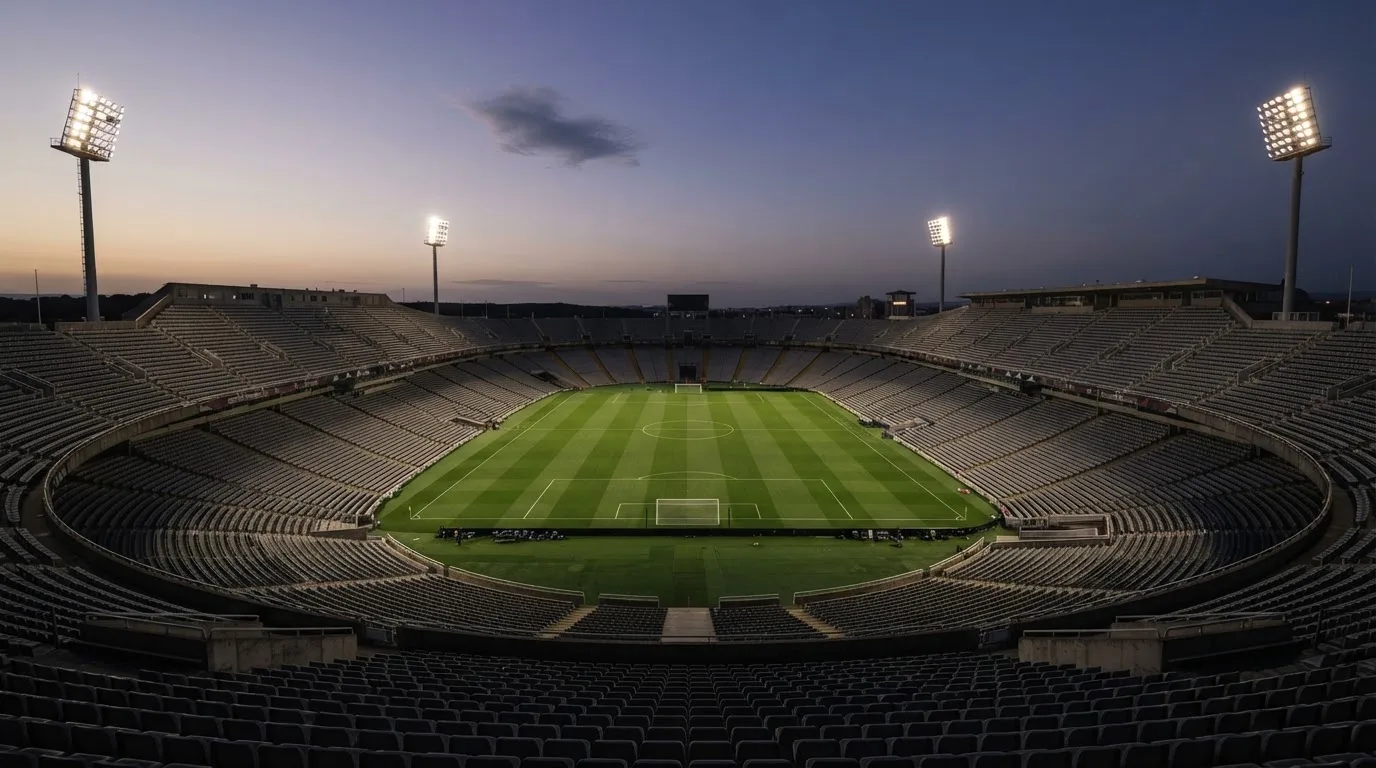
The translation step is where most punters go wrong. They read a tipster’s “Arsenal to win” as a statement of fact. It is a statement of probability dressed as fact. A price of 2.00 (decimal) means the bookmaker thinks the outcome has roughly a 50% chance. A price of 4.00 means a 25% chance. A price of 10.00 means a 10% chance. The punter’s job is to ask whether their own estimate of the chance is higher than the price implies, because that gap is the only edge worth backing.
What a value bet really is
A value bet is a price that is bigger than the true chance of the outcome. If a punter’s honest estimate of Arsenal’s win probability is 60% and the bookmaker’s price implies 50%, the price is 1.67 when it should be 1.67’s inverse (1 / 0.60) at 1.67 — the gap between 1.67 and 1.67 is small but real, and on a large enough number of bets at that kind of gap the punter finishes ahead. The arithmetic is plain; the discipline is hard. A punter who picks the team they want to win has already lost the calculation, because wanting is not probability.

The price the punter sees is not the bookmaker’s true estimate. The bookmaker builds a margin into every market, and the margin sits inside the prices on every outcome before the punter has placed a single bet. A 1X2 market at 1.90 / 3.40 / 4.20 does not represent probabilities of 52.6%, 29.4% and 23.8%. Those three numbers sum to more than 100%, and the excess is the margin. The exact figure depends on the match and the bookmaker, and is not the same from one event to the next.
Working out what a winning bet pays back
The arithmetic of a return is the first thing any punter should learn, because every offer, every boost and every accumulator is described in terms of returns.
A single bet at decimal odds 1.90 returns stake × 1.90. A £10 stake at 1.90 returns £19, of which £9 is net profit. The £10 stake is paid back with a win, and the net profit is the £9 above the stake. Decimal odds carry that information in one number, which is why most British punters under forty read decimal rather than the fractional 9/10 the older bookmakers still use. A 9/10 fraction becomes 1.90 in decimal: 9 ÷ 10 + 1.
An accumulator multiplies the odds. Two selections at 1.90 and 2.10 combine into 1.90 × 2.10 = 3.99. A £10 stake returns £39.90 if both legs win, of which £29.90 is net profit. Three legs become 1.90 × 2.10 × 1.80 = 7.18, and the £10 stake returns £71.80 if all three win. Each added leg raises the return, and each added leg raises the chance that one of them fails. The two move in opposite directions: the price grows but the probability collapses. A punter who thinks a five-fold accumulator is “free money” has not noticed the second half of the trade.
What the bookmaker keeps: a worked margin
Take a two-way market priced at 1.90 / 1.90 (fractional 9/10, an example, not a quoted price). The “true” probability each side implied by a fair price would be 1 / 1.90 = 52.63%. Two outcomes at 52.63% sum to 105.26%, and the 5.26 percentage points above 100% is the margin. Payout share is 100% − margin = 94.74%. Out of every £100 staked across both outcomes in roughly equal amounts, the publisher keeps about £5.20 and pays back £94.80 in winnings.
The margin is wider than that in real markets. A typical Premier League 1X2 market runs from 5% on a high-profile match to 10% on a smaller fixture, and a lower-league match or a less popular league sits higher still. Totals markets and Asian handicap lines are tighter — 2% to 4% on the headline matches — because sharp money sits on them and the publishers cannot afford to drift. The margin is not a fee the punter can avoid; it sits inside every price, on every outcome, on every market. A punter who does not know what it is cannot tell whether they have an edge.
A value bet, then, is a price whose true probability is higher than the bookmaker’s implied probability once the margin is taken out. It is not a price the punter likes. It is not a price from a tipster they trust. It is a price that pays back more than the chance of winning justifies, and only the punter’s own estimate of that chance — built from form, statistics and the actual line-ups — can tell them whether the gap is real.
Bankroll discipline: the bet that decides the rest
A punter who picks correctly and stakes badly loses money in the long run. A punter who picks badly and stakes well loses more slowly but still loses. The bankroll — the sum set aside for betting, kept separate from rent, bills and savings — is what staking decisions operate on.
The flat-stake rule says: bet the same fraction of the bankroll on every selection, somewhere between 1% and 5%. The fractional rule says: bet a fraction of the bankroll proportional to the edge, so a 5% edge on a price of 2.00 stakes more than a 2% edge on the same price. Both rules survive the test of variance in a way that a “double it to recover” punt never does. The Kelly Criterion, which sizes the stake as edge divided by the price minus one, is the mathematical limit of the fractional rule and over-runs badly if the edge estimate is wrong, which it usually is.
The discipline is the part most punters skip. They back the team they want to win, they double the stake after a loss, they chase a price that has already shortened. A punter who follows the discipline accepts that a price they like will lose more often than they expect, that a 2.00 shot wins roughly half the time and not three times out of four, that an accumulator of five legs wins one in twenty on fair prices and far less once the margin is taken out. The discipline is dull. It is also the only part that pays the bills.
Where the prediction actually comes from
The information behind a prediction is public. League tables, fixture lists, results, line-ups and injury lists are published by every club and every league. Expected-goals data, pressing data and pass-completion data are published by Opta and its peers. The bookmaker’s own odds carry information about what other punters think, and a price that has drifted from 2.50 to 3.00 in the hour before kick-off is telling the punter something about late team news or weight of money. A tipster is a convenience — a way to have someone else’s reading of the data without doing it oneself — and the tipster’s accuracy over hundreds of picks is the only honest test of their value. The headline accuracy figure on a tipster’s site rarely matches what a thousand settled bets show.
The bookmaker’s own algorithms are the heaviest information set of all. The price the punter sees has been shaped by the bookmaker’s trading team, by the weight of money on each outcome, by feeds from sharper clients, and by the bookmaker’s own view of where the line should sit. The margin sits inside that price, and the punter is betting against it.
The 2026–27 football calendar and the season in front of the punter
Football is played in seasons, not calendar years, and the year sits across two of them. The 2026–27 Premier League runs from 21 August 2026 to 30 May 2027 with twenty clubs, with Coventry City, Ipswich Town and Hull City the promoted sides and Arsenal as defending champions. The European club competitions — the Champions League, the Europa League and the Conference League — run on their own calendars, with the Champions League final scheduled for late May or early June. The domestic cups — the FA Cup, the EFL Cup, and the Scottish equivalents — are knock-out competitions layered over the league season.
The international windows break the club season. The 2026 FIFA World Cup was held in the United States, Canada and Mexico through the summer, with Spain beating Argentina 1–0 after extra time in the final on 19 July 2026. The next senior tournament for England, Scotland, Wales and Northern Ireland sits in the qualifying cycle that runs into 2027. A punter who bets through a World Cup summer is betting on different markets from one who bets through a Premier League autumn, and the markets that suit a punter depend on which season they are in.
The rules of the match do not change between seasons, but the way the bookmakers price them does. In-play markets open with the first whistle and close on the final one, with prices updating through the ninety minutes plus stoppage time. Extra time and the penalty shoot-out sit inside separate markets on most operators, so a punt on the match outcome under two legs and a separate punt on extra time or penalties to follow. Each is settled on its own result. A punt on the outright league winner sits on the whole season and settles only when the last match is played.
The licensed market in Great Britain: who is allowed to take a bet
The Gambling Commission regulates commercial gambling in Great Britain under the Gambling Act 2005. The Commission is a non-departmental public body sponsored by the Department for Culture, Media and Sport, and its public register is the only test of whether a brand holds a British licence. Since the Gambling (Licensing and Advertising) Act 2014 an operator whose remote facilities are used in Great Britain needs a Commission licence wherever it is based, so a Curaçao, Maltese or Gibraltar licence is not a substitute. The Commission’s remote general betting standard (real events) is the licence category every football bookmaker on the shortlist below holds, and every one of them is searchable on the register by trading name, business name, domain or account number.
A remote betting intermediary licence is a different category, held by betting exchanges such as Betfair. The exchange model — where the punter backs or lays against other punters rather than against a bookmaker — runs on its own rules and its own commission structure, and rates specific to exchanges are quoted only from the exchange’s own terms.
The minimum age for gambling in Great Britain is 18, and identity verification is done before the first deposit or the first bet. That means name, address and date of birth are checked, and the check applies to free bets and bonuses, not only to real-money play. A licensed operator cannot run an anonymous account, and a punter who wants one is on the wrong site.
What the licence gives the punter
A Gambling Commission licence is the reason a British punter has recourse when something goes wrong. The licensed operator is bound by the Commission’s Licence Conditions and Codes of Practice, by the social responsibility code, and by the Remote Technical Standards. The operator must take part in GAMSTOP, the multi-operator online self-exclusion scheme. The operator’s marketing is bound by the CAP Code for non-broadcast and the BCAP Code for broadcast, enforced by the ASA, alongside the Commission’s own marketing conditions. Promotion rules in force since 19 January 2026 cap wagering requirements on bonuses at 10x, and mixed-product promotions — offers that require play on two or more product types, for example a “bet on football to get free spins” — are banned. The punter’s complaints route runs through an approved alternative dispute-resolution body, and the Commission’s enforcement arm sits behind that.
A punter outside that protection — on an offshore site without a British licence — has none of it. No GAMSTOP coverage, no Commission complaints route, no approved dispute resolution, no recourse when funds are withheld, and no obligation on the operator to honour the 10x bonus cap or the £150 vulnerability check. The unlicensed site can pay out, and many do, but it is not required to. The Commission disrupts unlicensed sites through cease-and-desist notices, search-engine referrals, work with registrars and payment providers, and powers the Government has granted or is in the process of granting for court-ordered DNS blocking. That is disruption, not a block at the customer’s internet service provider, and it is not a guarantee.
Tax, the punter and the operator
The punter pays no tax on betting winnings in Great Britain. A professional gambler should ask HMRC or an adviser, because the boundary between hobby and trade is its own area of law, but the casual punter keeps the full return. The operator pays General Betting Duty, currently 15% on gross profits from general betting, with a separate 25% remote betting rate applying from 1 April 2027, while remote bets on UK horse racing, bets on self-self-service betting terminals, pool betting and in-person betting stay at 15%. Spread betting on financial markets has its own rates. Whether the operator passes any of that duty on through tighter odds is not established and should not be assumed.
Safer gambling: tools a licensed operator has to offer
Every brand on the shortlist below is a GAMSTOP member, because GAMSTOP membership is a mandatory licence condition for online operators in Great Britain, in force since 31 March 2020. GAMSTOP lets a punter self-exclude from every licensed online operator for six months, one year, five years, or five years with auto-renewal. After the minimum period the exclusion stays in place for a further seven years unless the punter asks GAMSTOP to remove it. Self-exclusion is the heavy tool. The lighter ones sit on the punter’s account page.
The licensed operator must offer deposit limits. A deposit limit is a gross limit on deposits over a fixed time frame — daily, weekly or monthly — and the punter sets it. The first changes to the regime have applied since 31 October 2025, and a second phase was postponed to 30 September 2026. There is no state-set ceiling on stakes or losses: the operator sets its own maximum stakes, the punter sets their own deposit limit, and the two together bound how much can be lost in a given window.
The financial vulnerability check is a public-record check that licensed remote operators run once a punter’s deposits minus withdrawals exceed £150 in a rolling 30-day period. It looks at bankruptcy and county court judgments, not at income or at credit files. A heavier financial risk assessment has been announced in a staged plan with no start date. The punter who plans to spend more than £150 a month needs to know that the check will run and what information it will pull.
The other tools a licensed operator offers vary by brand. Unibet’s safer-gambling tools include deposit limits, a Player Profile test, product restrictions and self-exclusion, with live chat support and links to BeGambleAware, GamCare, GAMSTOP, Gambling Therapy and the Betting and Gaming Council. Most operators on the shortlist below carry a similar set, and the punter who has not seen them on an account page has not looked.
The help lines sit outside the operator. GamCare runs the National Gambling Helpline. GambleAware funds treatment and education. The NHS runs gambling clinics in several cities. Gamblers Anonymous runs peer-support meetings. A punter who has crossed their own line — chasing losses, hiding bets from family, betting money earmarked for bills — is the punter for whom those numbers matter, and the section on safer gambling in every brand’s review links to them.
Mobile, app and browser: where the bet is actually placed
Most British punters place football bets on a phone, and most do it through an app rather than through a browser. The Apple App Store and the Google Play Store carry the major operators’ apps, with a 17+ age rating in the App Store and a similar rating in Google Play. A punter who cannot install an app, or prefers a desktop, can still bet through the brand’s mobile site, and the experience is close to identical.
The features on the app do not always match the desktop site. Bet builders, accumulators and price boosts tend to sit at the front of the mobile app, with in-play markets under their own tab and a search box for fixtures and teams. A bet placed on the app settles into the punter’s account on the same terms as a bet placed through the browser, and the licence the operator holds covers both. There is no separate licence for the app.
A punter who bets on the move should know three things about the app. First, the app pushes notifications for price boosts and for the start of in-play markets on selected fixtures, and the punter who has not turned them off sees them. Second, the app stores payment credentials by default, and the punter who wants a second check before each deposit should turn that off. Third, the app and the browser session on the same account see the same balance, the same bets and the same deposit limits, so a punter cannot get around their own deposit limit by switching device.
A bookmaker that does not have a native app is unusual in the British licensed market. A bookmaker that has an app but does not run in-play markets on it is a different problem, because in-play is the largest single segment of football betting by stake. The punter who bets in-play should check the app before signing up.
Bookmakers reviewed: ten licensed operators and the path each one suits
Every brand on this shortlist holds a Gambling Commission remote licence and is searchable on the Commission’s public register. The licence number, the licence holder and the Commission’s account number are listed beside each brand, and the punter can verify them on the register. The licences and accounts are not ranked, and no brand is “the only” licensed one. The shortlist is a starting point for the punter’s own comparison.
A brand that runs under the same licence as another — for example Ladbrokes and Coral, or Paddy Power and Betfair — is one business with two trading names, and the punter should treat the licence, not the trading name, as the unit of regulation.
10bet
Gambling Commission account 43173. Licence held by Blue Star Planet Limited.
10bet covers football, tennis and horse racing, and the sportsbook sits alongside a casino. The mobile app carries cash out, a bet builder and live streaming. The brand runs in-play markets on the headline football leagues, and the price-boost feed sits at the top of the app’s home page. 10bet suits a punter who wants football, tennis and racing on a single account, with a bet builder for same-game multiples and live streaming on the bigger matches. It is a quieter brand on the British high street, but the licence and the product set are not.
Star Sports
Gambling Commission account 9177. Licence held by Star Racing Limited.
Star Sports calls itself the UK’s leading independent bookmaker, and the licence sits with a racing-focused business. The sportsbook covers football alongside horse racing, with virtual sports, casino and live casino on the same account. The brand’s strength is in horse racing — Best Odds Guaranteed on UK and Irish racing, extra-place races, daily boosts — but the football markets are there and the in-play product is solid. Star Sports suits a punter who bets on both codes and wants a single account with a strong racing product. The independent framing matters to a punter who wants to back a smaller British bookmaker.
LiveScore Bet
Gambling Commission account 56859. Licence held by LiveScore Betting and Gaming (Gibraltar) Limited.
LiveScore Bet sits on top of the LiveScore scores app, and the punter who already has LiveScore on their phone finds the betting product in the same place. The brand accepts debit cards from Visa and Mastercard, Apple Pay, PayPal, Pay by Bank app and Revolut Pay. The in-play product is the centre of the football offering, because LiveScore’s data feed carries into the betting app, and the punter who likes to follow the match and the prices at the same time has the right tool here. LiveScore Bet suits a punter who already uses the LiveScore scores product and wants the betting to sit on the same screen.
Lottoland
Gambling Commission account 38991. Licence held by EU Lotto Limited.
Lottoland’s British product combines casino, lottery betting, sports betting and scratchcards. The lottery betting product is the centre of the brand — Lottoland’s name is on the product, and the football bookmaker sits beside it. The licence is for general betting standard (real events), so the football markets are covered in the same way as every other brand on this list. Lottoland suits a punter who plays the lottery regularly and wants a sportsbook on the same account. The football product is competent rather than headline, and the punter whose only interest is football betting will find a wider choice on a football-first brand.
888sport
Gambling Commission account 39028. Licence held by 888 UK Limited.
888sport runs pre-match and in-play football betting with cash out, a bet builder, racing streams, BetFinder form tools, a live bet feed and daily boosted odds. The bet builder is the centre of the in-play product for the punter who likes same-game multiples. The racing streams carry UK and Irish meetings, and the daily boosts sit on the football coupon. 888sport suits a punter who wants a wide feature set on a single account, with cash out on most markets and a live feed that follows the match.
Kalooki Sportsbook
Gambling Commission account 57730. Licence held by Kalooki Sportsbook Limited.
Kalooki Sportsbook is operated by Kalooki Sports Book Ltd, and the licence sits with that business. The brand advertises instant withdrawals by bank transfer within minutes, Best Odds Guaranteed on UK and Irish horse racing, in-play betting, daily boosts and extra place races. Kalooki is a smaller brand than the rest of the shortlist, and the smaller scale shows in the marketing — the brand is not on every television break — but the licence, the safer-gambling set and the product range are not smaller for that. Kalooki suits a punter who values a fast bank-transfer withdrawal and is comfortable betting on a smaller British bookmaker.
Ladbrokes
Gambling Commission account 54743. Licence held by LC International Limited.
Ladbrokes runs odds boosts on horse and greyhound bets, Best Odds Guaranteed on UK and Irish horse races, in-play betting and Acca Boosts. The Acca Boosts apply to accumulators settled the same day, and the maximum boost depends on the number of legs. Ladbrokes is one of the British high-street names, and the brand sits on Coral as well — both run under the same LC International Limited licence. Ladbrokes suits a punter who wants a long-established British brand with both a high-street presence and a mobile app, and who values the racing product as much as the football one.
William Hill
Gambling Commission account 39225. Licence held by WHG (International) Limited.
William Hill pays Best Odds Guaranteed on UK and Irish horse racing from 8 AM on the day of the race, on both single and multiple bets. The rule does not apply to ante-post bets, to tote or to pari-mutuel pools. The football offering sits beside the racing one, with in-play markets and a bet builder. William Hill is the other British high-street name that runs on a mobile app. William Hill suits a punter who bets on racing as well as football and wants BOG from 8 AM on the day of the race, and who is comfortable on a brand that has been on the British high street for decades.
BoyleSports
Gambling Commission account 39469. Licence held by Boylesports Enterprise.
BoyleSports is an Irish bookmaker with a British licence. The Acca Insurance product requires opt-in, a minimum stake of £5, minimum odds of 1/2 (1.50 decimal) and pays a maximum refund of £20 as a free bet that expires in 7 days; the qualifying bets must be placed and settled on the same day. The football offering is wide, with in-play markets and a strong coupon. BoyleSports suits a punter who backs accumulators regularly and wants the safety net of a refund on a near-miss — though the punter who reads the small print will notice the £20 ceiling and the 7-day expiry, both of which turn a generous-sounding offer into a modest one.
Hollywoodbets
Gambling Commission account 53028. Licence held by Hollywoodbets International UK Limited.
Hollywoodbets’ football welcome offer runs a different shape. New players who deposit £10 or more by card get their stake back as a free bet of up to £30 on their first qualifying losing accumulator — three or more legs, odds of 4/1 (5.00 decimal) or greater, settled within 7 days, one free bet per customer. The product on offer is a free bet on a losing first acca, not a refund of the stake. The football product sits alongside horse racing and a casino. Hollywoodbets suits a punter who bets on accumulators as their main product, who is comfortable with a brand that has grown from a South African base into the British market, and who reads the small print before the first bet.
The licence table
| Brand | Gambling Commission account | What the operator’s own terms state |
|---|---|---|
| 10bet | 43173 | Football, tennis and horse racing; cash out, bet builder, live streaming |
| Star Sports | 9177 | UK’s leading independent bookmaker; virtual sports, casino, live casino |
| LiveScore Bet | 56859 | Debit cards, Apple Pay, PayPal, Pay by Bank, Revolut Pay; in-play centred |
| Lottoland | 38991 | Casino, lottery betting, sports betting, scratchcards; licensed in Great Britain |
| 888sport | 39028 | Cash out, bet builder, racing streams, BetFinder, live bet feed, daily boosts |
| Kalooki Sportsbook | 57730 | Instant withdrawals by bank transfer; BOG on UK and Irish racing; in-play, daily boosts, extra places |
| Ladbrokes | 54743 | Odds boosts on racing; BOG on UK and Irish racing; in-play; Acca Boosts |
| William Hill | 39225 | BOG from 8 AM on race day on UK and Irish racing, single and multiple; not ante-post, tote or pari-mutuel |
| BoyleSports | 39469 | Acca Insurance: opt-in, £5 minimum stake, 1/2 minimum odds, £20 max refund as free bet, 7-day expiry, same-day settlement |
| Hollywoodbets | 53028 | Stake back as a free bet up to £30 on first losing acca; £10+ deposit, 3+ legs, 4/1+ odds, 7 days, one per customer |
The table is a reading aid, not a ranking. The licence numbers are a punter’s route to the Commission’s public register, where each number resolves to a named licensee. The third column carries the single product or term the brand leads on, and the punter who wants the wider feature set will find it in the operator’s own pages.
Two sides of the same choice
The punter looking at it from the betting side wants an in-play product on the bigger leagues, a bet builder, cash out, and a mobile app that does not stutter. From that side, 888sport and LiveScore Bet carry the in-play product; 10bet and BoyleSports carry the bet builder; the high-street brands Ladbrokes and William Hill carry the racing product beside the football one.
The punter looking at it from the safer-gambling side wants a deposit limit that is easy to set, a self-exclusion route that works, and a help line the operator links to. Every brand on the shortlist offers those tools because every brand is licensed to. The differences sit in the small print — the speed of a withdrawal, the maximum refund on an acca insurance, the minimum odds on a free bet — and the punter who reads them is the punter who is not surprised.
A brand that does not appear on the shortlist may still hold a British licence, because the shortlist is not the whole register. The Commission’s public register is the whole test. A punter who finds a brand the shortlist does not name can check the register by domain, by business name, by trading name or by account number. The register resolves every one.
The bookmaker’s margin, the punter’s edge and the small print that matters
The bookmaker’s margin sits inside every price on every market, and the punter who does not know what it is cannot read the rest of this page. The section on what a value bet really is set out the arithmetic on a two-way market at 1.90 / 1.90, an illustrative example, where the payout share is 1 / (1/1.90 + 1/1.90) = 1 / (0.5263 + 0.5263) = 1 / 1.0526 = 95.00%, and the margin is 100% − 95.00% = 5.00%. The exact figure on a real market depends on the match and the bookmaker, and on the headline Premier League match sits closer to 5% on the 1X2 market and 2% to 4% on totals and Asian handicaps, while a smaller fixture sits at 8% to 12%. The punter’s edge is the difference between their own probability estimate and the bookmaker’s implied probability, once the margin is taken out, and that edge has to be wide enough to clear the bookmaker’s margin before it pays.
The small print on every offer
The offers on every brand carry small print, and the punter who skips the small print is the punter who finds the surprise later. Wagering requirements on bonuses are capped at 10x in force since 19 January 2026 — a £10 bonus at 50x would have needed £500 of bets before the cap, and under the cap no more than £100. Mixed-product promotions are banned — a “bet on football to get free spins” offer no longer exists on a British licensed operator. The minimum odds on a qualifying bet are the part most punters miss, because the minimum is set per offer and a £10 acca at 1.20 per leg qualifies at a 1.20 minimum but not at a 1.50 minimum, and the punter who bets at 1.30 on a 1.50 minimum loses the qualifier. The free bet’s stake is usually not paid back with a win, which means a £10 free bet at 3.00 returns £20 of profit, not £30. The 7-day expiry on a free bet is the part that catches the punter who leaves it in the account a week too long.
What an unlicensed site costs the punter
The unlicensed offshore site costs the punter the protections a British licence gives. No GAMSTOP coverage. No Commission complaints route. No approved alternative dispute resolution. No British consumer redress if funds are withheld. No obligation on the operator to honour the 10x bonus cap, the £150 vulnerability check or any of the marketing rules. The Commission disrupts unlicensed sites, and the punter who bets on one has chosen to sit outside the British regulatory net.
Where this leaves the punter
A punter who has read this far has the tools to do three things. They can read a price as a probability, with the margin inside it, and tell whether their edge clears the margin. They can pick a bookmaker from a shortlist they have checked against the Commission’s register, and they can tell which of the small-print terms on the offer they have read. They can pick a path between a single and an accumulator, an in-play and a pre-match bet, a British licensed operator and an offshore one, and they can tell which path costs more when the costs are visible.
What this page has not done is name a winner. No tip sheet could, because no tip sheet can. The match is played once, in real time, with eleven players on each side, and the prediction the punter reads is built from public information, from the bookmaker’s own prices, and from the punter’s own estimate of the chance. The punter who treats it as a probability and not as a fact is the punter who finishes the season still standing.
Frequently asked questions
How do I bet football predictions?
Find a bookmaker licensed by the Gambling Commission, register an account, deposit by debit card or bank-based method, and pick the match and market you want to back. The price you see is what you get back per £1 staked if the bet wins, and your stake is paid back with a win. In-play markets open with the first whistle and update through the match. A free bet is a stake that is not paid back with a win — a £10 free bet at 3.00 returns £20 in profit, not £30. There is no way around the age check (18+) or the identity check that runs before the first deposit.
What is a value bet and why is no tip ever certain?
A value bet is a price that is bigger than the true chance of the outcome. If your honest estimate of Arsenal’s win probability is 60% and the price you see is 1.67 (implying about 60%), the bet is fair. If the price is 2.10 (implying about 48%), the bet is a value bet, because your estimate gives Arsenal more chance than the price does. No tip is ever certain because football is played once, in real time, with eleven players on each side, and the result depends on every part of the match.
What is the bookmaker’s margin and how can it be seen in the odds?
The margin is what the bookmaker keeps of every unit bet on a market. On a two-way market priced at 1.90 / 1.90, the implied probabilities (52.6% and 52.6%) sum to 105.3%, and the 5.3 percentage points above 100% is the margin. The bookmaker keeps 5% of every unit staked across both outcomes in roughly equal amounts. The margin is wider on a 1X2 market than on totals or handicaps, and wider on smaller fixtures than on headline matches.
How is the return on a bet worked out from the stake and the odds?
Decimal odds carry the return directly. A £10 stake at 1.90 returns £19, of which £9 is profit. A £10 stake at 2.50 returns £25, of which £15 is profit. An accumulator multiplies the odds — two legs at 1.90 and 2.10 combine into 3.99, so a £10 stake returns £39.90. The stake is paid back with a win, except on a free bet, where the stake is not paid back. Fractional odds convert by a/b → a ÷ b + 1, so 9/10 becomes 1.90 in decimal.
How can I check that a bookmaker holds a Gambling Commission licence?
Search the Commission’s public register by trading name, business name, domain or account number. The register resolves each licence to a named licensee and lists the licence categories held. A Curaçao, Maltese or Gibraltar licence is not a substitute for a British one. Every brand on the shortlist above has been verified against the register on the date noted under the lead.
Which tools for controlling play does a licensed bookmaker have to offer?
Every licensed online bookmaker is a GAMSTOP member, so a punter who self-excludes is excluded from every British licensed operator at once. The operator must offer deposit limits, and the punter can set a daily, weekly or monthly limit on the account. The financial vulnerability check runs once deposits minus withdrawals cross £150 in a rolling 30-day period, and is a public-record check, not an income check. Other tools — product restrictions, time-outs, reality checks — vary by brand. The help lines outside the operator are GamCare (National Gambling Helpline), GambleAware, the NHS gambling clinics and Gamblers Anonymous.
Football – Darts betting
Content created by the «Darts betting» team
