
NASCAR Betting Odds: How the Prices Are Built and Where UK Punters Find Them
 Available in US
27 October 2026 · verified against the UK Gambling Commission’s public register
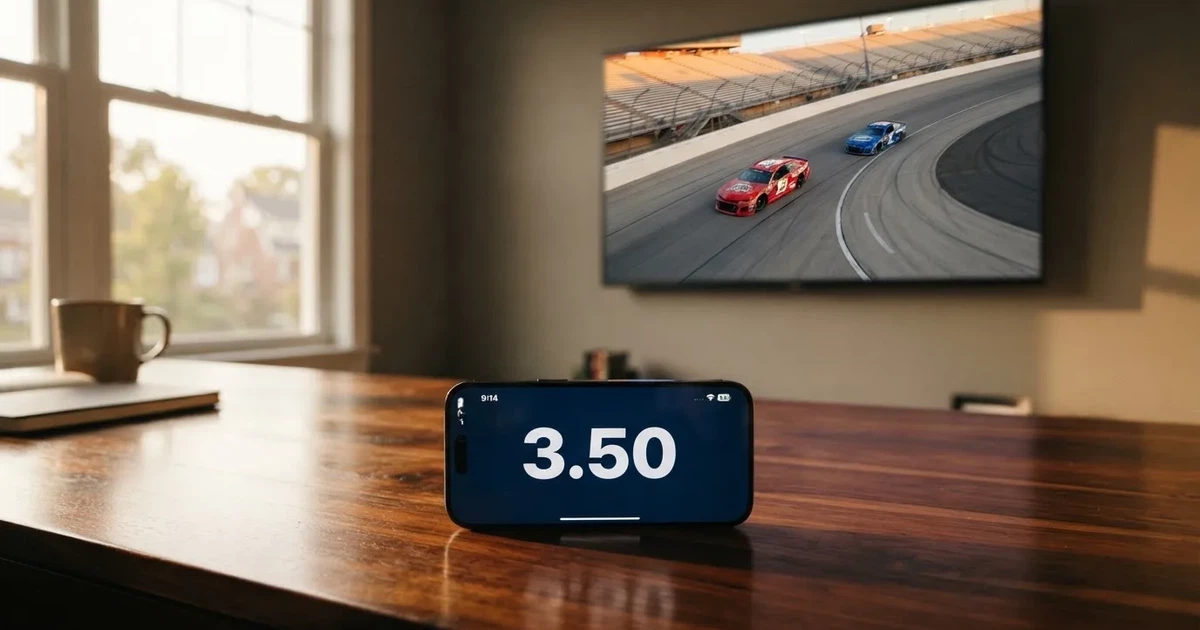
The 2026 NASCAR Cup Series is a 36-race points-paying season bookended by the Daytona 500 in February and the Straight Talk Wireless 400 at Homestead–Miami in November. Three non-championship races sit alongside it: the Cook Out Clash, the Duel at Daytona and the All-Star Race. Three bookmakers used to crown a champion by winning a single race; that rule is gone, and the post-season now takes the top sixteen in points after twenty-six rounds, with starting positions staggered by regular-season standing. Anyone holding a remote licence from the Gambling Commission can offer NASCAR markets under their own terms. The page below works through what those markets look like, what the odds actually mean, and which licensed bookmakers are taking bets on the series this year.
In-Race Markets: Live Betting and Cash Out on NASCAR
Live betting on motor racing runs on a tight loop. NASCAR races run two-to-three hundred laps and finish in roughly three hours; the field stretches out, pit stops split the running order, and a single caution flag can rewrite the market within seconds. The bookmaker’s screen rarely sits still for long, and a bettor watching a race on one of the UK-licensed apps can refresh the in-play panel faster than the commentary catches up.
How live prices move on a stock car race
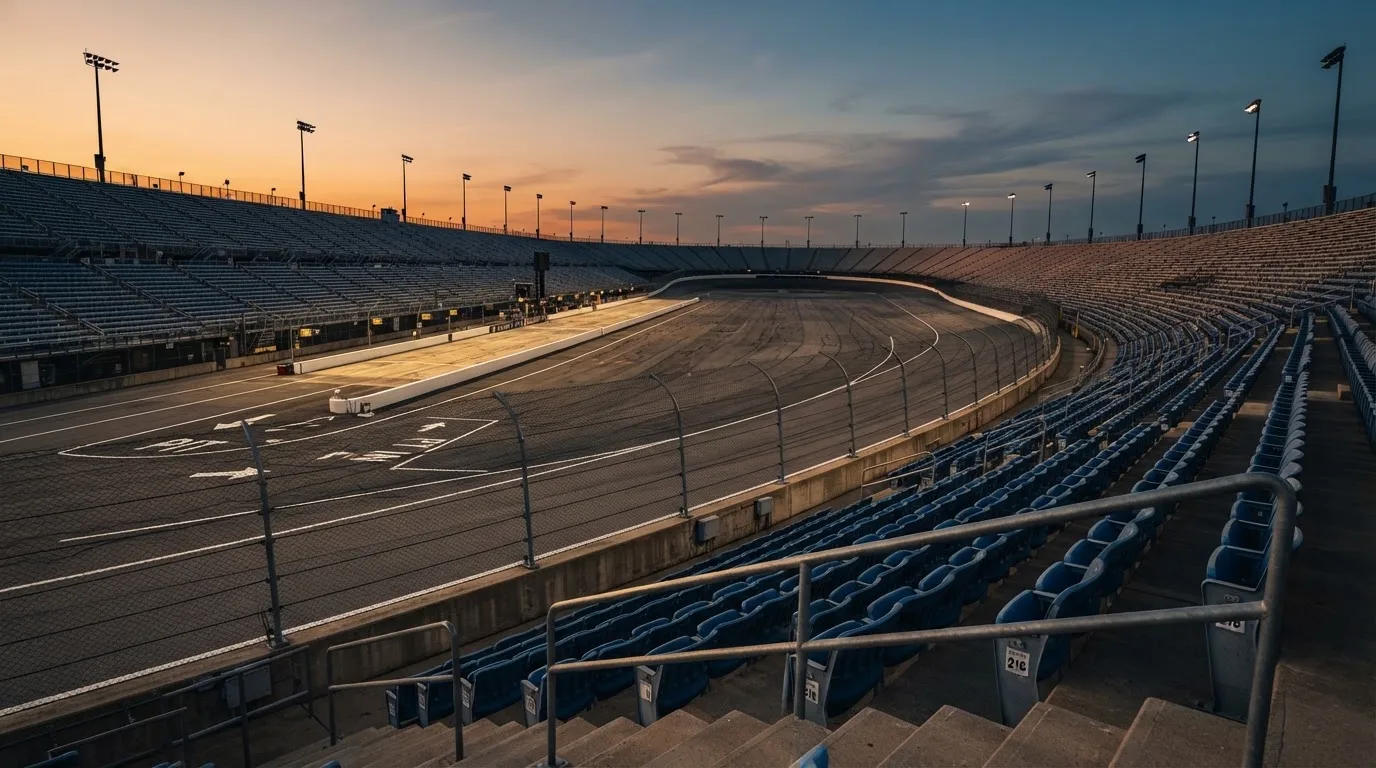
Live prices reflect three things at once: the gap back to the next car, the tyre/fuel run left in the stint, and the pit-cycle window. A clean run of green-flag laps lengthens the gaps and tightens the favourites; a caution bunches the field and pushes prices back toward the pack. bet365 and 888sport both offer pre-match and in-play betting panels, and bet365 pairs its in-play product with live streaming and a tracker that follows the running order and the in-running price together. That tracker matters on NASCAR because the lead changes hands dozens of times across a 400-mile race, and a price set on lap 50 has usually been overtaken by lap 80.
The pace of the market is the point. A bettor who watches the race as it unfolds gets more pricing information than the pre-match screen ever carried, and a bookmaker that lags its in-play book costs itself margin. The cheapest way to find a laggard is to compare the in-running price on a leading car against the screen’s own running order: if the leader is drifting on the screen while the price stays put, the price is late.
Cash out, settle early, walk away
Cash out lets a bettor settle a bet before the race ends. 888sport’s app names Cash Out as a headline feature alongside its Bet Builder and racing streams, and bet365’s app carries the same mechanism inside its broader in-play offering. A cash-out price is the bookmaker’s own mid-market quote on the remaining action — usually smaller than a full win at the back end and larger than surrendering the slip. Whether to take it depends on the price movement so far and the price on offer for the rest of the race.
The risk is double-sided. A bettor who cashes out before a late caution pockets a smaller number than a back-to-back winning bet would have paid. A bettor who lets the bet ride into a last-lap wreck loses the lot. Cash out is a tool, not a strategy, and the value of it is the spread between what the bookmaker offers and what the bettor’s own estimate of the remaining probability would pay.
What live betting can’t fix
A live market can never widen the price enough to beat a thin pre-match read. If the pre-match price on a midfield driver was generous, the in-play book at green flag usually is not. The reverse is also true: a price that looked short on Saturday can become generous on Sunday if the driver drops through the field in the first stint. Watching the race is its own research, and the bettor who treats the in-play panel as the only price they read will end up overpaying for favourites and under-pricing the back of the field.
Predictions and Strategy: What a Betting Tip Actually Buys
Every NASCAR preview column arrives with the same shape: a shortlist of names, a one-line reason for each, and an odds quote that may or may not match the screen by the time the race starts. None of it tells a reader who will win. The page below works through what a tip is worth when it lands in a betting account, and what the betting strategies surrounding NASCAR actually cost.
Reading a tip without swallowing the marketing
A tip is somebody else’s read of one or two angles — pace at the previous race, average running position on a similar track, a qualifying time on a short track — bundled into a name. It does not know the weather on Sunday, the order of green-flag pit stops, or whether the first caution will fall before the field reaches turn three. A punter who backs a tip is buying a snapshot of one analyst’s view at one moment, and the price on the screen at kick-off is the price the tip has to beat to be worth anything.
The honest framing is mechanical. A tip worth backing is one whose price was still available at kick-off and whose underlying reasoning the bettor back can repeat without help. A tip worth leaving is one whose reasoning is a feeling about a driver’s “form” that the bettor back cannot themselves articulate. The middle ground — “he looked quick in practice” — is the most common shape of a tip that loses.
Bankroll, staking and the cost of being wrong
A staking plan decides how much of a bankroll a single bet can cost. The most common rule on motor racing is a flat unit per bet — say, 1% or 2% of the bank — regardless of how confident the tip feels. That rule buys two things: it stops a single bad beat from wiping the bank, and it gives the punter enough losing bets in the sample to know whether their read actually beats a skill on a NASCAR field. A flat stake of 2% over a 36-race season means a bankroll takes 50 straight losses to half itself. A flat stake of 10% takes seven.
The cost of being wrong is what a staking plan prices in. Every NASCAR race finishes with one winner, and a betting card of five names carries an 80% chance of at least one of them not winning. The punter who needs every name to land to break even is paying for a parlay they were never going to afford.
When a model helps and when it doesn’t
Models that price NASCAR markets exist — driver ratings by track type, loop data on average running position, pit-road speed — and a serious bettor can build a fair-price estimate on a single race from them. The catch is that the bookmaker’s own team runs the same data and adjusts the book faster than any solo model. Where a model earns its keep is on the slow markets: outright futures, manufacturer championship, race winner without the top-three teams. The fast markets — race winner, top-three finish, stage winner — are usually efficient by the time a model catches up.
Bet Types and How NASCAR Odds Are Built
The odds on a NASCAR race are not just numbers — they encode the bookmaker’s margin, settle in different ways and respond to different in-race events. A punter who treats “odds” as one undifferentiated price will misprice almost every bet they place.
Outright race winner, each-way and the place terms
The race-winner market pays the price multiplied by the stake, with the stake returned. A £10 bet at 6/1 returns £70 (£60 profit plus the £10 stake). Each-way splits the stake in two — half on the win, half on a place — so a £10 each-way bet costs £20. The place part pays a fraction of the win price, typically a quarter or a fifth, depending on the field size and the bookmaker’s house rules. Each-way betting nearly doubles the stake, and the place fraction is the point that decides whether the bet is worth taking at all.
Stage winners, top-three, top-six
The 2026 Cup Series splits races into stages, and bookmakers price a stage-winner market on each. The prices are shorter than race-winner odds because the field is smaller and the random element is reduced. Top-three and top-six finish markets sit between outright and stage: they pay out more often than a race winner but less often than a top-six, and the margin on them is often tighter than the race-winner margin because the bookmaker has more information to set them. Midnite’s app shows price boosts with stated maximum-stake limits on selected markets — that detail matters, because a price boost with a small cap is a marketing line, not a value line.
Match-up, group betting and proposition markets
Match-up markets pair two drivers and price which one finishes ahead. The margin on these is usually thinner than outright because the bookmaker only has to balance two prices against each other. Group betting asks the punter to pick the highest finisher from a named subset — say, the four Kaulig Racing cars — and the price depends on how the bookmaker has grouped the field. Proposition markets cover things like the winning manufacturer, the number of cautions, the lead changes, and the margin of victory. The market depth varies by bookmaker: bet365 and 888sport run a fuller proposition board than smaller UK brands.
Margin, overround and the price of the book
The bookmaker’s margin is the book’s edge over the punter. To calculate it, first find the overround: add the implied probabilities of every price in the market (1 ÷ decimal odds). For a two-way market at 1.90 and 1.90, the implied probabilities sum to 105.26% (1.0526). The overround is 5.26%. The margin itself is (sum − 1) ÷ sum, which for this market is 0.0526 ÷ 1.0526 ≈ 5.0%. A 105% book represents a 5% margin; a 108% book has an 8% margin. A NASCAR outright market at typical prices implies between 115% and 130%, an overround of 15% to 30% and a margin roughly 13% to 23%. The margin is the bookmaker’s cut on every unit bet on the market.
How prices settle — the part that decides whether a bet pays
NASCAR bets settle under each bookmaker’s house rules, and the rules vary. Some bookmakers pay out on the official finishing order at the chequered flag; others settle at the last completed lap before a race is shortened. A bet on a stage winner settles when the stage ends, not when the race ends. A each-way bet settles in two parts at the same time. The punter who reads the rules before placing the bet does not lose a winning slip to a settlement dispute.
NASCAR Calendar and Where the Races Sit
The 2026 Cup Series opens at Daytona in February and closes at Homestead–Miami in November. Between those poles sits a 36-round points season that runs through every kind of track stock car racing knows: short ovals, intermediate speedways, superspeedways, road courses, and a street course. Three non-championship rounds — the Cook Out Clash at Bowman Gray, the Duel at Daytona, and the All-Star Race at North Wilkesboro — are bookmaker-priced but do not pay championship points.
The opening: Daytona and the early superspeedways
The 2026 Daytona 500 was held on 15 February 2026 as the 68th running and was won by Tyler Reddick. Daytona is the season’s first major market: 40 cars, drafting packs, a race that ends in pairs or trios, and a finishing order that often has little to do with single-car pace. Bookmakers price Daytona wider than most ovals because the field is genuinely hard to call. The bettor who backs a single name at Daytona is buying a lottery ticket with a NASCAR sticker on it.
The middle: short tracks, intermediates, road courses
The middle of the season is where championship positioning gets settled. Short ovals like Martinsville and Bristol reward brake and tyre management; intermediates like Kansas and Charlotte reward long-run pace; road courses like Sonoma and the Charlotte Roval reward road-course craft. Bookmakers price each track type differently: short tracks usually carry a smaller field of realistic winners and tighter margins; road courses often carry a wider field and a higher margin because the variable is the driver’s wet-weather or road-course form, which is harder to call. A market that looks “the same” from week to week is in fact four or five different markets running back-to-back.
The playoff: sixteen in, one out
The post-season takes the top sixteen in points after twenty-six races. Starting positions are staggered by regular-season standing — the regular-season champion starts the playoff at the front of the field. The win-and-you’re-in rule is gone. Each of the ten playoff rounds eliminates drivers until four reach the finale at Homestead–Miami. Bookmakers price the championship outright from the regular season onwards, and the price on a driver usually tracks their points position more than their race-by-race form. A driver who sits fifteenth in points with two races left is paying for a title run, not a race win.
The finale: Homestead–Miami
The Straight Talk Wireless 400 at Homestead–Miami Speedway closes the 2026 season on 8 November 2026. The race settles the championship and pays out all season-long outright markets. A bet on the championship in March pays at the worst possible price if the driver wins in November, but the bettor who backed a driver at 50/1 in March and sees him win the title in November has just had a very good season.
Top 10 UK-Licensed Bookmakers for NASCAR Betting
The table below compares ten UK-licensed bookmakers on the same four matters: brand, Gambling Commission remote licence number and licence holder, and what the operator’s own terms say about a NASCAR bettor’s key concerns. The order is the order research ranks them; it is not a “best of” list. Several brands run under the same parent, and the comparison reflects that.
| Brand | Gambling Commission licence (number · holder) | What the operator’s own terms state |
|---|---|---|
| QuinnBet | 061011-R-335683-004 · QuinnBet (Gibraltar) Limited | Best Odds Guaranteed on Irish and UK horse racing from 10:00am, singles and multiples, £150 cap per customer per race |
| Betway | 039372-R-319367-029 · Betway Limited | Free Bet Club: up to £10 in free bets weekly after opt-in; £25+ spend unlocks 2 × £5 free bets |
| Bet600 | 044731-R-323941-016 · Tyche Tech Limited | Best Odds Guaranteed on horse racing — early or show price upgraded to SP if bigger |
| Geoff Banks | 054095-R-330366-010 · GB Sports Advisors Limited | Live in-play prices and ante-post prices on future events |
| London Bet | 066162-R-340278-004 · Thistle Bet Limited | Sports betting across football, tennis, horse racing, greyhounds, darts, golf, cricket, NFL, NBA, MLB, snooker; live in-play |
| 888sport | 039028-R-319297-014 · 888 UK Limited | Pre-match and in-play, Cash Out, Bet Builder, racing streams, BetFinder form tools, boosted odds daily |
| bet365 | 055148-R-331498-002 · Hillside (UK Sports) ENC | Bet Builder+ (single-event combination, pre-match and in-play), Super Boosts, Winnings Boosts on Bet Builders, daily Bet Boosts, in-play streaming, Bet Track, Live Golf Tracker |
| Copybet | 053774-R-330743-010 · Copybet UK Limited | Best Odds Guaranteed all day, every day on UK and Irish racing; pays first past the post on horse racing even if the winner is later disqualified |
| Fitzwilliam Sports | 048760-R-335434-009 · SBKI Limited | Dublin bookmaker with capped membership, instant deposits, fast withdrawals, timeouts and deposit limits; High Stakes Welcome subject to compliance criteria |
| LiveScore Bet | 056859-R-332720-005 · LiveScore Betting and Gaming (Gibraltar) Limited | Bet Builder: up to 10 selections, match result, both teams to score, corners, total goals, player scoring, card markets |
QuinnBet
QuinnBet’s licence sits under QuinnBet (Gibraltar) Limited, and the brand’s headline product on racing is Best Odds Guaranteed from 10:00am daily on Irish and UK horse racing. The BOG applies to singles, multiples and system bets with a £150 cap per customer per race. NASCAR outright markets don’t qualify for BOG — only horse racing — but the racing offer is the strongest signal that QuinnBet takes price seriously. The cap on the BOG benefit is worth noting: a punter who backs a 50/1 winner at 10:01am collects the SP, but the benefit tops out at £150. The same BOG mechanism on shorter prices is effectively free upside.
For a NASCAR bettor, QuinnBet is a credible second bookmaker — the racing product and the price discipline are the points that distinguish it. The lack of a stated NASCAR-specific feature (no Bet Builder on stock cars, no stated NASCAR streaming) means it is a fallback rather than a primary NASCAR book.
Betway
Betway’s licence is held by Betway Limited, and the brand’s running offer is its Free Bet Club: up to £10 in free bets each week after opt-in, with £25+ of sports spend unlocking 2 × £5 free bets. The Free Bet Club runs weekly and resets — a punter who misses a week loses nothing, but the value compounds across a long NASCAR season. Betway’s app is well-known for a deep in-play product and a competitive outright book on US sports.
For a NASCAR bettor, Betway is a steady mid-market choice: the Free Bet Club subsidises a long season of small-stake bets, and the in-play product handles race-day markets. The £10 weekly cap is small against the £25 qualifying spend — a punter whose weekly betting volume is below £25 will not unlock the full offer.
Bet600
Bet600’s licence is held by Tyche Tech Limited, and the racing product is its Best Odds Guaranteed offer: if the SP is bigger than the early or show price taken, the bet is paid at the SP. That is a standard racing BOG with no cap stated in the App Store listing. Bet600’s NASCAR market depth is less established than the bigger brands, but the BOG mechanism is the kind of detail that signals a bookmaker that watches its margins. For a punter focused on outright markets and stage winners, Bet600 is worth a look — the price discipline matters more than the size of the brand.
Geoff Banks
Geoff Banks’ licence is held by GB Sports Advisors Limited, and the app offers live in-play prices and ante-post prices on future events. The brand is a smaller UK bookmaker with a focus on racing and a high-end client base. Ante-post is the right market for a NASCAR bettor — championship outright, race winner a month in advance — and Geoff Banks’ stated ante-post book is a signal that the brand takes long-dated markets seriously. The smaller scale of the brand means liquidity is thinner; the price on the front of the market may sit at a higher margin than the bigger books.
London Bet
London Bet’s licence is held by Thistle Bet Limited, and the app pairs sports betting (football, tennis, horse racing, greyhounds, darts, golf, cricket, NFL, NBA, MLB, snooker) with Pragmatic Play casino slots. The sports breadth is wide; NASCAR sits in the US-sports bucket alongside NBA and MLB. Live in-play is stated. For a NASCAR bettor, London Bet is a generalist — useful for the big races, less so for a season-long outright campaign. The combination with casino is the kind of product extension a smaller operator uses to broaden appeal.
888sport
888sport’s licence is held by 888 UK Limited, and the feature set is the broadest of the ten brands in the comparison: pre-match and in-play, Cash Out, Bet Builder, racing streams, BetFinder form tools, a live bet feed and daily boosted odds. The Bet Builder on a NASCAR race-winner market is unusual — most bookmakers restrict Bet Builders to team sports with multiple markets — and 888sport’s stated coverage on singles and combination markets is broader than most UK books. The racing streams are a NASCAR bettor’s quiet advantage: live vision of the race is the only way to read an in-play price with any confidence.
For a NASCAR bettor, 888sport is one of the two brands with the deepest stated product (the other being bet365). The boosted odds are worth scanning but the maximum-stake limits on the boosts are the real number — a 50/1 boost with a £5 max stake is a marketing line, not a value bet.
bet365
bet365’s licence is held by Hillside (UK Sports) ENC, and the brand sits at the top of the UK market by app downloads and stated features: Bet Builder+ (combining markets from one event into a single bet, pre-match and in-play), Super Boosts, Winnings Boosts on Bet Builders and selected singles, daily Bet Boosts, in-play streaming, Bet Track, Match Live and a Live Golf Tracker. bet365 is also the official global betting partner of the UEFA Champions League, which signals a bookmaker that pays partnership fees at the top of the sport — the same kind of budget that supports a deep NASCAR product. The Bet Builder+ feature is unusual: combining markets from one event into a single bet is closer to a same-game multi on a motor race, and the in-play availability makes it a live product.
For a NASCAR bettor, bet365 is the primary book for most. The in-play streaming and tracker combination is the strongest stated offering in the comparison. The boosts and the Bet Builder+ are the kind of features that reward a punter who reads the offer terms carefully — a Super Boost with a maximum-stake limit is a marketing line; a Winnings Boost on a Bet Builder can compound across a season.
Copybet
Copybet’s licence is held by Copybet UK Limited, and the racing product is the headline: Best Odds Guaranteed all day, every day on UK and Irish racing, plus first-past-the-post payout on horse racing even if the winner is later disqualified. The BOG has no stated time cap and no stated benefit cap in the App Store listing, which is unusual — most BOG offers apply from 8am or 10am with a benefit ceiling. For a NASCAR bettor, Copybet is worth a look on outright markets, but the racing focus is the brand’s main currency.
Fitzwilliam Sports
Fitzwilliam Sports’ licence is held by SBKI Limited, and the brand describes itself as a Dublin bookmaker with capped membership and a “High Stakes Welcome” subject to compliance criteria. The offer is unusual for the comparison: capped membership means Fitzwilliam Sports does not take every punter who walks in, and the High Stakes Welcome is targeted at customers whose betting volume justifies a higher-tier relationship. Instant deposits, fast withdrawals, timeouts, deposit limits and links to GambleAware, GamStop and Gamblers Anonymous sit beside the offer.
For a NASCAR bettor, Fitzwilliam Sports is a niche option — the capped membership and the high-stakes focus signal a brand that targets serious bettors rather than the mass market. The smaller scale means thinner liquidity on NASCAR outrights, but the personal relationship model is the kind of brand that can offer sharper prices on the right customer.
LiveScore Bet
LiveScore Bet’s licence is held by LiveScore Betting and Gaming (Gibraltar) Limited, and the headline feature is the Bet Builder: up to 10 selections, covering match result, both teams to score, corners, total goals, player scoring and card markets. The Bet Builder is stated for team sports; the NASCAR application is limited because the markets that power a Bet Builder (corners, cards, player scoring) don’t translate directly to stock car racing. LiveScore Bet’s strength is in-play coverage and live scores, and the brand pairs sportsbook with the wider LiveScore network.
For a NASCAR bettor, LiveScore Bet is a secondary book — useful for live scores during a race, less so for outright markets. The Bet Builder is the wrong shape for NASCAR, and the in-play product is the reason to keep the app installed.
How NASCAR Betting Works in the UK
The UK has no statutory list of permitted sports or markets: a bookmaker serving customers in Great Britain needs a Gambling Commission licence wherever it is based, and the Commission’s public register is the whole test of who holds one. The Gambling Act 2005 covers Great Britain (England, Scotland and Wales); Northern Ireland is outside the Act and runs under older law. Since the Gambling (Licensing and Advertising) Act 2014 an operator whose remote facilities are used in Great Britain needs a Commission licence wherever it sits — a Curaçao, Maltese or Gibraltar licence is not a substitute.
Licensing categories that cover NASCAR
The remote general betting standard (real events) licence is the category that covers NASCAR betting at every brand in the table above. The other categories — remote general betting standard (virtual events), remote general betting limited, remote pool betting and remote betting intermediary (for exchanges) — cover other products. A bookmaker that holds a real-events licence can offer NASCAR markets under its own rules and the Licence Conditions and Codes of Practice (LCCP). No separate per-sport licence is required.
Financial spread betting is regulated by the Financial Conduct Authority, not the Commission — Spreadex, for example, sits under both the FCA (for spread betting) and the Commission (for fixed-odds betting), and the spread betting losses can exceed the deposit.
How to check a bookmaker’s licence
The Commission’s public register can be searched by business name, trading name, domain or account number. The licence number on the table above is the account number on the register; the licence type is “remote general betting standard (real events)”. A brand that does not appear on the register after a search by name and by domain is not licensed to take bets from customers in Great Britain. Operators use .com and .co.uk, so the domain proves nothing on its own — only the register confirms the licence.
In-play, exchange and the rules that shape the market
GB bookmakers offer in-play betting under their own licence conditions and customer-protection duties. No statutory prohibition on in-play NASCAR betting exists, and the controls sit with the operator. Betting exchanges run under a betting intermediary licence, and rates and rules specific to exchanges are stated only from each exchange’s terms. Spread betting that is not a financial product is inside General Betting Duty.
Responsible Gambling and Player Protection in the UK
Every bookmaker in the comparison above is a GAMSTOP member. GAMSTOP is the national multi-operator online self-exclusion scheme and a mandatory licence condition for online operators since 31 March 2020. A self-exclusion period can be six months, one year, five years, or five years with auto-renewal; after the minimum period the exclusion stays in place for a further seven years unless the customer asks GAMSTOP to remove it. GAMSTOP covers online sites and apps; betting shops use a separate service.
Verification before the first bet
Identity is verified before a customer can deposit or gamble — name, address and date of birth — and the rule has applied since 7 May 2019, including with a free bet or bonus. There is no anonymous play at a licensed UK site. Source-of-funds questions at higher spend are normal under the money-laundering rules. The verification is the price of the protections below.
Vulnerability checks and the £150 trigger
A financial vulnerability check (LCCP condition 3.4.4, in force since 30 August 2024) applies to licensed remote betting when a customer’s deposits minus withdrawals exceed £150 in a rolling 30 days (since 28 February 2025). It is a public-record check (for example bankruptcy or county court judgments), not an income check and not a credit reference check. Financial risk assessments — the affordability checks of the press coverage — are announced in a staged plan (Commission article of 7 July 2026), with no start date. Deposit limits under RTS 12 require operators to offer a gross deposit limit on a fixed time frame; the first changes applied since 31 October 2025, a second phase was postponed to 30 September 2026, and whether it is live is not established. There is no state-set deposit or loss ceiling for betting: limits are the customer’s choice.
Where help is
GamCare (National Gambling Helpline), GambleAware, NHS gambling clinics and Gamblers Anonymous all sit outside the licensed operators. Fitzwilliam Sports’ terms link to GambleAware, GamStop and Gamblers Anonymous on its home page — that is the kind of signposting the LCCP expects. A punter who needs help finds the same services whichever brand they have been using; the route in does not depend on the bookmaker.
Crypto, E-Wallets and the Reality of NASCAR Betting Payments
Betting with cryptocurrency is not explicitly permitted or banned by UK regulations, and the UK position is the same whichever coin the bettor holds: no British named-account rule, no state list of permitted payment methods, and any rule for or against cryptocurrency deposits at licensed operators is not established.
What the ban does cover
Credit cards are banned for gambling in Great Britain (since 14 April 2020, LCCP condition 6.1.2), including credit-card-funded payments through an e-wallet. Debit cards and bank-based payments are not covered by that ban. The ban closes off one route into a betting account; it does not close off the others. A punter who wants to bet on NASCAR from a debit card, a bank transfer or an e-wallet funded from a debit card or bank account can do so at any licensed bookmaker.
What the ban does not cover
Cryptocurrency is not on the banned list and is not on a permitted list. A licensed UK bookmaker that accepts crypto at all is rare; the bigger brands in the comparison above take debit cards and bank-based payments, and the smaller brands do the same. A punter holding bitcoin or ethereum who wants to bet on NASCAR at a UK-licensed bookmaker will usually have to convert it through an exchange and a bank account before the funds arrive at the bookmaker. The conversion costs a spread, and the spread is the price of betting from crypto at a licensed UK book.
Anonymity, in the UK frame
Identity is verified before the first deposit at every licensed UK bookmaker. There is no anonymous play. A punter who wanted anonymity would have to leave the licensed market, and the section on the offshore market below explains what that costs. The licensed UK market is built around knowing who is betting; the cost of that knowledge is the protection of the rest of this page.
Bonuses, Free Bets and the NASCAR Betting Offers Worth Reading
NASCAR betting offers, bonuses, and promotions come in many shapes, but none of the offers in this section can be claimed by reading the page — the codes are not on the page, and a punter who wants to claim an offer follows the link from the operator’s own site. What the section does is describe the shape of each offer and what it actually costs the bettor who claims it.
The 10x cap on wagering requirements
Since 19 January 2026, wagering requirements on bonuses at UK-licensed bookmakers are capped at 10x. A £10 bonus with a 50x wagering requirement would have needed £500 of qualifying bets; the cap means no bonus at a UK-licensed bookmaker requires more than £100 of qualifying bets per £10 of bonus. The cap is the single biggest change in the UK bonus market in a generation, and it applies at every brand in the comparison above.
Mixed-product promotions are banned under the same rule: an offer that requires gambling on two or more product types — betting, casino, bingo, lottery — is not permitted at a UK-licensed bookmaker. “Bet on football to get free spins” is the textbook example, and the textbook example is now closed.
What a free bet is worth
A free bet whose stake is not paid back has a clear value: free-bet amount × (odds − 1) ÷ odds × the market’s payout share. For a £10 free bet at 5.00 (4/1) on a market with a 95% payout share, the value is 10 × 4 ÷ 5 × 0.95 = £7.60. The free bet is worth £7.60 on average across many bets at that price; a single bet can win more or less. The stake is not returned with a win — that is what makes the offer a free bet rather than a cash bonus.
Betway’s Free Bet Club — up to £10 in free bets weekly after opt-in, £25+ spend unlocking 2 × £5 free bets — is the closest example in the comparison. The value of the weekly £10 across a 36-race NASCAR season depends on the prices the bettor takes. At an average 4.00 (3/1) and a 95% payout share, the £10 weekly free bet is worth roughly £7.13. Across a 36-week season that is about £256 of free-bet worth against the £25 weekly spend — a return of about 22p per £1 of qualifying stake, before the price the bettor has to take to qualify.
Enhanced odds, price boosts and what they cost
Enhanced odds and price boosts are short-lived offers on selected markets with stated maximum-stake limits. Midnite’s app shows price boosts with maximum-stake limits on selected markets; bet365 runs Super Boosts, Winnings Boosts on Bet Builders and selected singles, and daily Bet Boosts; 888sport runs daily boosted odds. The maximum-stake limit is the line that decides whether the boost is a value bet or a marketing line. A boost from 5.00 to 10.00 with a £5 max stake is worth up to £45 on a win — the boost adds £25 to the return — but the bettor who backs the boost at £5 and the bet loses has paid £5 for nothing.
The honest framing: a price boost on a market the bettor was already going to back is free money. A price boost on a market the bettor would not otherwise touch is a marketing line dressed as value.
Best Odds Guaranteed and the racing-only frame
Best Odds Guaranteed applies to horse racing at every brand in the comparison that runs it — QuinnBet from 10:00am daily, William Hill from 8am, Copybet all day every day, Bet600 on early or show prices. BOG does not apply to NASCAR. The reason is straightforward: BOG pays the bigger of the early price taken and the starting price, and NASCAR has no SP market in the same sense. A NASCAR bettor looking for price upgrades gets them from in-play price movement, not from BOG.
Mobile and App: NASCAR Betting from a Handset
The UK-licensed market has moved decisively to handsets: the bet365 app is described as the most downloaded sports betting app in the UK, and every brand in the comparison above ships an iOS app. London Bet’s app combines sports betting with Pragmatic Play casino slots; Lottoland UK’s app combines casino, lottery betting, sports betting and scratchcards. The shape of the average UK betting app is a sportsbook plus a casino plus a live-data layer, with NASCAR sitting in the US-sports bucket.
What a NASCAR bettor actually uses the app for
Three things, in order: the in-play panel during a race, the outright book between races, and the live data — running order, lap charts, pit cycles — the rest of the time. bet365’s Bet Track and Match Live sit in that third bucket and are the closest thing in the comparison to a NASCAR-native feature. 888sport’s racing streams sit in the same bucket — live vision of the race. A live betting panel that updates faster than the screen it sits next to is the single most valuable feature on a NASCAR app.
Browser versus app, in the UK context
Every brand in the comparison offers both. The app gets the in-play push, the push notifications on price moves, and the biometric login. The browser gets a bigger screen for outright research and a longer session for the ante-post book. Most UK punters end up running both — the app for race day, the browser for the week between races.
The Offshore Frame: What a Bet Loses When It Leaves the Licensed Market
A GB licence is compulsory at the point of consumption. Providing gambling facilities in Great Britain without the licence the Act requires is an offence under section 33 of the Gambling Act 2005 (on summary conviction up to 51 weeks’ imprisonment, a fine up to level 5, or both; six months in Scotland) — aimed at the operator. There is no offence aimed at a customer who merely bets on an unlicensed site. The relevant point for a customer is the loss of protection: no GAMSTOP coverage, no Commission complaints route, no approved dispute-resolution body, no British consumer redress if funds are withheld, not bound by the 10x bonus cap, not bound by the £150 vulnerability check.
Enforcement is disruption, not blocking. The Commission has issued cease-and-desist notices, worked with search engines and payment providers, and is being given — or is about to receive — court-order DNS blocking powers. ISP blocking is not in operation as a matter of policy; the power exists or is imminent, but the operational picture is not established. Honest framing: a licensed UK bookmaker offers checks, limits, GAMSTOP and the bonus cap, but it also verifies identity before the first bet. An unlicensed book offers none of the protections and may withhold funds. Neither is “the safe choice” by default.
Tax and the bettor’s side
The bettor pays no tax on betting winnings in Great Britain (general information, not tax advice; a professional gambler should ask HMRC or an adviser). General Betting Duty is the operator’s tax on gross profits, currently 15%; from 1 April 2027 a new remote betting rate of 25% applies within it, while remote bets on UK horse racing, bets on self-service betting terminals in licensed premises, pool betting and in-person betting stay at 15%. Until 1 April 2027 the remote rate stays at 15%; whether operators pass duty on through odds is not established, and the duty is never charged to the player.
Reading the Margin: An Illustrative Two-Way Market
The arithmetic the page offers is an illustrative example, not a quoted price. Take a two-way market at decimal odds of 1.90 and 1.90. The implied probability of each side is 1 ÷ 1.90 = 0.5263, or 52.63%. Both sides together imply 105.26%, and the excess over 100% — the margin — is 5.26%. A £1 stake on either outcome returns £1.90, of which 90p is winnings and £1 is the stake returned. Across both outcomes the bookmaker keeps roughly 5p out of every £1 staked on the market, and pays out 95p as winnings.
The margin is the tax the book charges for taking the other side of the bet. A 5% margin on a two-way market is a thin book — efficient, competitive, close to the cost of running the market. A 10% margin is a fat book — expensive, soft, the kind of price a bookmaker puts out when they are not worried about losing to a sharp customer. On a 40-driver NASCAR race-winner market the implied probabilities usually add up to between 115% and 130%, which is a margin of between 15% and 30% on the outright. The race-winner market is a much more expensive market to bet into than a two-way match-up.
The conclusion the arithmetic supports: the margin on a NASCAR outright market is high enough to be the dominant cost of a betting strategy, and a punter who wants to find value on NASCAR is looking for the bookmakers whose outright books are priced tightest. The price a punter sees is the fair price minus their share of that margin; a 26% margin on an outright means the punter pays 26p of every £1 staked for the privilege of taking the other side, before any skill at picking winners.
Putting It Together: What a NASCAR Bettor in the UK Actually Does
The honest sequence runs in five steps. First, the bettor opens an account at a UK-licensed bookmaker — bet365 or 888sport for the broadest product, a second bookmaker for price comparison. Second, the bettor verifies identity before the first deposit, which is a condition of holding a GB licence. Third, the bettor reads the NASCAR outright book on the screen and checks the margin by adding the implied probabilities together; anything over 130% is a fat book, anything under 120% is a tight one. Fourth, the bettor reads the in-play panel during the race and looks for the lag — the price on the screen that has not caught up to the running order on the live tracker. Fifth, the bettor settles bets under each bookmaker’s house rules, and reads the rules before placing the bet so that a winning slip is not lost to a settlement dispute.
The bettor who follows that sequence is not guaranteed to win. Nobody is — that is the first sentence of any honest betting guide. The bettor who follows it is paying a smaller margin, claiming fewer bonuses with thin terms, and reading the rules before the bet is placed. That is what the licensed UK market gives a NASCAR customer that an unlicensed one does not.
Frequently Asked Questions
How do you bet on NASCAR?
Pick a UK-licensed bookmaker — bet365, 888sport, QuinnBet and the rest of the table above are all licensed. Open an account, verify your identity before the first deposit, and pick a market: race winner, each-way, top-three, top-six, stage winner, match-up, group betting, or a proposition. Place the bet at the price on the screen; the bet settles under the bookmaker’s house rules when the race finishes or the stage ends.
Where can I bet on NASCAR in the UK?
At any UK-licensed bookmaker offering NASCAR markets. bet365 and 888sport run the broadest stated product; QuinnBet, Betway, Bet600, Geoff Banks, London Bet, Copybet, Fitzwilliam Sports and LiveScore Bet all carry NASCAR under their remote general betting standard (real events) category. A bookmaker not on the Gambling Commission’s public register is not licensed to take bets from customers in Great Britain.
How do you bet on NASCAR races?
The same way you bet on any motor race: pick a market, pick a price, place a stake, watch the race settle. NASCAR races are settled at the chequered flag or the last completed lap before a race is shortened; each-way bets settle in two parts at the same time. Read the bookmaker’s house rules before placing the bet — settlement rules vary by brand and market.
How can I check a bookmaker holds a Gambling Commission licence?
Search the Commission’s public register by business name, trading name, domain or account number. Every brand above lists its account number and licence holder on the register. A bookmaker that does not appear on the register after a search by name and by domain is not licensed to take bets from customers in Great Britain.
How is the return on a bet worked out from the stake and the odds?
Return = stake × decimal odds. Net profit = stake × (decimal odds − 1). For a £10 stake at decimal odds 6.00, the return is £60 and the net profit is £50. For a combination bet the odds of the legs multiply into one price, and the same formula applies to the combined price.
What is the bookmaker’s margin and how does it show in the odds?
The bookmaker’s margin is the book’s edge over the punter. To calculate it, first find the overround: add the implied probabilities of every price in the market (1 ÷ decimal odds). For a two-way market at 1.90 and 1.90, the implied probabilities sum to 105.26% (1.0526). The overround is 5.26%. The margin itself is (sum − 1) ÷ sum, which for this market is 0.0526 ÷ 1.0526 ≈ 5.0%. A 105% book represents a 5% margin; a 108% book has an 8% margin. A NASCAR outright market at typical prices implies between 115% and 130%, an overround of 15% to 30% and a margin roughly 13% to 23%. The margin is the bookmaker’s cut on every unit bet on the market.
Combat & motorsport – Darts betting
Content created by the «Darts betting» team
