
Where the 11-point game meets a betting slip
 Available in US
Current as of 27 October 2026 · verified against the Gambling Commission’s public register and each operator’s own published terms
Table tennis is the rare sport where a match can be over before the kettle boils. A game ends at 11 points, or two clear points past 10. That brevity is the whole reason the sport has become a fixture of in-play betting: a five-game match lasts roughly forty minutes, every rally is a decision point, and the bookmaker’s screen updates before the umpire has finished calling the score. It is also why a sport with no Premier League rights and no stadium has ended up on the slip of nearly every licensed UK bookmaker. The question this page answers is not whether table tennis can be bet on in 2026 — it can, on every major UK-licensed site — but what each operator does with the sport, what its odds actually cost, and which rules apply when the bet is a free one or a live one.
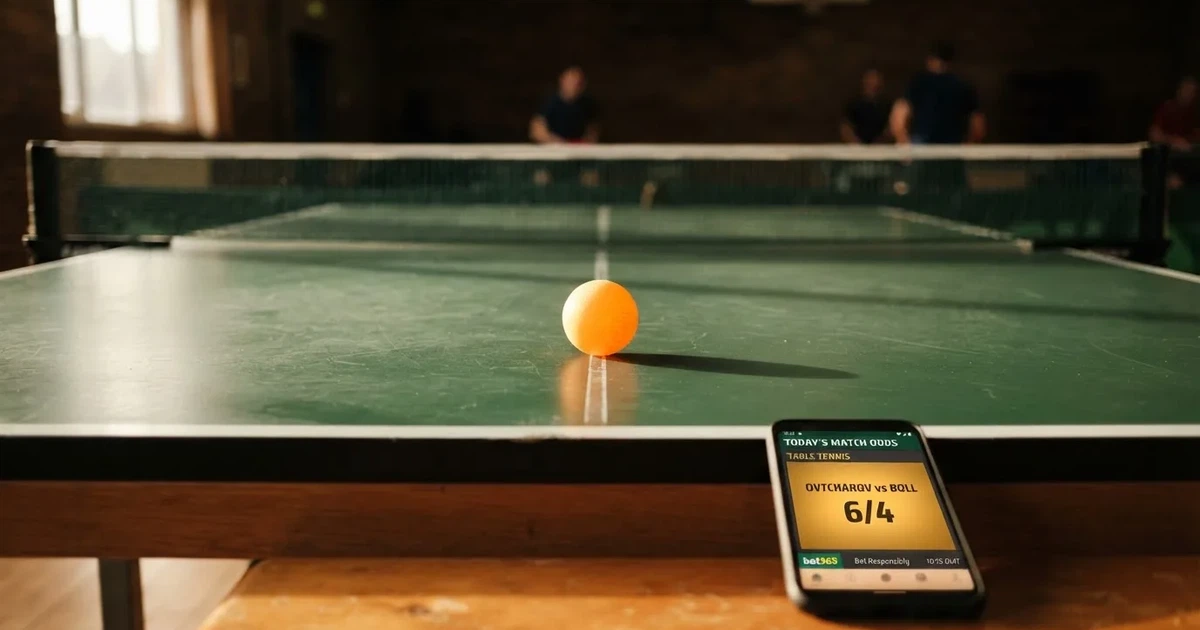
The page works through the calendar of the sport first: which competitions actually have a betting market, when they run, and why the off-season looks the way it does. It then moves to the comparison of the ten reviewed bookmakers, before turning to the framework that holds them — the licence, the duty, the rules on bonuses, the checks a customer goes through, the help that exists when a punter wants to stop. Two of the sport’s own conventions (the 11-point game, the every-two-points service) shape how a market is built, so they sit where they earn their place, in the section that explains a price. A single worked example of a bookmaker’s margin closes the analytical core, and the FAQ answers the questions that recur in this corner of the market.
The table tennis calendar: when there is a match to bet on
The 2026 table tennis calendar is built around three layers. The top layer is the ITTF World Tour and its successor ITTF World Table Tennis (WTT) calendar: the Contender, Star, and Smashes, plus the World Championships, which cycle every two years and next fall in 2027. Below that sit the national leagues — the Russian Liga Pro, the Czech Extraliga, the Polish Superliga, the German Bundesliga, the French Pro A — and a dense layer of regional events run by national federations, many of which stream live on YouTube. Around all of this sits Setka Cup and TT Cup, the two Ukrainian-run round-robin series that produce table tennis fixtures every hour of every day, with no off-season.

What this layering means for a bettor in 2026 is that there is, at any given moment, a match to back. The WTT and Bundesliga events carry the most markets and the tightest odds; the Liga Pro, Setka Cup and TT Cup events carry fewer — usually match winner, handicap, and a totals line — and the price is wider. The off-season in the top events is not empty: the Russian and Czech leagues run year-round with a short Christmas break, and the Ukrainian series do not stop. What changes is the depth of the market. On a Saturday afternoon during a WTT Star Contender, a single match can carry twenty or more pre-match markets; on a Wednesday at 9 a.m. during a TT Cup round, the same match may carry three.
Two practical consequences follow. First, a bettor who wants a price on a specific player should check the WTT or the national league calendars before checking a bookmaker’s lobby — most of the Ukrainian round-robins are listed on the same day, but with limited markets, and a “match winner” line on a Setka Cup fixture is often the only price. Second, in-play coverage is dense everywhere in the year: the round-robins run multiple tables simultaneously, and the bookmakers’ live consoles have a fixture to populate even on bank holidays. The trade-off is that the live margin on a round-robin fixture is wider than the live margin on a WTT final, and a punter who values price should look at the calendar before the slip.
Where the 2026 fixtures are
The WTT calendar in 2026 is anchored by the World Team Table Tennis Championships (London, in late April) and the WTT Finals, with Star Contenders running through the year. The Bundesliga playoffs sit in spring; the French Pro A in late spring. The Russian, Czech and Polish leagues play autumn-to-spring. Setka Cup and TT Cup do not stop.
The practical read is that a bettor who wants the deepest market watches the WTT; a bettor who wants a bet at any hour watches the round-robins; and a bettor who wants the tightest in-play price watches the European leagues, where bookmakers have priced the same players for several seasons and the screen updates inside a second.
The ten bookmakers at a glance
The ten brands in this ranking are each a Gambling Commission remote-licence holder, which is the only test of holding a licence to serve customers in Great Britain. The list is not a recommendation: every licensed UK bookmaker is open to the customer, and the table below compares the ten on three things the page covers later — the licence detail, what the operator’s own published terms say about the topics in this guide (table tennis markets, in-play, cash out, the bonus a new customer sees), and the position in the ranking. The order in the table reflects the order in this page; a higher position does not mean a stronger licence and a lower position does not mean a weaker one.
| Brand | Licence | What the operator’s own terms state on table tennis |
|---|---|---|
| Betway | Gambling Commission account 39372 (Betway Limited) | Fixed-odds sportsbook, in-play and pre-match, acca-style markets on selected events; no spread betting |
| Dabble | Gambling Commission account 65677 (Dabble Sports UK Ltd) | Fixed-odds sportsbook with social features, in-play, bet copy; primary market is match winner on smaller events |
| Spreadex | Gambling Commission account 8835 (Spreadex Limited) | Combined fixed-odds and financial spread-betting book; one-click and partial cash out; spread losses can exceed the deposit |
| bet365 | Gambling Commission account 55148 (Hillside (UK Sports) ENC) | In-play, live streaming, Bet Builder+, Super Boosts, Winnings Boosts; deep market depth on top events |
| Smarkets | Gambling Commission account 39173 (Smarkets (Malta) Limited) | Remote betting intermediary (exchange); back and lay prices; commission-based rather than margin-based |
| Bet600 | Gambling Commission account 44731 (Tyche Tech Limited) | Fixed-odds sportsbook with Best Odds Guaranteed on UK and Irish horse racing; table tennis on the main console |
| BoyleSports | Gambling Commission account 39469 (Boylesports Enterprise) | Fixed-odds sportsbook; in-play, bet builder, free bet welcome package; table tennis in the menu |
| Betfair Sportsbook | Gambling Commission account 39439 (PPB Counterparty Services Limited) | Sportsbook under the same group as the exchange; in-play, bet builder, 90 Minute Payout; 90-minute rule is football-specific |
| NetBet | Gambling Commission account 39170 (Netbet Enterprises Limited) | Sportsbook with Daily Boosts, Profit Boosts, Bet Builder with dynamic odds; table tennis on the menu |
| Swifty Sports | Gambling Commission account 58957 (Swifty Global (UK) Ltd) | Sportsbook with Best Odds Guaranteed on racing, cash out, daily boosts, live streaming; Bet Builder listed as coming soon |
The table is a snapshot, not a verdict. Each brand is read in detail in the section that carries its name. A bookmaker’s column tells you which licence category it holds (the difference between a remote general betting standard licence and a remote betting intermediary licence is the difference between a margin-based bookmaker and a commission-based exchange), and what the brand’s own published materials say about how it covers table tennis. What the column does not say is whether the price on a specific match is good: that question is settled in the section on odds, where the bookmaker’s margin is the test.
What table tennis actually is — the rules that shape the market
Two of the sport’s rules matter to a bettor because the bookmaker’s markets are built on them. The first is the game: a game is won by the first player to reach 11 points, with a two-point lead required once the score reaches 10–10. The second is the service: service alternates every two points, and once the score reaches 10–10, service alternates every point. The match is the best of any odd number of games, and competition matches are typically best of five or best of seven.
These three rules shape what a bookmaker sells. The 11-point game means a “winner” market is binary and quick; it also means an in-play “race to X points” market is meaningful, because the gap between 0 and 11 is short enough for a comeback to be priced. The service rule matters because the player who serves last in a game has a structural advantage at the business end: a server leading 10–9 is one point from the game and one point from the title if the match is the deciding game. A bookmaker’s live “next point” market is built on that arithmetic, and the price is set by the score, the server, and the side.
The third rule, and the one most punters do not know, is the size of the equipment. A table tennis table is 2.74 m long, 1.525 m wide and 76 cm high; the net is 15.25 cm high; the ball is 40 mm in diameter and weighs 2.7 g. These dimensions are why a referee or a Hawk-Eye review can settle a service-line call inside a second: the table is small enough to film from above, and the line of the ball is unambiguous. They are also why a bookmaker’s video feed of a table tennis match can be small and still legible on a phone — a layout that matters for in-play betting, where the punter watches the rally and the slip at the same time.
The international federation is the International Table Tennis Federation (ITTF), founded in 1926; the sport has been an Olympic one since 1988. The ITTF runs the world championships and sanctions the WTT calendar; the national federations run the leagues. None of this is on the slip. It is on the slip because a bettor who knows that the WTT Smashes carry ranking points will recognise that the same player who wins a Contender at 1.50 one week will be a different price at a Smash the next, and a bookmaker’s market opens around the calendar rather than the round.
The legal frame: a UK bookmaker, a UK licence
A bookmaker serving customers in Great Britain needs a Gambling Commission licence, and the Commission’s public register is the whole test of who holds one. Since the Gambling (Licensing and Advertising) Act 2014, that requirement applies to an operator wherever it is based, so a Curaçao, Maltese or Gibraltar licence is not a substitute. The ten brands in this ranking each hold a remote operating licence; the licence number is on the register, against the company name that runs the site, and the register can be searched by business name, trading name, domain or account number. A licensed operator can use a .com as well as a .co.uk, so the domain proves nothing.
Two licence categories cover the operators on this page. The first is the remote general betting standard (real events) licence, which is what a margin-based bookmaker holds: Betway, Dabble, Spreadex, bet365, Bet600, BoyleSports, Betfair, NetBet and Swifty Sports all sit under that category. The second is the remote betting intermediary licence, which is what an exchange holds; in this ranking only Smarkets sits under it. The difference is mechanical: a bookmaker’s customer bets against the bookmaker, the bookmaker’s margin is the cut, and the bookmaker’s loss on a winner is the customer’s stake. An exchange’s customers bet against each other, the exchange takes a commission on net winnings, and the exchange does not lose on a winner. That structural difference is why an exchange’s “margin” is not a margin at all and why an exchange’s price on a two-way market tends to be tighter than a bookmaker’s.
Northern Ireland is outside the Gambling Act 2005 and runs under its own older law, so a “GB-licensed” bookmaker is licensed for England, Scotland and Wales, not Northern Ireland. That distinction is not a marketing detail — it is a test of which set of rules a customer’s bet falls under. A customer in Belfast and a customer in Bristol are betting under two different regimes, and the same bookmaker will offer them slightly different products.
Financial spread betting is regulated by the Financial Conduct Authority, not the Commission, and Spreadex, which holds both licences, makes that point in its own materials. The point matters because a financial spread bet is a different product: the stake is the loss-limit rather than the stake, and the loss can exceed the deposit. A customer looking at Spreadex for fixed-odds table tennis is buying a different thing from a customer looking at Spreadex for a financial spread on a market index, and the firm’s own materials say so.
How a bettor is checked: identity, age, deposits
A licensed UK bookmaker has to know who its customer is before the customer can deposit or gamble. Name, address and date of birth are verified before the first bet, including with a free bet or bonus. The minimum age is 18. The check is not optional and is the same on every site in this ranking. The practical consequence is that no licensed UK bookmaker is an anonymous bookmaker, and any site offering anonymity by design is not licensed in Great Britain.
Identity verification has two further consequences a punter should expect. The first is the credit-card ban: credit cards have been banned for gambling in Great Britain since 14 April 2020, including credit-card-funded payments through an e-wallet. A debit card or a bank transfer is the normal route. The second is a source-of-funds question at higher spend, which is the money-laundering rules in operation; a customer who deposits a sum that looks out of pattern will be asked where the money came from, and the bookmaker can hold a withdrawal while the answer is checked. These are not features a bookmaker chooses; they are the licence conditions.
A second check, the financial vulnerability check, came into force on 30 August 2024 and applies once a customer’s deposits minus withdrawals exceed £150 in a rolling 30 days, with the figure enforced since 28 February 2025. The check is a public-record one — bankruptcy, county court judgments — not an income check and not a credit reference check. It is the bookmaker’s job, not the customer’s, and the customer does not see a decision. The “financial risk assessment” or “affordability check” the press writes about is a separate, staged plan announced in a Commission article of 7 July 2026, with no start date, and the right way to write it for 2026 is “announced, staged, no start date”, not “in force”.
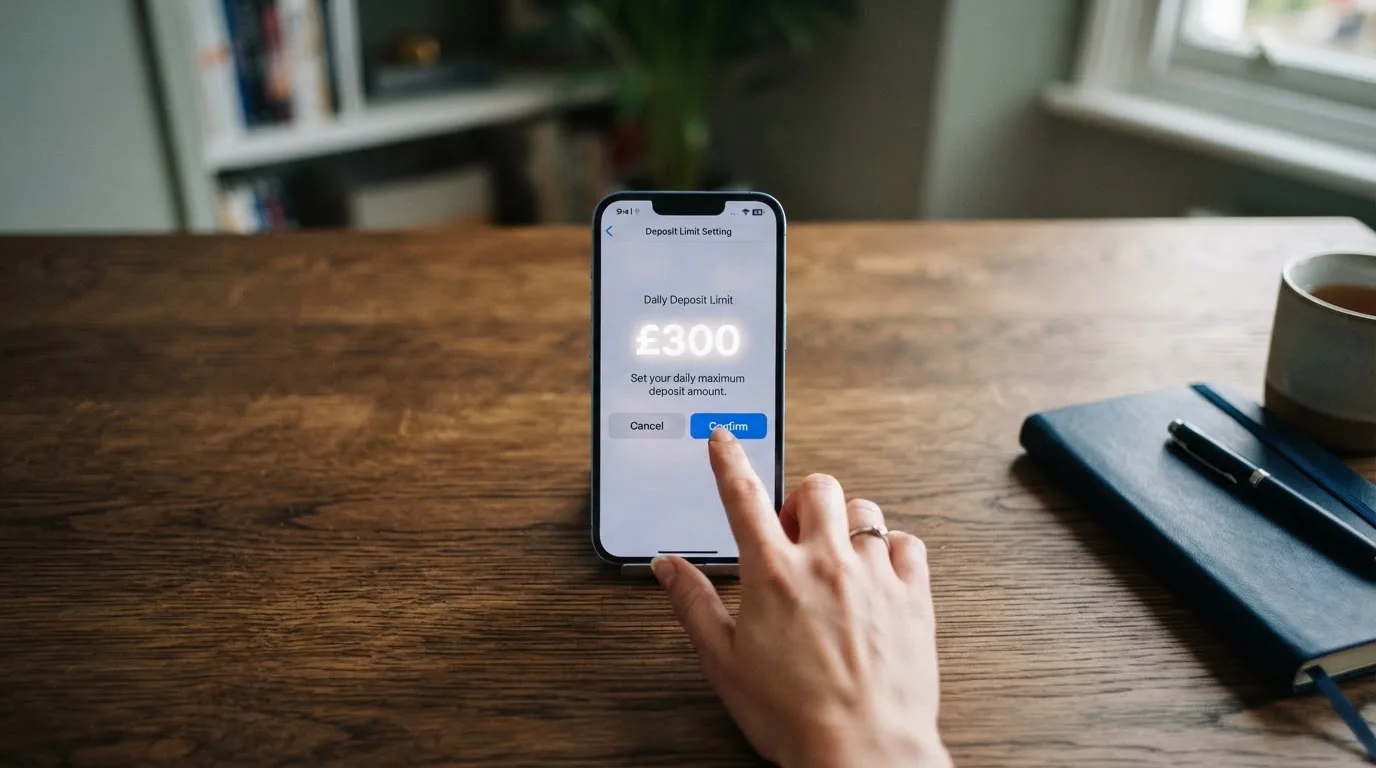
The deposit limit is the customer’s choice. There is no state-set ceiling for sports betting, and the operator’s own deposit-limit tool is the cap a customer sets on themselves. Since 31 October 2025 a phased set of changes to the operator’s deposit-limit framework has applied; a second phase was postponed to 30 September 2026. None of that imposes a number on a customer; it changes how the operator offers and adjusts the limit.
Player protection: GAMSTOP, GamCare, the rest of the framework
GAMSTOP is the national multi-operator online self-exclusion scheme. It has been a mandatory licence condition for online operators since 31 March 2020, and every bookmaker in this ranking is a GAMSTOP member. A customer can self-exclude for six months, one year, five years, or five years with auto-renewal, and after the minimum period the exclusion stays in place for a further seven years unless the customer asks GAMSTOP to remove it. GAMSTOP covers online sites and apps; betting shops use a separate service. Once a customer is on GAMSTOP, no licensed online bookmaker is open to them, and there is no route around the register for the period they have chosen.
The counselling and treatment network sits behind GAMSTOP. GamCare runs the National Gambling Helpline; GambleAware funds treatment and education; the NHS runs gambling clinics; Gamblers Anonymous runs peer-support meetings. Several of the operators in this ranking publish links to all of them in their safer-gambling pages. A customer who wants to stop does not need a bookmaker’s permission to self-exclude, and a bookmaker cannot override a GAMSTOP registration.
The licensing framework for marketing is not the Commission but the ASA. The CAP Code (non-broadcast) and BCAP Code (broadcast) sit alongside the Commission’s marketing conditions. CAP Code section 16 is the rule on who may appear in an advertisement: no one who is or seems to be under 25 may be featured gambling or play a significant role, with a narrow exception for marketing placed where a bet can be made directly. That is a rule on the advertisement, not on the customer. Since 19 January 2026 the promotion rules in force have capped wagering requirements on bonuses at 10x and banned mixed-product promotions (an offer that requires gambling on two or more product types such as betting, casino, bingo and lottery, for example “bet on football to get free spins”). The 10x cap is the answer to a question the page returns to below: what a bonus actually costs the punter.
Bonuses and free bets: what a “free bet” actually costs
A “free bet” is, mechanically, a token that pays the winnings of a winning bet and does not return the stake. A “£10 free bet” at 3.0 returns £20 if it wins — £10 in winnings, the £10 stake gone. The punter who reads “free” as “risk-free” pays for that misreading with a stake they do not get back. The bookmaker’s marketing is built around the word “free” because the word is short and the comparison is favourable; the punter’s decision is built around the word “free” because the punter is in a hurry. The two do not match, and the difference is what a punt costs.
The mechanics get tighter once a bonus is paid as a cash amount rather than as a free bet, because the cash bonus carries a wagering requirement. The wagering requirement is a multiplier on the bonus that determines how much the punter has to bet before the bonus is withdrawable. Under the rules in force since 19 January 2026, that multiplier is capped at 10x on a bonus — so a £10 bonus at 10x needs £100 of qualifying bets before the bonus is in cash. The cap is the answer to a market that, before 19 January 2026, regularly attached 30x, 40x and 50x requirements to bonuses, with the punter covering the cost of the bonus turnover out of the margin on the bets they had to place to clear it.
A second rule, the ban on mixed-product promotions, closes a related loophole. A bookmaker could once offer “bet £10 on football, get 50 free spins” — a bet on one product (sports) to unlock a bonus on another (casino). The bonus on the second product had its own wagering requirement, and the punter was running two products’ requirements at once. The 19 January 2026 rules treat that as one promotion with two products, and ban it. A bonus that requires only sports betting to clear is fine; a bonus that requires sports betting and a casino spin to clear is not.
The bookmakers in this ranking each offer a welcome promotion. The shape varies: Betway’s Free Bet Club gives up to £10 in free bets every week after opt-in, with £25 of qualifying sports spend earning 2 × £5 free bets. Dabble’s welcome offer is “Bet £10, Get £10 in Free Bets” on the first deposit, with minimum odds, a 7-day free bet expiry and the stake not returned. BoyleSports’ sports welcome offer for UK players is £20 in free bets on a £10 qualifying bet. Each is described here as the operator’s own terms state it; the page does not print a working code and does not carry the code into the body. The honest read on a welcome offer is that the headline number is the value at the maximum price; the actual value depends on the punter’s choice of market, the minimum price, the expiry, and the wagering requirement. The 19 January 2026 cap on wagering requirements means the requirement on a new-customer offer in 2026 is, at most, ten times the bonus — which is the rule, not the typical practice.
What a free bet is worth, in arithmetic
A free bet’s value is not its face value. A £10 free bet at 3.0, on a market with a 5 per cent margin, is worth £10 × (3.0 − 1) ÷ 3.0 × 0.95, which is £6.33. A £10 free bet at 1.5 on the same market is worth £10 × (1.5 − 1) ÷ 1.5 × 0.95, which is £3.17. The free bet is worth more at a higher price, all else equal, because the winnings grow faster than the stake loss. The market margin is the same in both, and the margin is what the punter pays in expectation.
The page does not tell the punter which free bet to take; it tells the punter that two free bets with the same face value and different prices are worth different amounts, and that the price is the only variable the punter controls. The face value is the bookmaker’s choice; the price is the punter’s.
Live betting and cash out: how a live price is built
In-play betting on table tennis is dense because the matches are short, the schedule is round-the-clock on the round-robins, and a single point changes the odds. The bookmaker’s console for an in-play match shows the score, the server, the next-point market, the game winner, the match winner, and a handful of handicaps. The price updates inside a second of a rally ending, and the bookmaker’s margin on the live market is wider than the margin on the pre-match market — usually by one or two percentage points — because the bookmaker’s risk on a live event is harder to lay off.
Cash out is the bookmaker’s offer to settle a bet before the event is over, at a price the bookmaker sets. The price reflects the live odds and the bookmaker’s live margin, and the bookmaker can suspend cash out at any time — usually during a service break or a medical timeout, when the live odds are moving faster than the cash-out price can be updated. The bookmakers in this ranking each offer cash out in some form: Spreadex offers one-click, auto and partial cash out on its combined book; bet365 and Betfair offer cash out on the in-play console; Swifty Sports lists cash out on markets including horse racing and football. The quality of a bookmaker’s cash out is not on a published scale; it is a function of how often the bookmaker suspends the button and how wide the live margin is at the moment of cash out.
A “live” market and an “in-play” market are the same thing in British usage. A bet placed at 0–0 in the first game is an in-play bet; the bookmaker’s price on that bet reflects the score, the server, and the historical win rate from that score in the same match-up. The punter’s edge, where one exists, is the gap between the bookmaker’s price and the punter’s model. The bookmaker’s edge, on every bet, is the live margin.
The mechanics of cashing out
A bookmaker’s cash-out price is the live single-price equivalent of the current in-play odds, adjusted by the bookmaker’s live margin and the bookmaker’s liability on the original bet. The price the punter sees is the price at which the punter can settle, not the price at which the bookmaker would lay the same selection to a new customer. The two prices are not the same and the bookmaker does not publish the gap. The punter who cashes out at a wider bookmaker’s live margin receives less than the punter who holds the bet to settlement, on average, by exactly the gap the bookmaker keeps. The cash-out button is not a price-improvement tool; it is a settlement tool, and a punter who treats it as a way to “lock in profit” is paying the bookmaker’s live margin twice — once on the original bet, once on the cash-out.
Bet types: what the slip can carry
A pre-match table tennis slip on a top event carries, in 2026, the match winner, the handicap, the total games (over/under 3.5 in a best-of-five, 4.5 in a best-of-seven), the correct score, and a set of player props on the bigger names. On a round-robin event the slip carries the match winner, a handicap, and sometimes a total-points line. The depth of the slip is a function of the bookmaker’s pricing model, not the sport; a bookmaker that prices player props on Bundesliga tennis will price them on the round-robins if the data is there.
The bet builder — a same-game multi that combines markets from one event into a single bet — is now standard on the bigger books. bet365 calls its product Bet Builder+; BoyleSports, Betfair and NetBet each offer a bet builder on table tennis. The bet builder’s odds are the product of the individual prices, minus the bookmaker’s margin on the combination; the margin on a combination is wider than the margin on a single, because the bookmaker cannot lay off the correlated risk as cleanly. A bet builder on a 1.50 and a 1.50 single — both available at 1.50 alone — will price around 2.10 rather than 2.25, which is a margin of roughly 6.7 per cent against the 11.1 per cent that two singles would carry. The punter pays for the convenience.
The accumulator is a multi-leg bet on different events. The odds multiply, the bookmaker’s margin compounds, and a four-leg acca at 2.00 each carries a margin of roughly 11.1 per cent against the 5 per cent a single would carry. Acca insurance — a refund as a free bet if one leg loses — is a partial answer to that compounding, and a “winnings boost” on a winning acca is a partial answer to the lower price of an acca against its singles. Neither changes the underlying margin; both change what the punter keeps when the bet wins or loses by one leg.
The handicap is the bookmaker’s way of offering a price on a heavy favourite. A −2.5 game handicap on a best-of-five match says the favourite has to win 3–0 for the bet to win, and the price is shorter than the match winner. A +2.5 handicap on the underdog pays if the underdog wins a game. The handicap is a price on the spread of the match, and a punter who reads the favourite’s form against the handicap will find a different value from a punter reading the same form against the moneyline.
The spread bet, on a financial-spread book like Spreadex, is a stake-sized bet on a range — a points spread, a games spread — where the punter’s loss is multiplied by the size of the miss and the punter’s win is multiplied by the size of the overshoot. The loss can exceed the deposit; Spreadex’s own materials say so, and the firm’s FCA regulation puts it under a different regime from a fixed-odds bet. A punter looking at Spreadex for table tennis is buying a different product from a punter looking at a fixed-odds bookmaker for the same fixture, and the difference is in the loss profile, not the fixture list.
How to read a price: the bookmaker’s margin
A bookmaker’s price is the inverse of the implied probability, plus the bookmaker’s margin. On a two-way market priced at 1.90 / 1.90, the implied probabilities add to 1.053 — 1 ÷ 1.90 = 0.5263 for each side, and 0.5263 × 2 = 1.0526. The 1.0526 is the bookmaker’s overround; the margin is the overround minus 1, or 0.0526, or 5.26 per cent. The bookmaker keeps 5.26p of every pound bet on this market, on average, across the long run. A price of 1.85 / 1.85 implies 0.5405 per side and an overround of 1.0811, or 8.11 per cent. The price has widened and the margin has nearly doubled.
A bookmaker’s margin is the one number a punter can compare across bookmakers, across markets, and across sports. The punter who finds 1.95 / 1.95 on a match winner is paying a 2.56 per cent margin; the punter who finds 1.85 / 1.85 is paying 8.11 per cent. The fixture is the same; the bookmaker’s take is different. The deeper the market — a Bundesliga match, a WTT Contender — the tighter the price, because the bookmaker has more data and more competitors. The shallower the market — a TT Cup round-robin — the wider the price, because the bookmaker has less data and fewer competitors. The punter’s edge, where one exists, is the gap between the bookmaker’s price and the punter’s model, and the punter’s cost is the margin.
A worked example. The illustrative two-way market at 1.90 / 1.90 has a payout share of 0.9494 (1 ÷ 1.0526) and a margin of 0.0506, or 5.06 per cent — the band a tight match-winner market sits in, with the exact figure moving between bookmakers and between events. The same market at 1.85 / 1.85 has a payout share of 0.9259 and a margin of 0.0741, or 7.41 per cent — the band a middling match-winner sits in. The same market at 1.72 / 1.72 has a payout share of 0.8831 and a margin of 0.1169, or 11.69 per cent — the band a long-shot match-winner or a deep handicap sits in. The 5 per cent figure is the floor a top bookmaker aims at on a top event; the 12 per cent figure is the ceiling a middling bookmaker hits on a round-robin. Below 5 per cent, the bookmaker is competing on price; above 10 per cent, the bookmaker is competing on something other than price.
The bookmaker’s margin compounds on a combination bet. Two singles at 1.90 each, both at a 5.06 per cent margin, multiply to a double at 3.61, which implies a payout share of 0.9224 and a margin of 7.76 per cent. Three singles at 1.90 each multiply to 6.859, a payout share of 0.8966 and a margin of 10.34 per cent. A four-leg acca at 1.90 each multiplies to 13.032, a payout share of 0.8713 and a margin of 12.87 per cent. A punter who reads an acca as “four bets at 1.90” is paying 12.87 per cent rather than 5.06 per cent, and the difference is the cost of carrying four matches rather than one.
The illustration, set out in plain numbers
A two-way market at decimal odds of 1.90 and 1.90 has an implied probability of 52.63 per cent on each side, summing to 105.26 per cent. The excess over 100 per cent is the bookmaker’s margin: 5.26 per cent. The payout share — the proportion of every pound bet that comes back to customers, on average, before the margin is taken — is the inverse: 1 ÷ 1.0526 = 95.00 per cent (a touch over, by rounding). Stated as a band, with rounding, the margin on this kind of illustrative two-way market is 5 to 5.5 per cent and the payout share is 94.5 to 95 per cent.
The band is what the page is willing to commit to. A single figure, pinned to a snapshot date and a single bookmaker, would be a description of one bookmaker’s price on one match, and the snapshot ages the moment the next rally starts. A band, with the condition (two-way, near-even money, illustrative) attached, is a useful yardstick for the reader: a reader can take it to a bookmaker’s screen and read the same shape in the prices on offer.
Predictions, tips, and the discipline of not having one
A prediction in this market is a forecast that a specific player will win a specific match. The page does not make predictions, and does not carry tipsters, because a prediction is an outcome claim and the page is a market-structure claim. The two are different products: a tipster’s value is the tipster’s track record, and the page has no track record to publish; a market structure’s value is the structure, which is the same for every match.
What the page can say, and does, is the shape of an edge. A punter who has a model of a player’s first-serve win rate by surface, or a player’s hold rate at deuce, or a player’s record against left-handers, has a model that produces a probability; the punter’s edge is the gap between the model’s probability and the bookmaker’s implied probability. The bookmaker’s margin is the floor under the gap; the punter’s edge, on average, has to clear the floor. A punter without a model is paying the floor and calling it strategy.
The practical discipline is to read the bookmaker’s price, not the bookmaker’s tip. A “tip of the day” on a sportsbook’s homepage is a marketing line; the price on the same fixture is the bookmaker’s actual view, adjusted by the bookmaker’s margin. A punter who backs the tip without reading the price is paying the marketing line; a punter who reads the price without the tip is paying the margin. The two are not the same bet.
A punter who wants a tip should look for a tipster’s published record — a tipster service that lists settled tips, the price taken, the staking plan, and the closing bank — and assess that record against the same standard a bookmaker would: the closing line, the yield, the drawdown. A tipster without a published record is a forecast without a calibration, and the punter pays the calibration. The page does not name a tipster because no single tipster is licensed under the Gambling Commission’s regime and a tipster’s product is the tip, not the licence.
Crypto and offshore: what “anonymous” table tennis actually buys
A bookmaker licensed in Great Britain is not anonymous. The customer verifies name, address and date of birth before the first deposit. There is no licensed UK bookmaker that accepts a cryptocurrency deposit in a way that bypasses the verification, because the verification is the licence condition, not the payment method. A punter who wants a “table tennis betting with bitcoin” product is looking at an unlicensed site, and the page’s read on an unlicensed site is in the section above: no GAMSTOP coverage, no Commission complaints route, no approved dispute-resolution body, no British consumer redress if funds are withheld, and the bet itself may be unenforceable under English law.
The crypto route to table tennis betting is, in 2026, an offshore route. A Curaçao-licensed bookmaker that takes bitcoin does so under Curaçao rules, not GB rules; a customer in Great Britain using that bookmaker is betting on a site whose licence does not reach the customer, and whose regulator cannot pull the customer out of a dispute. The bet may settle; the funds may be paid; the customer has no British route to complain if they are not. That is what “anonymous” buys, and the price is the route.
A licensed bookmaker that takes a debit card or a bank transfer does so under GB rules, the customer’s funds are held in a segregated account under the licence conditions, and a dispute goes to an approved alternative-dispute-resolution body. The verification is the price of that protection, and the price is paid before the first bet, not on the way out. The punter who does not want to verify is the punter who has chosen the offshore route, and the offshore route’s protections are the protections of Curaçao or Malta, not of Great Britain.
The ten bookmakers, in detail
The ten reviews that follow are each a short read of what the operator’s own terms and own materials say, and a verdict on where the operator sits in the comparison. The verdict is the page’s own, not the operator’s, and is the part a reader cannot derive from the table above. Each review is the same length in shape — the licence, the markets, the offer, the verdict — because that is the shape a comparison needs. What differs inside the shape is the substance: a bookmaker’s edge is different from another bookmaker’s edge, and a verdict that says the same thing about two operators is a verdict that says nothing.
Betway — the long-running fixed-odds book
Betway holds a Gambling Commission remote licence under account 39372, with Betway Limited as the licence holder. The UK site has run since the late 2000s, and the book carries a full pre-match and in-play menu on table tennis, with the Bundesliga and WTT events covered in depth and the round-robins covered for match winner. The Free Bet Club is the recurring offer: opt in, stake £25 or more on sports in a week, and receive 2 × £5 free bets, up to £10 in free bets a week. The free bet’s stake is not returned on a win; the 7-day expiry applies on the welcome offer’s free bets.
The verdict is that Betway is the operator a punter with a settled routine picks: a deep menu, a long-standing licence, a recurring free-bet product that does not depend on a one-off welcome. The price on a top event is mid-pack: not the tightest, not the widest, with the live margin widening in line with the rest of the market. A price-sensitive punter should check Smarkets or bet365 for the same match; this operator stays in the shortlist.
Dabble — the social book with a small welcome
Dabble holds a Gambling Commission remote licence under account 65677, with Dabble Sports UK Ltd as the licence holder. The book is built around social features: customers can copy other customers’ bets, follow tipsters in-app, and post their own slip to a feed. The sportsbook underneath is fixed-odds, with in-play, bet builder, and a table tennis menu that covers the top events. The welcome offer is “Bet £10, Get £10 in Free Bets” on the first deposit, with minimum odds, a 7-day free bet expiry, and the stake not returned on a win.
The verdict is that Dabble is the operator a punter who values social signals picks: the in-app tipster feed is a feature the rest of the ranking does not have, and a punter who follows a tipster on the platform has the same slip in two clicks. The price on a top event is mid-pack to wide, and the social feed is a marketing channel for the same bookmaker’s prices. For pure price, look elsewhere; for the social layer on a licensed book, this one belongs in the shortlist.
Spreadex — the combined fixed-odds and spread book
Spreadex holds a Gambling Commission remote licence under account 8835, with Spreadex Limited as the licence holder, and is also regulated by the Financial Conduct Authority for spread betting. The book combines fixed-odds and spread betting in one app: a punter can take a fixed-odds price on a table tennis match winner, or take a spread position on the games spread, with one-click, auto and partial cash out on both. Live streaming of UK and Irish horse racing, greyhounds, tennis, NFL and selected football is included. The financial-spread side is the part of the book that has its own loss profile — the stake is the loss-limit, the loss can exceed the deposit, and the FCA’s rules apply.
The verdict is that Spreadex is the operator a punter who wants both products in one app picks: a single login, a single wallet, a single cash-out button across fixed-odds and spread. The fixed-odds menu on table tennis is narrower than the dedicated bookmakers’ menus, and the spread book on round-robins is thin. The dedicated spread-betting catalogue is the place to look for pure spread exposure; for pure fixed-odds, the field is open.
bet365 — the deep-menu benchmark
bet365 holds a Gambling Commission remote licence under account 55148, with Hillside (UK Sports) ENC as the licence holder. The book is the deep-menu benchmark for UK sports betting, and the table tennis menu reflects that: in-play, live streaming, Bet Builder+ (combining markets from one event into a single bet, available pre-match and in-play), Super Boosts, Winnings Boosts on bet builders and selected singles, daily Bet Boosts, and the Bet Track and Match Live consoles for following bets in play. The app is the most-downloaded sports betting app in the UK, and the book is the official global betting partner of the UEFA Champions League.
The verdict is that bet365 is the operator a punter who values menu depth and live price picks: a top event carries more pre-match markets on bet365 than on most of the rest of the ranking, the live margin is mid-pack to tight, and the in-play console is the one other books benchmark against. The price on a Bundesliga match winner is consistently among the tightest on the page; the price on a TT Cup round-robin is wider, in line with the rest of the market. Anchoring here is a standard choice for the year; comparing against Smarkets for the tightest single price is the pro move.
Smarkets — the exchange
Smarkets holds a Gambling Commission remote licence under account 39173, with Smarkets (Malta) Limited as the licence holder, and runs as a remote betting intermediary. The book is an exchange, not a bookmaker: customers back and lay against each other, the exchange takes a commission on net winnings, and the price is the price the market clears at. The UK site runs with open bank transfer deposits from £10 to £10,000, withdrawals processed within 6 hours from £10 to £100,000, and UK debit card deposits from £10 to £15,000. The table tennis market on a top event is back and lay on the match winner, with the depth of the book depending on the time of day.
The verdict is that Smarkets is the operator a punter who wants a back-and-lay book picks: the price is the market-clearing price, the commission is the only take, and a punter who can lay a bet has a tool no bookmaker offers. The exchange’s depth on a round-robin is thin, and a punter who wants a lay on a Setka Cup fixture may find the book empty. This operator is not an anchor; it is a price-improvement tool for a top event.
Bet600 — the racing-led book with table tennis on the side
Bet600 holds a Gambling Commission remote licence under account 44731, with Tyche Tech Limited as the licence holder. The book is racing-led: Best Odds Guaranteed on UK and Irish horse racing, with the bet paid at the starting price if the SP is bigger than the price taken. The table tennis menu sits in the main console rather than in a dedicated vertical, and the depth is mid-pack — match winner, a handicap, and a totals line on the top events. The live console is functional, with cash out and a smaller in-play menu than bet365’s.
The verdict is that Bet600 is the operator a punter who bets across racing and table tennis picks: a single login, a single wallet, Best Odds Guaranteed on the racing side, and a table tennis menu that is not the page’s deepest but is consistent with the rest of the mid-pack. The price on a top table tennis event is mid-pack, and the BOG on racing is the book’s distinguishing feature. For primary table tennis betting, bet365 is the alternative; for combined racing/tennis punting, keep Bet600 in the shortlist.
BoyleSports — the Irish-led book with a UK welcome
BoyleSports holds a Gambling Commission remote licence under account 39469, with Boylesports Enterprise as the licence holder, and is an Irish-founded book with a UK presence. The sports welcome offer for UK players is £20 in free bets on a £10 qualifying bet. The table tennis menu is in the main console, with in-play, bet builder, and a market depth on the top events that is mid-pack. The book carries a strong racing product alongside the sportsbook, and the live console is functional.
The verdict is that BoyleSports is the operator a punter who values the welcome offer picks: £20 in free bets for a £10 stake is at the top of the welcome offers in this ranking, and the 10x wagering cap means the bonus turnover is at most £200 before withdrawal. The price on a top event is mid-pack, and the racing product is a useful add-on. For a year-round anchor, bet365 is the choice; for a high-value welcome bonus, this one is the contender.
Betfair Sportsbook — the exchange’s sportsbook sibling
Betfair Sportsbook holds a Gambling Commission remote licence under account 39439, with PPB Counterparty Services Limited as the licence holder, and sits under the same group as the Betfair Exchange. The sportsbook is fixed-odds and runs in parallel with the exchange: in-play, bet builder, free live streaming of UK and Irish horse racing and football within the app, and a 90 Minute Payout market that applies to selected football events (a 90-minute rule is football-specific and does not extend to table tennis). The table tennis menu is in the main console, with a market depth on the top events that is mid-pack to deep. The book carries a range of in-play features and bet builder options.
The verdict is that Betfair Sportsbook is the operator a punter who already has a Betfair Exchange account picks: a single login, a single wallet across sportsbook and exchange, and a sportsbook that is not the deepest on the page but is consistent with the rest of the mid-pack. The 90-minute payout is a football feature, not a table tennis one; look to bet365 for a deep-menu alternative. Combining the sportsbook and exchange under one roof is the value here.
NetBet — the boost-led book
NetBet holds a Gambling Commission remote licence under account 39170, with Netbet Enterprises Limited as the licence holder. The book runs Daily Boosts, Profit Boosts and free bet offers, a Bet Builder with instant dynamic odds, and sports stats for major leagues. The table tennis menu is available in the main console, with a market depth on the top events that is mid-pack. The live console is functional, with a smaller in-play menu than bet365’s.
The verdict is that NetBet is the operator a punter who values the boost product picks: the Daily Boosts and Profit Boosts are the book’s distinguishing feature, and a punter who is happy to take boosted prices on a curated list of events has a tool the rest of the ranking does not match. The price on a non-boosted event is mid-pack to wide, and the live margin is mid-pack. For a year-round anchor, bet365 is the alternative; for a boost-based edge, keep this one in the shortlist.
Swifty Sports — the racing-led newcomer
Swifty Sports holds a Gambling Commission remote licence under account 58957, with Swifty Global (UK) Ltd as the licence holder. The book is racing-led, with Best Odds Guaranteed on horse racing, cash out on markets including horse racing and football, daily price boosts, live streaming, and in-play betting. The Bet Builder is listed as coming soon. The table tennis menu is featured in the main console, with a market depth that is mid-pack.
The verdict is that Swifty Sports is the operator a punter who bets across racing and table tennis picks: a single login, a single wallet, BOG on the racing side, and a table tennis menu that is consistent with the rest of the mid-pack. The book is newer than the rest of the ranking, the Bet Builder is not yet live, and the live menu is functional rather than deep. bet365 is the year-round anchor; this operator provides a racing-led alternative with a growing table tennis product.
A note on bookmakers outside the ranking
The ten bookmakers on this page are Gambling Commission remote-licence holders. Several licensed UK bookmakers do not appear — William Hill and Ladbrokes, for example, run on the same parent-licence as each other and fall outside the brands reviewed on this page. The page does not name a brand outside the ranking, because a name a reader sees but cannot read is a name the reader cannot use. The reader who wants a wider shortlist should search the Commission’s public register directly, by business name, trading name, domain or account number, and read the licence categories on each card.
Frequently asked questions
How do I win at table tennis betting?
You don’t, in expectation, because the bookmaker’s margin is built into every price. A punter with a model of a player’s first-serve win rate, hold rate at deuce, or record against left-handers has a model that produces a probability; the punter’s edge is the gap between the model’s probability and the bookmaker’s implied probability, after the bookmaker’s margin. A punter without a model is paying the margin and calling it strategy, and the long-run result is the margin. Read the bookmaker’s price, not the bookmaker’s tip.
How do I bet on table tennis?
Open an account with a Gambling Commission-licensed bookmaker, verify your name, address and date of birth, deposit by debit card or bank transfer (credit cards are banned for gambling in Great Britain), find a table tennis fixture in the pre-match or in-play console, and place a bet. The minimum age is 18. The bet is a stake on a market; the bet settles when the fixture settles. Read the bookmaker’s terms before claiming a free bet or bonus, because the terms carry the minimum price, the expiry, and the wagering requirement.
How is the return on a bet worked out from the stake and the odds?
For a single bet, the return is the stake multiplied by the decimal odds, and the net profit is the stake multiplied by the odds minus one. A £10 bet at 3.0 returns £30 — £20 in net profit, the £10 stake returned. A free bet’s stake is not returned, so a £10 free bet at 3.0 returns £20 — £20 in net profit, the £10 stake gone. For a combination bet, the odds of the legs multiply, and the return is the stake multiplied by the combined odds.
How can I check that a bookmaker holds a Gambling Commission licence?
Search the Commission’s public register by business name, trading name, domain or account number. The register lists the licence categories, the licence holder, and the trading names under that licence. A licensed operator can use a .com as well as a .co.uk, so the domain proves nothing; the register is the test. The licence number is on the register against the company name, and a bookmaker that does not appear on the register is not licensed in Great Britain.
What is the bookmaker’s margin and how can I see it in the odds?
A bookmaker’s margin is the proportion of every pound bet on a market that the bookmaker keeps, on average, across the long run. On a two-way market at decimal odds of 1.90 and 1.90, the implied probabilities sum to 105.26 per cent, and the excess over 100 per cent is the margin: 5.26 per cent. The tighter the price, the smaller the margin; the wider the price, the larger. A punter who finds 1.95 / 1.95 on a match winner is paying a 2.56 per cent margin; a punter who finds 1.85 / 1.85 is paying 8.11 per cent.
Tennis, darts & cue sports – Darts betting
Content created by the «Darts betting» team
