
Best Betting Sites With Accumulators
 Available in US
27 October 2026 data checked against the Gambling Commission’s public register for remote operating licences.
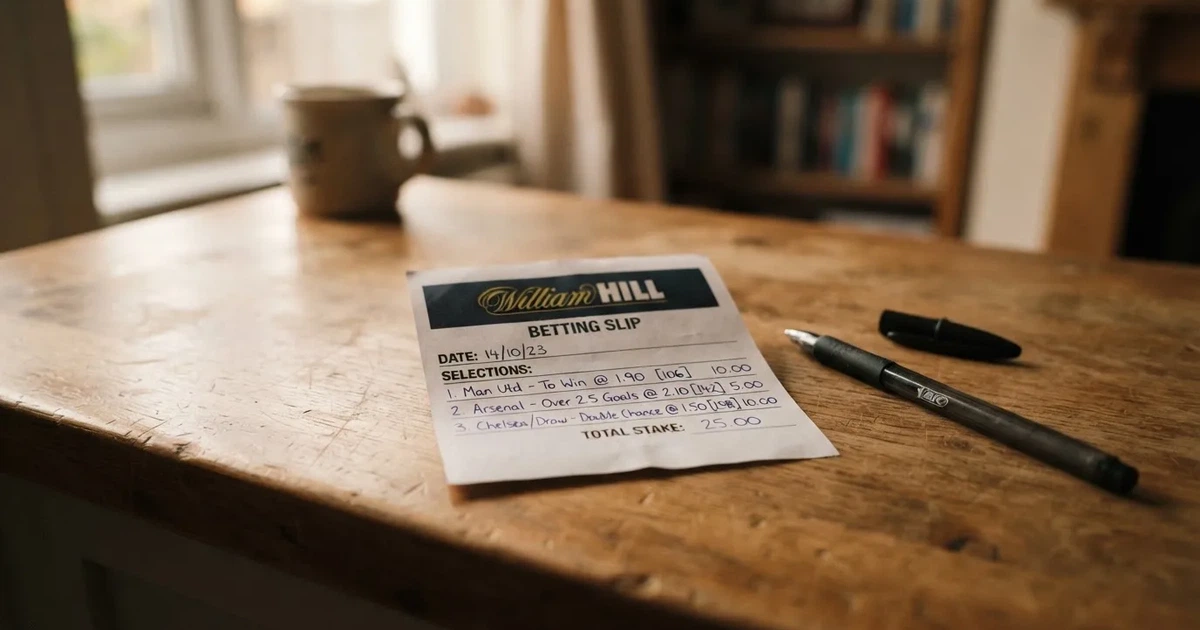
An accumulator is the single bettor’s friend and the bookmaker’s best one. Every leg added multiplies the price, the marketing loves the word “accumulator”, and the price the bettor sees at the end already has the margin baked in across every leg. The wager that pays ten thousand to one has usually paid for itself in lost versions before the bettor noticed. So the right question on a page like this one is not which site has the brightest “acca” banner; it is what an accumulator really costs, who is licensed to take one, and which bookmakers on the shortlist make the offer in a way the bettor can actually use.
This page is built around that question. It explains how accumulators work, walks through the calculations a punter can run before staking, sets the legal frame for Great Britain, and closes with the ten Gambling Commission-licensed brands research names as the featured set for this comparison. Every brand is described from its own published terms; the conclusion each one earns is on its own block, because the question “is this one worth it” is different for an acca-only welcome package than for a Bet Builder-heavy sportsbook.
Accumulator betting on a mobile: where the bet is actually built
The accumulator is a touchscreen bet. A punter in 2026 is rarely standing in a shop with a pencil and a betting slip; the bet is built in a sportsbook app, the legs are added with a tap, and the slip shows the combined odds recalculating as each leg is added. Every bookmaker in the featured set has a sportsbook app; the differences lie in how the acca is presented, whether the builder is single-game or cross-event, and how aggressively the app markets “acca boosts” or “popular accas” the punter did not ask for.

What the screen does is the easy part. What costs the punter is the bit behind the price: the margin baked into every leg, the price the operator quotes versus the true price the market would clear at, and the bookmaker’s own “max stake” on a boosted price. The acca boosts are the place to read the small print carefully, because a “max stake £10” on a boosted price is a cap on how much the punter can win, not a cap on how much the bookmaker can lose.
A second mobile-only cost is the in-app prompt. The “popular accas” tile, the “acca of the day” card, and the “boosted acca” push notification are designed to move a punter from selection to stake in as few taps as possible. They are convenient, and they are also where the bet is least thought-through. A 12-leg acca at 1,000/1 looks like a windfall; the same acca at the margin of every leg across the bettor’s other open positions is a structural loss the bettor may not have seen.
The third mobile-only cost is the in-play acca. A live bet that looks like value at 3.00 can be value at 2.40 by the time the punter taps “place”. The acca is built across events that are happening in parallel, and the price shown on the slip is a snapshot. Reputable apps quote the price at the moment of placement, not the price when the leg was first tapped. The bettor should assume the price moves against them between adding the leg and confirming the slip.
Mobile is the right starting point for a page on accumulators because the bet itself has moved there. The rest of this page works through what the screen hides.
Accumulator predictions and strategy: what tips can and cannot do
Tipsters, predictions sites and the in-app “tips” tile all sell one promise: a higher strike rate than the punter could find alone. The promise is plausible at first glance and it is wrong at the level of an accumulator. The reason is mechanical, not moral.

An accumulator is a chain of independent bets. Each leg has its own probability of winning. The probability the whole acca wins is the product of those probabilities, which is smaller than any of them. A punter who picks five legs at a 60% strike rate each has a 7.8% chance of the acca winning, before margin. A 70% strike rate on each leg gives a 16.8% chance, still before margin. Margin on every leg drags the strike rate down further, and the bettor is betting against a price, not against a probability.
Two consequences follow. First, a tipster who has a genuine 60% strike rate on singles will produce a 7.8% winning-accas record on five-leg accas built from those same selections. The tipster’s tip is not wrong; the bet is the wrong shape for the tip. Second, a tipster who markets “95% acca strike rate” is one of three things: misreading their own record, lying, or running a different kind of product (high-leg accas with many short-price legs that are all favourites, where the lower payout per acca is masked by a higher win rate). None of those is an edge the bettor can trade on.
What tips can do is narrow the field. A bettor who treats a tipster as a filter, not as a system, is reading the tip for what it is: one informed opinion on a match outcome. The bettor then prices the leg themselves, decides whether the leg is value at the price quoted, and adds it to an acca only if the leg passes the same test it would on its own. Tips are inputs to a decision, not decisions in themselves.
The strategy that does work on accumulators is the unglamorous one. Bankroll is sized in units, not in pounds. The stake on a four-leg acca is the same fraction of bankroll as the stake on a single, because every bet is the same bet in shape. The bettor records every acca, settled or not, in a log that shows leg-by-leg strike rate, average combined odds, and the running P&L. The punter who does not log bets cannot tell a strategy from a streak.
The cost the punter pays for not doing this work is paid in lost accas that “should have” landed. The cost the punter pays for doing the work is time, which compounds into better strike rates over months. The cost the punter pays for following an “acca system” advertised on a tips site is the margin on every leg plus the subscription.
Accumulator bet types, odds and the calculations that settle them
An accumulator is a bet in which two or more selections are linked. The single rule: the bet wins if, and only if, every leg wins. A leg that loses loses the whole stake. A leg that ties — a “push” in American English — is removed and the combined price is recalculated across the remaining legs. A leg that is voided for any other reason (a non-runner in a horse race, a player withdrawal before a match) is treated the same way: the leg is removed, the price is recalculated, the stake is unchanged.
The combined price of an accumulator is the product of the decimal odds of each leg. The multiplication is the whole point. Two legs at 2.00 each are 4.00. Three legs at 2.00 each are 8.00. The same three legs at 3.00 each are 27.00. The growth is what makes the headline price look large, and the size of the price is what the bookmaker wants the punter to look at.
The payout on a four-leg acca
Take four illustrative selections at 1.50, 2.00, 2.50 and 2.00, and a stake of £10. The combined price is 1.50 × 2.00 × 2.50 × 2.00, which is 15.00. A winning acca returns £10 × 15.00 = £150, of which £140 is profit and £10 is the original stake. The same four legs at a stake of £20 return £300, with the same profit ratio. The stake is what scales the payout; the price is what the bet is worth.
A five-leg acca at 1.50, 2.00, 2.50, 2.00 and 1.80 has a combined price of 27.00. The £10 stake returns £270, profit £260. The same five legs with the middle 2.00 replaced by 1.70 drop the combined price to 22.95; the return is £229.50, profit £219.50. The reader can see from those two lines how much one price change costs the payout, and how much a small shift in any single leg moves the final return. The arithmetic the punter runs is the same one the bookmaker has already run, but from the other side.
Full cover bets: more bets, more chances, more stake
A full cover bet is not a single accumulator; it is a package of accumulators built from the same set of selections, with smaller unit stakes. A Trixie on three selections is 4 bets: three doubles and one treble. A Yankee on four selections is 11 bets: six doubles, four trebles and one four-fold. A Heinz on six selections is 57 bets; a Super Heinz on seven is 120 bets. The unit stake is what the punter pays per line, and the total stake is the unit stake multiplied by the number of bets.
Take a Trixie on the three illustrative legs at 1.50, 2.00 and 2.50, with a unit stake of £2. The four bets are 1.50 × 2.00 at £2, 1.50 × 2.50 at £2, 2.00 × 2.50 at £2, and 1.50 × 2.00 × 2.50 at £2. The total stake is £8, the most the bettor can lose. The total return depends on which legs win. If all three win, the doubles return £6, £7.50 and £10 respectively, the treble returns £15, and the total return is £38.50, of which £30.50 is profit. If only two legs win, the corresponding double pays and the rest is lost.
The point of a Trixie over a straight treble is that one leg can lose and the bettor still gets something back — but the bettor has paid for that insurance in the unit stakes of the doubles. Whether the insurance is worth the extra stake depends on the prices and on the punter’s view of the leg most likely to let them down. The Heinz and the Super Heinz scale the same logic to more selections and more bets; the cost scales with the number of bets, not with the number of selections.
The margin inside every leg
The combined price is the punter’s gross return, but the bookmaker keeps a margin in every leg. On a market with three outcomes priced at 2.10, 3.40 and 3.60 in decimal, the “true” probabilities implied by the prices are 47.6%, 29.4% and 27.8%, which sum to 104.8%. The 4.8% above 100% is the bookmaker’s overround, also called the margin or the take. Across a four-leg accumulator, that margin compounds. A 4.8% margin on each of four legs is a margin of about 17.7% on the combined bet; the punter’s effective odds on the acca are worse than the headline by that amount.
The same margin in a different light: a 2.00 decimal price on a coin-flip is fair. A bookmaker’s 1.85 on the same event is a margin of about 8.1% on that single leg. Across an acca of four such legs, the bookmaker’s edge is closer to 28% than to 8%, because the margins multiply as the prices multiply. The punter who treats an acca as four independent bets has paid for four independent bets and lost four independent margins.
The return calculation the punter runs
For a single bet: return is stake × decimal odds, and profit is return minus stake. The calculation holds for each leg, and the combined acca is the product of the leg prices. The £10 stake on a four-leg acca at 1.50, 2.00, 2.50 and 2.00 returns £10 × 15.00 = £150, of which £10 is the original stake. The same stake on a five-leg acca at 1.50, 2.00, 2.50, 2.00 and 1.80 returns £10 × 27.00 = £270. The reader who wants to know what a specific acca pays can multiply the legs in a calculator; the result is what a winning bet pays, not what a winning bet is likely to be.
The top 10 accumulator bookmakers licensed in Great Britain
The ten brands below are the featured set for this page. Each one holds a Gambling Commission remote operating licence for Great Britain as listed in the Commission’s public register, which the punter can search by business name or domain. The set is not a ranking, the place in the list is not a licence, and being a Commission licensee is the floor, not the ceiling. The brands are presented in the order research sets and the comparison below them sits in the same order.
| Brand | Gambling Commission licence and holder | What the operator’s own terms say about accumulators |
|---|---|---|
| BetUK | Remote licence 039198-R-319450-029 (account 39198), held by LeoVegas Gaming PLC | A sports and casino app whose free-bet terms exclude virtual sports, esports and non-UK/IE horse racing; minimum odds apply to the qualifying bet |
| Midnite | Remote licence 101839-R-342850-001 (account 101839), held by Midnite Limited | Lists an acca builder, popular accas, price boosts and in-play events on its home page; the welcome free-bet credit is usable on accumulators subject to the site’s minimum-odds rule |
| Bet Ahoy | Remote licence 100094-R-341742-003 (account 100094), held by Bet Ahoy Ltd | A “Bet £10 & Get £10” welcome split into a £5 sports free bet and a £5 acca free bet, evidencing that acca free bets are a tracked product line |
| Smarkets | Remote licence 039173-R-319366-011 (account 39173), held by Smarkets (Malta) Limited | A betting exchange; commission is 2% on eligible bets, with a 0% introductory window for new customers, and the exchange format lets the punter back or lay acca legs |
| BetGoodwin | Remote licence 002927-R-327985-008 (account 2927), held by Goodwin Racing Limited | A racing-led sportsbook with a “Bet £10 & Get £15” welcome split into a £5 sports free bet, a £5 acca free bet and a £5 Sub-Cover free bet, where the acca is named separately from singles |
| Kalooki Sportsbook | Remote licence 057730-R-333396-005 (account 57730), held by Kalooki Sportsbook Limited | A Commission-licensed bookmaker, a GAMSTOP member, with name and date-of-birth verification before the first deposit |
| 888sport | Remote licence 039028-R-319297-014 (account 39028), held by 888 UK Limited | A general sportsbook with pre-match and in-play betting, Cash Out, Bet Builder, racing streams, BetFinder form tools, a live bet feed and daily boosted odds |
| Swifty Sports | Remote licence 058957-R-334734-006 (account 58957), held by Swifty Global (UK) Ltd | A sportsbook offering Best Odds Guaranteed, Cash Out on horse racing and football, daily price boosts and live streaming; Bet Builder is listed as coming soon |
| Spreadex | Remote licence 008835-R-104580-022 (account 8835), held by Spreadex Limited | A combined fixed-odds and spread-betting bookmaker; the welcome free-bet credit is usable across fixed-odds and spread betting, and the qualifying bet has a 28-day window |
| Betfair | Remote licence 039439-R-319330-013 (account 39439), held by PPB Counterparty Services Limited | A sportsbook with in-play betting, Bet Builder, free live streaming on UK and Irish racing and football, and a 90 Minute Payout market |
The licence numbers above are what the Commission’s public register shows on the access date. The punter can re-check any of them by searching the register at the Gambling Commission’s domain for the business name or the domain listed in the operator’s own terms. A licence can change — the punter is one search away from confirming the present state.
The column on what each operator’s own terms say is deliberately narrow. The marketing pages of every sportsbook in the featured set mention “acca boosts”, “acca insurance” and “build your acca” somewhere. The interesting differences are the ones in the small print: which markets are excluded from free bets, what the minimum price is on a qualifying bet, and whether the free-bet credit is cash or a non-withdrawable token. Those are the cost points, and they are what the next ten sections work through.
What an accumulator actually is: primer for the punter who has not built one yet
An accumulator is one bet in which the punter links two or more selections. Each selection is a “leg”. The bet wins only if every leg wins. The price the punter sees is the product of the leg prices. The stake is paid once, on the whole bet, and is lost if any one leg loses. The single sentence every accumulator review should start with is the one the punter most often forgets: the acca is one bet, with one stake and one outcome, and that outcome is “every leg wins or the bet is lost”.
A double is a two-leg accumulator. A treble is a three-leg accumulator. A four-fold is a four-leg accumulator. The word “accumulator” covers all of them, and so does “acca”, “parlay”, “combo” and “multi”. British bookmakers use “acca”; American-facing books use “parlay”; the same product sits behind both. The number of legs is the only thing that varies, and the price grows with the number of legs multiplied by the per-leg price.
The bettor can also build packages — Trixies, Yankees, Heinz, Goliath and the rest — which are sets of accumulators run off the same selections. A Trixie is 4 bets on 3 selections. A Yankee is 11 bets on 4. A Heinz is 57 bets on 6. A Super Heinz is 120 bets on 7. A Goliath is 247 bets on 8. The total stake is the unit stake times the number of bets, and the punter pays it up front. The advantage over a straight acca is that the punter gets some return even if one leg loses; the cost is the unit stake across the whole package.
The terminology that catches a punter out is “each-way”. An each-way bet is two bets of equal stake — one on the win, one on the place — so the total stake on an each-way treble is six times the unit stake, not three. The place terms vary by race, sport and operator, and the punter is well advised to read them before assuming the place part pays the same as the win part.
The terminology that catches a punter out in play is the in-play acca. A bet that looks like value at 3.00 is value at 2.40 by the time the bettor places it. The bookmaker quotes the price at placement, not when the leg was first added to the slip. The punter’s margin for error is the time between the tap and the confirmation, and the price can move against the punter in that window.
The legal frame: who is licensed to take an accumulator in Great Britain
Every bookmaker in the featured set holds a Gambling Commission remote operating licence for Great Britain. The Commission is the regulator for England, Scotland and Wales; Northern Ireland is outside the Gambling Act 2005 and runs on older law, so a “GB licence” regulates Great Britain and not the whole United Kingdom. The Commission’s public register is searchable by business name, trading name, domain or account number, and is the whole test of who holds a licence at any moment. The punter who wants to know whether a brand is licensed types the name into the register and checks the entry; the entry will show the licence number, the holder, the trading name, the domain, and the categories the licence covers.
Since the Gambling (Licensing and Advertising) Act 2014, an operator whose remote facilities are used in Great Britain needs a Commission licence wherever the operator is based. A Curaçao, Maltese or Gibraltar licence on its own is not enough. The reason is the point-of-consumption rule: a GB customer can place a bet only at a site the Commission has licensed to serve them, and the licence follows the customer, not the operator’s headquarters. Several brands in the featured set are operated by groups with a Maltese or Gibraltar parent — Unibet’s UK site is run by Platinum Gaming Limited, Gibraltar, for example — but each UK-facing site is covered by its own Commission licence on top of the parent company’s overseas permissions.
There is no statutory list of permitted bets. The Commission issues a licence for a category — remote general betting standard (real events), remote general betting standard (virtual events), remote general betting limited, remote pool betting, and remote betting intermediary — and the operator offers markets under its own rules and the Licence Conditions and Codes of Practice. In-play betting is offered by GB bookmakers and is regulated by the operator’s licence conditions, not by a separate statute. Esports are treated like any other event; virtual events are a separate licence category. Pool betting on horse and dog racing is a separate licence and duty. Spread betting that is a financial product is regulated by the Financial Conduct Authority, not the Commission; spread betting on sport is inside General Betting Duty.
The age rule is uniform: the minimum age for any bet at a licensed site is 18, and the identity check happens before the first deposit or bet, including before a free bet or bonus can be claimed. The check covers name, address and date of birth, with source-of-funds questions at higher spend. No licensed site allows anonymous play; the credit-card ban that has been in force since 14 April 2020 closes one path into a licensed site, and the identity check closes another.
The punter who plays at a site that is not licensed has no Commission complaints route, no approved dispute-resolution body, no GAMSTOP coverage, no British consumer redress if funds are withheld, and is not covered by the bonus cap or the financial vulnerability check. Whether the customer themselves commits an offence by betting at such a site is not established; the offence under section 33 of the Gambling Act 2005 is aimed at the operator. The honest framing is: licensed means checks, limits, GAMSTOP, and the bonus cap; unlicensed means none of those and a real risk that funds are not returned.
Responsible gambling: the cost the punter can pay themselves
The accumulation is a structural product. It is built to compound. A punter who adds a leg to chase a small loss is doing the thing the product is designed to make easy. The licensed operator is obliged, by the Commission’s social responsibility code, to offer the punter a way to set a deposit limit, take a time-out, or self-exclude through GAMSTOP. The punter who does not use those tools is paying the cost of an acca in the worst possible currency: a stake they did not plan to lose.
GAMSTOP is the national multi-operator self-exclusion scheme. It is a mandatory licence condition for online operators in Great Britain and has been since 31 March 2020. The exclusion periods are six months, one year, five years, or five years with auto-renewal. After the minimum period the exclusion stays in place for a further seven years unless the punter asks GAMSTOP to remove it. GAMSTOP covers online sites and apps; betting shops run a separate self-exclusion scheme. A punter who has registered with GAMSTOP cannot open a new account at a licensed site for the period chosen, and existing accounts are closed.
Deposit limits are a different lever, and a smaller one. The Commission requires operators to offer a gross deposit limit on a fixed time frame. The first changes applied from 31 October 2025; a second phase was postponed to 30 September 2026, and whether it is live is not established. The punter who wants a deposit limit can set one at any licensed site without waiting for the regulation. The punter who sets a limit and then raises it is paying the cost of an acca in a different way: by giving themselves a higher ceiling on the next stake.
The financial vulnerability check is a Commission condition that has applied since 30 August 2024 for customers whose deposits minus withdrawals exceed £150 in a rolling 30 days, and the trigger was lowered by the further change in force from 28 February 2025. The check is a public-record check (bankruptcy, county court judgments), not an income check and not a credit reference check. The punter who is asked the question should treat it as a feature, not a barrier: it is a check the unlicensed site cannot do. A second stage — the financial risk assessments the press calls “affordability checks” — has been announced in a staged plan, with no start date set.
The help that is not an operator tool exists outside the licensed site. GamCare runs the National Gambling Helpline. GambleAware funds treatment and research. The NHS runs gambling clinics. Gamblers Anonymous runs peer-support meetings. The punter who is paying the cost of an acca in worry, in lost time, or in arguments at home is the punter for whom one of those services is the right next step. The cost the punter cannot pay back is the one that was paid before the help line was called.
Bonuses and free bets on accumulators: the price after the marketing
“Free bet” is the marketing word; “free-bet credit” is the legal word. The two are not the same. A free bet is a stake the operator gives the punter, on terms. The stake is rarely paid back with a win — the punter keeps the profit, the operator keeps the stake. A cash bonus is a different thing: it is a credit added to the punter’s cash balance, with terms that include a wagering requirement before the cash can be withdrawn.
The 19 January 2026 promotion rules cap wagering requirements on bonuses at 10x. A £10 bonus at 50x wagering needed £500 of qualifying bets to clear; under the cap no more than £100. The rule applies to cash bonuses with a wagering condition. Whether the cap applies to free bets with no wagering condition, and any cap on the money value of a bonus, are not established. Mixed-product promotions — an offer that requires gambling on two or more product types such as betting, casino, bingo and lottery, “bet on football to get free spins”, for example — are banned.
The acca-specific marketing terms are the place the punter should read. A £5 acca free bet on a four-leg accumulator with minimum odds of 4.00 pays a maximum of £15 if the bet wins, on the punter’s calculation. The same free bet at minimum odds of 2.00 on a treble pays up to £5, because the free-bet stake is not returned. The punter is comparing a marketing headline — “£5 acca free bet” — with a maximum payout the terms permit, and the difference is the cost the punter is paying for accepting the offer.
A “boosted acca” is a price the operator has increased on a set of selections, often with a maximum-stake cap. The boost is paid as cash or as a free-bet credit, depending on the terms. The punter who wants to value the boost should compare the boosted price with the same legs at the un-boosted price on the same site, and with the same legs on a competing site. The boost is most valuable when the un-boosted price is at the top of the market; it is least valuable when the un-boosted price is already below the market.
“Acca insurance” is a refund on a one-leg-loss accumulator. The refund is usually a free-bet credit, not cash, and usually capped at the stake. A punter who takes the insurance and loses by one leg is paid back in credit, with the credit usable on the operator’s terms. The insurance is paid for by the operator’s margin on every leg the punter adds to qualify. The punter who would not have added the extra leg without the insurance is paying for the insurance in lost stakes on a less selective acca.
The welcome package on the featured set varies in shape. Midnite offers £25 in free bets and 50 free spins for a £5 qualifying bet at minimum odds of evens (2.00) within 14 days of sign-up, with the free bets valid for 7 days. Bet Ahoy gives £10 in free bets for a £10 qualifying stake, divided into a £5 sports credit and a £5 acca credit. BetGoodwin matches this with £15 in free bets for a £10 stake, comprising a £5 sports bet, a £5 acca bet and a £5 Sub-Cover bet. Spreadex provides £60 in free bets for a £10 fixed-odds bet, usable across fixed-odds and spread betting within a 28-day window. The punter who reads the small print sees the actual cost of each offer; the punter who reads the headline sees the marketing.
BetUK
BetUK is a Commission-licensed sportsbook and casino, holding a remote general betting standard licence via LeoVegas Gaming PLC. The Commission’s public register shows the licence under account 39198. The site’s free-bet terms exclude virtual sports, esports and non-UK/IE horse racing, with minimum odds applying to the qualifying bet. The punter who reads the exclusions before claiming a free bet is the punter who does not lose a free-bet credit to a voided selection.
The cost the punter pays on BetUK is the standard one: the margin inside every leg, the minimum-odds requirement on the qualifying bet, and the exclusion list on the free-bet credit. The punter who is choosing BetUK because the welcome offer is generous is paying for the generosity in a free-bet credit that is non-withdrawable and tied to minimum odds. The punter who is choosing BetUK because the site has the price on a leg the punter wants is paying the standard margin, which is what the punter pays everywhere.
For the punter who wants a sports and casino app under one Commission licence and is willing to navigate the exclusion list, BetUK is a credible option. For the punter whose accumulators are built around virtual sports or esports, the free-bet credit is not the place to start — the qualifying bet will settle in a market the free bet cannot be used on.
Midnite
Midnite is a Commission-licensed sportsbook with a remote general betting standard licence issued to Midnite Limited, with the licence under account 101839. The site lists an acca builder, popular accas, price boosts and in-play events on its home page, with maximum-stake limits on the boosted prices. The welcome offer is £25 in free bets and 50 free spins for a £5 or more qualifying bet on pre-match odds of evens (2.00) or greater, with the qualifying bet placed within 14 days of sign-up and the free bets valid for 7 days.
The Midnite acca builder is the centrepiece: a same-game-multi tool that lets the punter add legs from a single event to one slip, alongside a cross-event acca builder for the longer bet. The price boosts are tied to specific selections, with a maximum stake that limits the punter’s upside on the boosted leg. The popular accas tile is a curated set of accas the operator thinks the punter will add; it is a convenience and a marketing channel, and the punter should treat it as the latter.
The cost the punter pays on Midnite is the 7-day validity on the free bets, the maximum-stake cap on the boosts, and the margin on every leg. The punter who plans the qualifying bet and uses the free-bet credit within the week captures the value; the punter who lets the credit lapse pays for the offer in unused credit. For the bettor who wants a Commission-licensed app with an acca builder and a generous welcome free bet, Midnite is a strong option. For the punter who places one acca a month, the 7-day clock is the binding constraint.
Bet Ahoy
Bet Ahoy is a Commission-licensed sportsbook with a remote general betting standard licence issued to Bet Ahoy Ltd, with the licence under account 100094. The welcome offer is “Bet £10 & Get £10 in Free Bets”, split into a £5 sports free bet and a £5 acca free bet. The split is the interesting feature: the operator is naming the acca as a separate product line, with a separate free-bet credit, which is one of the few direct signals on the page that the acca is a tracked bet at this site.
The cost the punter pays is the typical one: minimum odds on the qualifying bet, expiry on the free bets, and the exclusion list in the small print. The acca free bet is the bit the punter should use on a multi-leg acca; the sports free bet is the bit the punter should use on a single or a double. The split is a marketing device, but it is also a clue that the operator has thought about how the punter uses the credit.
For the punter who wants a low-friction welcome and is willing to claim the acca credit on a separate slip, Bet Ahoy is a credible option. The punter who wants a deeper feature set — Bet Builder, in-play markets, live streaming — will not find it on the welcome page and should look at the sportsbook pages before claiming the credit.
Smarkets
Smarkets is a Commission-licensed betting exchange operating under a remote betting intermediary licence held by Smarkets (Malta) Limited, with the licence under account 39173. The standard commission is 2% on eligible exchange bets, with a 0% commission window for 60 days for new customers with a minimum first deposit of £10. The exchange format is the structural difference: the punter backs selections at the price other punters are offering, or lays selections at the price other punters are willing to take, and the platform takes commission on the net profit.
The punter on a traditional sportsbook pays the bookmaker’s margin in every price. The punter on an exchange pays a commission on net winnings, and the price the punter gets is the market-clearing price, which is closer to the true price than a bookmaker’s price is. The cost of using the exchange is the commission, the cost of using a sportsbook is the margin. The two are not the same cost, and the punter who builds an acca on the exchange is paying a different kind of price than the punter who builds the same acca on a sportsbook.
Building an accumulator on an exchange requires backing each leg at the back price. The exchange does not provide an acca button in the same shape the sportsbook does; the punter backs each leg, and the total stake is the sum of the leg stakes. The punter who wants a true-price multi is the punter the exchange is built for; the punter who wants a one-tap acca with a price-boost tile is the punter the sportsbook is built for. Both are licensed, both are Commission-regulated, and the cost of each is the cost of the format the punter chooses.
For the punter who is comfortable with the exchange interface and wants the closest price to the true market price, Smarkets is a strong option. The 0% commission window is a real saving on net winnings; the standard 2% commission is competitive. The punter who wants a sportsbook-style acca builder should not start at the exchange.
BetGoodwin
BetGoodwin is a Commission-licensed sportsbook with a remote general betting standard licence issued to Goodwin Racing Limited, with the licence under account 2927. The welcome offer is “Bet £10 & Get £15 in Free Bets”, split into a £5 sports free bet, a £5 acca free bet and a £5 Sub-Cover free bet. The three-way split is the tell: the operator has a separate credit for accumulators, a separate credit for a singles/doubles free bet, and a separate credit for a Sub-Cover bet, which is a multi-leg package distinct from the standard full-cover bets.
The Sub-Cover free bet is a feature worth a closer look. The punter claims the credit, places a Sub-Cover bet (a multi-leg package the operator defines) and the credit is settled under the Sub-Cover terms. The punter who wants the Sub-Cover free bet is paying for it in the qualifying bet and the minimum-odds rule, and the credit is paid in the same non-withdrawable token the acca free bet is paid in. The three-way split is a marketing device, but it is also a way of pricing three different products separately.
The cost the punter pays is the standard: margin on every leg, minimum odds on the qualifying bet, and the expiry on the free bets. For the punter who wants a Commission-licensed sportsbook with a horse-racing heritage and is willing to navigate a three-way free-bet split, BetGoodwin is a credible option. The punter whose accumulators are built around football should look at the in-play and Bet Builder pages before claiming the credit.
Kalooki Sportsbook
Kalooki Sportsbook is a Commission-licensed sportsbook operated by Kalooki Sports Book Ltd (company number 12938274), with the remote general betting standard licence under account 57730. The site is a GAMSTOP member and runs the standard identity verification before the first deposit. The structural point of interest is the verification itself: the punter cannot deposit or claim a free bet until name, address and date of birth have been confirmed, which is the licence condition rather than a Kalooki-specific feature.
The cost the punter pays on Kalooki is the same cost the punter pays at every licensed site, with the same regulatory floor. The margin on the legs, the minimum-odds rule on the qualifying bet, and the free-bet credit terms are the binding constraints. The site is one of the smaller Commission-licensed sportsbooks in the featured set, and the punter who is choosing Kalooki is choosing it for a specific reason — a price on a specific market, a feature the operator offers that others do not, or a familiar interface — rather than for the welcome offer alone.
For the punter who wants a Commission-licensed sportsbook that runs the verification before the first deposit and is happy with a smaller site, Kalooki is a credible option. The punter who wants a deep feature set — Bet Builder, in-play markets, live streaming — should check the sportsbook pages before depositing.
888sport
888sport holds a Commission-licensed sportsbook remote general betting standard licence via 888 UK Limited, with the licence under account 39028. The site offers pre-match and in-play betting, Cash Out, Bet Builder, racing streams, BetFinder form tools, a live bet feed and daily boosted odds. The feature set is one of the broader ones, and it provides a reliable app for football, racing and in-play betting.
The cost the punter pays is the cost of the format. The Bet Builder is a same-game-multi tool, with the leg prices the operator quotes; the acca builder is a cross-event tool, with the same. The daily boosted odds are tied to specific selections and a maximum stake, with the boost paid as a free-bet credit or a cash boost depending on the terms. The Cash Out is a settlement tool the punter can use before the bet is settled, at a price the operator quotes at the moment of cash out; the punter should treat the cash-out price as a price, not as a refund.
The punter who uses 888sport as a one-stop sportsbook is paying for the convenience in the standard margin. The punter who uses 888sport for the feature set and shops the price on every leg at the same time is paying the same margin, and the saving comes from the better price on the leg, not from the operator. For the punter seeking a Commission-licensed sportsbook with a broad feature set and is willing to read the boosted-odds terms, 888sport is a strong option.
Swifty Sports
Swifty Sports possesses a Commission-licensed remote general betting standard licence via Swifty Global (UK) Ltd, with the licence under account 58957. The site offers Best Odds Guaranteed, Cash Out on horse racing and football, daily price boosts, live streaming and in-play betting; Bet Builder is listed as coming soon. The Best Odds Guaranteed promotion is the centrepiece: if the starting price is higher than the price the punter took, the bet is settled at the higher price, and the punter pays nothing extra for the guarantee.
The cost the punter pays is the standard one, with two specific features to read. The first is Bet Builder, which is not yet live; the punter who builds a same-game multi at Swifty today is paying the standard acca price, not the Bet Builder price. The second is the in-play offering, which the site lists as live but with a thinner catalogue than the larger sportsbooks in the featured set. The punter who wants in-play on a wide range of events should check the catalogue before depositing; the punter who wants Best Odds Guaranteed on horse racing will find it at Swifty, on the operator’s terms.
For the punter whose accumulator is built around horse racing and who values Best Odds Guaranteed, Swifty is a strong option. The punter who wants a deep Bet Builder should wait for it to go live, or should pick a site where the Bet Builder is already running.
Spreadex
Spreadex is a Commission-licensed combined fixed-odds and spread-betting bookmaker with a remote general betting standard licence held by Spreadex Limited, with the licence under account 8835. The fixed-odds side is regulated by the Gambling Commission, and the financial spread-betting side is regulated by the Financial Conduct Authority. The two are different products, with different costs: fixed-odds bets cap the loss at the stake, and spread bets can lose more than the stake. Spreadex states that spread betting losses can exceed the deposit, which is the regulator-required warning and the punter’s first clue to the cost of the spread side.
The fixed-odds welcome offer is £60 in free bets for a £10 fixed-odds qualifying bet, with the credit usable across fixed-odds and spread betting. The 28-day window on the qualifying bet is the binding constraint: the punter has four weeks to place the bet, and the credit is paid in non-withdrawable tokens usable on the operator’s terms. The punter who plans the qualifying bet inside the window and uses the credit on a single sport captures the value; the punter who lets the window lapse pays for the offer in unused credit.
The cost the punter pays on the fixed-odds side is the standard margin, with the same minimum-odds rule on the qualifying bet as every other site. The cost the punter pays on the spread-betting side is the cost of a leveraged product, which is not the same cost and is not the product the punter is here to read about. For the punter who wants a Commission-licensed bookmaker with a generous fixed-odds welcome offer and a separate spread-betting product under the FCA, Spreadex is a credible option. The punter who places accumulators on the fixed-odds side and never opens the spread side is paying the cost of the format the punter chose.
Betfair
Betfair is a Commission-licensed sportsbook using a remote general betting standard licence held by PPB Counterparty Services Limited, with the licence under account 39439. The site offers in-play betting, Bet Builder, free live streaming on UK and Irish horse racing and football, and a 90 Minute Payout market. The 90 Minute Payout market is the centrepiece: a bet on a football match that is paid out as a win if the team the punter backed is ahead by two or more goals at any point in the match, regardless of the final score.
The cost the punter pays is the standard margin on the regular markets, with a different cost on the 90 Minute Payout market. The 90 Minute Payout price is set by the operator, and the payout rule is the operator’s own; the punter who backs a team at 3.00 in the 90 Minute Payout market is paying the operator’s price for the early-cash-out guarantee, which is higher than the same selection in the regular match result market. The punter who wants the early payout pays for it in a shorter price; the punter who backs the team to win outright in the regular market pays a longer price and accepts the risk of a late equaliser.
The free live streaming on UK and Irish racing is a real feature, and the cost the punter pays for it is the qualifying bet on a racing market the operator specifies. The punter who uses the streaming on a weekly basis is paying for it in the operator’s margin on the qualifying bets; the punter who uses it once and never again is paying the same margin for one stream.
For the punter who wants a Commission-licensed sportsbook with a broad in-play offering, free streaming on racing, and an early-payout market, Betfair is a strong option. The punter who wants the longest price on a football match should not pick the 90 Minute Payout market; the punter who wants the early payout is paying for the guarantee in a shorter price.
Closing the cost: what this page is for
The accumulator is a product the bookmaker sells at a margin. The punter who buys it at a margin is paying the cost of the format. The licensed operator is the floor: every bookmaker in the featured set holds a Gambling Commission remote operating licence, runs GAMSTOP, applies the identity check before the first deposit, and operates under the Commission’s social responsibility code. The floor is a real protection, and the punter who plays at a licensed site is paying for it in the price the operator quotes.
The price the operator quotes is the second cost. The margin inside every leg, the minimum-odds rule on the qualifying bet, the free-bet credit on terms, the boosted-odds cap, and the cash-out price are the cost points. The punter who reads the terms sees the cost; the punter who reads the headline sees the marketing.
The bet itself is the third cost. The combined price is the product of the leg prices, and the margin compounds across the legs. The punter who treats the acca as four independent bets has paid for four independent bets and lost four independent margins. The punter who treats the acca as one bet with one stake and one outcome has named the product for what it is.
The punter who plays at a Commission-licensed bookmaker in the featured set, reads the terms on the free-bet credit, sizes the stake against the bankroll, and prices the leg before adding it to the slip is the punter paying the lowest cost the format permits. The punter who plays at a licensed site, follows an “acca system” advertised on a tips page, and lets the price on the slip be the only price the punter sees is paying a different cost, in lost margin and lost time, that no licence can refund.
Frequently asked questions
What is an accumulator bet?
An accumulator is a single bet that links two or more selections, with the price the punter sees being the product of the leg prices. The bet wins only if every leg wins; one losing leg loses the whole stake. A leg that ties or is voided is removed and the combined price is recalculated. The same product is called a parlay in some markets, and the British slang is “acca”.
How do football accumulator bets work?
A football accumulator is an acca built only from football selections: match result, both teams to score, over/under goals, or a Bet Builder combination. The legs are added in the app or on the site, the price is the product of the leg prices, and the bet settles once the last leg finishes. A Bet Builder on a single match is a same-game acca and settles the same way.
How can it be checked that a bookmaker holds a Gambling Commission licence?
The Commission’s public register is searchable by business name, trading name, domain or licence account number. The punter types the operator’s name or domain into the register, finds the entry, and checks the licence number, the holder, the trading name and the categories the licence covers. The register is the whole test of who holds a licence at any given moment.
How is the return on a bet worked out from the stake and the odds?
Return is stake multiplied by the decimal odds. Profit is return minus stake. A £10 stake at 2.50 returns £25, of which £15 is profit. For an accumulator, the combined price is the product of the leg prices, and the return is the stake multiplied by the combined price. The calculation is the same for every leg, and the punter runs it before placing the bet.
What is the bookmaker’s margin and how can it be seen in the odds?
The margin is the cut the bookmaker keeps from every market. It is the percentage by which the implied probabilities of the outcomes exceed 100%. Three outcomes priced at 2.10, 3.40 and 3.60 in decimal imply probabilities of 47.6%, 29.4% and 27.8%, which sum to 104.8%; the 4.8% above 100% is the margin. The margin compounds across an accumulator, and a 5% margin on each of four legs is closer to 18% on the combined bet.
Bet types & in-play – Darts betting
Content created by the «Darts betting» team
