
Water polo betting tips 2026: how a value bet is built, what the margin takes, and where to place it under a UKGC licence
 Available in US
A “tip” in water polo is the same thing as a tip anywhere else in fixed-odds betting: a price that looks bigger than the chance justifies, once the bookmaker’s margin has been stripped out. There is nothing exotic about it. The pages that claim to sell tips every week are selling opinions, and the opinions are wrong as often as they are right over a season — sometimes more often, because the betting margin on a niche event is wider than the margin on Premier League football and there is more of it for a tipster to mistake for edge. This page does not name winners. It walks through how a value judgement is made, how the odds encode the bookmaker’s cut, and which of the ten bookmakers licensed by the Gambling Commission actually quote water polo with enough depth to take a stake on a quarter-final of the European Championships or a group game at the World Aquatics Championships.

Read it as a guide to the decision, not as a tip sheet. A reader who wants a price for Croatia versus Italy tonight can find one on any of the brands reviewed below; what follows is the reading of that price.
Current as of 27 October 2026 and verified against the Gambling Commission’s public register and each operator’s own published terms.
The shape of water polo and the shape of its market
Water polo is a seven-a-side contact sport played in four quarters inside a pool deep enough that the field cannot touch the bottom. Seven means seven: six field players plus a goalkeeper, with up to six substitutes on the bench. That small roster is one of the reasons the betting market on the sport is thinner than on football or basketball — a single injury to a centre-forward or a goalkeeper can swing a match, the betting sites rarely price that as a standalone market, and a tipster has to read team sheets before kick-off rather than relying on last week’s numbers.
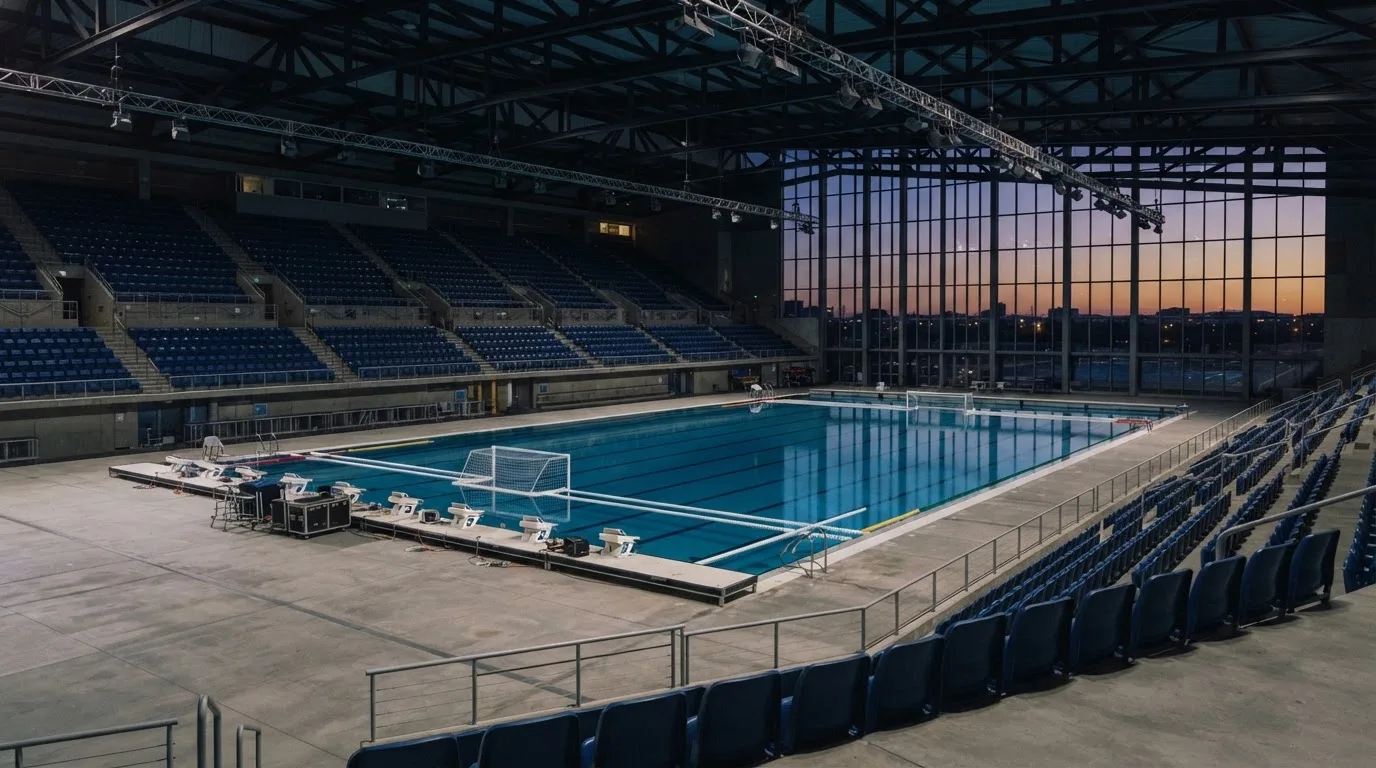
The international calendar is governed by World Aquatics, the highest body in the sport. Men’s water polo was an Olympic team sport from the 1900 Games onward; women’s water polo joined the Olympic programme at Sydney 2000. World Championships for men have been held within the World Aquatics Championships every two to four years since 1973, with women’s competition added in 1986. That is the calendar a UK bettor is betting into: the Olympics, the World Aquatics Championships, continental championships (European, Asian, Pan American), the LEN Champions League at club level, and a domestic league scene in Hungary, Croatia, Spain, Italy, Serbia and Montenegro that bookmakers occasionally price on the major nights.
Water polo betting markets at UK-licensed operators sit in a small, well-defined set: match winner (1X2 in two-way fixtures because there is no draw at the elite level except after a shootout — most bookmakers settle the regular-time line as the primary market and add an “any result including shootout” line as the secondary), handicap (a -1.5 or -2.5 goal line where one side is a heavy favourite), totals (over/under on the total goals, usually set around 13.5 to 15.5 for a men’s international), next goal, quarter winner, and player props in a small number of televised matches. Some operators also offer outrights on tournament winners weeks before the event.
What “value” actually means at the betting site
A value bet is a price whose implied probability is lower than the bettor’s estimate of the true probability. That is the whole definition. It does not mean “the price I like”, it does not mean “the team that should win”, and it certainly does not mean a tip from a website. It means a number, set against another number, with the second number arrived at independently.

Three pieces go into the judgement. First, the form picture: results in the last six to ten matches, weighted towards the most recent, with a sharp eye on strength of opposition. Water polo internationals are sparse — a top team plays perhaps eight to fifteen fixtures a year outside a tournament year — so a single result can swing a form picture disproportionately. Second, the roster picture: who is in the squad, who is suspended, who is carrying an old shoulder injury, and whether the goalkeeper of record has been rotated. Third, the market’s own line: where each of several bookmakers has set the price, and how wide the spread between them is. A price that is out of line with the rest of the market by more than the margin of that market is a candidate for value; a price that is broadly in line is just the market’s view.
The next step is to turn the estimated probability into a price. If a bettor’s read says Croatia is a 60% chance to win in regular time, the fair decimal price is 1 ÷ 0.60, or 1.67. Anything at 1.80 or above is value on that read; anything at 1.50 is not, regardless of how strongly the bettor believes Croatia will win. The discipline of that conversion — model first, price second — is the only thing that separates betting from backing.
None of this is unique to water polo. It is how betting works in any sport with a thinner information environment than the Premier League: the steps are the same, the inputs are scarcer, and a tipster’s “research” is rarely more than a press read.
The bookmaker’s margin, and how it sits inside the odds
Every price on a betting site carries the bookmaker’s margin. It is the cut the operator keeps from every unit bet, before any payout, expressed as a percentage of turnover. The bettor does not see it as a line item; it is baked into the prices so that all outcomes sum to more than 100% of the stake that would pay them out.
Take an illustrative two-way market with decimal odds of 1.90 on each side. The implied probability of each outcome, naively, is 1 ÷ 1.90, or about 52.63%. Add the two probabilities and you get 105.26%. The 5.26% above 100% is the bookmaker’s margin on that market. The payout share — the fraction of every pound staked that the bookmaker returns to customers in the long run — is 1 ÷ 105.26%, or about 94.87%. Margin and payout share are the same market seen from two sides: a 5% margin is a 95% payout share.
In real water polo markets, the margin on match winner in a men’s international sits higher than that — often in the 7% to 10% range, because the market is thin and the operator’s pricing model is fed by less liquidity. Totals (over/under on goals) can carry a similar margin. Outrights on a tournament winner carry even more, sometimes 15% to 25%, because the field is large and the operator’s risk is dispersed across many outcomes.
That is why a tipster’s “lock of the week” at 1.80 is rarely the value it looks like. A 1.80 shot has an implied probability of 55.6% and, on a market with a 9% margin, an underlying true probability closer to 51% once the juice is stripped out. The tipster has to be right more often than the market to make a long-run profit at that price.
The analysis of this market for the illustrative 1.90 / 1.90 example above: a £10 stake on one side returns £19 if it wins; the bookmaker keeps, on average across all stakes placed on this market, about 5 pence in the pound over the long run. Where a market’s margin widens to 9% (closer to a real water polo match-winner line), the operator’s long-run take rises to about 9 pence in the pound, and the same £10 stake still returns £19 on a win but the losing stakes vanish more quickly into the operator’s pocket. The wider the margin, the harder a tip has to work.
Staking and bankroll: how much to put on each tip
The arithmetic of how much to stake is separate from the arithmetic of which side to back, and most bettors conflate them. A value bet is one where the price exceeds the true probability; the stake is a separate decision governed by bankroll and by how confident the bettor is in the read.
The standard approach is a flat unit stake — say, 1% or 2% of the bankroll per bet, regardless of how “strong” the value is. That is dull, and it works because it removes the bettor’s tendency to over-stake on the tip they like and under-stake on the close one. A more aggressive approach is the Kelly criterion, which sizes the stake to the edge: if a bettor believes Croatia is 60% to win and the price is 1.80 (an implied 55.6%), the edge is 4.4 percentage points and the Kelly stake is roughly 4.4 ÷ (80 − 56), or about 18% of the bankroll — a number so high that serious bettors use a “fractional Kelly”, often half or a quarter, because the variance of an 18% stake will wipe the bankroll out before the long-run edge materialises.
For water polo, where markets are thin and the variance of any single read is high, fractional Kelly at a quarter or a tenth is the realistic answer for most bettors. A flat 1% unit is the realistic answer for almost everyone else. The point is not the formula; it is that the stake is small relative to the bank, so that ten losing tips in a row do not end the betting.
Bankroll discipline is also what stops a tipster’s subscription from looking like an investment. A tipster who charges £30 a month and posts a 53% strike rate at average odds of 1.85 is, on the face of it, profitable. After the margin on each market is stripped back in, after the dead heat losses on each-way bets, after the tipster’s mistakes on the bad weekends, the realistic edge is closer to a couple of percentage points. At a £10 unit stake and 200 bets a year, that is a few hundred pounds of edge against £600 of tipster fees. It is not a wage.
What the UK market looks like for water polo
Ten UK-licensed bookmakers are reviewed in the comparison later on this page. None of them is built around water polo — it is a niche sport in Great Britain, the television coverage is occasional, and the betting menu is a sidebar rather than a tab. That shape matters for the choice.
A bookmaker that covers water polo with a 1X2 line, a handicap line and an over/under on goals is doing the minimum useful. A bookmaker that adds outrights on the World Championships, quarter betting and a small player-prop menu for televised matches is doing more than most. A bookmaker that does not price water polo at all outside the Olympic window is a brand to come back to for football and leave for the niche.
The deeper question is whether the price on a niche market is competitive. A bookmaker with no liquidity in water polo is pricing off a model and a single feed; a bookmaker with even modest in-house trading is pricing off its own book and may shade a line a half-point in either direction for risk-management reasons. The bettor who wants the best price on Croatia versus Italy at 19:00 has to check two or three of the brands reviewed below, because the spread between them on a thin market is wider than on a Premier League game.
What a betting tip is worth, and what it is not
A tip is an opinion. A useful tip is an opinion with a record: a track that shows the strike rate, the average odds, the long-run return and, ideally, the conditions under which the tip was made (league, time of season, type of bet). A tip that arrives without those numbers is marketing copy. A tip that arrives with the numbers and a 49% strike rate at average odds of 2.10 is, on its face, losing.
There is no shortcut to that judgement that does not require reading the numbers. The tipster’s website says they have a 12% return on investment over the season; the reader asks for the underlying data, the sample size, the bookmakers the bets were placed with and the dates. Most tipsters cannot produce it. Those who can, often fail the audit at the data step.
The honest version of a water polo betting tip in 2026 is the same as the honest version in any year: it is a read of a price against a probability, sized at a small fraction of the bankroll, placed at a licensed bookmaker, accepted to be wrong more often than it is right.
Bonuses and free bets on water polo: what the marketing leaves out
The offers that appear on the comparison brands’ home pages follow the same pattern across British online bookmakers: a sports welcome offer that pairs a first deposit or a first bet with a free-bet bundle, occasional price boosts on the marquee football match, and acca insurance on a Saturday accumulator. None of these is a water polo offer in any specific sense — they are bookmaker-wide promotions on which a water polo bet can be settled as the qualifying stake or the qualifying bet, subject to the offer’s own minimum odds.
The marketing on these offers uses two words that repay attention. “Free bet” is the first. A free bet is credit the bookmaker credits to the account; the stake is usually not returned with a win, so a £10 free bet at 2.0 returns £10 in profit, not £20. The headline “£40 in free bets” is not £40 added to the balance; it is four £10 stakes whose returns are the profit only, and only on wins. “Risk-free” is the second. A risk-free bet is one where, if the bet loses, the stake is refunded as a free bet or credit — not as cash, unless the offer says so. A refund in credit is a refund that can only be re-staked, and the re-stake comes with its own conditions. The risk-free framing is the bookmaker’s, not the bettor’s.
The mechanics that matter are the minimum odds for a qualifying bet (most sports welcome offers require a minimum decimal price in the 1.5 to 2.0 range, which means the qualifying bet has to be a price at which the bookmaker’s margin is doing real work), the expiry (free bets expire within 7 days at most of the brands below, and a free bet that expires unwagered is a free bet that returned nothing), and any wagering requirement on returns (a bonus balance with a 5x wagering requirement is a balance that has to be re-staked five times before it becomes withdrawable cash, and the re-staking has to happen on markets at the minimum odds the offer names).
One rule that applies to every licensed British bookmaker since 19 January 2026: any wagering requirement on a bonus is capped at 10x. A £10 bonus at 50x is no longer permitted at a UKGC-licensed operator; the same £10 bonus can carry at most £100 of wagering. That cap is part of the consumer-protection architecture and is the practical reason a UK-licensed bonus is, on the same headline number, worth more than the same headline at an offshore brand.
Mixed-product promotions — an offer that requires the customer to bet on football to get free casino spins, for instance — are also banned at licensed operators from the same date. Water polo bets qualify under “sports” or “sports betting” in almost every offer; whether they qualify under a specific sport-restricted promotion depends on the offer’s own small print.
Promo codes, voucher codes and affiliate links do not appear on this page. The offers are described qualitatively because the comparison is between bookmakers, not between current promotions, and the headline number is rarely the number the bettor keeps.
Bet types and odds: how a water polo bet settles
A single is the simplest form: one selection, one outcome, settled at the price at the time the bet was placed. A double is two selections, both of which must land, with the price being the product of the two decimal odds. An accumulator (an “acca” in British usage) extends the chain to three or more selections, with the price the product of all of them. The longer the chain, the higher the price and the lower the probability that all of them land.
A each-way bet is a stake split into two equal parts: one on the selection to win, one on the selection to “place” (finish in a place position the bookmaker defines). On a six-runner horse race the place terms are one-quarter the win odds for the first two places; the each-way terms on a water polo outright are bookmaker-defined and often less generous, because the place threshold on a small field is loose. The stake doubles — a £10 each-way bet is a £20 total stake, with £10 on the win and £10 on the place — and the payout reflects both halves.
A bet builder is a same-event accumulator: the bettor picks two or more markets from the same match (for instance, Croatia to win and total goals over 14.5) and the price is the product of the legs. Bet builders on water polo are rarer than on football — the markets are thinner — and where the brand offers it, the margin on the combined price is usually wider than the margin on any single leg. The wider margin is the price of the convenience.
Cash out is the bookmaker’s offer to settle the bet early, at a price the bookmaker sets from its live model. A cash out at £80 on a bet that would return £100 at full-time is a £20 haircut for the certainty; whether to take it depends on the price the bettor originally took, the state of the match, and whether the bettor still believes in the read.
In-play betting is the live market that updates as the match progresses. Water polo in-play is offered by the larger brands on the bigger televised matches — the Olympic knockout rounds, the European Championship quarter-finals and semi-finals, the LEN Champions League Final — and it is rarely offered on a Tuesday night domestic game in Hungary. The in-play market on a niche sport is thinner than the pre-match market, the margin is wider, and the price moves fast.
Fractional odds are the British form. A price of 5/1 returns £5 in profit for every £1 staked, plus the £1 stake, so the total return on a winning £10 bet is £60. The decimal form, used on every online bookmaker’s site as well as in the maths above, is the fractional price plus one: 5/1 in decimal is 6.00, 11/4 is 3.75, evens (1/1) is 2.00. The conversion is exact, and a bettor who knows both can read any bookmaker’s slip.
Tournaments, fixtures and what is actually on the betting menu
The men’s and women’s Olympic water polo tournaments are the headline events: 12 teams in each gender, group stage then knockout, with the United States, Hungary, Croatia, Serbia, Italy, Spain, Montenegro and Greece the perennial contenders on the men’s side and the United States, Australia, Spain, Hungary and Italy the names to track on the women’s. The tournament is two weeks long and the betting menu runs from outright winner before the event to quarter, semi and final markets during it.
The World Aquatics Championships run every two years in odd-numbered years (with the 2025 edition in Budapest and the 2027 edition to be hosted in the calendar research does not specify here). Men’s water polo has been a World Championship event within the Aquatics Championships since 1973, with the women’s edition added in 1986. The World Championships draw a deeper field than the Olympics because there is no qualification cap on host associations, and a few of the bracket matches are televised in the UK.
The European Championships (LEN events) sit in the years between Olympics and World Championships. Hungary and Croatia have dominated men’s European Championships for the last two decades, with Serbia, Italy and Spain the consistent quarter-finalists. The LEN Champions League at club level runs through the European autumn and spring and is the club competition that draws the most televised minutes.
Domestic leagues in Hungary, Croatia, Spain, Italy, Serbia and Montenegro are followed by their own domestic broadcasters, and the bookmakers listed below price the bigger matches of those leagues when the calendar lines up — typically the closing weeks of the Hungarian league and the playoff rounds in Croatia and Montenegro. The domestic-league offering is thin, the prices move on low liquidity, and a tipster who claims to have an edge there without explaining the data sources is selling a story.
The other side of the calendar is the women’s game, which has been an Olympic sport only since Sydney 2000 and has a smaller but real international calendar. The US, Australia, Spain, Hungary and Italy are the names that recur; the betting market on the women’s game is shallower than the men’s, and the prices are correspondingly wider in margin.
For a UK bettor, the practical rhythm is: pre-Olympic outrights and group-stage prices become available six to nine months before the event, in-play markets become dense in the knockout rounds, and the niche market closes the morning after the final. The World Aquatics cycle provides a similar but smaller window in non-Olympic years.
Responsible gambling: the tools a licensed bookmaker has to provide
A bookmaker licensed by the Gambling Commission in Great Britain is bound by a set of player-protection rules that an unlicensed offshore brand does not have to follow. They are not optional extras — they are licence conditions, and the Commission’s enforcement record over the last five years shows fines and licence reviews for brands that fall short.
Identity verification before the first deposit is the first condition a UK bettor meets. Since 7 May 2019, every licensed remote operator has had to verify a customer’s name, address and date of birth before the customer can deposit or gamble, including with a free bet or bonus. That is why the sign-up flow on any of the brands below asks for a passport or driving licence and a proof of address; it is also why a licensed site cannot be played anonymously.
GAMSTOP is the national multi-operator self-exclusion scheme. Since 31 March 2020 it has been a mandatory licence condition for online operators, and every GB-licensed online bookmaker is a member. A customer who registers with GAMSTOP chooses a six-month, one-year, five-year, or five-year-with-auto-renewal exclusion period; after the minimum period the exclusion stays in place for a further seven years unless the customer asks GAMSTOP to remove it. GAMSTOP covers online sites and apps; high-street betting shops use a separate service. It does not cover unlicensed offshore sites, which is the practical reason a self-excluded customer can still reach one of those brands if they choose to.
A financial vulnerability check has applied to licensed remote betting since 30 August 2024, and the threshold for triggering it became operational on 28 February 2025: a customer whose deposits minus withdrawals exceed £150 in a rolling 30 days is subject to a public-record check (bankruptcy, county court judgments, similar) at the point of those deposits. It is not an income check and not a credit reference check. Financial risk assessments — the heavier “affordability checks” of the press coverage — have been announced in a staged plan with no start date, and that is the right way to describe them: announced, staged, no start date.
Deposit limits are the customer’s tool. Every licensed operator has to offer a gross deposit limit on a fixed time frame, and the customer can set one voluntarily. There is no state-set ceiling; the operator’s own stake and bet limits are set by the operator under its own licence conditions, and they may restrict a customer without explanation.
Help is widely advertised. GamCare runs the National Gambling Helpline; GambleAware funds treatment and education; the NHS runs gambling clinics in several regions; Gamblers Anonymous runs peer-support meetings. A licensed operator’s safer-gambling page links out to all four.
Two things to keep separate. The first: the credit-card ban. Since 14 April 2020 it has been unlawful for a GB-licensed gambling operator to accept a credit card for gambling, including a credit-card-funded payment through an e-wallet. Debit cards and bank-based payments are not covered by that ban. The second: the player pays no tax on betting winnings in Great Britain. General Betting Duty is the operator’s tax on gross profits and is not a charge on the customer. A professional gambler, defined by HMRC, is a different case and is not the subject of this page.
The licensed-versus-offshore question, in plain terms
A bookmaker licensed by the Gambling Commission offers a UKGC-regulated account: identity verified before the first deposit, GAMSTOP coverage, deposit limits, the 10x bonus wagering cap, the financial vulnerability check at the £150 threshold, a Commission-run complaints route and an approved alternative-dispute-resolution body if the operator’s own service fails. The bettor can lose money — that is what betting is — but the rules of the engagement are British.
An offshore brand without a UKGC licence offers none of those. No GAMSTOP, no Commission complaints route, no approved ADR, no British consumer redress if funds are withheld, no 10x bonus cap, no financial vulnerability check. The bettor can still play — there is no offence against the customer in placing a bet on an unlicensed site — and the bettor can still win and be paid; the difference is that the protections are absent and the enforcement route, if the operator refuses to pay, does not run through a British court or regulator. The Commission disrupts unlicensed sites in other ways — cease-and-desist notices, search-engine referrals, registrar and payment-provider work, and court-order DNS blocking powers that have been granted or are imminent — but blocking is not the same as prohibition, and an unlicensed brand that wants to reach a UK bettor has workarounds.
The honest framing, in a single sentence: licensed means checks, limits, GAMSTOP, the bonus cap and the vulnerability check; unlicensed means none of those and the practical risk that a dispute is unresolvable in Britain. Neither is automatically “the safe choice” — both can leave a bettor out of pocket, because betting is betting — but the architecture is different and the choice is the bettor’s.
The ten bookmakers reviewed on this page
The ten brands below are all on the Gambling Commission’s public register against a licence holder that holds a remote general betting standard (real events) licence for Great Britain. Several of them are familiar from Premier League football and Cheltenham racing; several are quieter brands that nonetheless cover the major water polo fixtures. They are listed in the order of the comparison table that follows; the table sets out the licence holder, the Commission account number and the operator’s own published terms on water polo coverage. The reviews underneath work through what each operator actually does on this market — and what it does not.
A note on the licence numbers: the Commission’s public register lists each operator against a licence holder and an account number. Where the operator is a single brand, the licence holder is the operator; where several brands sit under one licensee (Ladbrokes and Coral are the canonical example, Paddy Power and Betfair are another), they are not independent operators and are not double-counted. The ten below are ten licences held by ten licence holders; a reader who wants to verify any of them can search the Commission’s public register by business name, trading name, domain or account number, and the search result is the licence status as at the date of the query. A licence that has been surrendered, revoked or put under review shows up in the register entry; a clean entry is a live licence.
Betfred
Betfred’s licence is held by Petfre (Gibraltar) Limited under Gambling Commission account 39544, with categories covering remote general betting standard (real events). The Betfred Sports, Casino & Games app covers 21 sports alongside over 2,000 casino-style games, and the brand is one of the largest high-street bookmakers in the country.
Water polo coverage sits inside the sports tab in the same way as on the other mainstream brands: a 1X2 line on the bigger men’s internationals, totals over/under on goals, and a handicap line on the closest matches. The deeper markets — quarter betting, player props — are rare at Betfred outside the Olympic window, but the price on a 1X2 line is competitive because Betfred’s liquidity in major sports is large enough to shade the line in either direction.
The book is built for the British punter, with Best Odds Guaranteed on UK and Irish horse racing from 8 AM on the day of the race (a separate feature, not a water polo one), and a sports welcome offer that runs in line with the rest of the British mainstream. For a bettor whose water polo interest is occasional — the Olympics every four years, the World Championships every two — Betfred is a sensible single account rather than a specialist one.
Unibet
Unibet’s UK site is run by Platinum Gaming Limited, Gibraltar, under Gambling Commission account 45322. The brand says it has operated since 1999, and the UK operation has been live since the early 2000s.
The water polo menu is broader than Betfred’s: 1X2, handicap, totals, and a small outright market on the bigger tournaments, with the price refreshed through the working week before the event. Unibet’s sports welcome offer is “Get £40 in Free Bets when you bet £20”: a deposit and sports bet of £20 or more at minimum odds of 2.0 (1/1), with free bets expiring within 7 days of issue. The minimum-odds line at 2.0 is a tight requirement — it excludes short-priced favourites and most handicap lines — and a bettor who wants to use a water polo match as the qualifying bet has to find a price at 2.0 or above on a market with enough liquidity that the price has not been inflated for the promotion.
Unibet is the brand for a bettor who wants a deeper water polo menu than the mainstream minimum and who reads the European club scene as well as the international calendar. The price is competitive on the bigger matches.
London Bet
London Bet runs under a Gambling Commission remote licence held by Thistle Bet Limited under Commission account 66362. The London.bet app combines sports betting on football, tennis, horse racing, greyhounds, darts, golf, cricket, NFL, NBA, MLB and snooker with Pragmatic Play casino slots and live in-play betting.
Water polo is on the sports menu but at the thinner end of the offering. The brand is built around British punt sports and a casino extension; the niche-sport menu is a sidebar rather than a tab. A bettor whose interest in water polo is the Olympics and a couple of World Championships a year will find London Bet adequate; a bettor who wants the European club scene priced weekly will not.
Copybet
Copybet’s licence is held by Copybet UK Limited under Gambling Commission account 53774. The brand’s sports app offers Best Odds Guaranteed all day, every day on all UK and Irish racing, and pays first past the post on horse racing even if the winner is later disqualified. Both features are racing-specific and do not apply to water polo.
Water polo coverage at Copybet is in line with the smaller end of the British market: 1X2 and totals on the men’s international calendar, with handicap markets on the closest matches. The brand is useful for the bettor who wants a single account across racing and a small niche-sport menu, and the licence is clean.
Fitzdares
Fitzdares’ licence is held by Fitzdares Limited under Gambling Commission account 400. The Fitzdares app offers cash out, accumulators, Lucky 15s, specials and antepost markets on horse racing, football, tennis, rugby, cricket, golf and American football, with in-play live odds. The sports menu is built around British and American betting sports; water polo is not at the centre of it, but the niche menu is present.
The brand’s positioning is premium: a smaller customer base than the high-street giants, a focus on horse racing and the bigger football matches, and a tailored service that includes the same kinds of niche props the bigger brands offer on marquee events. A water polo bettor using Fitzdares is using it as a complement to a horse-racing account rather than as a specialist destination.
BoyleSports
BoyleSports’ UK licence is held by BoyleSports Enterprise under Commission account 39469. The sports welcome offer for UK players is £20 in free bets when a £10 bet is placed, with a separate offer of €30 in free bets for a €10 bet for Irish players. The BoyleSports app is one of the larger Irish and UK operations apps, and the brand has a strong high-street presence in Ireland that carries through into the online offering.
Water polo is on the menu in the same shape as the other major British and Irish operators: 1X2, handicap and totals on the men’s international calendar, with outrights on the bigger tournaments. The brand’s strength is depth on UK and Irish racing and football rather than niche sports, and a bettor who comes to BoyleSports for water polo is using it as a mainstream account.
BetMGM
BetMGM’s UK licence is held by LeoVegas Gaming PLC under Commission account 39198. The brand is the European arm of the US BetMGM operation and runs on the LeoVegas platform.
The sports welcome offer for new UK customers is four £10 free bets (two football accumulators of 4+ selections and two sports multiples of 2+), valid for 7 days with minimum odds and opt-in required, for customers who deposit £10 or more and place a sports bet within 7 days. The structure of the welcome bundle is restrictive in form, accented to football and accumulators, and a bettor who wants a single sports bet as the qualifying bet has to read the small print. Water polo is on the sports menu and counts as a sport under the offer, but a £10 single on a men’s international at minimum odds is the cleanest qualifying bet rather than an accumulator on a thin market.
Paddy Power
Paddy Power’s UK licence is held by PPB Counterparty Services Limited under Commission account 39439. The Paddy Power Sports Betting app covers football, horse racing, boxing, rugby, tennis, golf, darts, snooker and F1. Water polo sits in the broader sports menu rather than the headliners.
Paddy Power is one of the British-Irish mainstream brands with the deepest in-house trading on niche sports. The water polo menu on the bigger events (Olympics, World Championships, European Championships) is competitive with Betfair and Bet365 on 1X2 and is often sharper on totals because the brand’s risk team prices the line as a separate product rather than as a derivative of the match-winner market. A bettor with a Paddy Power account already in use for football and racing can extend it to water polo without a second relationship.
Tote
Tote’s UK licence is held by TDCO Limited under Commission account 54779. Tote is a pool-betting operator with a long British history, and the modern Tote brand runs both pool betting and conventional fixed-odds betting through the same site.
Pool betting on water polo is not a market that exists in any meaningful depth in Great Britain — the liquidity is on horse racing. Fixed-odds on water polo is the relevant offering, and it is in line with the rest of the British mainstream. A bettor whose interest is the niche-sport menu alone will find Tote similar to the smaller end of the comparison; a bettor who wants both pool betting on racing and fixed odds on a broader menu will find Tote’s combined offering useful.
QuinnBet
QuinnBet’s licence is held by QuinnBet (Gibraltar) Limited under Commission account 61011, with categories covering remote general betting standard (real events). QuinnBet’s Best Odds Guaranteed applies to Irish and UK horse racing bets from 10:00am on singles, multiples and system bets, with a maximum benefit of £150 per customer per race. Like the other racing-specific BOG features on the comparison list, the water polo application is indirect.
The brand’s water polo coverage is on the sports menu in line with the smaller British operators, and the welcome offer is the standard sportsbook pattern. QuinnBet is a sensible single account for a bettor whose interest in niche sports is occasional rather than weekly.
Side-by-side: the ten licensed bookmakers
| Brand | Gambling Commission account and licence holder | What the operator’s own terms say about water polo |
|---|---|---|
| Betfred | Account 39544 — Petfre (Gibraltar) Limited | 1X2, handicap and totals on the men’s international calendar; deeper markets rare outside the Olympic window |
| Unibet | Account 45322 — Platinum Gaming Limited | 1X2, handicap, totals and a small outright market on the bigger tournaments; broader menu than the mainstream minimum |
| London Bet | Account 66362 — Thistle Bet Limited | 1X2 and totals on the men’s international calendar; niche menu is a sidebar |
| Copybet | Account 53774 — Copybet UK Limited | 1X2 and totals on the men’s international calendar; deeper markets on the closest matches |
| Fitzdares | Account 400 — Fitzdares Limited | 1X2 and totals on the bigger tournaments; niche menu sits behind the racing and football offering |
| BoyleSports | Account 39469 — BoyleSports Enterprise | 1X2, handicap and totals on the men’s international calendar; outrights on the bigger tournaments |
| BetMGM | Account 39198 — LeoVegas Gaming PLC | 1X2, handicap and totals on the men’s international calendar; broader menu around the bigger tournaments |
| Paddy Power | Account 39439 — PPB Counterparty Services Limited | 1X2, handicap and totals on the bigger events; in-house trading often sharp on totals |
| Tote | Account 54779 — TDCO Limited | Fixed-odds on the bigger tournaments in line with the British mainstream; pool betting on water polo is not a meaningful market |
| QuinnBet | Account 61011 — QuinnBet (Gibraltar) Limited | 1X2 and totals on the bigger tournaments; niche menu in line with the smaller British operators |
The table is read down the rows, not across the columns. Each brand is licensed by the Gambling Commission against the account number shown, the licence holder is the entity that holds the licence, and the third column is the operator’s own published terms on water polo coverage as those terms describe it. Two caveats belong beside the table rather than in it.
The first caveat is that the licence account numbers above are the ones the Gambling Commission’s public register shows for the listed brands as at the date of this page’s check; a reader who wants to verify can search the register by business name, trading name, domain or account number, and the search result is the live status as at the date of the query. The register does not stay static — licences are surrendered, revoked or put under review — and a brand whose entry is clean today can have a different entry tomorrow. The check takes about thirty seconds and is worth doing once before a first deposit, because the alternative is to play at a brand that has just lost its licence.
The second caveat is that “what the operator’s own terms say” is read off the published marketing pages and the published sports menu on each brand’s site. The shape of the menu shifts week to week: a brand with no water polo markets on a Tuesday in March can have a full 1X2, handicap and totals board on a Wednesday in July when the European Championships open. The deeper markets — quarter betting, player props, in-play on domestic leagues — appear and disappear as the calendar dictates. A bettor who wants a specific market on a specific event checks the operator’s site on the day.
What the margin means at a real water polo price
A real water polo 1X2 line on a men’s quarter-final at the European Championships is closer to 1.65 / 2.25 on the favourite and outsider, with a margin in the 4.8% to 8.6% range depending on the bookmaker. Take a 1.65 / 2.25 pair: implied probabilities are 60.6% and 44.4%, summing to 105%, a margin of about 4.8% on this specific pair — that is the low end of the real-world range. On a closer match priced at 1.85 / 1.95 the implied probabilities sum to about 105.4%, the same kind of 5.1% margin. The thinner the market, the wider the spread and the higher the margin; the bigger the event, the more bookmakers price it and the tighter the margin converges on the British mainstream’s 5% to 7% range.
The takeaway from this page is that the margin on water polo match-winner sits between roughly 5% and 9% at the larger operators and can run higher at the smaller ones on a single fixture, against a Premier League football 1X2 margin that sits closer to 3% to 5%. A tipster’s edge has to clear that wider margin before the bettor’s bankroll moves, and the wider the margin the harder that is.
A second piece of arithmetic belongs with the welcome offers: a £20 qualifying bet at 2.0 returns £40 if it wins, a profit of £20, against which the bettor receives four £10 free bets whose stake is not returned. Each £10 free bet at a fair price of 2.0 returns £10 in profit, or £40 across the bundle if all four win at fair prices — and the bet on which the free bet is placed carries the same margin as the qualifying bet. The headline “£40 in free bets” is £40 of stake, not £40 of expected value.
Reading the calendar in 2026
The 2026 calendar runs along three rails. The first is the European club competitions: the LEN Champions League group stage runs from October 2025 to April 2026, with the Final Eight early in the second quarter of the year. The second is the European Championships in men’s water polo, which sit in the summer of 2026 in a host city to be confirmed by LEN on its published schedule. The third is the build-up to the 2028 Olympic water polo tournament in Los Angeles, where qualification opens in 2026 and 2027 for the men’s and women’s fields.
A UK bettor planning to bet on water polo in 2026 should expect outright markets on the European Championships from late spring, group-stage prices from the early summer, knockout-round in-play from the quarter-finals onward, and no significant water polo betting menu between August and the next club competition. The World Aquatics Championships sit in 2027 and will be priced in the spring of that year rather than 2026.
The women’s calendar is similar in 2026, with a European Championships at the same time as the men’s and the same kind of build-up to the 2028 Olympics. The market is thinner, the prices wider, and the tipster’s edge, if any, has to clear a wider margin again.
Where this page leaves the reader
The page is a guide to the decision, not the decision. A reader who has followed it knows what a value bet is, what margin looks like inside the odds, how to size a stake against a bankroll, what a UKGC licence means in practice, and which of the ten brands reviewed above actually price water polo with enough depth to take a stake. What the page does not do is name a winner. The reader names the winner, with a price, at a stake sized to the bank, on a brand licensed to take it.
The two pieces of work that follow this page are the bettor’s. The first is the verification: a search of the Gambling Commission’s public register by brand name or domain, taking the thirty seconds to confirm the licence status as at the date of the search. The second is the price check: a comparison of two or three of the brands reviewed above on the specific market the bettor wants, taking the best price and the smallest margin.
After that, the bet is the bettor’s.
Frequently asked questions
What is a value bet and why is no tip ever certain?
A value bet is a price whose implied probability is lower than the bettor’s own estimate of the true probability — for example, a price of 2.00 on an outcome the bettor judges a 55% chance (where 2.00 implies 50%). No tip is ever certain because every estimate of probability is a model with error, the bookmaker’s margin takes a cut off every price, and a thin market like water polo carries wider pricing errors in both directions. The honest answer to a tip is “the price exceeds my read”, not “I am right”.
What is the bookmaker’s margin and how can it be seen in the odds?
The bookmaker’s margin is the cut the operator keeps from every unit bet on a market, expressed as a percentage. On a two-way market priced at 1.90 / 1.90, the implied probabilities (1 ÷ 1.90) sum to about 105.3%, and the 5.3% above 100% is the margin. On a real water polo match-winner line, the margin typically runs 5% to 9% — wider than the Premier League margin, because the market is thinner. The wider the margin, the harder a tipster’s edge has to work to deliver a long-run profit to the bettor.
How is the return on a bet worked out from the stake and the odds?
For a single bet at decimal odds, the total return on a win is the stake multiplied by the odds, and the net profit is the stake multiplied by (odds minus 1). A £10 stake at 2.50 returns £25 in total (£15 profit plus the £10 stake). For a combination bet (a double, treble or accumulator) the odds multiply into a single price: a double at 1.80 and 2.20 has a combined price of 3.96, and a £10 stake returns £39.60 if both legs land.
How can it be checked that a bookmaker holds a Gambling Commission licence?
The Gambling Commission’s public register can be searched by business name, trading name, domain or account number, and the entry shows the licence status, the licence holder and the categories the licence covers. A clean entry on the register is the test. The licence status can change, so it is worth re-checking at the date of a first deposit. The brands reviewed above are all on the register under the account numbers shown in the comparison table.
Which tools for controlling play does a licensed bookmaker have to offer?
A UKGC-licensed remote operator must verify a customer’s identity before the first deposit or bet, must be a member of GAMSTOP (the national multi-operator self-exclusion scheme), must offer deposit limits, and must link to help services (GamCare, GambleAware, NHS gambling clinics, Gamblers Anonymous). A financial vulnerability check has applied to licensed remote betting since 30 August 2024, with the operational threshold (deposits minus withdrawals exceeding £150 in a rolling 30 days) live since 28 February 2025. The Commission also publishes a complaints route and an approved alternative-dispute-resolution body for unresolved disputes.
US & other team sports – Darts betting
Content created by the «Darts betting» team
