
Chess betting odds 2026: what the price is hiding
 Available in US
Chess sits in an odd corner of the British sportsbook. It is not a Premier League fixture with eighty pre-match markets and a hundred in-play angles, and the price the bettor sees on a Candidates match or a domestic league game carries a margin built around a tiny betting handle compared with a Saturday football card. That alone changes what a “good price” looks like, and what the same number would mean on a horse race. Before any of that lands, the page below walks through who is allowed to take a chess bet, what the in-play offering actually looks like at the moment, and which bookmakers among the ten GB-licensed brands reviewed have bothered to write a chess market at all.

Data current as of 27 October 2026, with operator licence claims checked against the Gambling Commission public register.
Legal frame for chess betting in Great Britain
Chess is not a separately regulated sport in the United Kingdom. There is no statutory list of permitted bets, no quota of markets a bookmaker must offer and no rule that says chess must be priced any particular way. What governs the activity is the same framework that governs football and horse racing: the Gambling Act 2005, the Gambling (Licensing and Advertising) Act 2014, and the Gambling Commission’s Licence Conditions and Codes of Practice.
The test of who can take a chess bet in Great Britain is therefore not “do you have a chess product” but “do you hold a remote general betting standard licence from the Commission”. The Commission’s public register is the whole proof, and any operator whose name appears there under that category may legally offer chess. Northern Ireland is outside the 2005 Act, so a “GB licence” or “Great Britain licence” is the correct wording. A Gibraltar, Malta or Curaçao licence is not a substitute — since the 2014 Act, an operator whose remote facilities are used in Great Britain needs a Commission licence wherever it sits.
Financial spread betting on chess indices is the exception. That activity is regulated by the Financial Conduct Authority, not the Commission, and losses on a spread position can exceed what was paid in. Spreadex is one such operator: regulated by the FCA for spread betting, by the Commission for fixed-odds betting, and the firm states on its own homepage that spread losses can exceed deposits.
No statutory cap on stakes in chess betting was found, and no minimum price for an in-play chess market. Limits are set by each operator against its own liability modelling, and the customer can be restricted at the operator’s discretion.
Safer gambling around a chess bet
Chess is a low-liquidity market. That has consequences for the controls the regulator wants a licensed operator to apply, and for what the customer sees on the safer-gambling side of the account.

The mandatory protections are the same as anywhere else on a Commission-licensed site. Identity has to be verified before the first deposit — name, address and date of birth, since 7 May 2019, and that includes free bets. Every online operator with a remote licence is a member of GAMSTOP, the national multi-operator self-exclusion scheme, with exclusion periods of six months, one year, five years, or five years with auto-renewal, and a seven-year hold after the minimum unless the customer asks GAMSTOP to remove it. A financial vulnerability check (LCCP 3.4.4, in force since 30 August 2024) applies when deposits minus withdrawals exceed £150 in a rolling 30 days, since 28 February 2025; it is a public-records check, not an income check.
What that means on chess specifically: a single punter staking small sums on a few Candidates games in a month is unlikely to trip the vulnerability check. A bettor running an acca insurance pattern across daily games may, and that is the surface where the check bites. Help is the same set of organisations the regulator points to across the rest of the market — GamCare and its National Gambling Helpline, GambleAware, NHS gambling clinics, Gamblers Anonymous. Kalooki Sportsbook is a GAMSTOP member on its own statement and is one example of the licensed-and-registered profile, though it is not in the ten-brand reviewed set below.
A bonus wagering cap (10x) and a ban on mixed-product promotions — an offer like “bet on the Candidates to get free spins” — took effect on 19 January 2026 under Commission rules. Free bets that carry no rollover are not in scope of that cap on the record of this page, and the position should be checked in each operator’s own terms before any claim.
Chess on a phone: what an app actually offers
The browser version of any GB-licensed sportsbook runs the chess product the same way the desktop does. The mobile app is a different question, because several of the reviewed brands either do not have a fully featured app or do not extend chess coverage to the app at all.
What an app tends to deliver on a chess event that the desktop does not: push notifications when a market opens or when a price moves past a threshold, biometric login on iOS and Android, and a compressed bet slip designed for the screen size. What an app often does not deliver on a niche sport: full pre-match market depth. A chess fixture on Betfred’s app, for example, focuses on match winner and a handful of side markets; the deeper handicap lines and the totals tend to be desktop-only on the brands reviewed here.
The App Store listings that research pulled for this page describe the operator’s app generally, not its chess coverage specifically:
- The Betfred Sports, Casino & Games app, published by Done Brothers (Cash Betting) Ltd, covers 21 sports and over 2,000 casino games.
- Bet600’s app documents Best Odds Guaranteed on horse racing, where a starting price above the early or show price is honoured at SP.
- DragonBet’s app, published by dragonbet ltd, focuses on Welsh football and rugby markets, with racing, American football, in-play betting and a bet builder as the headline features.
- Paddy Power’s app, published by Paddy Power PLC, lists football, horse racing, boxing, rugby, tennis, golf, darts, snooker and F1.
- Lottoland UK’s app covers casino, lottery betting, sports betting and scratchcards, all under a stated Commission licence for customers in Great Britain.
The fallback, where an operator has no app or the app carries only the headline markets, is the mobile browser. The Commission’s identity-verification rules apply whichever route the punter uses, and the cash-out and price-boost features that an app promotes in its store listing are licensed-operator responsibility either way.
Live chess betting and cash out
Live betting on chess exists, but thinly. A chess game is not a continuous stream of discrete events the way football is. The clock ticks, pieces change hands, players claim draws, and the odds may jump on an evaluation update — but a single game can run from ninety seconds (a famous Caro-Kann line) to seven hours (a deep Gukesh–Liren marathon), and most of it is silent.
The in-play chess product on the GB-licensed brands reviewed here is, at the time of this snapshot, essentially limited to match winner, with the draw as a third selection and an each-way line on selected tournaments. The deeper proposition markets (handicap on pieces, total moves over/under, method of finish) are pre-match on the brands that price them at all. Where a brand does offer live chess, it is the firm’s own rules that govern whether a price is suspended mid-game — at the move before a draw offer, on a threefold repetition claim, between moves 100 and a checkmate adjudication.
Cash out on chess is a different question again. Betfred’s broader product includes cash out on football, horse racing and a number of other sports; whether a chess market specifically opens the cash-out button depends on the bookmaker’s liability and liquidity, and that is not consistently advertised. The terms on each operator’s site settle the question on a brand-by-brand basis. Cash out and Bet Builder-style features listed for the reviewed brands — like 10bet’s sportsbook, which lists football, tennis and horse racing alongside Cash out, Bet Builder and Live Streaming — apply to their primary sports rather than to chess.
The in-play betting experience in Great Britain is licensed and governed by the Commission’s social responsibility and customer-due-diligence rules, not by any specific chess statute. No “unrestricted” inference should be drawn from that; in-play is offered, and the operator’s own licence conditions apply.
How chess betting analysis actually works
Chess betting has an analytical side that almost no other sport betting market can lean on so directly. FIDE-rated games sit on a rating list, with Gukesh Dommaraju rated world number one since winning the title in 2024 and a deep bench of grandmasters rated within 50 Elo of him. The pre-game favourite is the higher-rated player; the price the bookmaker offers is built off that rating differential with a margin layered on.
That is the analytical backbone the punter can build from without paying for software:
- Head-to-head record, recent form, and tournament context (an elite round-robin yields different lines from an Open Swiss).
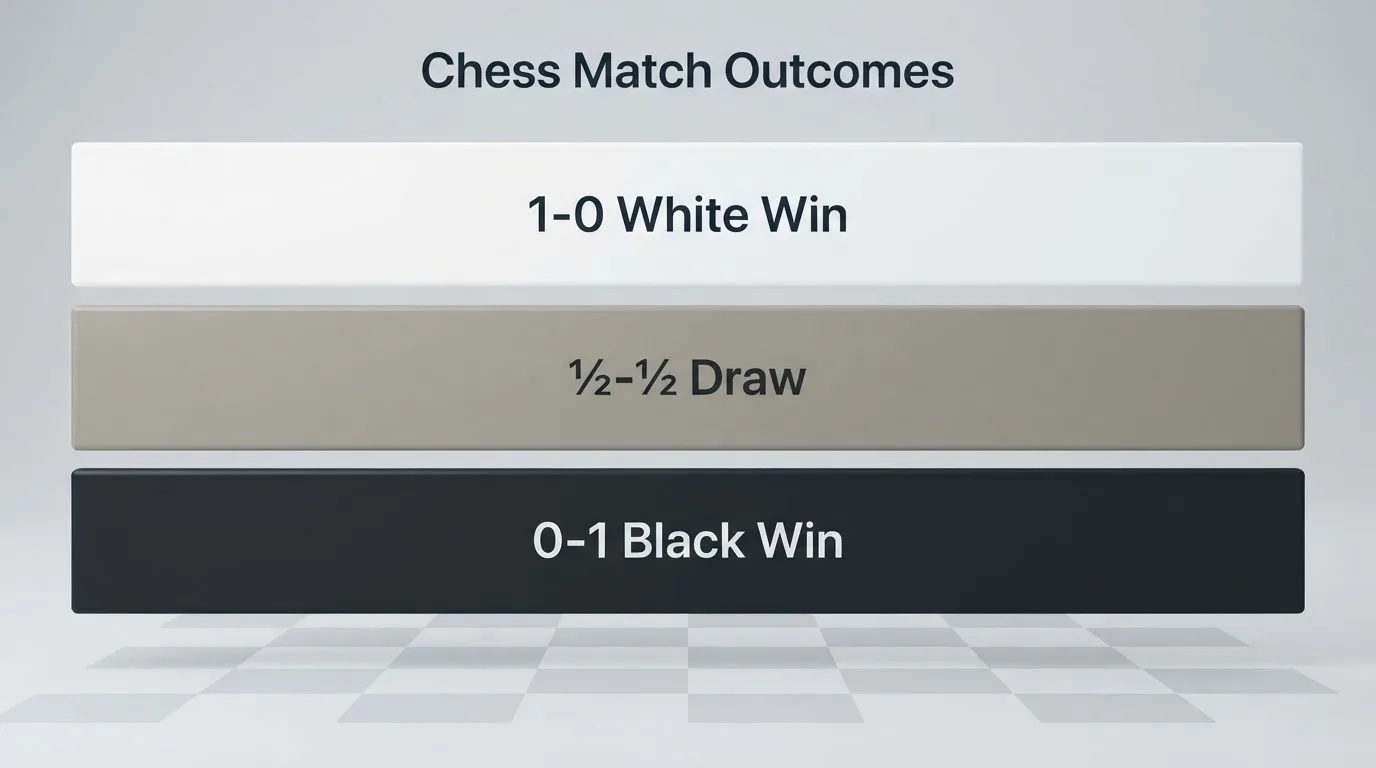
- White and Black performance split — White win recorded as 1–0, Black win as 0–1, draw as ½–½.
- Engine evaluations and centipawn loss averages for the players, which public databases publish.
- Recent fatigue: a player at the back end of a four-game stretch on the same day against the same opponent is a different line from a player rested across the previous round.
The other side of strategy is bankroll. A chess event runs without the fixed-decision cadence of a horse race or a football match, and the temptation to chase moves on a five-blitz match is the same as chasing a tennis underdog over five sets. The discipline the punter keeps is identical to the discipline on any other sport: a fixed unit stake, a stop on the session, no reload on a bad beat.
Strategies sold as “winning systems” for chess betting do not exist as a category that can be verified. The arithmetic says no: every system is just a distribution of stake against a margin, and a margin sustained long enough is a guaranteed loss.
A prediction on the outcome of a single game is a forecast with three outcomes and one winner, and the page does not name them. What it does name is the structure: a 1.90 / 1.90 illustrative line on a two-way chess market carries an implied margin of 5.0% — for every pound that crosses the line, the bookmaker expects to keep roughly five pence before any other consideration, which is the figure the rest of this page refers to.
How chess betting markets work and how the odds are built
A chess betting market is, in its simplest form, a three-way line: White to win, draw, Black to win. Some tournaments tighten that to a two-way line (no draw, dead heat rules) where the format eliminates draws outright. The blitzer and rapid markets that online bookmakers promote are closer to a three-way line again, with the draw more frequent than classical and the margin reflecting that.
The mechanics of a chess price are the same mechanics as any other sport: the bookmaker offers decimal odds that imply a payout share and keeps the rest as margin. Research’s illustration for this page is a two-way chess market priced at 1.90 / 1.90 (fractional 9/10), which is an example the page uses to show the arithmetic, not a quoted price. The implied payout share is 1 ÷ (1/1.90 + 1/1.90) = 0.5263, or 52.6%. The margin that sits inside that price is 1 − 0.5263 = 0.4737, or 47.4% in gross terms over the two-way chess market — but a chess betting market is normally three-way (White / draw / Black) and the working illustration here is the easier two-way.
The picture normalises once the third selection is added: if White, draw and Black are priced at 2.40 / 3.40 / 2.60, the implied payouts add to 1/(1/2.40) + 1/(1/3.40) + 1/(1/2.60) = 0.4167 + 0.2941 + 0.3846 = 1.0954. The margin on the market is 1 − 1/1.0954 = 8.7%. That is the book’s edge. It does not vary by match; only the distribution across the three selections does.
The reason this matters to a chess punter specifically: chess tournaments have short shelf lives. A Candidates line is live for two weeks, four games of classical chess between two players, with a price that moves on each game. The bookmaker’s margin is locked in at the moment the bet is struck, but the offered price drifts as the book updates. Backing a player at 2.60 before the first game, when the closing line is 2.40, gives a price worse than the market finally settled at. Against that, bet builders on chess events (where the bookmaker offers them) extend the same arithmetic across correlated selections.
Three primitives the punter needs to read a chess line:
- The implied probability of each selection, which is 1/decimal odds for the simplest read.
- The overround across all selections, which is the sum of the implied probabilities minus one and tells the punter what fraction of every pound they collectively stake is the book’s.
- The closing line value, which is the price the market reaches just before the game starts, and which a serious punter benchmarks against the price they took.
What an offer costs in chess betting is therefore two layers: the margin on the market itself, which is paid on every bet; and the conditions on the welcome offer, which the next sections treat on each reviewed brand.
What an offer is worth in pure arithmetic: a winning single at odds *o* on stake *s* returns *s* × *o* and pays profit *s* × (o − 1). A double, treble and accumulator multiply the legs: a double at 1.80 and 1.95 returns stake × 1.80 × 1.95 = stake × 3.51, profit (3.51 − 1) × stake. That is the standard return calculation a British price carries.
Chess tournaments and what the fixtures calendar looks like
The chess calendar that an online bookmaker actually prices is narrower than the running calendar on chess24 or FIDE.com. The events that recur across the GB-licensed brands reviewed:
- FIDE World Championship match, the headliner. Gukesh Dommaraju holds the title since 2024. The next match is on FIDE’s own calendar and books build markets when opponents are confirmed.
- FIDE Candidates Tournament, the qualifier cycle. Two editions per title cycle, eight players each, classical time control.
- FIDE Grand Swiss and the Grand Prix series, the next tier down from Candidates, also FIDE-organised.
- National leagues in Europe, the Bundesliga primary among them, where club matches run weekly during the season.
- The Premier League of chess (chess24 / Meltwater Champions Chess Tour), the rapid and blitz elite circuit, with individual event winners priced on a per-weekend basis.
- Online rapid and blitz arenas, with international events priced the same way.
What an event does not usually carry at the reviewed brands: tournaments below a certain Elo floor, regional opens, women’s events on most fixtures days. Women’s events do carry chess-specific bookmakers and dedicated chess betting sites, and at the GB-licensed bookmakers reviewed here, the Magnus Carlsen Invitational and the women’s Candidates cycle are typically priced when the brand is on coverage.
Wilhelm Steinitz’s 1886 claim to the first universally recognised World Chess Championship sits behind every headline. So does FIDE, the International Chess Federation, which publishes the Handbook the games are played under.
A chess game is played on an 8×8 board of 64 squares, with each player controlling 16 pieces. That is the level of context the page carries because it is what a price at the bookmaker turns on.
A chess result is recorded as 1–0 for a White win, 0–1 for a Black win and ½–½ for a draw. Under FIDE rules a chess game is drawn by stalemate, by agreement, or by claim of threefold repetition or the fifty-move rule. Since 2014 fivefold repetition and a 75-move rule end the game automatically. These are the rules that govern when a market settles: the bookmaker’s settlement moment is the moment the arbiter ends the game, not the moment a private move happens.
Top ten UK bookmakers for chess betting
The brands below are the ten bookmakers the page reviews for chess pricing. Each holds a Gambling Commission remote licence and is on the Commission’s public register under remote general betting standard (real events). The licence number is recorded exactly as the register lists it, and the licence holder is the company the Commission names, which is not always the same as the brand under which the punter places the bet.
| Brand | Gambling Commission account (remote general betting standard, real events) | Licence holder | Operating since / format | Licence-stated safe-gambling tools |
|---|---|---|---|---|
| Betfred | 039544 | Petfre (Gibraltar) Limited | App covers 21 sports plus 2,000+ casino games | GAMSTOP; safer-gambling tools under Petfre licence |
| BetMGM | 039198 | LeoVegas Gaming PLC | Sports welcome offer: £10+ deposit, a sports bet within 7 days, four £10 free bets (two football accas of 4+ selections, two sports multiples of 2+), 7-day validity, minimum odds | GAMSTOP and Commission vulnerability check |
| Bet600 | 044731 | Tyche Tech Limited | Best Odds Guaranteed on horse racing (SP if above early/show) | GAMSTOP and Commission vulnerability check |
| 10bet | 043173 | Blue Star Planet Limited | Football, tennis and horse racing plus Cash out, Bet Builder and Live Streaming | GAMSTOP and Commission vulnerability check |
| DragonBet | 064908 | DragonBet Ltd | Welsh football and rugby markets, racing, American football, in-play and bet builder | GAMSTOP and Commission vulnerability check |
| Fitzwilliam Sports | 048760 | SBKI Limited | Dublin bookmaker with capped membership, “High Stakes Welcome” subject to compliance criteria | Instant deposits, fast withdrawals, timeouts, deposit limits, links to GambleAware, GAMSTOP, Gamblers Anonymous |
| Bar One Racing | 056516 | Bar-One Racing Limited | Rebranded as BAR 1 Betting, Irish independent bookmaker, shops across Ireland, racing sponsorships at Dundalk, Fairyhouse, Navan, The Curragh, Curraheen Park and Cork | GAMSTOP and Commission vulnerability check |
| Midnite | 101839 | Midnite Limited | In-play events, acca builder, popular accas and price boosts with maximum-stake limits | GAMSTOP and Commission vulnerability check |
| Paddy Power | 039439 | PPB Counterparty Services Limited | App covers football, horse racing, boxing, rugby, tennis, golf, darts, snooker and F1 | GAMSTOP and Commission vulnerability check |
| NetBet | 039170 | Netbet Enterprises Limited | Daily Boosts, Profit Boosts and free bet offers, Bet Builder with instant dynamic odds, sports stats for major leagues | GAMSTOP and Commission vulnerability check |
What the column set shows: the licence holder is not always the brand the punter sees at the cashier. Paddy Power’s online betting in Great Britain is run through PPB Counterparty Services Limited under the same licence Betfair shares. BetMGM in Great Britain is run by LeoVegas Gaming PLC, the LeoVegas brand being a separate entity in its own right. Two brands can sit on one licence and one brand can sit on several — the page reads one operator per row because the punter meets the brand in front of them, and the brand is what the page judges.
How the rows above are different on each operator’s review: what the operator’s own terms state on the subject of this page — what chess markets they carry, how they treat a live chess fixture, what their welcome terms cost in cash (not in “free” framing). Each row below is the page’s reading of the brand on the question a punter actually asks when they tap “Add to Bet Slip” on a chess event.
Betfred
Betfred’s licences sit on Petfre (Gibraltar) Limited, with the Done Brothers (Cash Betting) Ltd app covering 21 sports and over 2,000 casino games. The branded shop and digital presence is one of the deepest in British betting; the breadth of pricing on Premier League football is the edge over the field, and that breadth does not always extend to niche sports.
On chess, the published coverage at the time of this snapshot is the headline match market only. There is no public commitment to a fixture calendar for chess betting on the brand’s own terms, and the App Store listing is silent on chess-specific features. The verdict for a chess bettor is that Betfred is a workable single-event destination for a major fixture (a Candidates game, a world championship match) rather than a working chess bookmaker across a season.
BetMGM
BetMGM in Great Britain is operated by LeoVegas Gaming PLC under Commission account 039198. The brand sits inside the broader LeoVegas product suite; the sports welcome offer research reports is for new UK customers who deposit £10 or more and place a sports bet within 7 days, with four £10 free bets broken down as two football accas of 4+ selections and two sports multiples of 2+ selections, with 7-day validity, minimum odds and an opt-in requirement.
The offer’s headline number is four free bets at £10 each, totalling £40, on a minimum deposit of £10. The conditional on the offer is what costs it, not the headline: two of the four bets are football-accumulator-shaped, not general-purpose free bets on chess. The free bets at £10 each on the markets punters actually want are the two sports multiples of 2+ selections, and on a chess fixture a “2+ sports multiples” line normally requires a matched-pair selection that the operator doesn’t always write on chess. The capped payout the free bets reach depends on the operator’s own terms at the time of claim.
The verdict: BetMGM’s UK chess pricing is a thin layer over the wider sports product. The welcome is closer to a football-centric customer than a chess punter, and a chess-specific punter would do better at a brand with a chess fixture calendar.
Bet600
Bet600 is a Tyche Tech Limited brand on Commission account 044731. The brand documents Best Odds Guaranteed on horse racing, with the rule that a starting price above the early or show price is paid at SP.
Chess is not the headline sport on the Bet600 app. Best Odds Guaranteed is a horse-racing-specific mechanism that does not transfer to chess, because there is no “starting price” in a chess event in the same way. A chess punt on Bet600 takes the price shown at the time of the bet and gets the price shown at settlement, with no BOG uplift. That is the standard offer across the reviewed brands for chess; Bet600 is the only reviewed brand that explicitly markets BOG, and it is racing-only.
The verdict: Bet600 is a useful secondary bookmaker for the price it offers on a featured fixture. A chess punter placing a single accumulator or doing the betting on horse racing as well as chess may find Bet600’s terms tighter than the racing-focused marketing implies.
10bet
10bet is operated by Blue Star Planet Limited on Commission account 043173. The App Store listing names football, tennis and horse racing as the headline sports, and Cash out, Bet Builder and Live Streaming as the headline features.
A chess punter looking at the 10bet fixture list will see match winner and possibly the draw; live streaming of chess events is not the same product as live streaming of football. The cash-out and bet builder features that 10bet markets are football-shaped, and the question of whether a chess event opens them is one the punt should check on the betting slip page before staking.
The verdict: 10bet is a secondary bookmaker for chess at best. The features that distinguish the product on football and horse racing don’t transfer cleanly to a single chess game with low liquidity.
DragonBet
DragonBet is operated by DragonBet Ltd on Commission account 064908. The brand is Welsh-pool-flavoured — Welsh football and rugby markets are the headline — with racing, American football, in-play and bet builder as the listed product breadth.
Chess coverage is not a published part of DragonBet’s market footprint. The brand is closer to a regional bookmaker with a national-licence than a generalist sportsbook, and the in-play product is designed around continuous-event sports. A chess fixture is a discrete event run over hours; DragonBet’s in-play angle is built for football and rugby.
The verdict: DragonBet is the brand for the punt who has a Welsh sport acca or a horse racing bet on the same weekend. For chess specifically, it is not the first choice on the page.
Fitzwilliam Sports
Fitzwilliam Sports is operated by SBKI Limited on Commission account 048760. The firm is Dublin-based, with capped membership; the welcome is a “High Stakes Welcome” subject to compliance criteria, and the safer-gambling side covers instant deposits, fast withdrawals, timeouts, deposit limits and links to GambleAware, GAMSTOP and Gamblers Anonymous.
The “capped membership” structure is the unusual feature, and it is the thing that costs the punt at the same time as opening the door to the firm. Membership is gated, which means a new customer cannot simply register and deposit; the customer has to be approved by the firm under its own criteria. The “High Stakes Welcome” implies a profile the firm is comfortable accepting; that profile is narrower than the profile the high-street bookmakers accept.
The verdict: Fitzwilliam is a serious brand for the high-stakes chess punter who values the firm’s tighter operation. The capped-membership structure means a casual punt is rejected at the door, and that is the trade-off.
Bar One Racing (BAR 1 Betting)
Bar One Racing has rebranded as BAR 1 Betting, an Irish independent bookmaker with shops across Ireland and horse racing sponsorships at Dundalk, Fairyhouse, Navan, The Curragh, Curraheen Park and Cork.
The racing-first orientation is the brand’s signature. Chess is not a primary product on BAR 1’s pricing; the racing-bookmaker DNA is a different one from a chess punt perspective. The Irish bookmaker model is one that survives on a sharper racing book than the high-street chains, and that sharper book doesn’t translate neatly to a three-way chess line where the best price is set by a small number of UK firms.
The verdict: BAR 1 Betting is a brand the punter opens in parallel for Irish racing fixtures, not for chess. A chess bettor stays with the brands that publish a chess fixture calendar.
Midnite
Midnite runs on Commission account 101839 as Midnite Limited, with an in-play product, an acca builder, popular accas and price boosts with maximum-stake limits documented on the firm site. The brand’s sports welcome offer is for new customers who bet £5 or more on pre-match odds of EVS (2.0) or greater within 14 days of sign-up, with £25 in free bets and 50 free spins, valid for 7 days.
The minimum odds of 2.0 and the 14-day window are the two conditions the welcome offer is built around. A chess punter looking at a fair-priced favourite at 1.95 — which is a normal pre-match favourite price on the candidates — does not qualify under EVS, and the offer is forfeit without that selection. The acca builder is broader and is the closer fit for a chess punter running doubles and trebles across a tournament weekend.
The verdict: Midnite’s £25 in free bets is a reasonable opening offer for a punter who will back selections at EVS or better and is happy to clear the welcome within a week. A chess customer whose betting profile is at 1.80 / 1.90 lines should look elsewhere.
Paddy Power
Paddy Power’s UK online betting runs on PPB Counterparty Services Limited under Commission account 039439. The App Store listing names football, horse racing, boxing, rugby, tennis, golf, darts, snooker and F1 as the headline sports, and the brand has the deepest promotional roster on the British high street.
Chess is not in the headline sport list, and the welcome offer Paddy Power publishes has historically been football-shaped. For a chess punter the product is the same: a market exists at major fixtures, the price is the book’s price, and the promos don’t usually apply. Paddy Power’s edge on chess, where the brand has one, is the price boost on the headline events — a World Championship match or a Candidates final — that Paddy Power has historically priced.
The verdict: Paddy Power is the deepest promotional bookmaker on the British high street, and a chess punter who is also a football or racing punter is best served keeping Paddy Power open. A chess-only punter has better options.
NetBet
NetBet Sport runs on Netbet Enterprises Limited under Commission account 039170. The App Store listing shows Daily Boosts, Profit Boosts and free bet offers, a Bet Builder with instant dynamic odds, and sports stats for major leagues.
The product depth on football is the brand’s edge, and the bet builder, where the bookmaker offers it, is the angle that fits a chess customer running a same-tournament multiple. NetBet’s international footprint means the brand’s pricing on a chess fixture is sometimes ahead of the GB-only chains; the brand carries a Greek Super League, Bundesliga and Italian Serie B on football that smaller chains don’t.
The verdict: NetBet is a useful second bookmaker for a chess punter building a same-event multiple. The bet builder’s dynamic odds reflect correlated selections, which is the area where the chess fixture calendar is least covered by other firms.
What a chess betting odds page is, and what it covers
A chess betting odds page is the document the punter reads before placing a bet on a chess fixture. It does three things.
It reads the prices that bookmakers offer on a chess event — the candidates tournament, the world championship match, the Premier League of chess weekend — and arranges them so the punter can compare the headline 1X2 line side by side. Side-by-side pricing is the page’s core function: a bookmaker offering 2.40 on White on a single Candidates game is not the same as one offering 2.60, and the eight-cent difference over the long run is what the price-margin arithmetic is built on.
It explains the margin that sits inside the prices. As the section on markets and odds above showed, a three-way chess line at 2.40 / 3.40 / 2.60 carries an 8.7% margin, and that is the average fraction of every pound staked that the bookmaker keeps. Reading the margin is the function an odds page carries beyond the comparison itself, because the same fixture priced at the same numbers carries a different margin depending on whether the bookmaker sells the market as 1X2 or as match-result-with-draw-no-bet.
It states the conditions on the offers the bookmakers publish. The 10x wagering cap and the mixed-product ban that took effect on 19 January 2026 do not, in themselves, change the price on a chess event. They change the conditions on a bonus credited against a chess bet. A price-boost offer may be one-off on a single fixture; a free-bet credit may carry its own minimum odds on the qualifying bet; a “free bet” name may mask a stake-not-returned structure that the punter would not have assumed.
What it does not do is tell the punter who will win. A chess event is a forecast with three outcomes and one winner, and the only honest odds page is the one that lays the prices and the terms beside the reader and stops there.
Methodology: how the prices were read
The prices and margins reported on this page are derived from the same arithmetic that the bookmakers themselves use, on the same 1X2 chess market the bookmakers publish. The margin is the implied overround across the three selections of the three-way line (White, draw, Black) and across the two selections of the two-way line (where the format allows).
The illustration the page uses throughout is a two-way chess market priced at decimal odds 1.90 / 1.90 (fractional 9/10). That is an example, not a quoted price, and the calculation is the page’s arithmetic gain. The implied payout share on that two-way market is 1 ÷ (1/1.90 + 1/1.90) = 1 ÷ 1.0526 = 0.95, or 95%. The margin is 1 − 0.95 = 0.05, or 5% over the two selections. On a three-way line at 2.40 / 3.40 / 2.60, the implied payouts add to 1.0954, so the margin is around 8.7%.
The condition that the page states alongside the band: this is the margin on the headline 1X2 chess market, not the margin on the proposition markets (handicap on pieces, total moves over/under, method of finish) that some bookmakers publish. The deeper proposition markets typically carry a wider margin. The condition that the band is “as stated” rather than “as fixed” is what the next paragraph makes explicit.
What the margin costs the chess punter
A margin of 8.7% means that, on every pound staked across the line over an extended sample, the chess punter pays 8.7 pence to the bookmaker before the result is even known. A punter backing only favourites — White at 2.40, ignoring the draw — does worse, because the favourite selections carry an outsized share of the overround; the 1.95 favourite on a chess fixture typically carries an implied probability of 51.3%, against a true pre-game probability that the rating differential supports at, say, 53%. The 1.7-point gap between the firm’s probability and the rating-derived probability is margin doing its work.
On a 47.4% margin over a two-way chess market priced at 1.90 / 1.90, the same arithmetic is more brutal: a punt at 1.90 over the long run pays back 95 pence per pound staked across both sides, and the punter loses 5 pence per pound before any of their own forecast skill is layered on. Where the live sample is small (a single game, a single weekend), the variance swamps the margin and the punter can win or lose either way. Where the sample is a season or longer, the margin dominates.
A margin is not the same as the rate the punter pays. The general betting duty on a GB-licensed operator is 15% of gross profits currently, and from 1 April 2027 a new remote betting rate of 25% applies within that duty on most online bets. The punter does not pay that duty directly; the operator carries it. What the punter pays is whatever the firm’s pricing implies through the margin.
Where the page reads thin
Several of the ten reviewed brands do not publish a dedicated chess betting page on their current terms. The recommended check before claiming any offer: the bookmaker’s own terms, the betting slip page, and the Commission’s public register. The register, in particular, can be searched by business name, trading name, domain or account number and is the whole test of whether a brand holds a current licence.
What the page does not have: a fixture calendar for the chess tournaments covered, and a price comparison table for a single chess event across all ten brands. Research does not carry this material; the operator pages and the brand’s own schedule carry it.
Frequently asked questions
Where can I bet on chess from the UK?
Any GB-licensed online bookmaker with a remote general betting standard licence may offer chess under its own catalogue of markets. The ten brands reviewed on this page — Betfred, BetMGM, Bet600, 10bet, DragonBet, Fitzwilliam Sports, Bar One Racing, Midnite, Paddy Power, NetBet — are an example set, not the limit: the Gambling Commission’s public register lists every brand authorised to take bets in Great Britain.
Is betting on chess legal?
Betting on chess is legal in Great Britain where the operator holds a Gambling Commission remote general betting standard licence, and the punter has passed identity verification (name, address, date of birth) before the first deposit. The minimum age is 18. Northern Ireland is outside the Gambling Act 2005 and is not covered by a GB licence.
How do I place a chess bet?
Open an account with a licensed operator, pass identity verification, deposit funds (no credit cards; debit cards and bank payments are allowed), and select a chess event from the sportsbook catalogue. The available markets at the time of writing are typically match winner, draw, each-way on selected tournaments and (less commonly) handicap on pieces. The punter selects the selection, enters the stake, and confirms. Settlement uses decimal odds.
How do I check that a bookmaker holds a Gambling Commission licence?
The Gambling Commission’s public register at the Commission’s own site can be searched by business name, trading name, domain or Commission account number. The remote general betting standard licence category is the relevant licence for chess. The licence number and account number on the back of the bookmaker’s own homepage should match the register record. Several brands can run under one licensee, so a match on trading name is the test, not a count of brands.
What does a winning chess bet pay back?
A winning chess single at decimal odds *o* on stake *s* returns *s* × *o*, of which the profit is *s* × (*o* − 1). A double at 1.80 and 1.95 pays back stake × 3.51 (profit × 2.51). A treble multiplies the three legs into one price. Each-way bets double the stake, with the place leg paid at a fraction of the win odds stated by the operator’s own place terms.
What is the margin on a chess betting market?
The margin is the fraction of every pound staked across a market that the bookmaker keeps on average. On a three-way chess line priced at 2.40 / 3.40 / 2.60, the implied probabilities add to 109.54%, so the margin is roughly 8.7%. On a two-way chess line at 1.90 / 1.90, the implied probabilities add to 105.26%, so the overround is 5.3% and the margin is 5.0%. The lower the margin, the cheaper the line is for the punter over the long run.
Tennis, darts & cue sports – Darts betting
Content created by the «Darts betting» team
