
Curling Betting Tips 2026
 Available in US
Curling sits in an unusual place on a British betting site. The sport draws genuine attention once every four years at the Winter Olympics and again when the World Curling Championships roll around, but it is rarely a headline market in between. Bookmakers trim their pre-event coverage during the slow stretch, then widen it dramatically when a major competition starts. That cycle shapes everything that follows on this page: how the odds are built, which markets appear at all, and why a tip that looked reasonable last season may be irrelevant by the time the next event begins.
Data current as of 27 October 2026, checked against the Gambling Commission’s public register.
This is a guide rather than a tip sheet. It explains what curling betting offers exist, how odds are constructed around an unfamiliar sport, how a value bet is identified in principle, and why no prediction is ever certain. It does not name winners, predict results, or invent picks. The arithmetic in the margin section is the only calculation on the page, and its inputs are an illustrative two-way market, not a quoted price.
Curling as a Betting Sport
Curling games usually last 8 or 10 ends; international competitive games are generally 10 ends. A team has 4 players (2 in doubles), and each player throws two of the team’s eight stones. After all 16 stones of an end are thrown, the team with the stone closest to the button scores one point for each of its stones closer than the opponent’s nearest stone; only stones in the house count. Tied curling games go to extra ends.
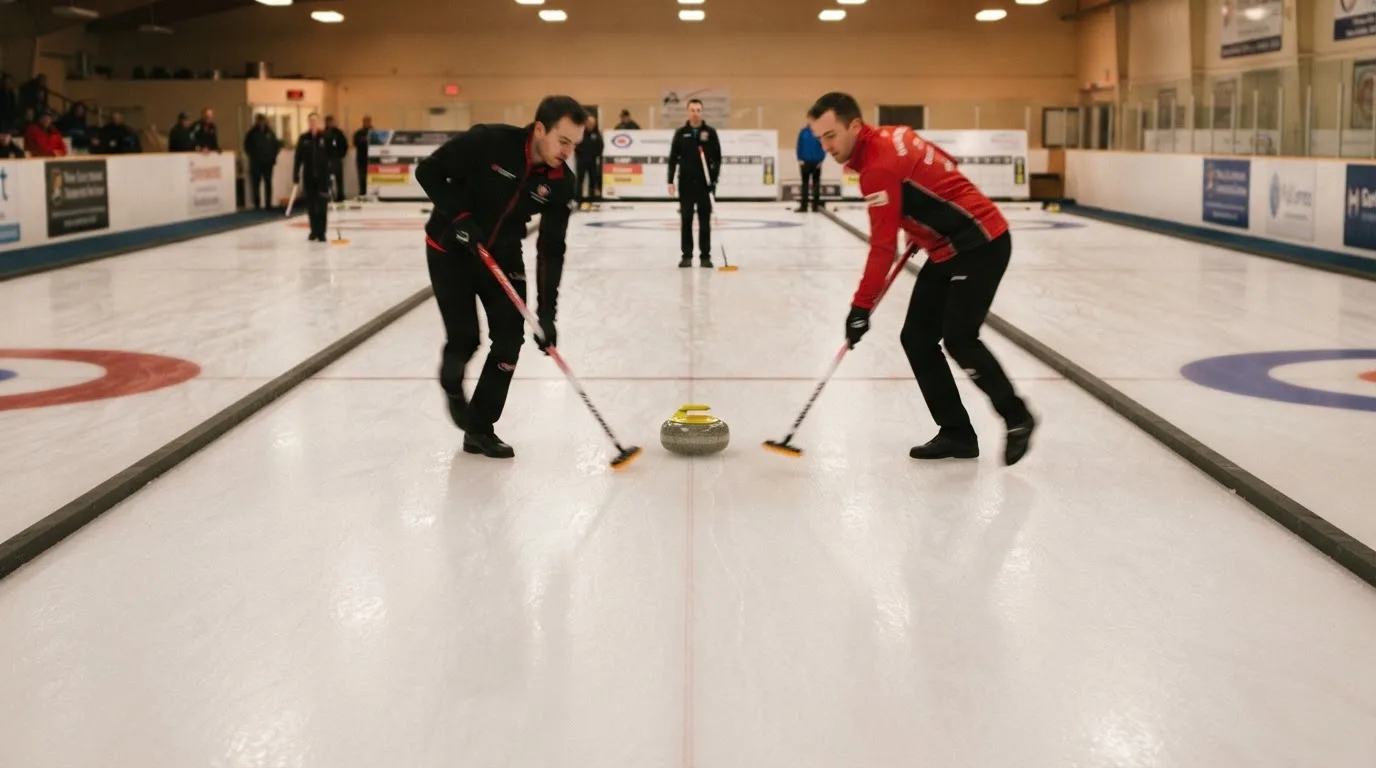
The scoring rule explains why the sport rewards patience and precision over outright pace. A single end can yield zero points if every stone finishes outside the house, and a well-placed guard can be worth more than a draw to the button. From a betting perspective this matters because a match that looks one-sided on paper can run for nine blank ends before a single decisive stone decides it.
The hammer, the last stone of an end, goes to the team that did not score in the previous end; if an end is blanked, the hammer stays with the same team. Hammer advantage is the single most discussed variable in curling commentary, and the markets price it accordingly. Live in-play markets during a blank end behave very differently from markets during an end where one side has already established a multiple-score threat.
Curling stones weigh between 17.24 and 19.96 kg (38 to 44 lb) under World Curling Federation rules. The weight is irrelevant to a betting slip but explains why the sport has a slower rhythm than others: a stone cannot be hurried, and an end takes roughly 35 to 40 minutes to complete. Live bettors should expect long gaps between decisive moments.
Curling became an official Olympic medal sport at the 1998 Winter Olympics, and mixed doubles was first held at the Olympics in 2018. The Olympic cycle is what draws the widest market coverage. Outside that four-year window, betting on curling means paying closer attention to which competitions the bookmaker has priced at all, and which ones have been relegated to a token offering.
Fixtures, Tournaments and the Calendar
The curling calendar is fragmented. World Curling Federation competitions run across the season: the men’s and women’s World Championships, the mixed doubles World Championship, the Continental Championships, the European Championships, and various Grand Slam events. Add the Winter Olympics every four years, the Winter Paralympics, the World Junior Championships, and a layer of national playdowns that produce the Olympic entries. A British bettor is most likely to find odds on World Championship events and, every four years, Olympic matches.
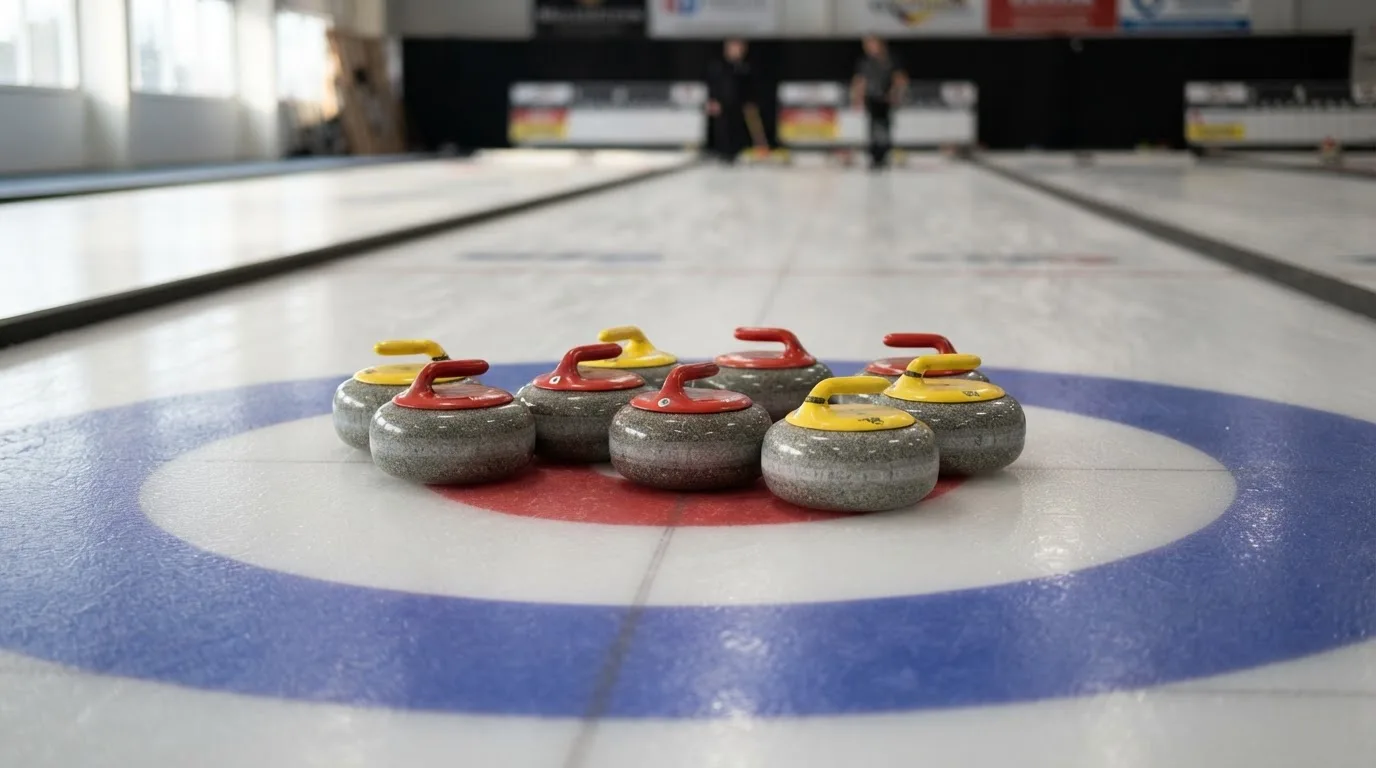
Fixture density drives market depth. A Grand Slam event in late autumn may carry three or four sheets running simultaneously, and a serious bookmaker can post match odds, end-by-end markets, totals, and outright winner markets without stretching. A quiet week in February may offer one event with a handful of markets. The same event priced at one bookmaker during a busy week and another during a quiet week does not carry the same odds for the same reason: liquidity, not just information.
Tournament outrights are worth understanding before a major. The field is small — eight or ten teams at the World Championships, twelve at the Olympics — and outright markets sometimes offer better value than individual match prices, because the field is priced as a group rather than match by match. The trade-off is that an outright winner has to be backed before the draw is known, and an early loss in the round-robin stage does not eliminate a team from medal contention in every format.
Mixed doubles is a separate discipline with its own calendar and its own markets at major championships. The rules differ from the four-player game: each team throws five stones, one player throws the first and last stones only, and the strategic use of the power play alters how an end is read. Bookmakers price mixed doubles and the four-player game as separate events, and a tip built from four-player form does not transfer cleanly into mixed doubles pricing.
How Curling Odds Are Built
The bookmaker’s margin sits inside every price. For a two-way market at decimal odds 1.90 and 1.90, the payout share is 1 ÷ (1 ÷ 1.90 + 1 ÷ 1.90) = 0.526, meaning the market returns about 52.6% of every unit staked across all outcomes and the bookmaker keeps the rest. The margin — 1 minus the payout share — comes out at roughly 47.4%, an exceptionally high figure used here only to show the mechanism in plain numbers. Real markets on curling carry much tighter margins; the point of the example is that even when both sides look evenly priced, the bookmaker’s cut is already inside the price.
The worked result is a band, not a single figure: a market priced at 1.90 on each side returns between roughly 50% and 55% across all outcomes in practice, with the exact share depending on how many outcomes are quoted and whether the price is decimal or fractional. The condition matters. A market where the favourite is priced at 1.45 and the outsider at 2.80 carries a different margin again, and a market with three outcomes (a draw, a regulation-time winner, and an outright winner) carries yet another. The arithmetic generalises; the band does not.
For match odds, an implied probability is the inverse of the decimal price, so 2.50 implies a 40% chance of winning. The sum of implied probabilities across all outcomes gives the payout share, and 100% minus the payout share gives the margin. The bookmaker’s margin is the gap between true probability and the implied probability after the cut is taken out. A value bet is a price whose implied probability is higher than the bettor’s own estimate of the true probability, with the margin already accounted for. That is the whole mechanism; nothing else in value-betting language changes it.
Curling markets tend to price tighter than headline sports because the field is small and information is limited. A Premier League match carries hundreds of pre-match markets and the margin can drift toward 2% to 5% on the main lines. A curling match during a World Championship may carry six markets at 6% to 8% margin. The bettor is not paying more for a worse price because the bookmaker is greedy; the price reflects how thinly each market is traded.
Reading Value Without Mistaking It for a Tip
A value bet is a price above the true probability once the margin is taken out. A tip is somebody’s estimate of the true probability, often expressed as a name. The two overlap when the tip is built from information the market has not priced in — a confirmed lineup change, a confirmed injury, a sheet condition nobody else has noted — but the tipster cannot see the bettor’s own model, so the gap between a price and a probability is a private judgement, not a service.
Form is the easiest input and the least reliable. Last season’s results on this bid move were strong is the kind of sentence that fills tipster columns and tells the reader nothing they could not have read off the standings. Form matters in curling less than in most sports because the roster is small, the matches are few, and the variance between events is high. A team that won the Continental Championship in November may miss the medal round at the Worlds in March for reasons that have nothing to do with form: travel, ice conditions, scheduling.
Statistics matter more. End-by-end scoring, hammer efficiency, blank-end rates, draw-shot success rates, and steal rates are all published by World Curling Federation statisticians during major events. A bettor who reads those numbers before the round-robin is in better shape than one who reads the standings afterwards. The problem is that the published numbers arrive at the same time for everyone, and the market has usually priced them in by the time a casual reader sees them. The edge lies in the gap between an early-season number and the same number after a coaching change, not in the final published figure.
Lineups matter most in mixed doubles, where a confirmed pair is a smaller bet than a rumoured one. In the four-player game, lineup confirmation is a routine check rather than a market mover. The exception is when a star player is rested for a round-robin game — confirmed or strongly rumoured — and the bookmaker has not yet trimmed the price. That window is narrow and tends to close within hours.
The honest summary is that a value bet in curling is rare rather than routine, and a tip without a price attached is a guess with no stake behind it. The arithmetic of value is straightforward; finding it requires a model the bettor builds themselves, and any tipster promising a steady stream of winners is selling certainty the sport does not provide.
Markets on a Curling Match
Match odds are the baseline: who wins the game. Bookmakers also price total points over or under a line, sometimes split by halves of the match, and outright winner markets across a tournament. End-by-end markets exist in-play at larger bookmakers but thin out at smaller ones, and outright markets are usually best early in a tournament when the field is priced as a group.
Draw no bet, where the stake returns on a draw and the bet loses only on a decided match, is offered by some bookmakers during the World Championships and is a useful market for matches expected to go to extra ends. Asian handicap lines are rarer on curling than on football but appear at sharper prices on World Championship fixtures. The presence or absence of a given market is itself information: a bookmaker offering a draw no bet has thought about extra ends, and one offering only match odds has priced the event quickly.
Bet builders on curling are unusual. Bet Builder+ type products, which combine markets from one event into a single bet, are designed for sports with deep market menus, and curling rarely meets that threshold outside the Olympic final. A bettor who wants an accumulator across curling matches should expect thin markets and accept that the price will reflect that thinness.
In-play markets on curling reward patience. An end takes 35 to 40 minutes, decisive moments are sparse, and the price between ends reflects the running score, the hammer, and the stones still in play. A bettor who reads the sheet rather than the clock is in a better position than one who treats the match like a football game. Cash-out is widely available and behaves as on any other sport: the offered price reflects the live state, and accepting it crystallises a profit or loss at the bookmaker’s current quote rather than at the end.
Staking Discipline and the Cost of Chasing
The bookmaker’s edge compounds with every bet. A 6% margin on a single curling bet is small enough to ignore; the same margin across a season of 200 bets at a flat stake produces an expected loss of 12 units. The arithmetic is the expected cost equals the required turnover times the margin, so 200 units staked at 6% margin is an expected cost of 12 units before any win or loss is counted. That is what the bookmaker keeps on average; the bettor’s actual outcome depends on whether the bets landed.
Staking discipline is the practical counter. Flat stakes — the same amount on every bet — are the simplest rule and the easiest to track. Proportional staking, where the stake is a fixed share of the current bankroll, smooths the variance but introduces a different problem: a losing streak shrinks the stake to a level that produces negligible returns, and a winning streak inflates it to a level that risks the bank on a single match. Both work; neither is a route to steady profit on its own.
Bankroll discipline means deciding in advance how much of the bank is at risk in a week and stopping when that limit is reached. The bookmaker does not enforce this; the operator offers deposit limits, timeouts, and self-exclusion, but it does not stop a customer from chasing losses with a fresh card. The discipline is the bettor’s own.
Betting is not income. The expectation over a season of curling bets at standard margins is negative, and no staking plan flips that sign. A punter who is ahead at the end of a month is not earning a return in any way the Inland Revenue recognises; they are sitting on a sequence of bets that happened to land above their expected value, and the variance around that expectation is large.
Curling Betting in Great Britain: the Legal Frame
A bookmaker serving customers in Great Britain needs a Gambling Commission licence wherever it is based. Since the Gambling (Licensing and Advertising) Act 2014, an operator whose remote facilities are used in Great Britain needs a Commission licence to take bets from customers in England, Scotland and Wales; Northern Ireland is outside the Gambling Act 2005 and has its own older law. A Curaçao, Maltese or Gibraltar licence is not a substitute for a Commission licence when the customer is in Great Britain.
The Commission’s public register can be searched by business name, trading name, domain or account number and is the whole test of whether a brand holds a licence. The featured operators later on this page are listed on that register, and the licence numbers quoted in their entries can be checked against it directly. A brand not on the register, or one whose licence has been suspended, is operating outside the British regime, and the protection that comes with a Commission licence does not apply.
Identity verification happens before the first deposit. A licensed remote operator checks name, address and date of birth before a customer can deposit or gamble, including with a free bet or bonus, and the check has applied since 7 May 2019. There is no anonymous play at a licensed British site, and a bettor who is asked for a driving licence, a passport, or a recent utility bill is being asked by every licensed brand. The check is part of the licence conditions, not a quirk of one operator.
Betting exchanges, where customers back and lay outcomes against each other rather than against the bookmaker, run under a separate licence category: remote betting intermediary. Matchbook, listed below, holds one. Pool betting on horse and dog racing is another, and spread betting that is a financial instrument is regulated by the Financial Conduct Authority rather than the Commission. Spreadex, listed below, holds both an FCA authorisation for its spread betting and a Commission licence for its fixed-odds book. The distinction matters because the consumer protections that apply to a betting exchange do not apply to a spread bet, and vice versa. Spread betting losses can exceed the deposit; fixed-odds losses are capped at the stake.
There is no statutory cap on stakes in British sports betting. Operators set their own maximum stakes and may restrict individual customers, and the regulator has not imposed a flat ceiling. Staking discipline is the bettor’s responsibility rather than the operator’s.
Betting winnings are not taxed at the customer level in Great Britain. The player pays no tax on returns from a licensed British bookmaker, and a £100 winning at any odds is paid out without deduction. General Betting Duty is the operator’s tax on gross profits, currently 15%, and from 1 April 2027 a new remote betting rate of 25% applies within it for remote bets not on UK horse racing, pool betting, or self-service terminals; until that date the remote rate stays at 15%. Whether operators pass duty on through odds is not established, and no statement that the customer pays duty should appear on this page. A professional gambler should ask HMRC or an adviser; this is general information, not tax advice.
A GB licence is compulsory at the point of consumption. Providing gambling facilities in Great Britain without the licence the Act requires is an offence under section 33 of the Gambling Act 2005, aimed at the operator. A customer who bets on an unlicensed site commits no offence but loses the protections a licence brings: no GAMSTOP coverage, no Commission complaints route, no approved dispute-resolution body, no British consumer redress if funds are withheld, and the offer is not bound by the 10x bonus cap or the £150 vulnerability check. Honest framing: licensed means checks, limits, GAMSTOP, and a bonus cap, but also identity verification before the first bet. Unlicensed means none of those, and possible loss of funds.
Safer Gambling
Every brand listed on this page is a member of GAMSTOP, the national multi-operator online self-exclusion scheme, and joining is a licence condition for online operators. Self-exclusion periods are six months, one year, five years, or five years with auto-renewal; after the minimum period the exclusion stays in place for a further seven years unless the customer asks GAMSTOP to remove it. The scheme covers online sites and apps; betting shops use a separate offline service.
A financial vulnerability check applies to licensed remote betting when a customer’s deposits minus withdrawals exceed £150 in a rolling 30 days. The check is a public-record check (bankruptcy, county court judgments, and similar), not an income check and not a credit reference check. The threshold has applied since 28 February 2025 under LCCP condition 3.4.4, in force since 30 August 2024. Financial risk assessments, often called affordability checks in the press, have been announced in a staged plan with no start date as of this writing, and the page should not state that they are in force.
Deposit limits are the customer’s choice. Operators must offer a gross deposit limit on a fixed time frame under RTS 13, and the first changes have applied since 31 October 2025, with a second phase postponed to 30 September 2026. There is no state-set deposit or loss ceiling: the limit is whatever the bettor asks for, and an operator cannot raise it without a cool-off period. Credit cards are banned for gambling in Great Britain since 14 April 2020, including credit-card-funded payments through an e-wallet; debit cards and bank-based payments are not covered by the ban.
Help is available beyond the operator. GamCare runs the National Gambling Helpline; GambleAware funds treatment and research; the NHS runs gambling clinics in several regions; Gamblers Anonymous runs peer-support meetings. A punter who feels their betting is no longer under control can contact any of those directly, and self-exclusion through GAMSTOP does not require telling the operator first.
Betting should be paid for from disposable income, not from money earmarked for rent, bills, or commitments. A punter who chases losses with a deposit they cannot afford has stopped betting and started gambling, and the two are not the same activity. The safer-gambling section on this page is the most important one to read before the operator reviews below.
Reviewed Bookmakers for Curling in 2026
The ten operators below hold a Gambling Commission remote licence for betting on real events in Great Britain. The licence number, the licence holder, and what the operator’s own terms state on curling are listed for each. A licence is not a recommendation, a place in this comparison is not an endorsement, and the order is editorial rather than ranked. Every GB-licensed online operator is a GAMSTOP member and is bound by the same identity-verification, deposit-limit, and bonus-cap rules; the differences are in market depth, in-play quality, and the kind of customer each brand suits.
| Brand | Licence | What the operator’s own terms state on curling |
|---|---|---|
| Kalooki Sportsbook | Gambling Commission remote licence 057730-R-333396-005 (Commission account 57730); licence holder Kalooki Sportsbook Limited | Curling markets are not consistently listed on the operator’s own pages; coverage tracks the major championships when scheduled |
| Octobet | Gambling Commission remote licence 062545-R-337248-006 (Commission account 62545); licence holder Octopus Game Limited | Curling markets appear at major events; out-of-season coverage is light |
| William Hill | Gambling Commission remote licence 039225-R-319373-015 (Commission account 39225); licence holder WHG (International) Limited | Curling outright and match odds are listed at the World Championships and at the Winter Olympics; in-play coverage depends on fixture density |
| Bet Ahoy | Gambling Commission remote licence 100094-R-341742-003 (Commission account 100094); licence holder Bet Ahoy Ltd | Curling is not a regularly priced market on the operator’s own pages; major-event coverage is operator-dependent |
| Betfred | Gambling Commission remote licence 039544-R-319290-010 (Commission account 39544); licence holder Petfre (Gibraltar) Limited | Curling markets appear during the World Championships and the Winter Olympics; in-play is not a core offering for the sport |
| Matchbook | Gambling Commission remote licence 039504-R-319407-024 (Commission account 39504); licence holder Triplebet Limited | Curling markets are available on the exchange when other users have priced them; liquidity is thin outside the Olympic cycle |
| Star Sports | Gambling Commission remote licence 009177-R-104555-019 (Commission account 9177); licence holder Star Racing Limited | Curling is not a core market on the operator’s own pages; coverage tracks major events when scheduled |
| BetUK | Gambling Commission remote licence 039198-R-319450-029 (Commission account 39198); licence holder LeoVegas Gaming PLC | Curling markets appear at major events; out-of-season coverage is light |
| Tote | Gambling Commission remote licence 054779-R-331321-008 (Commission account 54779); licence holder TDCO Limited | Curling markets are not a core offering on the operator’s own pages; coverage tracks major events when scheduled |
| Midnite | Gambling Commission remote licence 101839-R-342850-001 (Commission account 101839); licence holder Midnite Limited | Curling markets appear at major events; in-play and outright markets are listed when fixture density supports them |
Kalooki Sportsbook
Kalooki Sportsbook is operated by Kalooki Sports Book Ltd (company number 12938274), licensed by the Gambling Commission under account number 57730, and is a GAMSTOP member. The operator is a recent addition to the British licensed market and positions itself around a focused menu rather than the broadest catalogue. Curling coverage on the operator’s own pages is not consistently listed outside major events, and the page should not be treated as a default destination for the sport.
For a bettor who wants a smaller menu and a Commission licence in good standing, the brand offers a familiar framework: identity verification before the first deposit, deposit limits on request, GAMSTOP coverage, and a complaints route through the Commission. The trade-off is depth. A customer looking for curling match odds mid-season may find an empty fixture list rather than a thin one.
A functional choice for bettors who prioritise regulatory standing and a simple platform, though it is prudent to confirm curling market availability beforehand.
Octobet
Octobet’s sportsbook welcome offer is 50% back as a free bet up to £50, plus a £10 casino bonus for new customers. The operator holds a Gambling Commission remote licence under account number 62545, with Octopus Game Limited as the licence holder. A suitable option for bettors looking for a quick, event-driven curling market experience during major tournaments.
William Hill
William Hill pays Best Odds Guaranteed on UK and Irish horse racing from 8 AM on the day of the race, on both single and multiple bets; it does not apply to ante-post, tote or pari-mutuel bets. The Best Odds Guaranteed promotion is a horse-racing feature rather than a curling one, and the page should not present it as a curling benefit. What William Hill does bring to curling is established infrastructure: a deep in-play product on the sports it covers heavily, a long-running British licence, and a customer base large enough to support outright markets during major championships.
The licence is held by WHG (International) Limited under Commission account 39225. William Hill’s curling coverage tracks the major championships and the Winter Olympics, with match odds, totals, and outright winner markets at the World Championships and the Games. In-play quality depends on fixture density and may not be available at every round-robin session.
An ideal hub for bettors seeking established market depth, specifically during the Winter Olympics and major international curling championships.
Bet Ahoy
Bet Ahoy’s welcome offer is “Bet £10 & Get £10 in Free Bets”, made up of a £5 sports bet and a £5 acca. The offer is a fixed-value free-bet package rather than a matched deposit, and the £5 acca leg carries the same free-bet terms as the £5 sports leg: the stake is not returned on a win. The licence is held by Bet Ahoy Ltd under Commission account 100094.
Curling is not a regularly priced market on Bet Ahoy’s own pages, and the operator’s coverage of the sport depends on the events scheduled. A bettor who values the welcome structure should not assume curling will be on the fixture list when an event starts.
Betting options here are event-dependent; it is best to verify market availability on the site before planning a curling accumulator.
Betfred
The Betfred Sports, Casino & Games app is published by Done Brothers (Cash Betting) Ltd and covers 21 sports plus over 2,000 casino-style games. The licence is held by Petfre (Gibraltar) Limited under Commission account 39544, and the brand is a long-established British bookmaker with a wide retail and online footprint. Curling coverage tracks the major championships and the Winter Olympics; in-play is not a core offering for the sport at the operator.
The 21-sport menu is wider than the curling-relevant catalogue, and the casino-style games are a separate product with a separate licence category. A bettor who wants curling alongside a deep sportsbook will find Betfred in the established bracket; a bettor who wants curling-specific depth should compare outright market availability at the World Championships.
This platform is reliable for major tournament outrights, though it lacks the curling-specific depth found in niche-focused operators.
Matchbook
Matchbook is a betting exchange where customers bet against other users, with Bet Builder, multiples, in-play betting and live streaming of horse racing and greyhounds. The exchange operates under a betting intermediary licence held by Triplebet Limited under Commission account 39504. The structure differs from a fixed-odds book: prices are set by other customers rather than by a trader, and the operator earns a commission on net winnings rather than a margin inside every price.
Curling liquidity on the exchange is thin outside the Olympic cycle. A bettor who wants a curling match price on a Wednesday night in February is unlikely to find one because there is no market for other customers to make. The same bettor during the World Championships may find prices at smaller stakes than a fixed-odds book offers, because the exchange does not need to keep a margin on every event.
The exchange model provides a unique way to back or lay curling outcomes, provided there is enough liquidity during major events.
Star Sports
Star Sports lets customers speak to a trader directly on 08000 521 321 to open an account, place bets or ask customer queries, and also offers support at [email protected]. The phone-trader model is unusual in the British market and reflects the operator’s heritage in telephone betting. The licence is held by Star Racing Limited under Commission account 9177.
Curling is not a core market on Star Sports’ own pages, and coverage tracks major events when scheduled. A bettor who wants to phone a trader for a curling bet should call during the event window rather than expecting the same coverage mid-season.
The direct-to-trader contact is an unusual advantage for serious bettors, though curling coverage is strictly tied to the major international calendar.
BetUK
BetUK’s sports welcome offer: new customers who deposit £10 or more and place a sports bet within 7 days of registering receive four £10 free bets (two football accumulators of 4+ selections and two multiples of 2+), valid for 7 days, with opt-in required. The free bets are tied to specific bet types — football accumulators and multiples — rather than general sportsbook credit, and a curling bettor should not assume the £10 free bets apply directly to a curling match. This operator provides standard access for major curling events; verify market depth during specific tournament windows.
Tote
The Tote is operated by TDCO Limited under Commission account 54779 and is a pool-betting operator with a heritage in British horse racing. Pool betting differs from fixed-odds betting: returns are calculated from the pool after the event rather than from a price set in advance, and the dividend replaces the odds. The Commission’s licence category for the operator is remote general betting standard (real events); the pool-betting structure is a feature of the operator’s own product rather than a separate licence.
Curling markets are not a core offering on the Tote’s own pages, and coverage tracks major events when scheduled. A bettor who values the pool structure should not assume curling dividends will be available outside major championships.
While primarily focused on pool betting for horse racing, curling is covered during major championships for those seeking pool-style interest.
Midnite
Midnite’s site cites Gambling Commission licence 101839 and shows in-play events, an acca builder, popular accas and price boosts with maximum-stake limits. The licence is held by Midnite Limited under Commission account 101839. The acca builder and price boosts are sportsbook features designed for markets with deep menus, and curling availability depends on fixture density.
Midnite’s sports welcome offer: new customers who bet £5 or more on pre-match odds of EVS (2.0) or greater within 14 days of sign-up receive £25 in free bets and 50 free spins, valid for 7 days. The free bets are sportsbook credit and the 50 free spins are a casino product with separate terms. A curling match priced at 2.0 or greater qualifies for the welcome trigger, and the £25 in free bets can be applied to curling markets where the operator has priced them.
A sportsbook-focused environment where curling match odds become readily available during peak tournament periods.
What This Page Does Not Tell the Reader
This page does not name winners, predict results, or invent picks. The arithmetic in the margin section is illustrative, not a quoted price, and the bands stated are the mechanism rather than a forecast. A bettor who wants a tip should not find one here, because no tip can be honest without a stake behind it, and the stake is the bettor’s own.
No match is named with a predicted outcome. No tipster is recommended. No system for winning at curling betting is offered, because no system can clear a margin in expectation. The page explains what an offer costs, how a market is built, and what a licence means; the rest is the bettor’s own work.
The featured operators are the British licensed set in this comparison, not the only British licensed set. The Commission’s public register lists more brands than this page can cover, and a brand not on this page may be a better fit for the individual bettor. The list is a starting point rather than a final answer.
Frequently Asked Questions
How do you bet on curling?
Curling betting in Great Britain means placing a bet with a Gambling Commission-licensed bookmaker on a curling match or tournament. The baseline market is match odds — who wins the game — with totals, outright winner markets, and end-by-end markets available at major events. The licensed brand must verify your identity before the first bet, and you should check the operator’s own fixture list for curling coverage because the sport is not a permanent menu item outside the major championships.
Can you bet on curling in Great Britain?
Yes, at any operator holding a Gambling Commission remote licence. The licence is required for an operator whose remote facilities are used in Great Britain, regardless of where the operator is based. The Commission’s public register lists the licensed brands and is searchable by name, trading name, domain, or account number. Betting on an unlicensed site is not an offence for the customer, but the protections a Commission licence brings — GAMSTOP coverage, a complaints route, and the bonus cap — do not apply.
What is a value bet and why is no tip ever certain?
A value bet is a price whose implied probability, after the bookmaker’s margin is taken out, is higher than the bettor’s own estimate of the true probability. The margin is the gap between 100% and the sum of the implied probabilities across all outcomes. No tip is ever certain because the bettor’s estimate of true probability is a private judgement built on information the market may already have priced in, and any model produces variance around its expectation that the tipster cannot remove.
What is the bookmaker’s margin and how can it be seen in the odds?
The bookmaker’s margin is the cut the bookmaker keeps of every unit staked across all outcomes of a market. It shows up as the gap between 100% and the sum of the implied probabilities, where each implied probability is the inverse of the decimal price. For a two-way market at 1.90 on each side, the implied probabilities are roughly 52.6% each, summing to 105.3%, and the margin is the 5.3% gap. Real curling markets typically carry tighter margins, but the mechanism is the same.
How is the return on a bet worked out from the stake and the odds?
For a single bet, the return equals the stake multiplied by the decimal odds, and the net profit equals the stake multiplied by the decimal odds minus one. A £10 stake at decimal odds 2.50 returns £25, of which £15 is profit and £10 is the original stake. For a combination bet the odds of the legs multiply into one price, so a double at 2.00 and 3.00 carries a combined price of 6.00, and a £10 stake returns £60 of which three including the stake is profit. The arithmetic is the same in either case.
How can it be checked that a bookmaker holds a Gambling Commission licence?
The Commission’s public register can be searched by business name, trading name, domain, or licence number. The licence numbers quoted on this page can be checked against the register directly, and any licensed brand’s own site carries a link to its register entry. A brand not on the register, or one whose licence has been suspended, is operating outside the British regime, and the protections a Commission licence brings do not apply.
Tennis, darts & cue sports – Darts betting
Content created by the «Darts betting» team
