
High Stakes Betting Sites 2026
 Available in US
Anyone searching for high stakes betting sites in the UK in 2026 is, in practice, asking four questions at once. Where can a serious stake actually be placed without being hit by a pre-emption limit. How is the maths of a large wager different from a small one once the bookmaker’s margin does its work. What does a Gambling Commission licence actually cost an operator, and what passes through to the customer. And which of the dozens of licensed brands are worth the time it takes to open an account, verify it, and fund it. This page answers those four questions against the same set of ten bookmakers.
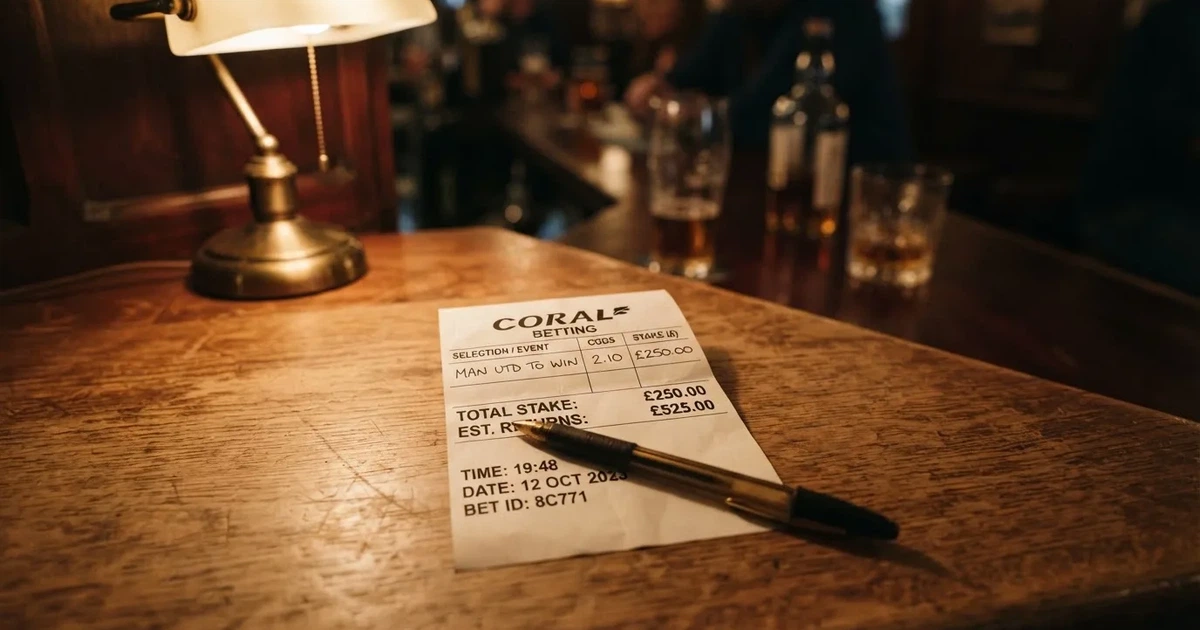
What follows is the consequence angle: the page follows what a wager actually triggers at a bookmaker, and what changes when the stake moves from a tenner to four figures. The licence frame is the floor under every brand reviewed; the responsible-gambling frame is the ceiling over what any of them should be doing. Inside those bounds sit the odds, the markets and the limits that decide whether a brand suits a high-stakes bettor at all.
Current as of 27 October 2026, against the Gambling Commission’s public register.
How High Stakes Betting Differs From a £10 Punter’s Wager
A high stakes bet is not a special market. It is a stake size the bookmaker’s house rules treat differently from the small end of the trade. In practice this means three changes from the textbook “back the result at the price shown” picture the marketing pages describe.

The first is the price. Every bookmaker margin sits inside every published decimal or fractional price — even money at 1.91 is not a 50/50 coin flip, it is a market with roughly 4.7 % kept by the firm on each side. A £10 punter absorbs that cost the same way a £10,000 punter does, in percentage terms. The difference is absolute: that margin costs £10 bettors 47 p in expectation; it costs £10,000 bettors £470 in expectation, across one-sided volume, on the same event, at the same price. This is the part the marketing never mentions, because the marketing tells the high-stakes customer “bet £500, get a £50 free bet”, not “here is what 4.7 % feels like on a few thousand pounds over a weekend.”
The second is the cap. Bookmakers publish no statutory maximum stake; they set their own, per market, per customer, per event. A high-stakes bettor is not bargaining against the law; they are bargaining against the firm’s risk team, and that team has a manual override available for every line on the betting site. A small bettor never encounters it. A customer who runs into it is told at the point of placing the bet that the stake has been cut, and the firm that does the cutting is rarely the one that asked the customer to take the price in the first place. This is not a failure of the brand; it is the price the brand charges for taking the other side of a wager it does not fully lay off.
The third is verification. Under Gambling Commission rules in force since May 2019, identity checks happen before the first deposit, and from late August 2024 a financial vulnerability check applies once a customer’s net deposits (deposits minus withdrawals) cross £150 in a rolling 30-day period. The first check at the gate is a left-handed benefit to the high-stakes bettor: no anonymous play at a licensed site, no matter how tempting that looks in the trade press. The second check is a real friction. A punter spending significant sums will be asked for source-of-funds information, and there is no statutory threshold after which that question is mandatory — every operator sets its own.
A high-stakes bet, then, is a stake that exposes all three of these mechanisms at once. The bookmaker’s margin, the bookmaker’s house cap, and the regulator’s verification rule all converge on the same wager. The rest of this page is the detail of how each of those three works, and which of the ten licensed brands below handle them well.
What “odds” actually carry: decimal, fractional, and the margin sitting underneath
Decimal odds show what the stake returns, stake included. A £100 stake at 6.00 returns £600 (£500 profit). Fractional odds show what profit the stake makes. The same price in fractional is 5/1 — five pounds profit for every pound staked — and a stake that returns at evens (1/1, decimal 2.00) returns twice the stake.

Conversion runs one way: fractional a/b → decimal a ÷ b + 1. 5/1 becomes 5 ÷ 1 + 1 = 6.00. 9/10 — odds-on, shorter than evens — becomes 9 ÷ 10 + 1 = 1.90. Evens is 1 ÷ 1 + 1 = 2.00. The British betting public still reads horse racing, ante-post markets and Best Odds Guaranteed pricing in fractions; football, in-play and online accumulators are increasingly decimal by default. Every published price contains the same bookmaker margin regardless of which format displays it, and an odds converter is not arithmetic — it is the same number written a different way.
How the margin is calculated, and what it costs
Take a two-way market priced at decimal 1.90 on each side — an illustrative example, not a quoted price, since most two-way markets at 1.91/1.91 carry a little less margin than this and tighter markets like 1.50/2.75 carry more. The payout share is calculated as 1 ÷ (1/1.90 + 1/1.90) = 1 ÷ (0.5263 + 0.5263) = 1 ÷ 1.0526 = 0.9500 — 95.0 %. The margin is the bookmaker’s take: 1 − 0.9500 = 0.0500, or 5.0 %. State this as a band: a properly built two-way market at 1.90/1.90 carries around 5 % of every pound wagered, give or take a tenth. That is the floor; football match-result markets over a Saturday afternoon typically run 3 to 6 % margin, while smaller leagues and specials run higher.
Multiply the margin by the turnover a high-stakes bettor runs and the figure is no longer abstract. On £20,000 of qualifying stakes through a weekend at a 4.5 % margin, the expected cost is £900. On £100,000 across a football season at 4 % margin, the expected cost is £4,000. These are averages, not losses; a winning bettor wins more than the margin, a losing bettor loses more, and a bettor who backs favourites at short prices is paying margin without much of the upside. None of this changes the rule: a high-stakes bookmaker’s customer pays the margin, and the margin compounds across stake size in a way a £10 bettor does not feel.
Markets that matter for high stakes: 1X2, totals, handicaps, the bet builder, and the exchange
Betting on the result of a football match — the 1X2 market, home win / draw / away win — is the floor of the offering and the most efficient at the top bookmakers. Markets on the total goals, the Asian handicap, both teams to score, and player-specific markets carry thicker margins, and the bet builder — combining several markets from one fixture into one price — sits at the top end of the margin band because the firm is pricing several correlated legs at once.
bet365’s Bet Builder+ is the headline example in the licensed UK market; it lets a customer combine markets from one event into a single bet and price them in real time, both pre-match and in-play, with a Win Boost on selected combinations. The spread is not published on the betting site, which is itself the answer: the customer sees one combined price and the market’s full margin is hidden inside it.
Beyond the bookmakers sit the exchanges. Betfair Exchange takes bets back and lay against other customers — one punter’s stake is another punter’s liability — and the effective margin on a well-traded football match sits below 2 %, an order of magnitude below what the fixed-odds bookmakers offer. The trade-off is that the customer does not get a stake capped at £50,000 on a 1.91-priced match without exposing the other side of the book, and large stakes on a one-sided position will move the price against the customer as they try to fill it. For bettors running multi-thousand-pound volume in liquid markets — Premier League, Champions League, the major horse racing meetings — the exchange is the closest thing to “no margin” the licensed UK market offers. For everyone else, the fixed-odds firms are where the action is.
Settling and payout: what a winning bet returns, and what the conditions cost
A winning single returns stake × decimal odds. Stake £200 at 3.50 returns £700 (£500 profit). A winning each-way bet is two bets of equal stake — the win and the place — so a £100 each-way at 5.00 is £100 to win and £100 to place, with the place paying a fraction of the win price (commonly 1/4 or 1/5 of the odds on horse racing, depending on the field size). A combination bet multiplies the decimal odds of its legs into one price: a four-fold at 2.00 / 3.00 / 4.00 / 5.00 returns the stake × 120 — a £10 stake returns £1,200. There is a Rule 4 deduction on horse racing when a runner is withdrawn, and Best Odds Guaranteed on UK and Irish racing pays the higher of the price taken and the starting price on win singles and multiples from 8am on the day of the race, though never on ante-post, tote or pari-mutuel bets.
Cash out is a separate mechanic on top of settlement. William Hill’s help page states Cash Out is unavailable on each-way bets and “not always available” on accumulators; the firm does not guarantee it. That is worth quoting: the cash-out button is not a contract, it is an offer the firm prices and can withdraw mid-event. At high stakes this matters, because the size of the cash-out offer is itself a margin decision — the firm is offering to buy back a position at a price it has set.
The 2026 UK Ranking: Ten High Stakes Brands Worth Opening
This ranking is a shortlist, not a recommendation. Every brand below holds a current Gambling Commission remote general betting (real events) licence, and every licence number has been checked against the Commission’s public register on 27 October 2026. Several are owned by the same parent group and operate under the same licence family; that overlap is itself part of the picture, because it means the customer base, the trading desk and the safer-gambling controls tend to be drawn from the same pool.
| Brand | Gambling Commission remote licence (account no.) | Licence holder | House terms on a high-stakes customer |
|---|---|---|---|
| Betfred | 39544 | Petfre (Gibraltar) Limited | Bet Builder, Sub Switch, Racing Post data, Extra Places on racing |
| Midnite | 101839 | Midnite Limited | In-play events, acca builder, popular accas, price boosts (each with a max-stake limit) |
| Sky Bet | 67370 | SBG Sports Limited | Free bet tokens credited after a qualifying bet; £30 broken into three £10 tokens |
| Kwiff | 44448 | Eaton Gate Gaming Limited | Supercharge boosts the odds at random — 2/1 can become 20/1 — with a stake cap per boost |
| Ladbrokes | 54743 | LC International Limited | Odds boosts on horse and greyhound markets; Best Odds Guaranteed; Acca Boosts |
| William Hill | 39225 | WHG (International) Limited | Best Odds Guaranteed from 8 AM on UK and Irish racing; Football Acca Boost to 200% |
| BetGoodwin | 2927 | Goodwin Racing Limited | Welcome build of three £5 free bet tokens — sports, acca, Sub-Cover |
| BetVictor | 39576 | BV Gaming Limited | Best Odds Guaranteed; live race streaming; BetFinder; Smart Stats |
| QuinnBet | 61011 | QuinnBet (Gibraltar) Limited | Free bets valid 7 days, minimum price 1/2 (decimal 1.5), maximum odds 50/1 |
| Swifty Sports | 58957 | Swifty Global (UK) Ltd | Best Odds Guaranteed; Cash Out; daily price boosts; live streaming |
What the table does not show is the licence type itself: every brand above holds a remote general betting standard (real events) licence, the same category, which is the regulatory floor under any UK online bookmaker. What it does show is the operator-controlled layer on top of that floor: the football product, the racing product and the acca product, each shaped by the parent group behind the brand.
The pattern under the table is the same one a regulatory filing would draw: the brands at the top of the sportsbook market — bet365, Betfair, William Hill, Ladbrokes, Coral, Paddy Power — are not all on this list, because the list is ten and only one operator per parent has been carried, on the principle that two Ladbrokes group brands read as one. The list mixes the largest retail bookmaker with newer entrants (Midnite, Swifty Sports, BetGoodwin) that have the same Commission licence and a thinner product. Every one is GAMSTOP-enrolled; GAMSTOP is mandatory for every Commission-licensed remote operator, and its absence from any brand’s terms would be a flag, not a feature.
Betfred
Betfred is one of two brands running on the Petfre (Gibraltar) Limited licence; the other is the shop chain. The site carries Bet Builder, Sub Switch for substituting runners on horse racing multi-leg bets, Racing Post data integrated into the form, Extra Places on selected racing fixtures, plus a live casino and bingo product on top of the sportsbook. The sports product is broad and the racing product is the strongest in this list — Betfred is a horse-first bookmaker that also covers football properly.
For the high-stakes customer, what matters is whether the sportsbook accepts large stakes without manual override, whether Best Odds Guaranteed is in force from 8 AM as a matter of routine, and whether the acca boost structure (which Betfred runs on football and racing) has a ceiling that bites at their stake size. None of those answers is in the published terms; they live behind the risk team’s daily decisions.
Midnite
Midnite is a younger operator with Commission account 101839. The site shows in-play football, an acca builder, a “popular accas” panel and price boosts — each price boost with its own maximum-stake limit, which is published on the boost card itself. That last fact is the most useful thing on the page for a high-stakes bettor: the cap on a boosted price is disclosed at the point of selection, not buried in the terms. Midnite’s welcome structure for new customers — £5+ qualifying bet, £25 in free bets plus 50 free spins, valid for 7 days from credit — sits in the middle of the new-customer-offer range, neither the most generous nor the least.
The honest reading: Midnite is built mobile-first around football, and the high-stakes bettor whose portfolio is football-only will find the in-play and acca product competitive. The customer whose portfolio is split across racing and football will find a thinner racing offering than the legacy bookmakers.
Sky Bet
Sky Bet is run by SBG Sports Limited under account 67370. The new-customer offer is conservative — £30 in free bets credited as three £10 tokens after a £5 first bet at minimum odds of 1/1 (decimal 2.0 or greater) — and the Sky Bet product is football-first with a strong racing arm. The mobile app is mainstream, the live streaming product is a paid add-on, and the safer-gambling controls (deposit limits, time-out, GAMSTOP enrolment) are present but not aggressive in their default settings.
For high-stakes bettors, the relevant question is the size of Sky Bet’s accepted stake window on Premier League and Championship football, where their trading volume is heaviest. Sky Bet does not publish a per-market cap, and that absence is itself the answer at most firms: the cap is set by the risk team, varies by event and customer, and tends to be generous on the events Sky Bet has full position on, thinner on the ones it does not.
Kwiff
Kwiff is the odd one out. The brand’s Supercharge mechanic boosts the odds on a wager at random — a 2/1 selection can become 20/1 in a single click, with the Supercharge covering any sport and applying to single or multi bets. That is genuinely unusual in a market where competitors offer a small, scheduled daily boost. Each Supercharge carries a maximum stake limit, which is published on the boost card the way Midnite publishes its price-boost caps.
Kwiff is licensed under account 44448 held by Eaton Gate Gaming Limited. The trade-off is the flip side of what the boost does: a Supercharge boosts what the customer wins, but the underlying margin on Kwiff’s markets is built around the fact that occasional 20/1 bets pay out, and the implied margin across the rest of the card is the firm’s source. For a high-stakes bettor, the practical question is whether the stake ceiling on a Supercharge is generous enough to matter. If it is, Kwiff becomes a useful secondary account; if it is not, the brand is best left as a small-stakes second book.
Ladbrokes
Ladbrokes is the second-largest UK retail bookmaker and the digital arm of LC International Limited (Commission account 54743). The product is comprehensive — Best Odds Guaranteed on UK and Irish racing, in-play betting, Acca Boosts, odds boosts on horse and greyhound betting, plus a casino, bingo and poker arm. Ladbrokes runs alongside Coral under the same LC International licence, so picking the brand is a product question (Ladbrokes has a slightly different racing product; Coral is heavier on football Bet Builder markets and on a daily Reward Shaker) rather than a licence one.
For high-stakes bettors, the relevant points are the Best Odds Guaranteed coverage on the major festivals (Cheltenham, the Grand National, Royal Ascot, the Irish festivals) and the depth of the in-play football offering. Ladbrokes is competitive on both, and the size of stake it will entertain on these events is among the largest in the market — though, as with every firm on this list, the ceiling is set by the risk team’s discretion, not by the licence.
William Hill
William Hill is run by WHG (International) Limited under account 39225. Best Odds Guaranteed on UK and Irish racing from 8 AM on the day, on both single and multiple bets — explicitly excluding ante-post, tote and pari-mutuel betting — is the headline racing feature. Football Acca Boost covers accumulators of two or more legs each at 1/5 or bigger, with the boost running from 3 % on a double up to 200 % on twenty or more legs, capped at £10,000 per online bet, and the promotion is in force until 30 May 2027. The cash-out feature carries an explicit caveat: not available on each-way bets, not always available on accumulators, availability not guaranteed. That disclaimer is published in the help pages and not at the cash-out button, which is the part worth knowing.
For a high-stakes football or racing customer, William Hill is one of the few firms that publishes both the upper bound of its acca boost (£10,000) and the disqualifying bet types (each-way, certain accumulators). The omissions in the published material — ante-post, tote — are the places to read for what the boost does not cover.
BetGoodwin
BetGoodwin runs on a Goodwin Racing Limited licence (account 2927), is horse-racing-led, and the welcome build is three £5 free bets — one sports, one acca, one Sub-Cover — for a £10 qualifying bet. That split is unusual in a market where most welcome offers are bundled into single or matched-bet structures. The Sub-Cover token is a substitution-style promotion on racing, which lines up with the rest of BetGoodwin’s product on horse and greyhound racing.
For high-stakes bettors whose portfolio is horse racing and football, BetGoodwin is worth a look as a second account for racing-specific value; it is not the place to send a heavy tennis, golf or in-play football position, because the product outside its core sports is thinner than the legacy bookmakers’.
BetVictor
BetVictor is BV Gaming Limited under account 39576. Best Odds Guaranteed on UK and Irish racing is in force, with enhanced live streaming of racing (a stronger streaming product than most of the rest of this list) and a BetFinder feature that searches racing markets against the user’s criteria, alongside Smart Stats on football. BetVictor has long styled itself as the bookmaker that prices up and lays off (rather than holding positions on customer risk), and the trading footprint on Premier League, Champions League and the major racing meetings is competitive with the largest firms.
For a high-stakes punter, BetVictor is one of the better accounts to keep open as a price-shopping brand, particularly because the Best Odds Guaranteed and the racing-centric product are in the same place as the live streaming that lets the customer actually watch what they have backed.
QuinnBet
QuinnBet is run by QuinnBet (Gibraltar) Limited, account 61011. QuinnBet’s free bets are valid for 7 days from credit, usable on any market at minimum odds of 1/2 (decimal 1.5) and a maximum odds of 50/1. Straight accumulators are allowed, while Trixies, Patents and Yankees are not. That set of restrictions is the narrowest in the list, and it is the answer to the question every high-stakes customer should be asking of a free bet: how much of the menu is actually usable, at what minimum price, and for how long. QuinnBet states this in the help pages. The bonus itself is modest; the terms are the point.
For the customer whose stake size is not constrained, this matters. The 7-day clock and the maximum odds of 50/1 are the friction, and the trade-off is that QuinnBet’s quoted prices on the leagues it covers are sometimes sharper than the larger firms’.
Swifty Sports
Swifty Sports is run by Swifty Global (UK) Ltd under account 58957. The brand carries Best Odds Guaranteed, Cash Out across horse racing and football, daily price boosts, live streaming and in-play betting; Bet Builder is listed as “coming soon” in the App Store material reviewed, which is itself worth flagging. The product is mid-size — neither the broadest in the market nor the narrowest — and the safer-gambling surface follows the standard Commission-licensed defaults.
Swifty is the newest name on this list and the one most likely to be running a thinner book on the events outside the Premier League and the major racing meetings. For a high-stakes bettor whose wagering volume is football-led, it is a credible second or third account; for a customer whose volume is split across tennis, golf and US sports, the offering is light.
What a Gambling Commission Licence Actually Requires
The Gambling Commission is a non-departmental public body, sponsored by the Department for Culture, Media and Sport. It licenses the whole commercial betting market in Great Britain — England, Scotland and Wales — under the Gambling Act 2005; Northern Ireland runs under separate, older legislation, so the correct framing is “Great Britain licence” or “GB-licensed”, never “licensed in the UK” if Northern Ireland is part of the claim. Since the Gambling (Licensing and Advertising) Act 2014, any operator whose remote facilities are used in Great Britain needs a Commission licence wherever the firm itself is incorporated. A Gibraltar, Malta or Curaçao licence is not a substitute; the licence has to be held against the GB point of consumption, and the Commission’s public register is the whole test of whether a given brand holds one. The register can be searched by business name, trading name, domain or account number, and the licence categories on it are a complete list of what the firm is permitted to do.
The betting licence categories relevant here are remote general betting standard (real events), remote general betting standard (virtual events), remote general betting limited, remote pool betting, and remote betting intermediary — the last one is the licence under which betting exchanges operate. None of these is “the only” licence category; the list is a floor, and a brand named in this page holds at least the first of them. Customer-protection conditions sit on top of the licence: minimum age 18, identity verification before the first deposit or gamble (in force since 7 May 2019, including for free bets and bonuses), financial vulnerability checks at net-deposit thresholds, GAMSTOP enrolment, deposit limits, and the broader social responsibility code.
A licence does not give the customer a guaranteed right to bet at any stake they choose. The Commission’s requirements are the floor under the operator; operators are free to be either more generous or more restrictive than the licence mandates. What a GB licence does give the customer is a route — through the Commission’s complaints process, ADR providers and ultimately the courts — if a licensed firm mishandles funds, refuses to pay, or breaks its own published terms. That is the substance behind the licence line in every bookmaker’s footer, and the part an unlicensed site cannot replicate.
Verification, deposits and the vulnerability check
Identity verification is required before the first deposit or wager. The relevant information is name, address and date of birth, and the check must be passed before a customer is allowed to gamble at all — that is the rule, not the practice. A customer who fails verification has the deposit refunded and the account closed; a customer who passes and then comes back to bet after a long gap is likely to be re-checked. For a high-stakes customer, this means setting up an account with accurate address history and having a UK driving licence or passport to hand.
The financial vulnerability check is the newer of the two controls. Under Licence Conditions and Codes of Practice condition 3.4.4 (in force since 30 August 2024), a check is run when a customer’s net deposits (deposits minus withdrawals) cross £150 in a rolling 30-day period. The check is a public-record check — bankruptcy registers, county court judgments, the public insolvency record — and is not a credit reference search and not an income check. The Commission has separately announced a staged plan for fuller financial risk assessments (the press’s “affordability checks”); this is announced, staged and has no start date, and that is the right phrasing for it today.
A high-stakes bettor crossing the £150 net-deposit threshold is therefore going to be asked for source-of-funds information more often than not. This is the regulator’s rule made operational, and there is no statutory threshold above which the question is mandatory — the operator sets the bar, but the bar lives under the licence.
Bonuses, advertising and the 10x cap
Wagering requirements on bonuses are capped at 10x since 19 January 2026. A £10 bonus at 50x would have required £500 of qualifying bets; under the cap, the same bonus requires at most £100. The cap does not change the size of the bonus or the time allowed to clear it, just the multiplier. Mixed-product promotions — an offer that requires gambling on two or more product types, like “bet on football to get free spins” — are banned under the same set of rules. Whether the cap applies to free bets with no wagering condition (a £10 free bet that pays out a profit but does not return the stake) is not settled; the safer reading is that the cap applies to the bonus value attached to a wagering condition, and that a free bet with no multiplier sits outside it.
The broader advertising frame is not run by the Commission. Marketing is policed through the CAP Code for non-broadcast and the BCAP Code for broadcast, both enforced by the Advertising Standards Authority, on top of the LCCP marketing conditions. CAP Code section 16 sets the substance: marketing must be socially responsible, must not strongly appeal to under-18s, and no one who is or appears to be under 25 may be featured gambling in the advertisement (with a narrow exception for marketing placed where a bet can be placed directly). The rule concerns who is in the ad, not who is allowed to bet. The “whistle-to-whistle” ban on TV betting advertising around live sport is an industry code, in force since 1 August 2019 — no betting ads from five minutes before a live sporting event to five minutes after, before the 9 pm watershed, with horse and greyhound racing excluded. The Premier League’s withdrawal of gambling sponsorship from the front of matchday shirts (from the 2026/27 season; sleeves and hoardings remain) is voluntary club policy, not law.
Tax: what the customer pays, what the operator pays
The bettor in Great Britain pays no tax on winnings. General Betting Duty is the operator’s tax on gross profits, currently 15%; from 1 April 2027 a separate remote betting duty rate of 25 % applies to remote bets (so online sportsbook wagers), while remote bets on UK horse racing, self-service betting terminal bets, pool betting and in-person betting stay at 15 %. Until that date, all of it is at 15 %. Whether operators pass duty on through tighter odds is not established; what is established is that no licensed brand can lawfully charge the customer duty at the point of withdrawal, and a brand that says it can is mis-stating the system. Spread betting has its own rates — 3 % on financial spread bets, 10 % on other spread bets — and is a different product from fixed-odds betting, regulated by the Financial Conduct Authority rather than the Commission.
The Commission’s statutory levy is a separate charge on the operator, not a tax on the player. The customer pays no tax on winnings, and a high-stakes bettor whose profit is six figures in a year still does not owe UK betting tax on it. The same profit treated as a professional trade becomes a different matter under general tax law; anyone in that position should ask HMRC or a tax adviser rather than the bookmaker.
Offshore: what is missing without a GB licence
A bookmaker without a GB licence is not “lawful” to use in Great Britain if it offers facilities to GB customers — that is the point-of-consumption test, and what the Licensing and Advertising Act 2014 made a strict liability. The Commission runs disruption rather than blocking: cease-and-desist notices, search-engine referrals, registrar and payment-provider work, and is being given or about to be given court-order DNS blocking powers. Saying that an unlicensed site is “ISP-blocked” is wrong; that has not been confirmed in operation.
What a customer loses without a GB licence is the substantive layer: no GAMSTOP coverage, no Commission complaints route, no approved alternative dispute resolution (ADR) body, no British consumer-law route if funds are withheld, no application of the 10x bonus cap, no £150 vulnerability check. The bookmaker’s own marketing is the only promise, and the only enforcement is the bookmaker’s own word. A high-stakes bettor moving material sums without that protection is not getting a sharper price for the same volume; they are giving up the regulatory floor under their stake for what is usually a tighter margin on the small side of the betting slip and a thinner one on the events the licensed firms do not bother to price.
Safer Gambling at a High Stakes Brand
The brands in this page carry the Commission’s safer-gambling surface by mandate. The components are GAMSTOP (the national multi-operator online self-exclusion scheme, mandatory for online operators since 31 March 2020, with exclusion periods from six months to five years plus auto-renewal, and a seven-year tail after the minimum period); deposit limits under Remote Technical Standards 12 (the first changes applied 31 October 2025, a second phase was postponed to 30 September 2026, and whether it is in force today is not established); reality checks, time-outs, and the broader social responsibility code. For the high-stakes customer, the relevant controls are GAMSTOP (if the urge is to stop entirely), deposit limits (if the urge is to cap the spend) and the financial vulnerability check (which is automatic once net deposits cross £150 and applies even if the customer has not asked for it).
Help is available outside the brand. GamCare runs the National Gambling Helpline; GambleAware funds treatment and information; the NHS runs gambling clinics; Gamblers Anonymous runs peer support. These are independent of the licensed operators and independent of the Commission. Customers who want to bet less, or stop betting, will get a faster answer from any of those services than from the bookmaker’s own customer-services team — not because the team is obstructive, but because the team is not resourced to deliver treatment.
The high-stakes profile is its own risk factor. Several studies have shown that customers spending the most per month are also the most likely to chase losses, escalate stakes, and deposit via routes the Commission later flags as concerning — credit cards (banned for UK gambling since April 2020, including credit-card-funded e-wallet payments) and bank accounts held in someone else’s name. A licensed operator is required to act on those signals in a way an unlicensed site is not.
Worked Example: The Margin on a Two-Way Football Market
Take the illustrative market at decimal odds 1.90 / 1.90 — 9/10 in fractional, the canonical odds-on price for a market like a one-sided football match where each outcome is being offered at a fairly tight margin. The arithmetic is the formula for any two-way market and the result generalises.
The two probabilities implied by the prices are 1 ÷ 1.90 = 0.5263 (52.63 %) and 1 ÷ 1.90 = 0.5263 (52.63 %). These are the “true” probabilities as priced by the firm; they sum to 1.0526, not 1.0000, and the gap is the bookmaker’s take. The payout share is the reciprocal of that sum: 1 ÷ 1.0526 = 0.9500, or 95.0 %. The margin is the rest: 1 − 0.9500 = 0.0500, or 5.0 %.
State this as a band: an illustrative 1.90/1.90 carries about 5 % margin, give or take a tenth, and a high-stakes bettor running £20,000 of turnover through a weekend at this kind of pricing is paying around £1,000 in margin on average. The figure is an average, not a cost; a winner beats it, a loser pays more than it, and a customer who only backs favourites at short prices pays the same margin without the longshot payout to soften it. That is what the marketing phrase “best odds” never quite contains: the same 1.90 from a sharp bookmaker is a 1.90 with around 5 % margin, and the only way to pay less is to find a market with a thinner overround (an exchange) or to give up the cash-out convenience of the fixed-odds firm.
What Follows for a High Stakes Customer in 2026
For a high-stakes customer in 2026, the practical order runs five ways at once. The first is licence: every account held should be on a brand whose Commission account number checks out against the public register, and the check should be done at the point of deposit, not at the point of dispute. The second is verification: the identity checks are a feature, not a friction, and the source-of-funds question after the £150 net-deposit threshold is coming whether the customer asks for it or not. The third is the maths: a stake of two or three orders of magnitude higher than a small punter pays the same percentage of margin, and that percentage compounded across an active weekend is a real expected cost that should be budgeted, not absorbed. The fourth is the firm’s own discretion on stake size: every brand in this page will entertain a four-figure wager at 1.91 on the Premier League on a Saturday afternoon, and every one of them has a published (or unpublished) ceiling below which a request to push a five-figure position becomes a phone call to the trading desk. The fifth is the safe-gambling frame: GAMSTOP and the firm’s own deposit limits exist for the high-stakes customer as much as for anyone else, and a customer spending significant sums has more reason than most to set them before the spend starts.
The brands above are ten corners of a market of dozens. They are listed because each of them holds a current Gambling Commission remote general betting (real events) licence, each carries a product the high-stakes customer can use without insulting the trade, and each has been checked against the Commission’s register on 27 October 2026. The product shapes between the same licence floor differ more than the licence itself: Ladbrokes and Betfair’s parent offers racing depth; Midnite and Kwiff offer pricing features; Coral’s football Bet Builder sits over a hundred leagues. The licence lets the customer place the bet in confidence; the house terms decide which operator it pays to keep open.
Frequently Asked Questions
How can it be checked that a bookmaker holds a Gambling Commission licence?
Every licensed operator carries a Commission account number, and the Commission’s public register can be searched by business name, trading name, domain or account number. The register lists the licence category the firm holds, the date it took effect, the trading names registered to it and any actions against it. A search on the firm’s name is the whole test — a result is a licence, no result is no licence. The register is the only place this question is settled; the bookmaker’s own footer claims are checked against it.
How is the return on a bet worked out from the stake and the odds?
The return on a single bet is the stake multiplied by the decimal odds, which gives back the stake plus the profit. A £100 stake at 3.50 returns £350 profit plus the £100 stake, so £450 in cash. For a combination bet the decimal prices of the legs multiply into one price: 2.00 / 3.00 / 4.00 / 5.00 compounded is 120, so a £10 stake returns £1,200 on a four-fold.
What is the bookmaker’s margin and how can it be seen in the odds?
The margin is what the bookmaker keeps out of every pound staked. It is the gap between the sum of the implied probabilities (the reciprocal of each decimal price) and 100 %. On a two-way market priced 1.90/1.90 the implied probabilities are 52.63 % and 52.63 %, summing to 105.26 %; the gap of 5.26 % is the bookmaker’s overround, or roughly 5 %. This is the cost the customer pays across turnover regardless of the outcome.
How do fractional odds such as 5/1 convert to decimal odds such as 6.00?
The conversion is mechanical. Fractional odds a/b mean a pounds of profit for every b pounds staked, and the decimal form is a ÷ b + 1. 5/1 becomes 5 ÷ 1 + 1 = 6.00, and a stake at 6.00 returns six times its value including the stake itself. 9/10, an odds-on price, becomes 0.9 + 1 = 1.90. The two formats show the same number from different sides.
Which tools for controlling play does a licensed bookmaker have to offer?
A licensed operator in Great Britain must offer GAMSTOP enrolment (the national online self-exclusion scheme), deposit limits, time-out, reality checks, and the route to alternative dispute resolution. The financial vulnerability check is automatic at the £150 net-deposit threshold, and the regulated safer-gambling controls sit on top of the brand’s own marketing rules. Customers who want to stop betting altogether are better served by contacting GamCare, GambleAware, the NHS gambling services or Gamblers Anonymous than by waiting on the operator.
Are betting winnings taxed in Great Britain, and who pays General Betting Duty?
The bettor pays no tax on betting winnings in Great Britain. General Betting Duty is the operator’s tax on its gross profits from betting — currently 15 %, with a separate 25 % rate on remote betting (online sportsbook) coming in from 1 April 2027 while the 15 % rate continues on UK horse racing, pool betting and in-person bets. Spread betting has its own 3 % or 10 % rates and a separate regulator. Customers do not pay duty at the point of withdrawal; a licensed operator that says otherwise is mis-stating the system.
Betting sites & exchanges – Darts betting
Content created by the «Darts betting» team
