
New Betting Apps UK: Where They Stand on Licence, Function and the Margin Built Into the Price
 Available in US
A betting app is a piece of software, a bookmaker’s account, a published price and a permission granted by the Gambling Commission to take bets from someone in Great Britain. The four travel together, and a comparison that ignores any one of them gives the reader only three of the four. The shortlist that follows holds a remote operating licence in the categories relevant to sports betting, lists its Commission account on its own site or app store page, and exposes, in its listing language, the functions a punter in 2026 expects to see on a handset. What each app costs the customer — the offer headline, the turnover behind it, the margin sitting in the price — sits beside the licence, because the cheapest licence to obtain is no protection at all if the price the app publishes has more house edge in it than the competition.
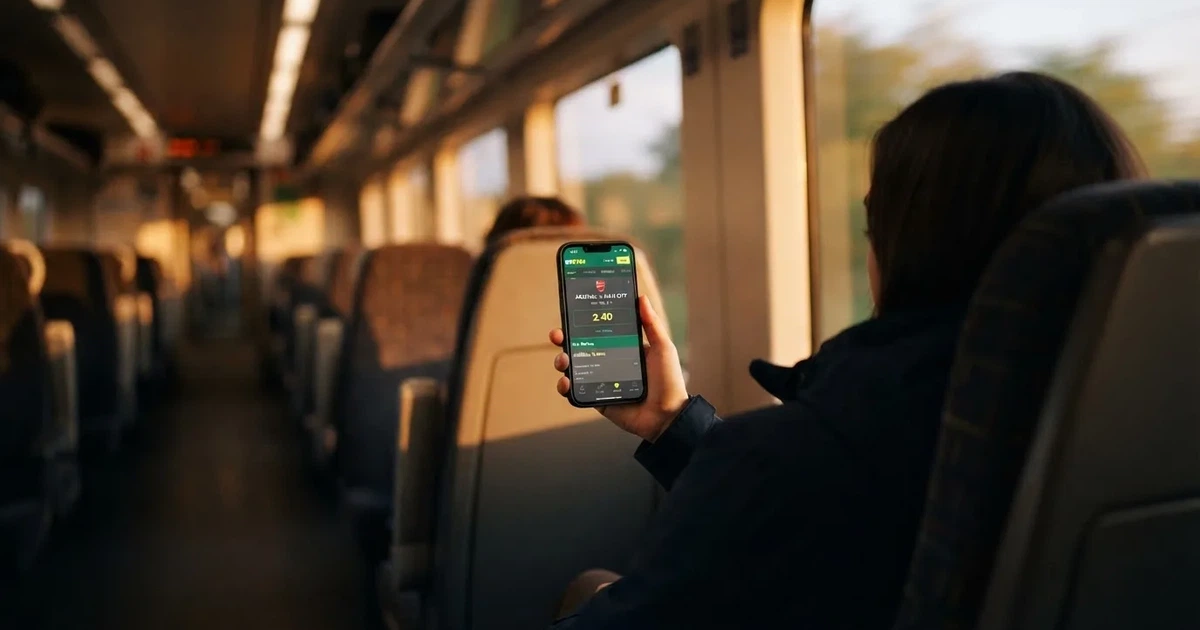
This page was checked on 27 October 2026 against the Gambling Commission’s public register, and each brand’s own site or App Store listing as carried by the underlying material. Where the figures that follow rely on a specific date, the date stays in the sentence.
Mobile Betting in Great Britain: What the App Layer Adds on Top of the Site
A sportsbook app is the same account on a smaller screen, with three practical differences. Biometric login shortens the time between unlocking a phone and placing a bet to a single motion. Push notifications pull promotions, settlement results and in-play flashes onto the lock screen without the customer opening the app. Some account actions — partial cash out, confirmation of a Bet Builder, Face ID approval of a withdrawal — are reachable from the betting slip in two taps rather than several clicks on a desktop. The bookmaker under it is unchanged: same licence, same safer-gambling duty, same odds compiled by the same trading desk.

Listing text in the App Store is the operator’s own, and is the source behind every functional claim in this article. A reader should treat the listing as a description of what the app does, not a third-party test of it. The features a modern app lists, in roughly the order the brands below name them, are: in-play markets, live streaming of selected events, Bet Builder (the same-game multi that combines selections from one match), Cash Out in full and partial form, price boosts on nominated selections, accumulator insurance (a stake-back refund if one leg of a multiple loses), a casino tab inside the same app, and 24/7 customer support in some form. None of those functions is universal. A bookmaker’s app, the listing says, supports the features its own listing names. A reader who wants two-factor authentication, native live charts or an order-book view on an exchange should expect to ask which app carries it.
App downloads and ratings carry no licence signal. A four-star average from a hundred thousand ratings tells the reader the app opens and the screens render; it says nothing about whether the company is permitted to take bets in Great Britain. The next section is about that permission, because every function on the app is conditional on it.
Statute and Permission: What the Gambling Commission Licences and What It Does Not
Betting in Great Britain is licensed under the Gambling Act 2005, and the Act is enforced through the Gambling Commission. Since the Gambling (Licensing and Advertising) Act 2014, an operator needs a Commission licence wherever it is based, the moment its remote facilities — site or app — are used by someone in Great Britain. A Curaçao, Maltese or Gibraltar permission does not extend; a GB licence is what counts, and the Commission’s public register is the test of who holds one. The register can be searched by business name, trading name, domain or account number, and it lists both operating companies and trading brands under the holder.

Licences divide by activity, and the categories a sports punter meets are: remote general betting standard (real events), the standard remote sportsbook licence; remote general betting standard (virtual events), which covers simulated events priced by a random generator; remote pool betting, the licence behind Tote-style betting on horse and dog racing; and remote betting intermediary, the exchange licence that lets one customer back an outcome and another lay it. Remote general betting limited exists for smaller operators with stake and prize restrictions. The shortlist below holds a remote general betting licence, an exchange licence or a pool licence; any brand where the register shows a different activity has been kept out of the comparison.
The Commission’s domain knowledge is narrow and important. It licenses the bookmaker; it does not license the advertising. Broadcast marketing on UK television goes through the BCAP Code, online and print through the CAP Code, both enforced by the Advertising Standards Authority, alongside the social responsibility conditions in the Commission’s Licence Conditions and Codes of Practice. A reader should not infer from a Commission licence that the ASA has cleared a specific advertisement; it is the operator’s responsibility, not the regulator’s promise, to make sure its affiliates market within the rules.
There is no state monopoly and no cap on the number of licences. Offshore, no offence aimed at a customer who uses an unlicensed site has been published; the position is enforced against the operator. The next section is on what that means for the player at the betting app — what the licensed app does for a customer that the unlicensed one does not.
Safer Gambling in the App: GAMSTOP, the £150 Trigger and the Operator’s Own Tools
Every bookmaker app on the shortlist is a GAMSTOP member, because participation in the national multi-operator self-exclusion scheme has been a licence condition for online operators since 31 March 2020. Exclusion periods run six months, one year, five years, or five years with auto-renewal, and once the minimum period ends the exclusion stays in place for a further seven years unless the customer asks GAMSTOP to remove it. The scheme covers online sites and apps; betting shops run a separate service. A self-excluded customer cannot open a new account with any member; a multi-account customer on the player’s side is a fresh breach by the operator on its side.
A second layer is the financial vulnerability check, in force since 30 August 2024 under LCCP condition 3.4.4, applied to licensed remote betting once a customer’s deposits minus withdrawals cross £150 in a rolling 30 days (since 28 February 2025). It is a public-record check against entries such as bankruptcy or county court judgments — not an income check, not a credit check. The affordability checks discussed in the press, the broader financial risk assessments, are a staged Commission plan published on 7 July 2026 with no start date. A reader should treat them as announced, staged, and not yet live.
Deposit limits are the customer’s choice, set inside the app under the operator’s safer-gambling menu. RTS 12, the first phase of the deposit-limit changes, has applied since 31 October 2025; a second phase was postponed to 30 September 2026 and whether it has gone live is not established. There is no statutory ceiling — no government-set maximum on a bet or a day’s spend — and the limit a punter sees is the one that punter chose or that the operator agreed under its licence duty. Help when a limit is not enough comes from GamCare (the National Gambling Helpline), from GambleAware, from NHS gambling clinics and from Gamblers Anonymous.
Time reminders, time-outs and self-exclusion sit inside the app, named in slightly different ways by each operator. William Hill’s app lists time reminders, time-outs and deposit limits in its safer-gambling menu. Star Sports publishes deposit limits, a Play Break facility and self-exclusion in My Account. Dabble exposes the same tools under its safer gambling section. What each app promises to do, and how reachable it is, is a feature the punter should test before staking, not after.
Identity verification is the licence condition that most affects the first session. Since 7 May 2019 a licensed bookmaker has to verify name, address and date of birth before the customer can deposit or gamble — and a free bet or a bonus offer still counts as gambling, so the check sits at the door. The next section is on what that means for the offer the punter sees on first deposit.
Welcome Offers and the Small Print Behind the Headline
The marketing language of a welcome offer is itself a product. “Free bet”, “risk-free”, “100% bonus”, “boosted odds” — each phrase is a brand’s own label for a particular arrangement. The label matters, because the arrangement behind it changes what the customer has to do to clear it. The comparison below skips the labels and reads what’s stated in the listing or the operator’s terms: a qualifying bet, a minimum number of selections or a minimum price, an expiry on the offer, sometimes a cap on what can be won from the free bet. The bet credit is not a refund in cash. Where a stake is returned depends on the offer type; only stakes paid back alongside a winning free bet come back as cash, and only some offers work that way.
Promotion rules in force since 19 January 2026 cap wagering requirements on bonuses at 10x. A £10 bonus with a 50x turnover needs £500 of qualifying bets; under the cap, the same bonus needs no more than £100 of qualifying bets. Mixed-product promotions — an offer that asks a punter to bet on football to unlock free spins, or to play bingo to earn a sports free bet — are banned. A reader should expect the listed welcome offer on a licensed app to be a single-product sports bonus or a no-wagering free bet; any combined offer that crosses product lines is an older one or one run on a different regulator’s perimeter.
Two offers give the shape of what the page is reading. Bet600’s listing terms state a welcome offer of at least five qualifying single bets of £10 or more at Evens (2.0) or greater within seven days of registration, after which one £10 free bet is credited. Lottoland UK’s listing describes a casino welcome offer — a £20 stake on selected slots earns 100 free spins on a named slot with no wagering and a 30-day expiry, running to 14 February 2027. The shape on each is the kind of bonus a punter should expect to read end-to-end before the first deposit, because the qualifying period, the minimum price, the expiry and what is paid back are where the offer costs money.
Betting apps promote acca insurance, price boosts, loyalty clubs and weekly rewards clubs. BetVictor’s app lists regular price boosts, acca offers and free bets on selected events. Midnite’s listing names weekly rewards clubs and rapid payouts. The lure of each is the next offer, and the next offer is the one the small print needs to be read for, every time.
What the Same-Game Multi and the In-Play Price Actually Cost
The bookmaker’s margin is the share of every pound bet that the price does not return, and the margin sits inside every price on the app. A 1X2 market — win, draw, lose — with three outcomes priced at 2.10, 3.40 and 3.40 has an implied payout share of 1 ÷ (1/2.10 + 1/3.40 + 1/3.40), about 90.9 percent. The remaining 9.1 percent is the margin the bookmaker keeps of every unit bet on this market. A two-way market priced at 1.91 and 1.91 has a payout share of 95.5 percent and a margin of 4.5 percent. The margin is what the punter pays, on average, for the convenience of betting on the phone.
A Bet Builder is one market the bookmaker composes from correlated legs — shots, corners, goalscorer, half-time result — and its margin is higher than the margin of the same legs priced separately. An accumulator multiplies the implied margins leg by leg. A 1.91/1.91 double has an individual margin of 4.7 percent on each leg; the combined margin sits closer to 9.2 percent and the payout share to 90.8 percent. A treble or a four-fold compounds further. Price boosts cut the margin on a single selection; acca insurance refunds one losing leg, not the whole bet. The reader who wants the cheapest price should bet singles on markets with the thinnest margin; the reader who wants one stake to ride several outcomes accepts the margin rise that combination brings.
The live app is where margin tends to widen. In-play prices update second by second, the bookmaker’s exposure shifts, and the overround the trading desk keeps is rarely published. A punter should expect in-play margins to sit above the pre-match margin on the same market; a reader comparing two apps on the same live event should treat the highest price as the cheapest settlement, not the closest to the pre-match line.
Cash out — full or partial — carries its own price: the bookmaker is buying back the bet at a number it has just set. Partial cash out locks part of the stake; full cash out closes the bet. Either way, the customer accepts the bookmaker’s mid-match quote rather than waiting for settlement. The convenience has a price, and the price is the gap between the cash-out number and the live fair value.
A live casino or slot tab inside the same app is licensed as a different activity and pays a different duty. It sits inside the app, but it is not the betting licence the Commission’s register test confirms. A bettor who wants only sports betting can ignore it; a bettor who uses it accepts a different margin and a different return-to-player figure.
Featured Apps: A Brand-by-Brand Reading
The comparison is built around the operators research holds, with a Gambling Commission remote licence, mentioned in their own pages or App Store listings. Each entry is built around the four matters the comparison needs: the licence, the app’s stated functions, the welcome offer in the listing, and the safer-gambling tools visible in the account. The verdict is the trade-off the app makes against the alternatives on the list.
Matchbook
Matchbook holds a remote betting intermediary licence and a remote general betting standard licence, the exchange-plus-sportsbook combination. Commission account 39504, on the register under Triplebet Limited. The app’s GB App Store listing states that the app combines a sportsbook with slots, live casino, jackpots and table games, and lists 18+ and GambleAware information in the listing.
The product is best understood as an exchange first. The back-and-lay structure means a customer can place a bet at one price, then another customer lay the same selection at a closer number; the order-book style works for customers who want to trade a position. The sportsbook tab is a smaller part of the listing and adds fixed-odds markets for those who do not want to find a counter-party. Matchbook’s pricing economics are tighter than a typical bookmaker’s because the commission on net winnings comes from the exchange, not from margin in the price — but the headline price the app shows is what the market clears at, with a commission charged on profit at settlement.
Verdict: the cheapest market structure on the list, conditional on the customer understanding an exchange. The casino inside is a tax on the time a customer might spend there; for a punt-only reader, the sportsbook on the same licence is the part to live in.
Fitzdares
Fitzdares is a Commission account 400, remote general betting standard, under Fitzdares Limited. The GB App Store listing describes cash out, accumulators, Lucky 15s, specials and antepost markets across horse racing, football, tennis, rugby, cricket, golf and American football, with in-play live odds. The brand calls itself a premium bookmaker; the listing supports that on the antepost side, where horse racing and specials carry weight.
The product set is narrow by design. A customer looking for Bet Builder or live streaming on a Premier League match is in the wrong place; a customer looking for a serious antepost book on the Cheltenham card or the Grand National field is at home. The Lucky 15 bet — fifteen bets across four selections covering singles, doubles, trebles and a four-fold accumulator — is a feature not every app exposes cleanly, and Fitzdares lists it in the app.
Verdict: for the customer whose interest sits in horse racing markets and who wants specials and antepost pricing. The football customer has more complete apps on this list; the racing customer has fewer.
Betway
Betway holds Commission account 39372 under Betway Limited on a remote general betting standard licence. The GB App Store listing describes live in-play, live streaming, Bet Builder, full and partial Cash Out, Betway Boosts, eSports markets and 30+ sports. That description is the most function-heavy single block on the shortlist.
The trade-off is the margin a market-leading breadth tends to carry. A app that publishes 30+ sports runs desks across each, and the depth of price on a mid-table tennis match is not what it is on the Premier League. The listing’s strongest claim is the in-play product, where live streaming inside the app and Betway Boosts work as a single user path: pick a match, watch it, take a boosted price. The eSports line is its own vertical inside the sportsbook, with separate markets and a separate trading desk behind it.
Verdict: the most complete mainstream app on the shortlist, priced at mainstream margins. The customer who wants breadth of sport and the in-play streaming feature is in the right place; the customer who wants thin-margin exchange pricing is not.
Midnite
Midnite holds Commission account 101839 under Midnite Limited on a remote general betting standard licence. The Midnite site cites the licence on its own home page; the GB App Store listing is published by Dribble Media Limited, the trading company inside the group. The listing names in-play events, an acca builder, popular accas and price boosts with maximum-stake limits.
The product is the modern sportsbook template — acca builder, in-play, boosted odds — with the maximum-stake limit on a boost acting as the tradable ceiling on a nomination. Midnite also runs weekly rewards clubs and rapid payouts; both are features the listing names directly. Payout speed is a small but concrete competitive advantage where the operator’s own terms state it; a punt-only reader should check it in the cashier before staking.
Verdict: for the customer who wants the modern acca-friendly sportsbook on a thin app footprint and who values rapid payouts. The acca builder is the brand’s centre of gravity; singles punters will find a working app without the same focus.
BetTom
BetTom operates under Commission account 64959, held by Bet Tom Limited, and holds a remote general betting licence. The GB App Store listing states a 17+ age rating and availability in English, Croatian, Dutch, French, German and Turkish. Multilingual customer support inside a UK-licensed sportsbook is uncommon and tells the reader where the operator expects its customers to come from.
The product is the standard sportsbook template: in-play, pre-match, acca support. Without a feature-rich description in the listing the comparison reads against the rest of the field on breadth and on price. The trade-off for a multilingual app under a GB licence is that the operator runs a European-facing sportsbook with a UK permission; a customer reading in English gets the same app as a customer reading in German, on a Commission-regulated basis.
Verdict: for the customer whose preferred language is one of the six it ships in. The UK-licensed sportsbook is the regulatory advantage; the feature advantage sits with the apps whose listings name more functions.
888sport
888sport operates under Commission account 39028, held by 888 UK Limited for remote general betting. The GB App Store listing names push notifications for promotions and lists responsible gambling resources inside the app. Push delivery is the strongest claim: a customer who opts in gets a notification every time a promotion lands on the customer’s account.
The product is the mainstream sportsbook template with the standard acca and in-play selection. The brand’s strongest feature is the operator-side effort behind it: the notifications feed promotions to a customer who is signed up to receive them, and the safer-gambling resources sit inside the app rather than only on the help pages. The trade-off is the breadth-and-margin profile common to mainstream operators; the 888 casino is on a separate product under the wider group.
Verdict: for the customer who wants promotions pushed to them and a balanced mainstream sportsbook behind it. The price is competitive on flagship events and ordinary elsewhere; the app surface is the operator’s centre of gravity.
Tote
Tote holds Commission account 54779 under TDCO Limited on a remote general betting licence, with the pool-betting heritage behind the product. The GB App Store listing is published by UK Tote Group Ltd and names Placepot, Jackpot, Scoop6 and Quadpot bets, plus World Pool and international pools (French PMU, US, Hong Kong). No other shortlist app exposes pool betting of that breadth.
The product set is the pool bets first and a sportsbook second. Pool betting on horse racing has its own odds structure: a stake is pooled with other customers, a take is removed, and the dividend is declared per unit stake. The customer on a Tote bet is not betting against the bookmaker; the customer is betting against every other customer in the pool. World Pool and the international pools carry the same structure across meetings from France, the US and Hong Kong.
Verdict: for the customer whose interest is pool betting on British and international racing. The fixed-odds sportsbook is present but not the brand’s centre of gravity; for racing-only customers this app is unmatched on the shortlist.
Smarkets
Smarkets is Commission account 39173 on a remote betting intermediary licence, the exchange licence. The GB App Store listing describes two-factor authentication, live charts and an order-book view, a quick trade-out option and 24/7 live chat support. Two-factor authentication is the strongest single security claim on the shortlist.
The product is exchange-only: a customer backs a price and another customer lays it, with commission on net winnings at settlement. The order-book view and live charts are the work surfaces. Trade-out lets a customer close a position mid-event without waiting for settlement, and the chat support is the operator’s claim on speed of response.
Verdict: for the customer who wants exchange pricing and is happy inside an order book. The price is set by the market clearing, with a commission on profit, and the deeper liquidity in major markets makes this a serious choice for the bigger-stake customer.
London.bet
London.bet holds Commission account 66162 under Thistle Bet Limited on a remote general betting standard licence. The GB App Store listing describes sports across football, tennis, horse racing, greyhounds, darts, golf, cricket, NFL, NBA, MLB and snooker with Pragmatic Play casino slots and live in-play betting. A 17+ age rating sits on the listing.
The product is the niche bookmaker template: a deep list of sports including darts and snooker, a casino inside the same licence and an in-play product that covers the basics. The brand’s competitive position is on choice of sport and on the casino attached: Pragmatic Play slots are a recognisable catalogue, and live in-play is present at the standard margin. The scale of the operation is smaller than the betting-giants on the shortlist, and the breadth of market on a single event tends to be narrower.
Verdict: for the customer whose interests land outside the Premier League and the Grand National — darts and snooker in particular — and who wants a casino inside the same licence. The sports coverage is the centre of gravity; flagship-event pricing is competitive but not the deepest on the shortlist.
Ladbrokes
Ladbrokes holds Commission account 54743 under LC International Limited on a remote general betting standard and remote betting intermediary licence — the sportsbook-plus-exchange combination inside one group. The GB App Store listing for the Ladbrokes Sports Betting App records a 4.66 rating from 101,255 ratings, the largest review count on the shortlist.
The product is the mainstream British high-street bookmaker in app form, with the exchange on the same licence. A betting slip, an acca section, in-play coverage and a casino tab sit inside; the exchange runs on the same account as the sportsbook in some markets, on a separate interface in others. Ladbrokes is one of a pair with Coral inside LC International, and a customer familiar with one is familiar with the layout of the other.
Verdict: for the customer who wants a high-street bookmaker on the phone with the broadest possible British racing and football coverage. The rating-vote count is a signal of install base; the price sits at mainstream margin.
The Cost Built Into the Price: Margin, Free Bet Value and Turnover
The numbers in the offers above translate to what the offer costs the customer doing the clearing. The formula is fixed; the conclusion stops at the gloss and goes no further. A worked example is useful once, because it explains what a wagering condition takes rather than names it.
A £10 free bet at decimal odds 3.00 on a market with a 95 percent payout share has a value of £10 × (3.00 − 1) ÷ 3.00 × 0.95 = £6.33 on average. The stake is not paid back with a winning free bet, so the free bet’s worth is the average profit, not the average payout. The £6.33 is what the offer is expected to return over many uses, not what a single use returns.
A £10 bonus with a 10x wagering requirement at minimum stake £1 means £100 of qualifying bets to clear. At a market with a 5 percent margin, the expected cost of the £100 turnover is £5; the offer returns the £10 bonus minus £5 of margin, a net of roughly £5. A £10 bonus with a 50x requirement and the same stake is a £500 turnover; the same margin gives an expected cost of £25, and the offer returns the £10 bonus minus £25 of margin, a net of −£15. That comparison is what the 10x cap on bonuses from 19 January 2026 changes, and is the worked reason the cap matters.
The conclusion stops at the gloss: a £10 free bet is worth its average value over many uses, not the £10 headline; a bonus with turnover costs its margin share, not a guaranteed net gain; expected cost is the average, never the single bet.
How the Shortlist Was Assembled
Every brand holds a remote operating licence issued by the Gambling Commission for an activity that includes sports betting, lists its Commission account in the public register or on its own site, and is currently distributed in Great Britain on iOS through the App Store. Each entry names the licence holder, the Commission account number, the categories under which the licence is issued, the app features the GB App Store listing states, and the product angle the brand’s own marketing positions. The safer-gambling and customer-protection clauses referenced are the operator’s own and are stated inside the comparison.
The licence numbers in the table carry a different meaning from the listing text. The Commission account number is unique to the licence holder and is the value a reader checks on the public register; the listing text is the operator’s own description of what the app does. A licence held is not a quality guarantee. A feature in the listing is not an offer to deliver; the conditions of each promotion live in the operator’s terms, and those are what the punter reads before claiming.
Comparing Features and Licence: A Side-by-Side View
The matters below matter in the comparison; the brands are the operators above; what each operator’s own terms state on the key is what the listing language describes.
| Brand | Gambling Commission remote licence number and licence holder | What the operator’s own terms state on the key |
|---|---|---|
| Matchbook | Commission account 39504 (Triplebet Limited) — remote general betting standard (real events), remote betting intermediary | App combines sportsbook with slots, live casino, jackpots and table games; 18+ with GambleAware information |
| Fitzdares | Commission account 400 (Fitzdares Limited) — remote general betting standard (real events) | Cash out, accumulators, Lucky 15s, specials and antepost markets across horse racing, football, tennis, rugby, cricket, golf and American football; in-play live odds |
| Betway | Commission account 39372 (Betway Limited) — remote general betting standard (real events) | Live in-play, live streaming, Bet Builder, full and partial Cash Out, Betway Boosts, eSports markets and 30+ sports |
| Midnite | Commission account 101839 (Midnite Limited) — remote general betting standard (real events) | In-play events, acca builder, popular accas and price boosts with maximum-stake limits; weekly rewards clubs and rapid payouts |
| BetTom | Commission account 64959 (Bet Tom Limited) — remote general betting standard (real events) | App available in English, Croatian, Dutch, French, German and Turkish; 17+ age rating |
| 888sport | Commission account 39028 (888 UK Limited) — remote general betting standard (real events) | Push notifications for promotions; responsible-gambling resources inside the app |
| Tote | Commission account 54779 (TDCO Limited) — remote general betting standard (real events) | Placepot, Jackpot, Scoop6 and Quadpot bets, plus World Pool and international pools (French PMU, US, Hong Kong) |
| Smarkets | Commission account 39173 (Smarkets (Malta) Limited) — remote betting intermediary | Two-factor authentication, live charts and an order-book view; quick trade-out option; 24/7 live chat support |
| London.bet | Commission account 66162 (Thistle Bet Limited) — remote general betting standard (real events) | Sports across football, tennis, horse racing, greyhounds, darts, golf, cricket, NFL, NBA, MLB and snooker; Pragmatic Play casino slots; live in-play |
| Ladbrokes | Commission account 54743 (LC International Limited) — remote general betting standard (real events), remote betting intermediary | 4.66 rating from 101,255 ratings; mainstream sportsbook with exchange coverage |
The licence matters and the listing matters sit side by side because a reader is choosing on both. The licence holder is the legal person the customer is dealing with; the listing is what the app delivers on the phone.
Safer Gambling Tools: What the Operator’s Own Account Exposes
A licensed app exposes safer-gambling tools inside the account menu as a duty, not as an option. Time reminders prompt a customer after a chosen session length. Time-outs lock a customer out for a chosen period. Deposit limits cap what can be moved into the account per day, week or month. Self-exclusion is the strongest of the four, with the period set inside the GAMSTOP scheme and respected across every member operator.
William Hill’s app lists time reminders, time-outs and deposit limits in its safer-gambling menu. Star Sports exposes deposit limits, a Play Break facility and self-exclusion in My Account. Dabble publishes deposit limits, cooling-off periods and a helpdesk route as safer-gambling tools. Each app is a member of GAMSTOP; the public listing mentions it for some and not others, and the membership is consistent across the brand set because the operator cannot hold a remote licence without it.
The £150 rolling-30-days vulnerability check is one tier above the customer-set deposit limit. It is not the punter’s choice, and it is the check that asks the bookmaker to look at public-record entries against a customer’s name. A punter who keeps net deposits under £150 over a rolling 30 days will not see the check fire. A punter above the line will, and the response varies by operator under LCCP condition 3.4.4 — usually a request for confirmation of circumstances or a step-up to a manager review. The check is public-record only; it does not pull a credit file.
Help outside the app is one phone call away. The National Gambling Helpline runs through GamCare, 24 hours a day, free from any UK line. GambleAware publishes information online. The NHS runs gambling clinics in several cities; referral routes run through a GP. Gamblers Anonymous runs peer-led meetings, with a directory on its own site. None of these lines advertises on a bookmaker’s behalf; they are independent of the operator.
Advertising, Bonuses and What the Commission Caps
The BCAP and CAP Codes draw the line on marketing. No one who is, or appears to be, under 25 may feature gambling or play a significant role in an advertisement, with an exception for marketing placed where a bet can be made directly. Marketing must be socially responsible and must not be of strong appeal to under-18s. “Whistle-to-whistle” — the absence of betting advertisements on TV from five minutes before a live sports event to five minutes after it, before the 9pm watershed — is an industry code, in force since 1 August 2019, with horse and greyhound racing excluded.
The bonus cap, in force since 19 January 2026, sets wagering requirements on bonuses at no more than 10x the bonus. A £10 bonus at 50x needed £500 of qualifying bets; the cap reduces that to £100. The cap is the regulator’s answer to the bonus-the-customer-can’t-clear problem the offer pages used to publish. Mixed-product promotions — an offer that asks a punter to bet on football to unlock free spins — are banned. A punter who sees an offer asking them to mix products on a licensed app should treat it as old wording and check the operator’s latest terms.
The Premier League clubs’ withdrawal of gambling sponsorship from the front of matchday shirts from the 2026/27 season, leaving sleeves and hoardings in place, is a voluntary code, not law. The cultural move sits beside the regulatory move; a reader who watches the Premier League on the phone will see the logos disappear from a different angle of the game.
Tax, Duty and What the Payer Pays
The punter pays no tax on betting winnings in Great Britain, which is the headline; the rest is operator duty. General Betting Duty is paid by the operator on its gross profits from betting, currently 15 percent. From 1 April 2027 a new remote betting rate of 25 percent applies within General Betting Duty, while bets on UK horse racing, on self-service betting terminals in licensed premises, on pool betting and on in-person betting stay at 15 percent. Spread betting has its own rates, with 3 percent on financial spread bets and 10 percent on others, separately regulated by the Financial Conduct Authority and the Commission respectively.
The duty is not the punter’s concern at settlement. The relevant question for a punter is whether duty shows up in the price, in margins wider than a competitor’s. A punter comparing two apps on the same market treats the highest price as the cheapest settlement; how the operator accounts for duty behind it is the operator’s problem, not the punter’s. A 15 percent remote rate and a 25 percent remote rate from April 2027 are reasons to watch margins on remote bookmakers at that point, and not before.
A professional gambler in the tax sense — someone whose betting is treated as a trade — pays tax on profits under Income Tax rules and should ask HMRC or a tax adviser for an answer specific to them. A recreational bettor pays nothing on winnings and reports nothing to HMRC. The line between the two is a question for an adviser, not for an app’s terms.
Choosing Among the Ten
The path that suits a punter is the one that lines up with what the punter actually bets on. A racing-only customer lives on Tote; a betting-exchange customer lives on Smarkets or Matchbook’s exchange. A mainstream football and racing customer with a wide-function app lives on Betway, with Ladbrokes as the high-street alternative on the same shape. A antepost-focused horse racing customer with a specials habit lives on Fitzdares. A multilingual customer lives on BetTom. A niche-sport customer lives on London.bet. A modern acca builder customer lives on Midnite. A notifications-heavy customer lives on 888sport. There is no single right app, only the right app for a punter’s specific bet mix.
The price sits separately from the product. Two apps on the same match at different prices are not equal; the cheaper-margin app wins on a single-selection bet, the combination-bet-friendly app loses on a single because of the function-rich front end. A punter who bets singles on thin markets looks at Smarkets and Matchbook first. A punter who bets accas on flagship events looks at Betway and Midnite first. A punter who mixes formats holds two apps and rotates by bet type.
Bonus clearing is where most punters lose the bonus’s value. The 10x cap is the floor; some offers are no-wagering, with the bonus credited as cash; some are stake-not-returned; a few are stake-returned. The clearing cost is the answer to “is it worth it?” and the answer changes the offer’s effective value by more than the headline amount.
Frequently Asked Questions
What should I look for in a new sports betting app?
A Gambling Commission remote licence displayed under the operator’s company name, with the account number checkable on the Commission’s public register; the safer-gambling tools accessible inside the account menu; the deposit and payment methods that suit how you intend to fund the account; and the specific features — Bet Builder, Cash Out, acca insurance, in-play — you actually use, because every function sits behind the licence and the feature list together.
How can I confirm a bookmaker holds a Gambling Commission licence?
Search the Commission’s public register by the operator’s business name, trading name, account number or domain. A remote general betting standard licence is the activity to look for; an exchange should show remote betting intermediary. A licence under a different regulator or no register entry at all is not a substitute, and any operator licensed only outside Great Britain is not covered by GAMSTOP, the £150 vulnerability check or the bonus cap.
How is the return on a bet worked out from the stake and the odds?
Multiply the stake by the decimal odds for the return, including the stake, and subtract the stake for the net profit. A £10 stake at decimal odds 3.75 returns £37.50 and pays £27.50 profit on a winning bet. For a combination bet the legs’ decimal odds multiply into one price, then the stake is multiplied by that price the same way.
What is the bookmaker’s margin and how does it show in the odds?
It is the share of every pound bet that the published odds do not return. For a 1X2 market, sum 1/odds across all outcomes, take the inverse for the payout share, and subtract from 1 for the margin. A market priced at 2.10, 3.40 and 3.40 has an implied payout share of about 90.9 percent and a margin of about 9.1 percent; a market at 1.91 and 1.91 has a payout share of about 95.3 percent and a margin of about 4.7 percent.
How do fractional odds such as 5/1 convert to decimal odds such as 6.00?
Divide the first number by the second and add 1. Fractional odds of 5/1 become decimal odds of (5 ÷ 1) + 1 = 6.00; fractional odds of 11/4 become (11 ÷ 4) + 1 = 3.75; evens, written as 1/1, become 2.00. The decimal odds are the multiplier a stake is multiplied by to give the return on a winning bet.
Which tools for controlling play does a licensed bookmaker have to offer?
A licensed app exposes time reminders, time-outs, deposit limits and self-exclusion inside the account menu, with GAMSTOP membership across the whole licensed remote market for exclusion periods of six months, one year, five years or five years with auto-renewal. The £150 rolling-30-days financial vulnerability check sits above the customer’s own limit as a public-record check, and GamCare, GambleAware, NHS gambling clinics and Gamblers Anonymous are the routes for help outside the app.
Payments & apps – Darts betting
Content created by the «Darts betting» team
