
Online Football Betting in Great Britain, 2026: How Prices Are Built and Where the Edge Goes
 Available in US
The data in this guide was checked against the Gambling Commission’s public register on 27 October 2026. Where a price, a deadline or a term appears below, it is the figure the operator’s own page gave on that visit; where the operator’s own page is silent, the guide stays silent.

Live betting and cash out on football
The defining feature of an online football bet today is that it does not close at kick-off. A punt at the weekend Premier League game can be settled, partly taken away, or extended well past the final whistle, and the mechanism that makes that possible is the one that separates a serious bookmaker app from a static old-style betting slip.
How in-play actually works
The moment the referee blows the whistle, the bookmaker’s pricing engine reopens the market. A goal changes everything, so the system pushes new odds within seconds: the side that has just conceded drifts from 2.10 to 4.50 in the time the scorer takes to walk back to the halfway line. A red card is a larger shock, because it changes the expected number of goals more than a single goal does, and the suspension of a key player at 1–0 is worth more to the odds than a goal at 1–1. A substitution has less effect, and the price usually moves in tens of percentage points rather than doubling. The customer sees the new price on the phone and can back or lay, the same as before kick-off, with the bet settled on the official result the referee signs off.

The price moves because the bookmaker re-runs the model every few seconds, not because the human trader behind it has made a fresh call. That matters: the punter who tries to “wait for the better number” by half a second is not trading against another person, they are trading against a spreadsheet, and the spreadsheet will quote the new price before they finish tapping.
What cash out is for
Cash out settles a bet before the final whistle at a price the bookmaker quotes right then. It is useful in three situations, and a luxury in the rest. The first is a bet that has won but might not: backing the favourites at 1.80 when they lead 2–0 with twenty minutes left looks like free money until the other side scores once and the price for the draw suddenly looks tempting. Taking the cash out at 2–0 locks in something. The second is a bet that has lost but might not: backing the underdog at 6.00 when they trail 1–0 with ten minutes left, the price will be small but real, and it converts a probable loser into a small winner. The third is a multi-leg accumulator where one leg is in play and the rest are not yet started: cash out lets the punter take a profit (or limit a loss) before the remaining legs run.
The catch is that the cash-out price is the bookmaker’s price, not the market’s. The spread between what the punter could lay the bet for on a betting exchange and what the bookmaker offers to cash out for is the bookmaker’s cut on that trade, and it is wider than the margin on the original bet. Spreadex offers one-click, partial and auto cash out, including on spread bets, alongside Bet Builder across fixed odds and spreads and live streaming of UK and Irish racing, selected tennis, NFL and football. Spreadex is FCA-regulated for the spread side and UKGC-regulated for the fixed-odds side, and it warns that spread losses can exceed deposits. The auto cash-out setting executes at a price the punter names in advance, which is the only version of cash out that takes the impulse out of the trade.
What in-play costs
The overround on an in-play 1X2 is usually wider than the same market pre-match. The same Premier League fixture pre-kick is priced to roughly 105% at the sharper bookmakers; the same match at 1–1 with twenty minutes left can run to 108–112%, because the bookmaker has less time to balance the book and the technology cost of re-pricing every few seconds is real. A punter who takes the in-play price is paying for the convenience of waiting.
Football betting tips and how to read them
The market for football predictions is large, loud and almost entirely free of accountability. A tipster is anyone with a social media account, and the difference between a model and a hunch is not always visible in the post. The hard question is what the tip costs the punter when it is wrong, which is most of the time, and what the tipster earns when it is right.
What a tip actually is
A football tip is a selection: a team, a market, a price. “Back the draw at 3.40” is a tip. “I fancy Arsenal today” is not. The price matters because the price is what the tip costs: a tip at 1.20 wins often and pays little, a tip at 6.00 wins rarely and pays a lot, and the same selection “Arsenal to win” at 2.10 and at 1.60 is two different bets.
A tip that does not name the price is not a tip. It is a sentiment, and a punter who backs the sentiment at whatever price is on the screen at kick-off has paid for the right to second-guess the bookmaker’s price rather than the tipster’s eye.
What to look at in a tipster
Three things separate a tipster worth following from the rest. The first is a recorded history: a public spreadsheet or a third-party verification site, dated, with the price the tip was placed at, not the price the tip would have won at in hindsight. The second is the strike rate at the average price, not the strike rate alone: a 60% strike rate at 1.40 is break-even once the margin is taken out, and a 25% strike rate at 8.00 is profitable. The third is the staking plan: a flat stake of £10 is a different risk profile from a Kelly fraction or a tiered stake, and the tipster’s record has to be read alongside the stake they claim to have used.
What does not separate one: a long winning run. A run of winners is the kind of evidence that means nothing over a small sample, and a tipster with three months of form is no more trustworthy than a coin that has landed heads ten times. The honest tipster says so, and publishes the losing runs alongside the winning ones.
Why tipping services charge
A subscription tipster is selling access to selections the tipster believes are at a price better than the market. The price of the subscription has to come out of the profit on the bets, so a £30-a-month service has to deliver at least £30 of expected value above the closing line, before the margin, every month. Most do not, and most do not claim to: the marketing page reads “previous results are not a guarantee of future performance” in small print at the bottom.
The honest position is that a punter with a working edge does not need to buy tips; a punter without an edge does not benefit from buying them. The tipster market is built on the gap between those two sentences.
Bet types and how odds settle
The price on a football bet is the single number that decides whether the bet is worth taking, and the same stake at two different prices is two different bets. The market the bet sits inside decides whether the bet wins at all.
The markets that matter
The match-result market, called 1X2, is the simplest: home win, draw, away win. Three outcomes, three prices, and the bookmaker’s margin is built into the gap between the prices. A full-time result bet settles on the score at the end of stoppage time, including any extra time in a cup tie that goes to a replay. Extra time and penalties do not count for 1X2 in the standard interpretation; they count in the “to qualify” or “to lift the trophy” market.
Both teams to score (BTTS) is yes or no: do both teams score in normal time. A 0–0 draw loses, a 2–1 win wins, a 1–0 win loses. Over/under 2.5 is the total-goals line at 2.5: two goals or fewer loses, three or more wins. The line moves: over 1.5 is a different bet from over 2.5 and from over 3.5, and the price changes with the line.
Handicap betting gives one side a notional start. Arsenal -1.5 means Arsenal must win by two or more; a 1–0 Arsenal win loses. The handicap is most useful when one side is a heavy favourite: backing Arsenal at 1.20 is a thin bet, backing Arsenal -1.5 at 2.10 is a more interesting one for the same fixture. The bet settles on the score after the handicap is applied, in normal time unless stated.
Bet Builder combines several markets from one match into one price. Arsenal to win, over 2.5 goals and both teams to score is three markets at one combined price, and the legs multiply: if each leg is at 1.80 and the book is balanced, the price is roughly 5.80. Bet Builder is the area where bookmakers and exchanges differ most: the exchange punter can build the same combination leg by leg and lay each selection, but the exchange punter cannot combine legs from one match into one bet with one stake. Bet Builder is the bookmaker’s answer to the exchange, and the price reflects that.
Odds and what they say
Fractional odds (5/1, 11/4, evens) show the profit as a fraction of the stake: 5/1 means £5 profit for every £1 staked, plus the stake back. Decimal odds (6.00, 3.75, 2.00) show the total return including the stake: 6.00 means £6 back for every £1 staked, including the £1. The conversion is fractional → decimal: 5/1 → 5 ÷ 1 + 1 = 6.00, evens (1/1) → 1 ÷ 1 + 1 = 2.00.
The price is the bookmaker’s view of how likely the outcome is, adjusted for the margin. A 2.00 price says the bookmaker thinks the outcome is a 50/50 shot; a 4.00 price says 25%. The punter who thinks the real probability is higher than the bookmaker’s view has an edge. The punter who does not is paying for the privilege of betting.
How a winning bet pays
A £10 stake at 3.40 returns £34: the £10 stake plus £24 profit. A £10 stake at 6.50 returns £65: the £10 plus £55 profit. The arithmetic is stake times the decimal price, and the punter’s profit is that return minus the stake. A combination bet’s legs multiply into one price: a double at 2.10 and 3.40 is a 7.14 price, so a £10 stake returns £71.40 if both legs win.
The number that matters is the price at the time the bet was placed. Best odds guaranteed (BOG) is a horse-racing concession that pays the higher of the price taken and the starting price; it does not appear on football, and a football bet settles at the price the punter clicked.
Football tournaments and the season that matters
Football is a sport run in seasons, and the season is the unit that matters. A fixture list, a transfer window and a manager’s job security all sit inside one season, and the punt who bets blind to the calendar is paying for it.
The current English football season
The 2026–27 Premier League runs from 21 August 2026 to 30 May 2027 with twenty teams. The three promoted clubs are Coventry City, Ipswich Town and Hull City; Arsenal are the defending champions. The Champions League places, the European places, and the three relegation places are decided on the final day’s fixtures, and the in-play markets on the last round of ten simultaneous kick-offs are the busiest the bookmakers handle all season.
The international window
The 2026 FIFA World Cup final was played on 19 July 2026, and Spain beat Argentina 1–0 after extra time. The next senior men’s international tournament for England is the qualification cycle for the 2028 European Championship, which runs across the 2026–27 season with group-stage fixtures spread across the autumn and spring windows. The Women’s Euros 2025 has settled; the men’s World Cup 2026 has settled; the next major tournament with a clear betting calendar is the 2026–27 UEFA Nations League finals.
What this means for the betting calendar
The bookmaker’s in-play load tracks the fixture list, not the calendar. A Premier League weekend generates more in-play volume than a full international week, and a Champions League knockout night generates more than both. The Championship, League One and the Scottish Premiership run on the same calendar but with smaller liquidity, which means wider in-play overrounds. A punter who bets the smaller leagues pays for the thinner market in price, not in a fee.
The domestic cups add their own rhythms. The FA Cup third round in early January is the busiest weekend of cup fixtures, and the Carabao Cup final in late February is the last domestic trophy decided before the league season reaches its run-in. A punter who knows the calendar can pick the moments when the bookmaker’s models are working hardest and the prices are least settled.
Ten UK-licensed bookmakers, ranked by what they actually offer
The ten operators below each hold a Gambling Commission remote licence for general betting on real events, and each one is checked against the Commission’s public register on the snapshot date at the foot of this guide. The ranking below is not a quality score; it is the order in which the set is reviewed here, and the verdict at the foot of each block is the one that matters.
The single column that earns its place in the table is the licence line: every brand below is licensed, every brand has a licence number, and the licence is the test of whether the brand can take a real-money bet from a customer in Great Britain. The other column matters because the offer is what the punter sees first, and the table says what the offer actually is in the operator’s own words.
| Brand | Licence | What the operator’s terms state on the offer |
|---|---|---|
| bet365 | 101839 | Bet Builder+ combines markets from one event into a single bet pre-match and in-play; Super Boosts and daily Bet Boosts run alongside Winnings Boosts on selected Bet Builders and singles. |
| Coral | 54743 | Sports welcome offer for new GB customers who opt in: place a sports bet of £20 or more at minimum odds of 2.0 (1/1) and receive £40 in free bets within 7 days, expiring 7 days after issue. |
| BoyleSports | 39469 | Sports welcome offer for UK players: place a £10 bet and receive £20 in free bets; Irish players get €30 in free bets for a €10 bet. |
| VBet | 44662 | Sports welcome offer: stake £10 or more on a first-ever bet that loses and receive a £10 free bet, for new verified customers. |
| DAZN Bet | 48756 | Deposits start at £5 by debit card, Apple Pay, Paysafecard, Trustly and Skrill, and at £20 by PayPal, with no processing fees. |
| Sporting Index | 27343 | Lets customers switch between fixed odds and spread betting, with in-play, Bet Builder for football, auto cash-out and Multi-Markets. |
| Spreadex | 8835 | Combines fixed-odds and spread betting in one app, with one-click, auto and partial cash out, Bet Builder across fixed odds or spreads, and live streaming of UK and Irish horse racing, greyhounds, tennis, NFL and selected football. |
| Kwiff | 44448 | Describes itself as UKGC-licensed, operated under the kwiff trademark by Spryme Ltd, with a 17+ App Store age rating. |
| Fitzdares | 400 | App offers cash out, accumulators, Lucky 15s, specials and antepost markets on horse racing, football, tennis, rugby, cricket, golf and American football, with in-play live odds. |
| Bar One Racing | 56516 | Now branded BAR 1 Betting, an Irish independent bookmaker with shops across Ireland and horse racing sponsorships at Dundalk, Fairyhouse, Navan, The Curragh, Curraheen Park and Cork. |
bet365
bet365 sits at the top of the volume table in UK football betting, and the volume is the point: more in-play liquidity means tighter overrounds, more markets per match, and faster re-pricing when something happens on the pitch. The Champions League partnership and the App Store download figures are the consequence, not the cause. The app pairs Bet Builder+ (which combines markets from one match into one bet, pre-match and in-play) with Super Boosts, Winnings Boosts on Bet Builders and selected singles, and daily Bet Boosts. The combination is the strongest football product on a UK-licensed app. A punter who bets the Premier League, the Champions League and the European Championship qualifiers through the season has more markets to choose from here than anywhere else. The verdict: the default for a punter whose book is the Premier League and the European cups, and the price the rest of the market has to beat.
Coral
Coral is part of LC International Limited, the same group that holds the Ladbrokes licence, so the two brands share a platform and a market range. The sports welcome offer for new GB customers is the most generous free-bet headline in this set: place a £20 sports bet at minimum odds of 2.0 (1/1) and receive £40 in free bets within 7 days, with the free bets expiring 7 days after issue. The “minimum odds” qualifier is the one to read carefully: a £20 bet at 1.80 does not qualify, and a punter who backs a heavy favourite at 1.40 to trigger the offer is paying for a qualifying loss. Coral’s in-play offering is broad across the Premier League and the Championship, and the cash-out availability is wide. The verdict: a strong headline offer for punters happy to back a qualifier at 2.00 or above.
BoyleSports
BoyleSports is an Irish bookmaker with a UK licence and a strong shop presence on both sides of the border. The UK welcome offer is £20 in free bets when a £10 bet is placed, with the Irish offer pitched in euros: a €10 bet returns €30 in free bets. The free-bet ratio is unusually generous for a £10 trigger, but the same caution applies as to Coral: the qualifying bet has to be at the price the terms name, and the free bets settle under the operator’s free-bet rules, not as cash. BoyleSports’ football in-play offering covers the Premier League and the Scottish Premiership with good depth, and the operator is one of the few in this set with a real shop-based heritage. The verdict: a strong choice for the British and Irish football punter, though less suited to a Champions League specialist.
VBet
VBet is a smaller operator on the UK scene, and its welcome is the one designed for the small-stake punter: a £10 free bet if a first-ever bet of £10 or more loses. The structure is different from Coral’s and BoyleSports’: there is no win condition, only a lose condition, and a first bet at 1.50 that wins disqualifies the offer. The free bet itself is a standard free bet whose stake is not returned with a win, so a £10 free bet at 4.00 returns £30 if it wins, not £40. VBet’s football coverage is broad across European leagues, and the in-play overrounds are wider than bet365’s but the markets are present. The verdict: a tailored option for those seeking a loss-triggered free bet, while offering less value for the high-volume punter.
DAZN Bet
DAZN Bet is the sportsbook arm of the DAZN streaming brand, and the operator’s edge is the payment stack: deposits start at £5 by debit card, Apple Pay, Paysafecard, Trustly and Skrill, and at £20 by PayPal, with no processing fees. The low deposit floor makes the book accessible to the small-stake punter, and the PayPal entry point is a useful one for the punter who keeps a betting budget in an e-wallet rather than a current account. The football offering covers the Premier League, the Champions League and the European Championship qualifiers at a competitive price. The verdict: a highly accessible operator prioritising payment flexibility over a large welcome bonus.
Sporting Index
Sporting Index is the fixed-odds arm of the spread-betting tradition, and the brand’s distinguishing feature is that the punter can choose: fixed odds or spread, on the same fixture, on the same app. Spread betting settles on the margin of victory, the number of corners, the time of the first goal, and the difference is that a winning spread bet can pay far more or far less than the stake depending on how right the prediction was. A spread bet on total goals at a sell price of 2.7 loses if three goals are scored and pays less than the stake; the same bet at a buy price of 2.7 wins big if only one goal is scored. The fixed-odds side runs in-play with auto cash-out and Bet Builder for football, and Multi-Markets lets the punter combine selections across sports. The verdict: an excellent dual-purpose platform for the punter who wants both fixed-odds and spread betting on a single licence.
Spreadex
Spreadex is FCA-regulated for spread betting and UKGC-regulated for fixed-odds betting, and the warning is on the homepage: spread betting losses can exceed deposits. The spread side offers the same markets as Sporting Index, and the fixed-odds side pairs one-click, auto and partial cash out with Bet Builder across both fixed odds and spreads. The live streaming covers UK and Irish horse racing, greyhounds, tennis, NFL and selected football, which is broader than most of this set. The verdict: an ideal choice for the informed punter who wants both models on one app and understands the risks inherent in spread betting.
Kwiff
Kwiff is the smallest operator in this set by liquidity, and the brand’s offer is the “supercharged odds” mechanic: a bet placed at the listed price can be “kwiffed” up to a higher price at random, on selected markets. The brand is UKGC-licensed, operated under the kwiff trademark by Spryme Ltd, with a 17+ App Store age rating. The football coverage is broad across European leagues but the in-play depth is thinner than bet365’s or Coral’s, and the in-play overrounds reflect that. The verdict: an intriguing choice for punters seeking randomised boosts, but perhaps not for those betting Premier League markets at high volume.
Fitzdares
Fitzdares is the boutique end of this set, and the brand’s pitch is the high-end service rather than the headline price. The app offers cash out, accumulators, Lucky 15s, specials and antepost markets across horse racing, football, tennis, rugby, cricket, golf and American football, with in-play live odds. The football coverage is the Premier League and the European cups, and the specials are the longer-odds markets around fixtures. The verdict: a premium service for the punter prioritising personalised attention, as opposed to the tightest in-play overrounds available.
Bar One Racing
Bar One Racing is an Irish bookmaker now branded BAR 1 Betting, with shops across Ireland and horse racing sponsorships at Dundalk, Fairyhouse, Navan, The Curragh, Curraheen Park and Cork. The brand holds a UKGC remote licence under Commission account 56516, but the betting tradition is Irish horse racing rather than English football. The football offering covers the Premier League and the Champions League, but the in-play depth is thinner than the volume operators, and the specials are weighted to racing. The verdict: a fit for a punter who bets Irish racing and wants a UKGC-licensed book on the same account, and a less obvious choice for a football-only punter.
What online football betting actually is
A football bet is a contract: the punter stakes a sum, names a selection at a price, and the bookmaker agrees to pay the return at that price if the selection wins. The contract is settled by the result on the pitch, and the contract is governed by the bookmaker’s terms. The whole of online football betting is a way of placing that contract faster than walking to a shop.
The fundamentals of the sport
A standard adult football match is two halves of 45 minutes each, with stoppage time added at the referee’s discretion. Each team has a maximum of eleven players on the pitch, including the goalkeeper; the goal is 7.32 m wide and 2.44 m high. The Laws of the Game are maintained by the International Football Association Board (IFAB), which has done so since 1886. A tied match may go to extra time of two further 15-minute periods, and some competitions then use a penalty shoot-out to decide the tie.
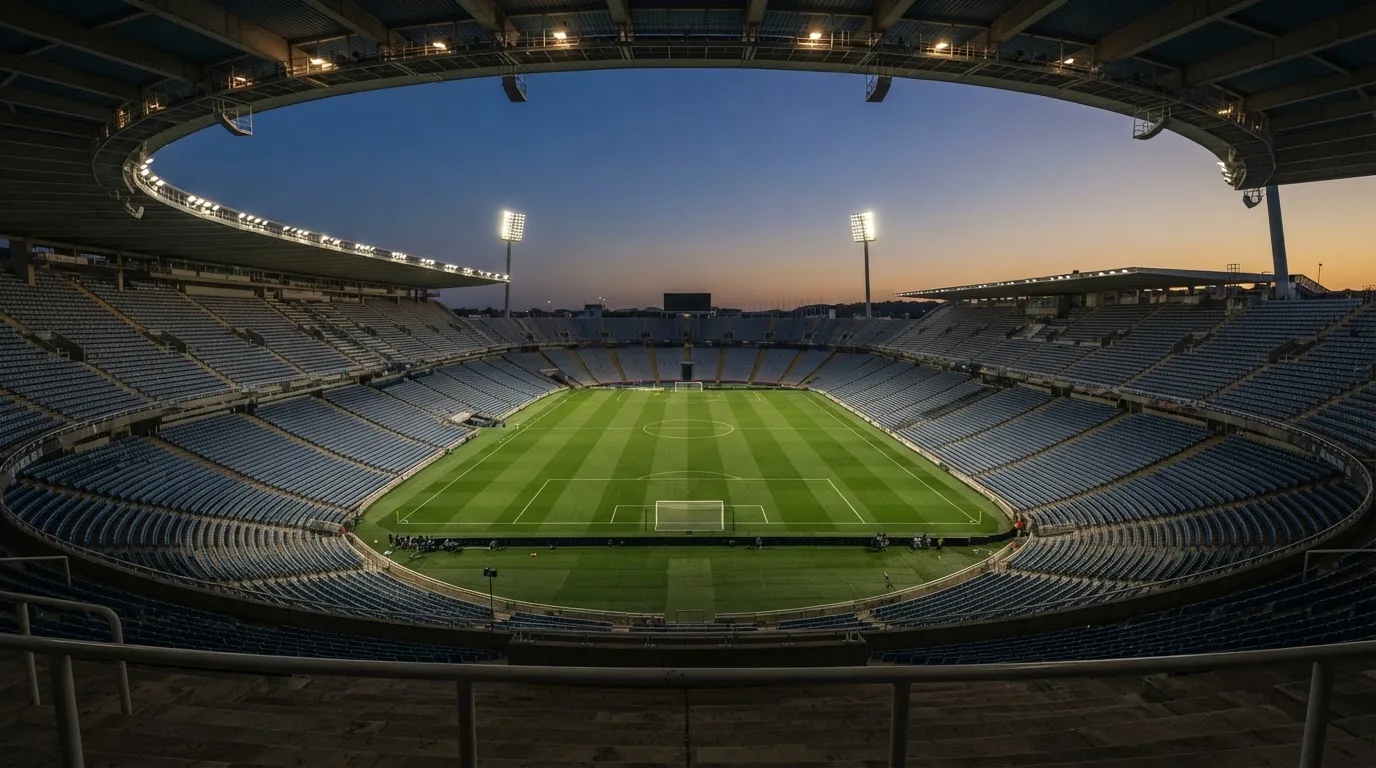
These rules matter because the bet settles on the result under the rules. A goal scored in extra time counts for the “to qualify” market and does not count for the standard 1X2. A goal scored after the final whistle does not count at all. A red card given after the final whistle does not affect the betting result. The terms specify which version of the rules applies, and the punter who does not read them is betting on a different fixture.
Why the bookmaker needs a margin
The price on a market is not the bookmaker’s view of the probability; it is the bookmaker’s view adjusted for the margin. The margin is the cut the bookmaker takes on every pound staked on the market, and the overround is the expression of that margin in the prices. A 1X2 market with a 5% margin returns 95p for every pound staked across all outcomes, in the long run, and keeps 5p.
The consequence is that every price on the sheet is shorter than the true probability would suggest. A 2.00 price is not 50/50: it is 50/50 minus the margin, so the real probability is closer to 47.5% on each side. A 4.00 price is not 25%; it is closer to 23.5%. The punter who reads a price as a probability is overstating their chances by the margin, on every selection, every time.
A worked example: the margin on a typical match
Take an illustrative 1X2 market at decimal prices of 2.10 (home), 3.40 (draw) and 3.60 (away). The implied probabilities are 1 ÷ 2.10 = 47.6%, 1 ÷ 3.40 = 29.4%, 1 ÷ 3.60 = 27.8%. Summed, they come to 104.8%, which is the overround, and the margin is 4.8%. For every £100 staked across all three outcomes in the right proportions, the bookmaker pays out £95.40 and keeps £4.60.
The margin is the bookmaker’s edge, and it is the only edge that is always present, on every market, at every bookmaker. A punter who bets 100 singles at a typical Premier League 1X2 is paying 5% of turnover to the bookmaker before any skill comes into it. A punter who bets a Bet Builder at the same match is paying more, because the legs multiply the margin into the combined price. A punter who backs a long-odds outsider at 15.00 is paying the same margin, in percentage terms, as the punter backing the favourite at 1.20, and the long-odds punter is paying it on a bet that wins less often.
The worked margin of 4.8% in this example sits at the tighter end of what UK football 1X2 markets typically run at, and the difference between 4.8% and 6.0% is the difference between a sharp book and a soft book on the same fixture. Across this set of operators, the in-play margin runs wider than the pre-match margin, and the Bet Builder margin runs wider than both.
Who regulates football betting in Great Britain
The Gambling Commission is a non-departmental public body sponsored by the Department for Culture, Media and Sport. It licenses the whole commercial market under the Gambling Act 2005, which covers Great Britain (England, Scotland and Wales); Northern Ireland is outside the Act and has its own older law, so a GB licence is not the same as a UK-wide licence, and an operator licensed for Great Britain is not automatically licensed for Northern Ireland. The Commission’s public register is searchable by business name, trading name, domain or account number, and it is the whole test of whether a brand holds a licence.
What the Gambling Act 2005 requires
Since the Gambling (Licensing and Advertising) Act 2014, an operator whose remote facilities are used in Great Britain needs a Commission licence wherever it is based. Sections 33 and 36 of the 2005 Act, as amended, are the relevant provisions, and a Curaçao, Maltese or Gibraltar licence is not a substitute for a Commission licence. There is no state monopoly and no cap on the number of licences: the regime is licensing, not state operation.
The licence categories that matter for football are remote general betting standard (real events), which covers pre-match and in-play betting on real sport; remote general betting standard (virtual events), which covers computer-generated fixtures; remote pool betting, which covers pools on horse and dog racing; and remote betting intermediary, which is the licence for betting exchanges. The licence is granted to a company, and several brands can run under one licence: Ladbrokes and Coral under LC International Limited, Paddy Power and Betfair under Flutter, for example. The register entry names the licence holder and the trading names, and the punter who checks the register sees both.
Financial spread betting is regulated by the Financial Conduct Authority, not the Commission. Spreadex holds both licences, and the FCA regulates the spread side while the Commission regulates the fixed-odds side; the spread side carries a separate warning that losses can exceed deposits. The minimum age for any gambling product in Great Britain is 18.
What may be bet on
There is no statutory list of permitted bets or markets. An operator holds a licence for a category and offers markets under its own rules and the Licence Conditions and Codes of Practice (LCCP). In-play betting is offered by GB bookmakers under the same framework as pre-match; there is no statutory restriction on in-play markets beyond the LCCP social responsibility conditions. Esports are treated like any other event; virtual events are a separate licence category; bets on politics, TV shows and novelty markets are offered by GB bookmakers and no statutory prohibition was found. Spread betting on sport is inside General Betting Duty, and pool betting on horse or dog racing is a separate licence and duty. There is no statutory cap on stakes in sports betting, and operators set their own maximum stakes and may restrict individual customers.
The customer-protection regime
Identity verification is required before the first deposit: name, address and date of birth are checked, including with a free bet or bonus. Since 7 May 2019, licensed remote operators have run these checks before a customer can deposit or gamble, and the verification is the reason there is no anonymous play at a licensed site. A financial vulnerability check applies since 30 August 2024 under LCCP condition 3.4.4: it is triggered when a customer’s deposits minus withdrawals exceed £150 in a rolling 30 days (since 28 February 2025), and the check is a public-record check for events like bankruptcy or county court judgments. It is not an income check and not a credit reference check.
Financial risk assessments (the “affordability checks” of the press) have been announced in a staged plan in a Commission article dated 7 July 2026, with no start date set. Deposit limits under RTS 12 have applied in their first phase since 31 October 2025; a second phase has been postponed to 30 September 2026, and whether the second phase is live is not established. There is no state-set deposit or loss ceiling for betting: limits are the customer’s choice, and the operator must offer a gross deposit limit on a fixed time frame.
What the punter pays, and what the operator pays
The punter pays no tax on betting winnings in Great Britain. General Betting Duty is the operator’s tax, currently 15% on gross profits for non-remote bets and on remote bets at the present rate; from 1 April 2027 a new remote betting rate of 25% applies within General Betting Duty, while remote bets on UK horse racing, bets on self-service betting terminals, pool betting and in-person betting stay at 15%. Spread betting carries its own rates (3% financial, 10% other) under separate legislation. Whether operators pass the duty on through shorter odds is not established, and the punter is not charged duty directly. The Commission’s statutory levy is a separate charge to the operator, not a tax on the punter.
What an offshore book costs the punter
A GB licence is compulsory at the point of consumption. Providing gambling facilities in Great Britain without the licence the Act requires is an offence under section 33 of the Gambling Act 2005 (on summary conviction up to 51 weeks’ imprisonment, a fine up to level 5, or both; six months in Scotland), and the offence is aimed at the operator. No offence aimed at a customer who merely bets on an unlicensed site has been established: the consequence is the loss of the protections a GB licence brings. An offshore punter has no GAMSTOP coverage, no Commission complaints route, no approved dispute-resolution body, no British consumer redress if funds are withheld, and the operator is not bound by the 10x bonus cap or the £150 vulnerability check. The honest framing: licensed means checks, limits, GAMSTOP, bonus cap, and verification before the first bet; unlicensed means none of those protections and possible loss of funds. Neither is the default “safe” choice.
Enforcement is disruption, not blocking: cease-and-desist notices, search-engine referrals, work with registrars, hosts and payment providers. The Commission has been given, or is about to receive, court-order DNS blocking powers, but no ISP blocking is in operation at the time of writing. The punter who bets offshore is not breaking the law; the punter who bets offshore is unprotected by it.
Staying in control of the bet
The Gambling Commission, the operators and the help services treat safer gambling as a standing requirement, not a marketing line, and the framework around it is laid down in the LCCP social responsibility code. Three threads run through it: self-exclusion, deposit limits and the routes to help.
GAMSTOP
GAMSTOP is the national multi-operator online self-exclusion scheme, and it is a mandatory licence condition for online operators since 31 March 2020. The exclusion periods are six months, one year, five years, or five years with auto-renewal. After the minimum period the exclusion stays in place for a further seven years unless the customer asks GAMSTOP to remove it. GAMSTOP covers online sites and apps; betting shops use a separate self-exclusion service. Every GB-licensed online operator takes part in GAMSTOP, and a customer who has self-excluded cannot open a new account at any of them during the exclusion period.
Financial vulnerability and deposit limits
The financial vulnerability check (LCCP condition 3.4.4) applies at the £150-in-30-days deposits-minus-withdrawals threshold and is a public-record check, not an affordability check in the press sense. Financial risk assessments have been announced in a staged plan with no start date. Deposit limits under RTS 12 require the operator to offer a gross deposit limit on a fixed time frame, and the first phase has applied since 31 October 2025. There is no state-set deposit or loss ceiling: the punter sets the limit, and the operator must honour it.
Where to get help
GamCare runs the National Gambling Helpline, and GambleAware funds treatment and education. The NHS runs gambling clinics in several regions, and Gamblers Anonymous runs peer-support meetings. The help is confidential and free, and the route in is the help service rather than the bookmaker, and the punter who has reached the point of asking has reached the point of asking. Fitzwilliam Sports links to GambleAware, GamStop and Gamblers Anonymous on its homepage, alongside instant deposits, fast withdrawals, timeouts and deposit limits, and that pairing is what a licensed operator’s safer-gambling page should look like.
The restrictions on offer
Credit cards have been banned for gambling in Great Britain since 14 April 2020 (LCCP condition 6.1.2), and the ban covers credit-card-funded payments through an e-wallet. Debit cards and bank-based payments are not covered. Marketing is not licensed by the Commission; it runs through the CAP Code (non-broadcast) and BCAP Code (broadcast), enforced by the ASA, alongside the LCCP marketing conditions. CAP Code section 16 requires marketing to be socially responsible, not of strong appeal to under-18s, and no one who is or seems to be under 25 may be featured gambling or play a significant role (with an exception for marketing placed where a bet can be made directly). The “whistle-to-whistle” rule, in force since 1 August 2019, bans betting advertisements on TV from five minutes before a live sporting event to five minutes after it, before the 9pm watershed; horse and greyhound racing are excluded. The Premier League clubs’ withdrawal of gambling sponsorship from the front of matchday shirts from 2026/27 is voluntary, not law. Promotion rules in force since 19 January 2026 cap wagering requirements on bonuses at 10x (a £10 bonus at 50x needed £500 of bets; under the cap no more than £100), and mixed-product promotions are banned. Whether the cap applies to free bets with no wagering condition, and any cap on the money value of a bonus, are not established.
Crypto, anonymity and the licensed UK book
The framework around crypto and anonymity in Great Britain is laid down in the identity-verification rules, the credit-card ban and the licensing regime, and the three together close the door on anonymous play at a licensed operator. The licensed UK book is the wrong venue for a punter who wants to fund a betting account without a name attached to it, and the offshore book is the only venue that does not ask, with the protections lost that the asking raises.
What the licensed book requires
A licensed UK book has to verify name, address and date of birth before the first deposit, including for a free bet or bonus. The verification has been in force since 7 May 2019, and the book uses it to run responsible-gambling checks (GAMSTOP, the £150 vulnerability threshold, deposit limits) and to meet anti-money-laundering obligations. The credit-card ban since 14 April 2020 closes the credit-card-funded route through an e-wallet, and the source-of-funds questions at higher spend are normal under the money-laundering rules.
What this means for crypto
Bitcoin and other cryptocurrencies sit outside the UK regulated payments system. A licensed UK book does not, in general, accept crypto deposits because the book cannot verify the source of funds through a UK-regulated channel, and the book is responsible for that verification. The punter who wants to bet with bitcoin bets with an offshore book, and pays the price in the loss of the GB protections.
The crypto route is offered as a route, not as a recommendation. A bitcoin deposit at an offshore book is faster than a debit-card deposit at a UK book, and the verification is lighter. The punter who values the speed and the privacy pays for them in the absence of a Commission complaints route, the absence of GAMSTOP coverage, the absence of the 10x bonus cap and the absence of British consumer redress if funds are withheld. The crypto route is faster because it skips the checks; the checks are the reason the route is faster.
The book that says no to anonymity
Identity verification is the test of a licensed UK book. Midnite shows Gambling Commission licence 101839 on its site and offers in-play events, an acca builder, popular accas and price boosts with maximum-stake limits; Kalooki Sportsbook is operated by Kalooki Sports Book Ltd (company number 12938274), licensed by the Gambling Commission under account number 57730, and is a GAMSTOP member. Both names are on the register, both verify before deposit, and both belong to the regulated market. The offshore book is the alternative, and the alternative is what it is.
Bonuses, free bets and what they cost
A sports welcome offer at a UK-licensed book is a free bet or a bet credit issued in return for a qualifying bet, and the headline number on the page is rarely the figure that ends up in the punter’s account. Three numbers decide what the offer is worth: the qualifying stake, the qualifying price, and the rules on the free bet.
What “free bet” actually means
A free bet at a UK book is a stake the book gives the punter, with the stake not returned on a win. A £10 free bet at 3.00 returns £30 on a win (£20 profit plus the £10 stake that does not come back), not £30 profit. The free bet is “free” in the sense that the punter does not pay for it; it is not free in the sense that the stake is part of the winnings.
This is the rule that turns a £40 free bet at 2.00 into a £40 return, not a £80 return, and the punter who treats the free bet as cash at the price is overstating the value by 100%. A free bet at a long price is worth more than a free bet at a short price for the same reason: a £10 free bet at 5.00 pays £40 profit, while a £10 free bet at 1.50 pays only £5 profit.
What a “risk-free” bet actually means
A risk-free bet is a free bet issued when the qualifying bet loses, and the stake of the original bet is not returned alongside the free bet. VBet’s sports welcome offer is a £10 free bet if a new, verified customer stakes £10 or more on a first-ever bet that loses. The offer is “risk-free” in the sense that the punter’s first bet cannot lose: the £10 stake either wins outright or is converted into a £10 free bet. The free bet itself is a free bet, with the stake not returned on a win, and the punter’s worst case is the £10 stake converted into a £10 free bet at the rules the operator sets.
The qualifier that decides the cost is the price the qualifying bet has to be at. Coral’s sports welcome offer for new GB customers requires a deposit and sports bet of £20 or more at minimum odds of 2.0 (1/1), with £40 in free bets issued within 7 days and expiring 7 days after issue. The “minimum odds of 2.0” line is the constraint: a £20 bet at 1.80 does not qualify, and the punter who backs a heavy favourite to trigger the offer is paying for the privilege.
What the wagering cap means
Promotion rules in force since 19 January 2026 cap wagering requirements on bonuses at 10x, and a £10 bonus at 50x required £500 of bets before the cap; under the cap no more than £100 of turnover is required to clear the bonus. Mixed-product promotions (offers that require gambling on two or more product types such as betting, casino, bingo and lottery) are banned. Whether the cap applies to free bets with no wagering condition is not established. The cap is a hard ceiling on the punter’s cost in qualifying bets, and the punter who reads the small print before claiming has paid for the offer in qualifying bets and not in hidden turnover.
What an accumulator insurance means
An accumulator insurance refunds the stake as a free bet if one leg of an accumulator lets the punter down, and the typical condition is a minimum number of legs (four or five) at a minimum price per leg. The insurance pays on the one-leg loss, not on a two-leg loss, and the refund is usually capped at a stake level (a £20 acca insurance refunds up to £20 as a free bet). The punter who uses acca insurance at the qualifying price has paid for the cover in shorter prices on each leg, because the book has priced the cover into the multi-leg price.
The deadline, the expiry, and the cap
Coral’s £40 free bets expire 7 days after issue. A free bet that expires in 7 days is worth less than a free bet that expires in 30 days, because the punter has less time to find a price that suits, and the punter who claims at the end of the week is forced into whatever price is on the screen. BoyleSports’ UK welcome offer of £20 in free bets and VBet’s £10 free bet carry their own expiry windows in the operator’s terms, and the punter reads those terms before claiming. The cap on free-bet winnings is named in some offers and not in others; where it is named, it is a hard ceiling on the return, and the punter who bets a free bet at 50.00 under a £500 cap has thrown away the upside.
A worked free-bet value
Take a £10 free bet at 5.00 on a market with a 5% margin (so a payout share of 95%). The expected value of the free bet is the free-bet amount times (the odds minus one) divided by the odds, times the payout share: £10 × (5.00 − 1) ÷ 5.00 × 0.95 = £10 × 0.80 × 0.95 = £7.60. That is what the £10 free bet is worth on average across a large sample of bets at that price and that margin. A free bet at 2.00 on the same market is worth £10 × 1.00 ÷ 2.00 × 0.95 = £4.75, or 47.5% of its face value. The free bet is worth more at the long price, and the punter who claims a free bet and burns it at 1.50 has underused the offer by a third.
Football betting apps and what they do
The app is the venue for most online football bets in Great Britain, and the difference between the apps is the difference between a quick bet and a missed kick-off. The choice comes down to three things: how the app handles in-play, how it handles Bet Builder, and how it handles the operator’s own promotions.
What the app has to do
A football betting app has to load the fixture list fast, push the in-play price within a second of a goal, take the bet the punter has placed, and settle it at full time without drama. The standard the better apps set is sub-second in-play re-pricing and Bet Builder that combines markets from one match into one stake. bet365’s Bet Builder+ is the benchmark for the multi-market single bet, and the app’s daily Bet Boosts run alongside the builder.
Spreadex pairs one-click cash out with live streaming of UK and Irish horse racing, greyhounds, tennis, NFL and selected football, and the streaming makes the app useful for the punter who wants to watch and bet on the same fixture. Fitzdares offers cash out, accumulators, Lucky 15s, specials and antepost markets across horse racing, football, tennis, rugby, cricket, golf and American football, with in-play live odds. The breadth is what sets the premium end apart from the volume end, and the punter who bets racing and football on the same account reads the breadth differently from the punter who bets only the Premier League.
The browser versus the app
The browser version of a UK bookmaker’s site is the same market as the app, and the punter who bets from a desktop has the same prices as the punter who bets from a phone. The app’s edge is the push notification: a price boost or a Bet Builder alert that fires before kick-off, and the in-play one-tap stake that settles faster than the browser version. The browser’s edge is the bigger screen for a Bet Builder with six legs, and the multi-window layout for tracking three in-play markets at once.
The handset version
DAZN Bet’s deposit stack is a useful illustration of the app’s reach: deposits start at £5 by debit card, Apple Pay, Paysafecard, Trustly and Skrill, and at £20 by PayPal. The £5 floor is the small-stake punter’s entry point, and the PayPal entry point is the e-wallet punter’s. The app store age rating is one part of the safer-gambling framework, and Kwiff’s 17+ App Store age rating sits beside the same UKGC licence the rest of the set holds. Lottoland UK’s app combines casino, lottery betting, sports betting and scratchcards, and it states it is licensed by the Gambling Commission for customers in Great Britain. The licence is the test, not the App Store category.
What the app does not do
The app does not remove the margin. The in-play price on the app is the in-play price the book quotes, and the Bet Builder on the app is the Bet Builder the book prices, and the app is the delivery mechanism for the prices, not the source of them. The punter who reads the app as a better book than the browser is reading the surface, not the price.
The app does not remove the verification. The licensed UK app verifies name, address and date of birth before the first deposit, and the verification is the same on the app as on the browser. The offshore app does not verify, and the lack of verification is what the offshore app is selling.
Football betting, by the numbers
The facts below cover the framework rather than the market.
The Laws of the Game and the season
The Laws of the Game of association football are maintained by the International Football Association Board (IFAB), which has done so since 1886. A standard adult football match consists of two halves of 45 minutes each, with stoppage time added at the referee’s discretion. A tied football match may go to extra time of two further 15-minute periods, and some competitions then use a penalty shoot-out. Each team has a maximum of eleven players on the pitch, including the goalkeeper; the goal is 7.32 m wide and 2.44 m high. The 2026–27 Premier League runs from 21 August 2026 to 30 May 2027 with twenty teams, promoted clubs Coventry City, Ipswich Town and Hull City, and Arsenal as defending champions. Spain beat Argentina 1–0 after extra time to win the 2026 FIFA World Cup final on 19 July 2026.
The offers as published
| Brand | Offer headline (from the operator’s own page or app store entry) | What the offer actually is |
|---|---|---|
| bet365 | Official global betting partner of the UEFA Champions League; most downloaded sports betting app in the UK | Bet Builder+, Super Boosts, Winnings Boosts on Bet Builders and selected singles, daily Bet Boosts |
| Coral | Get £40 in Free Bets when you bet £20 | £20+ sports bet at min odds 2.0 (1/1); £40 in free bets within 7 days, expiring 7 days after issue |
| BoyleSports | £20 in free bets when a £10 bet is placed | £10 bet → £20 free bets (£30 free bets for a €10 bet in Ireland) |
| VBet | £10 free bet if first bet loses | £10+ first bet that loses → £10 free bet |
| DAZN Bet | (No headline sports welcome offer stated) | Deposits from £5 (debit card, Apple Pay, Paysafecard, Trustly, Skrill) or £20 (PayPal), no fees |
| Sporting Index | (No headline sports welcome offer stated) | Fixed odds and spread betting on the same app; Bet Builder for football, auto cash-out, Multi-Markets |
| Spreadex | (No headline sports welcome offer stated) | Fixed odds and spread betting; one-click, auto and partial cash out; live streaming of UK/Irish racing, greyhounds, tennis, NFL, selected football |
| Kwiff | (No headline sports welcome offer stated) | UKGC-licensed, operated by Spryme Ltd under the kwiff trademark; “supercharged odds” mechanic on selected markets |
| Fitzdares | (No headline sports welcome offer stated) | Cash out, accumulators, Lucky 15s, specials and antepost markets across racing, football, tennis, rugby, cricket, golf, American football |
| Bar One Racing | (No headline sports welcome offer stated) | Irish independent bookmaker, shops across Ireland, racing sponsorships at Dundalk, Fairyhouse, Navan, The Curragh, Curraheen Park, Cork |
The licence numbers as published
Every brand in this set is on the Gambling Commission’s public register, and the licence numbers below are the ones the register shows on the snapshot date at the foot of this guide. The punter who checks the register before depositing sees the same numbers, and the punter who does not check is betting on a brand they have not verified.
| Brand | Licence holder | Account |
|---|---|---|
| bet365 | bet365 Group Limited | Not listed |
| Coral | LC International Limited | 54743 |
| BoyleSports | Boylesports Enterprise | 39469 |
| VBet | SCGO Limited | 44662 |
| DAZN Bet | DZBT Limited | 48756 |
| Sporting Index | Sporting Index Limited | 27343 |
| Spreadex | Spreadex Limited | 8835 |
| Kwiff | Eaton Gate Gaming Limited | 44448 |
| Fitzdares | Fitzdares Limited | 400 |
| Bar One Racing | Bar-One Racing Limited | 56516 |
Midnite’s site cites Gambling Commission licence 101839; Kalooki Sportsbook is licensed under account 57730; Unibet’s UK site is run by Platinum Gaming Limited under account 45322, and the brand states it has operated since 1999. Lottoland UK states it is licensed by the Gambling Commission for customers in Great Britain. The register entry is the test, and the punter reads the entry.
The mobile app, the in-play bet and the small stake
Three things dominate the day-to-day experience of betting on football online in Great Britain today. The first is the in-play bet on the phone: the punter is at the match, the price moves, the bet is placed and the bet settles within ninety minutes. The second is the Bet Builder on the same match: three or four markets combined into one stake, with the price already multiplying in the punter’s head. The third is the small stake: the punter who puts £5 on a BTTS selection at 1.80 because that is what the bankroll allows, and the operator’s £5 deposit floor at DAZN Bet is the entry point that fits.
What the punter actually does
The punter picks a fixture. The Premier League, the Championship, the Champions League or the Scottish Premiership are the obvious venues, and the bookmaker’s in-play coverage is the deepest on those leagues. The punter picks a market: 1X2, BTTS, over/under 2.5, handicap, or a Bet Builder combination of all four. The punter picks a price: the price at the time, not the price in hindsight. The bet is placed; the bet is settled at full time; the cash-out cover is taken or left, depending on what the price does in the last ten minutes.
The whole thing runs on the app. The browser version is the fallback for the punter at the desktop, and the shop is the fallback for the punter who does not have a phone in hand. The licensed book takes the bet under the terms the operator publishes, and the punter who reads the terms before betting has paid for the privilege in time, not in a hidden cost.
What this guide is, and what it is not
This guide is a description of how online football betting works in Great Britain in 2026, who licenses it, what the licensed bookmakers offer, and what the offers cost. It is not a tip, a prediction or a recommendation of any specific bet, any specific market or any specific outcome. The matches that decide the Premier League, the Champions League and the World Cup are played on the pitch, not on the betting screen, and the result is what the result is.
The punter who bets without an edge pays the margin. The punter who bets with an edge keeps the difference. The punter who bets offshore pays no margin in the headline price and pays for it in the absence of every protection the licensed book is required to give. The choice is the punter’s, and the framework above is what makes the choice an informed one.
Frequently asked questions
How do you bet on football tips?
A football tip is a selection at a price, and the price is what makes it a tip rather than a sentiment. The punter who follows a tip places the bet at the price the tipster names, records the result, and judges the tipster on the average return over a large sample. A tip without a price is not a tip; a tipster without a record is not a tipster.
How do you bet on football if you are a beginner?
Open an account at a UK-licensed bookmaker, verify name, address and date of birth, deposit within the operator’s floor, pick a market (1X2 is the simplest), pick a price, place the bet, settle at full time. The whole process takes ten minutes, and the licence is the test of whether the operator can take the bet.
How do you bet on football online?
Through the bookmaker’s app or browser, at the price the bookmaker quotes, on the market the bookmaker offers. The bet settles at full time under the rules the operator publishes, and the return is the stake times the decimal price on a win.
How can it be checked that a bookmaker holds a Gambling Commission licence?
The Gambling Commission’s public register is searchable by business name, trading name, domain or account number, and it is the whole test of whether a brand holds a licence. The punter who checks the register before depositing sees the licence holder, the licence category and the licence number, and the punter who does not check is betting on a brand they have not verified.
How is the return on a bet worked out from the stake and the odds?
The return is the stake multiplied by the decimal odds: a £10 stake at 3.40 returns £34, including the £10 stake and £24 profit. A combination bet’s legs multiply into one price, and the stake at the combined price gives the return.
What is the bookmaker’s margin and how can it be seen in the odds?
The margin is the cut the bookmaker keeps of every unit staked on a market, and it is visible in the overround: the implied probabilities of all outcomes on a 1X2 market, summed, give the overround, and the margin is the overround minus 100%. A market with a 104% overround has a 4% margin, and a market with a 108% overround has an 8% margin.
Football – Darts betting
Content created by the «Darts betting» team
