
Ante Post Betting 2026
 Available in US
Ante-post betting is the oldest long game in the betting shop. A punter can back a horse for the Cheltenham Gold Cup in October, lock in a price months before the Festival and carry that stake through every stable rumour, soft ground report and form reversal until the tape goes up. The same mechanic governs outright tournament markets on football, tennis, the Grand National field and a host of other events where the result is months away. What changes between ante-post and ordinary fixed-odds betting is the *when* — and the *when* is what decides whether a non-runner is treated as a void bet or a loser.
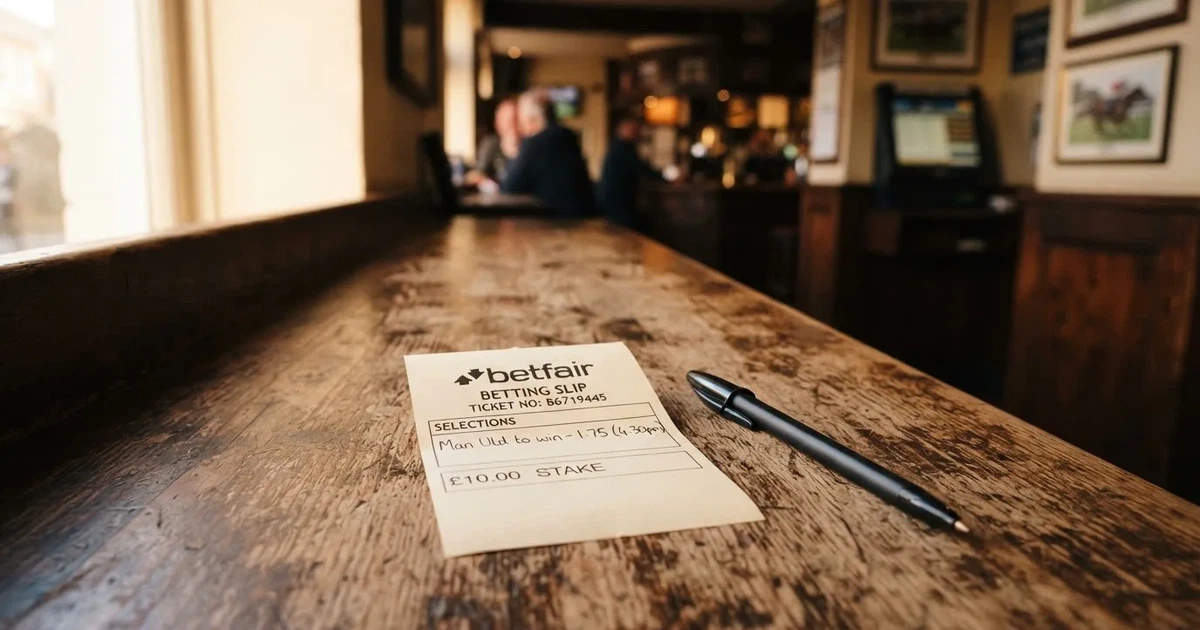
This page walks through that mechanic in plain terms: how UK bookmakers build ante-post books, how the price you take becomes the price you are paid at, what the bookmaker’s margin looks like inside those prices, which operators actually hold a Gambling Commission remote licence for future-race markets, and what a bettor loses by stepping off a licensed site onto an unlicensed one. Prices quoted below are illustrative and were checked against the licence register as of 27 October 2026.
Why “ante-post” exists as a separate market
Every fixed-odds book runs two parallel products. The closer product sits on a single race meeting, settles at the off, and pays Best Odds Guaranteed if the starting price drifts higher than the price taken. The ante-post product sits on the same event, opens weeks or months before, and stays open until either a declaration stage shortens the field or the race itself pulls the market. The two products are settled under different rule books because they are priced on different information.

A day-of-race book reacts to declarations, going reports, draw bias and market moves in real time. An ante-post book is priced when none of that information exists, on a field of dozens of declared horses where half may not even run, on a going description that may have no relation to the surface in March. That is why the margin on ante-post markets tends to sit higher than on the day race, why place-only and forecast bets are usually refused, and why a non-runner voids the bet on a Saturday and loses the stake in November.
Ante-post also matters because it is the only way to take a price that the market will not offer on the day. A short-priced favourite on the morning of the race is the market’s view of that race. The price taken eight months ago was the market’s view of the *horse* — a different question, and often a cheaper one when the horse’s form reads better than its public profile.
The Gran National, the Cheltenham Festival and Royal Ascot pull most of the ante-post traffic in Great Britain, but the same mechanism applies to outright markets on football leagues, the majors in tennis and golf, and outright markets on long-arc events in most major sports. Each bookmaker sets its own policy on what it will and will not price in advance.
How an ante-post book is built
The mechanics of a bookmaker’s ante-post market are the same as those of a day-of-race book, run on a smaller field and at a wider margin. Every runner in a race is given a price, those prices are converted to implied probabilities, and the implied probabilities are scaled so the book adds up to more than 100 per cent. The excess is the bookmaker’s margin — the slice of every pound bet that the book expects to keep in the long run. Wider fields, less form on view and less liquid markets all push the margin up.

A simple two-runner race at decimal odds 1.90 / 1.90 (fractional 9/10) is the cleanest illustration. Implied probability on each side is 1 ÷ 1.90 = 0.5263, or 52.63 per cent. The two probabilities add to 105.26 per cent. The bookmaker keeps the 5.26 per cent excess as margin. That is the gap between what the bettor pays in and what the book pays out on a “perfect” market where every outcome has been priced exactly. In a real ante-post book of twenty runners in a handicap chase, the same gap will read wider — often 20 to 30 per cent on a quiet market, dropping toward the 10 to 15 per cent band as the Festival approaches and liquidity arrives.
The cost of margin falls hardest on the favourite. A 4/1 shot in a twenty-runner field carries roughly 20 per cent of its implied probability against the actual chance of winning. A 33/1 outsider carries almost nothing — the longshot bias bakes several per cent of margin into every long price. That is the geometric shape of an ante-post book: cheap at the top, dear in the middle, and not really cheap anywhere once the margin is paid.
Margin worked as a band, not a number
Different from one event to the next, the ante-post margin on a single horse race sits in a wide range. A quiet midweek handicap pulled out two weeks before the off might price at 25 to 30 per cent margin if no other bookmaker has gone up yet. The same race the morning of the off, with declarations in and a full book from the major firms, will price closer to 12 to 15 per cent. The Cheltenham Gold Cup market in the final fortnight before the Festival has been known to push through 1.20 million in matched liquidity on the exchanges alone, and the major firms’ books narrow to single-digit margin on the day. Eight months out, the same market can sit at 18 to 22 per cent margin on each firm’s site and even wider on smaller books. Treating the margin as one fixed number is what misleads readers; treating it as a band that compresses as the race approaches is what the maths actually gives.
For a rough sizing rule: take a price offered on a five-runner no-runner-no-bet market, find the implied probability, and assume a 10 per cent margin. A 5/1 shot priced fair at 16.67 per cent is being offered at closer to 13.5 per cent of true chance, an 18 per cent haircut from fair. The price looks generous; the margin is the discount on every win.
Settling ante-post bets when the field changes
The settlement rule is the part most punters learn the hard way, because the rule for a non-runner is the opposite in ante-post to what it is on the day of a race.
Non-runner on the day of the race. A horse withdrawn after the declaration stage usually voids the bet and returns the stake, on both single bets and accumulators. Most major firms settle this without argument.
Non-runner in an ante-post market. A horse balloted out, withdrawn before declaration, or eliminated from the race before the ante-post book is closed loses the stake. The bet is not voided. The stake stays lost, because the price was taken on the assumption that the horse would run and the bookmaker priced the field accordingly. This rule is the single largest source of ante-post disputes, and it applies whether the bet was a single, a double or a leg of an accumulator.
Ante-post accumulators. When a leg of an ante-post accumulator is eliminated, the bet does not collapse. The remaining legs run at the original prices taken. A fourfold with one elimination becomes a treble; a treble becomes a double; and so on down. Single ante-post bets on the eliminated horse are the ones that lose.
Abandonment and course switches. An ante-post bet on a race that is abandoned is void and the stake is returned. If the race is moved to a different course — a frozen track in January replaced with a rearranged venue — the ante-post bet is also void, again with the stake returned.
Place-only, conditional and forecast bets. These are not accepted on the ante-post market. Each-way betting on a stated number of places is offered by some firms but not others, and only on certain races.
Staking and dead heats. Each-way doubles and trebles are not settled in the same way as ordinary each-way bets in some firms’ house rules, and a dead heat in an ante-post market is settled at the divided stake — a horse dead-heated for the win in a two-way dead heat pays half the win stake and half the place stake. These are the small prints that change the return on a small bet by a perceptible amount, and they are where it pays to read the firm’s ante-post rules before staking.
What “Best Odds Guaranteed” covers and what it does not
Best Odds Guaranteed is the single most important concession in British horse racing. A punter who takes a price on a horse in the morning gets paid the higher of the price taken or the starting price if the SP drifts longer by the off. The concession is meant to remove the risk of waiting too long on price and is the reason British punters rarely leave it to the off.
The concession does not extend to ante-post bets. The licence conditions of every major firm — and the rule is identical across the major books — say BOG applies to UK and Irish horse racing from a fixed time on the day of the race, on singles and multiples, and not on ante-post, tote or pari-mutuel bets. A punter who backs a horse at 16/1 in October and the horse wins at 12/1 in March is paid at 16/1, not 12/1, because the price was locked at the time of the bet. The opposite is also true: a punter who backs at 12/1 and the horse drifts to 16/1 is still paid at 12/1, the original price, because the price taken is the price settled. The concession does not act on ante-post in either direction.
This rule changes the ante-post calculus. The punter who takes a price eight months out is not subject to BOG drift either way, and the gamble is on the price being a fair reflection of the horse’s chance on the day — nothing else.
In-play and outright markets on other sports
Ante-post is not only about horse racing. Outright tournament markets work on the same principle in football, tennis, golf, rugby, cricket and American football: a price is offered months before the event, the bet is settled on the participant taking part (or else voided under the firm’s house rules), and a non-participant voids the bet.
Football outrights are the second biggest ante-post market in Great Britain. The Premier League, the Championship, the Champions League and the major European leagues are priced from the close of the previous season. Tennis outrights on the four majors open within hours of the previous final ending, and Grand Slam outright markets on Wimbledon, the French Open, the US Open and the Australian Open run for almost a full year. Golf majors and the Ryder Cup pull significant ante-post liquidity on both sides of the Atlantic.
The settlement rules on these markets follow the same pattern: a player who withdraws before the tournament voids the bet in most firms’ house rules, with the stake returned; a tournament that is shortened or cancelled voids the bet. A team that finishes bottom of the league in the Premier League settles as a loser at 1000/1 the same way as a horse that refuses at the start in an ante-post race: the bet was taken on the assumption the bet would run, and the rules resolve on that assumption.
Different firms price different outrights. Betfair, bet365 and the major high-street brands price almost every outright that has any liquidity. Smaller and newer brands cherry-pick the headline events and refuse the rest. The punter looking for ante-post on the Champion Hurdle, the World Cup or the US Masters has no shortage of options; the punter looking for ante-post on a smaller outright, such as a county championship outright at cricket or a lower-tier football league winner, often has to shop around.
The legal frame in Great Britain
The Gambling Commission, a non-departmental public body sponsored by the Department for Culture, Media and Sport, is the sole regulator of commercial betting in Great Britain. The framework is the Gambling Act 2005, amended by the Gambling (Licensing and Advertising) Act 2014 to extend licensing to operators whose remote facilities are used in Great Britain, wherever the operator is based. A Curaçao, Maltese or Gibraltar licence is not sufficient on its own; a separate Commission licence is required to take bets from customers in England, Scotland and Wales. Northern Ireland sits outside the 2005 Act and is regulated under older law, so “GB-licensed” is the right phrase for any operator holding a Commission licence.
There is no statutory list of permitted markets. The Commission does not publish a list of bets that may or may not be offered. A bookmaker holds a licence for a category — remote general betting standard (real events), remote general betting limited, remote pool betting, remote betting intermediary — and offers markets under the rules in its licence and the Licence Conditions and Codes of Practice (LCCP). This is the framework that allows ante-post markets, in-play markets, novelty markets and outright markets to exist legally without each one being separately approved, and it is also the framework that means a UK punter looking for an unusual bet should check the operator’s terms rather than assume any category is automatically available.
The Commission’s public register is the only test of whether a brand holds a licence. The register can be searched by business name, trading name, domain or account number, and the result is either a matched licence on the relevant category or nothing. Any other claim — a footer note on a site, a sentence in a press release, a banner on the home page — is corroboration at best, not proof.
The minimum age for any form of gambling in Great Britain is 18. Identity is verified before a customer may deposit or gamble, including with a free bet or a bonus, and verification takes the form of name, address and date of birth checks against public records, plus document upload where required. Anonymous play is not available at a licensed site.
Player protection: GAMSTOP and the financial checks
GAMSTOP is the national multi-operator self-exclusion scheme. Every GB-licensed online operator is required to take part in GAMSTOP, and the period of exclusion is six months, one year, five years, or five years with auto-renewal. After the minimum period ends, the exclusion stays in place for a further seven years unless the customer asks GAMSTOP to remove it. GAMSTOP covers online sites and apps; the separate gambling shop scheme is run by a different provider and is not interchangeable.
Two newer licence conditions have shifted the protection landscape since 2024. The first is a financial vulnerability check (LCCP condition 3.4.4, in force since 30 August 2024) that applies to licensed remote betting when a customer’s deposits minus withdrawals exceed £150 in a rolling 30-day period (since 28 February 2025). It is a public-record check — bankruptcies, county court judgments, similar — not an income check and not a credit-reference check.
The second is a financial risk assessment (the affordability check of the press coverage), which the Commission announced in a staged plan and has not yet given a start date. The phrase to use is “announced, staged, no start date” — not “in force”.
Operators must offer a gross deposit limit under a fixed time frame, and a series of phased changes to those rules has been running since 31 October 2025. A second phase was postponed to 30 September 2026; whether it is live today is not established, and any reader checking before staking should look at the firm’s current deposit-limit options rather than assume one rule. There is no state-set ceiling: deposit and loss limits are the customer’s own choice, and the firm’s deposit-limit facility is the floor.
Help is available outside the operators. GamCare runs the National Gambling Helpline; GambleAware funds treatment and education; the NHS gambling clinics offer cognitive-behavioural treatment on the health service; Gamblers Anonymous runs peer-support meetings. A punter feeling the bet slip from a choice into a habit has four places to start.
Advertising and bonuses
Advertising is not licensed by the Commission. It runs through the CAP Code on non-broadcast media and the BCAP Code on broadcast, both enforced by the Advertising Standards Authority, alongside the LCCP marketing conditions. CAP Code section 16 sets the rule that no one who is or seems to be under 25 may feature in marketing for gambling, except where the marketing is placed in a context where a bet can be made directly. The rule is about who may *appear* in the ad, not who may *bet*.
Promotion rules that took effect on 19 January 2026 placed two hard limits on what an operator can offer. First, the wagering requirement on any bonus is capped at 10x: a £10 bonus with a 50x wagering factor would have required £500 of qualifying bets before withdrawal, and is now capped at no more than £100. Second, mixed-product promotions — an offer that requires gambling on two or more product categories such as betting, casino, bingo and lottery, for example “bet on football to get free spins” — are banned outright. Whether the cap applies to free bets that carry no wagering condition, and any cap on the money value of a bonus, are not established.
The “whistle-to-whistle” television ban on gambling advertising — five minutes before a live sporting event to five minutes after — has been in industry operation since 1 August 2019 and is sometimes mistaken for statute. It is industry code, not law, and it excludes horse and greyhound racing.
The Premier League clubs’ voluntary withdrawal of gambling sponsorship from the front of matchday shirts from the 2026/27 season is a club-level commercial decision, not a change in law. Sleeves and hoardings remain in use.
Tax
The bettor pays no tax on gambling winnings in Great Britain. General Betting Duty is the operator’s tax, charged on gross profits at 15 per cent under the current rate. A new remote betting rate of 25 per cent applies from 1 April 2027, while remote bets on UK horse racing, self-service betting terminal bets, pool betting and in-person bets remain at 15 per cent. Until 1 April 2027 the remote rate stays at 15 per cent. Whether operators pass duty on through odds has not been established and should not be assumed either way; the duty is the operator’s liability, not the customer’s.
Spread betting is taxed differently. Financial spread betting is regulated by the Financial Conduct Authority, not the Commission, and is taxed at 3 per cent; non-financial spread betting is inside General Betting Duty at 10 per cent. Spread betting losses can exceed deposits, which is the headline on this product and the reason it sits in its own regulatory category.
The offshore question
An unlicensed site is not a more permissive site. It is an unregulated one. The customer protection floor on a licensed GB operator — the GAMSTOP enrolment, the Commission’s complaints route, the approved dispute resolution service, the 10x bonus cap, the £150 vulnerability check, the LCCP marketing code, the credit-card ban — none of it travels to the offshore site. The customer who stakes on an unlicensed site has no recourse to the Commission if the firm refuses to pay out, no recourse to GAMSTOP if self-exclusion needs to bite, no recourse to the ASA if a bonus promise is broken.
The customer is not the target of enforcement. Section 33 of the Gambling Act 2005 makes the *provision* of unlicensed gambling facilities a criminal offence on summary conviction (up to 51 weeks’ imprisonment, a fine to level 5, or both; six months in Scotland). Enforcement is disruption, not blocking: cease-and-desist notices to the unlicensed operators, search-engine referrals, work with registrars, hosts and payment providers. The Commission has been given, or is about to receive, court-order DNS blocking powers; that is not the same as an ISP blocking regime and should not be written as one.
No offence aimed at a customer betting with an unlicensed firm was identified in the framework. The framings to use are the loss of protection and the loss of British consumer redress, not “legal” or “illegal” for the punter.
How a UK bookmaker’s ante-post book is checked
Three checks catch most of what a punter needs to know about a UK bookmaker’s ante-post product. The first is the firm’s category on the Commission’s public register; the second is the firm’s ante-post house rules; the third is the firm’s Best Odds Guaranteed policy. None of these is on the firm’s marketing pages, and all three sit behind the firm’s own terms.
The Commission’s public register is the only source of licence confirmation. Search by business name, trading name, domain or account number — any of these, all of them — and the result tells the punter what category of licence the firm holds, who the licence holder is, and what domains are listed on the register. A site whose footer claims a Commission licence but does not appear on the register is making an unverified claim. A site’s footer is corroboration, not proof.
The firm’s ante-post house rules tell the punter what settlement rules apply. Non-runner on a single loses the stake. Non-runner in an ante-post accumulator leaves the remaining legs in play at original prices. Place-only, conditional and forecast bets are refused. Settlement is at the price taken; BOG does not apply.
The firm’s BOG policy tells the punter when the concession kicks in. Every major firm applies BOG to UK and Irish racing from a fixed time on the day of the race, on singles and multiples; none apply BOG to ante-post, tote or pari-mutuel bets. The punter who takes a price months out is settled at the price taken regardless of any drift.
Strategy and what “tips” actually do
Ante-post strategy is a small set of habits dressed up as a large one. The mechanical side of it is the rule book above, applied without sentiment. The predictive side is another matter.
Three habits make the difference between an ante-post book that loses slowly and one that loses fast. First, take the price only when the bet is worth taking. An ante-post bet that holds a price through eight months of form changes is a bet on the horse’s chance, not on the market’s view; once the market catches up to the form, the price shortens and the edge is gone. The punter who takes a price the market has not yet accepted is buying something the market will reprice later; the punter who takes a price the market has already accepted is paying for what everyone else has seen.
Second, keep an eye on the book. Each-way terms vary by race and operator. A 25/1 shot each-way at one-fifth the odds for four places is a very different bet to a 25/1 shot each-way at one-quarter the odds for three places, and the difference is several points of edge in the field. The each-way terms are the part of ante-post that the marketing copy is least likely to flag and that the house rules will state.
Third, accept the rule. A non-runner voids the bet only on the day. In ante-post, a non-runner voids the leg of an accumulator but loses the stake on a single. The bookmaker is not being difficult; the price was taken on the assumption that the horse would run. The punter who declines an ante-post single because the horse is a doubtful runner and prefers to wait for declarations is paying a real price for that caution — the longer the wait, the shorter the price.
“Tips” services for ante-post exist in two flavours. The first is a tipster publishing selections on a blog or in a paid service, with a long-run record that may or may not be verifiable. The second is a betting media outlet running preview pieces ahead of a Festival or a major meeting, with selections from a stable of writers and the implicit claim that some form of process is being followed. Both can be informative; neither is a system that wins.
The honest framing is this. Tipsters can be informative or misleading, and the long-run record — closing odds, strike rate, return on turnover — is the only figure that matters and is rarely published in a form the reader can check. An ante-post strategy built on price discipline, each-way terms and acceptance of the non-runner rule will lose less than a strategy built on chasing form across eight months and forgetting the price was taken. None of it is a system that wins, because the price the market sets after eight months of form has eaten the edge the ante-post price offered.
The ten GB-licensed bookmakers taking ante-post bets
The list below covers ten operators whose details appear on the Commission’s public register against a remote general betting standard (real events) licence. Each review covers the licence, the ante-post posture, what the bookmaker publishes about its future-race product, and the closing judgement for a punter weighing it. Verification was carried out on the register as of 27 October 2026.
The brands are listed in the order research establishes; nothing in the order is a recommendation. Several of the brands are smaller or newer than the household names and carry thinner ante-post books as a consequence; this is part of the trade-off a punter weighs when choosing where to place a future-race bet months in advance.
Fitzdares
Fitzdares runs under Commission account 400 as a remote general betting standard (real events) licence held by Fitzdares Limited. Its app markets an ante-post product on horse racing, football, tennis, rugby, cricket, golf and American football alongside accumulators, Lucky 15s, specials and an in-play product with cash out. The Fitzdares brand has historically positioned itself on the high-end of the market, with a smaller customer base and lower-stake ceilings than the larger firms.
The ante-post book is built around the headline meetings: Cheltenham, Aintree, Royal Ascot, the Grand National, the major festivals. The breadth of the firm’s ante-post offering on smaller events is narrower than at the major firms and is one of the trade-offs of a smaller book. The price discipline and the in-running product are what the brand sells to its customer.
Fitzdares (account 400) provides a VIP-style service centred on major festivals. It is a specialised choice, rather than a broad-market alternative.
Tote
The Tote is the successor to the state-owned pool betting operation and runs as TDCO Limited on Commission account 54779. Its licence category is remote general betting standard (real events), and its product set is built around pool betting on British and Irish racing. The Tote is the only place in Great Britain where a punter can bet into the pool directly and be paid a dividend rather than a fixed odds price, and the dividend mechanism is its distinguishing offer.
The ante-post product at the Tote is the Tote’s own version of the product, settling on the dividend rather than on a fixed price where pool betting applies. The pool dividend is a percentage of the pool returned to winning punters minus a take, and the take sits higher than a fixed-odds margin on most races.
For the punter who wants to bet into the pool rather than against a bookmaker, the Tote is the route and is the only place to do so. The ante-post product runs alongside the pool offer on the major festivals and meetings. Punters who want fixed-odds ante-post on a single horse go to the fixed-odds books; punters who want the dividend go to the Tote.
Geoff Banks
Geoff Banks runs on Commission account 54095 as a remote general betting standard (real events) licence held by GB Sports Advisors Limited. Its app publishes live in-play prices and ante-post prices on future events. The brand is a smaller operation than the household names and trades on its personal brand and a customer base that values the firm’s selections.
The ante-post book is built on the major horse racing festivals and a smaller selection of football and outright markets. The brand publishes tipping content alongside the betting product, which is a feature some customers value and others treat with caution; tipping content by a firm that also takes the bet has a built-in conflict of interest that the punter should keep in mind.
Geoff Banks (account 54095) offers a personal service that includes tipping advice. It is a focused operator for those who value such guidance, distinct from the mass-market options.
Lottoland
Lottoland runs on Commission account 38991 as a remote general betting standard (real events) licence held by EU Lotto Limited. Its app combines casino, lottery betting, sports betting and scratchcards. The lottery product is the brand’s core; the sportsbook is a smaller secondary offer.
The sportsbook’s ante-post product is present but narrower than at the dedicated sports books. The Commission licence covers the sportsbook; the betting products on offer follow from the licence category.
Lottoland is primarily a lottery brand with a sportsbook extension, making it less suitable for dedicated ante-post racing enthusiasts.
Betmaster
Betmaster (account 65699) is regulated by the Commission for remote general betting standard (real events), with the licence held by BM Solutions GB Ltd. The product set is built around the major sports and the headline ante-post meetings. The brand is among the smaller operations in the licensed field and is one of several brands that operate within a wider gambling group.
The ante-post book covers the major festivals in horse racing and the headline football and tennis outrights. The product is narrower than the dedicated sports books on the smaller events.
Betmaster delivers a reliable service on headline events, functioning as a straightforward, functional choice for moderate ante-post betting activity.
10bet
10bet (account 43173) holds a Commission licence for remote general betting standard (real events), registered to Blue Star Planet Limited. The product covers football, tennis and horse racing with cash out, a Bet Builder product and live streaming. The brand is one of the longer-established mid-sized operators and is known for a product-led approach to the sportsbook.
The ante-post book covers the headline meetings in horse racing and the major outrights in football and tennis. The Bet Builder feature extends to pre-match outright markets in some firms’ implementations; 10bet’s published offerings in that space are narrower than the dedicated bet-builder operators.
10bet provides an efficient, technology-led experience, balancing live-streaming capabilities with a reliable market presence on major tournaments.
bet365
bet365 (account 55148) provides its services under a Commission remote general betting standard (real events) licence, registered to Hillside (UK Sports) ENC. The product is the broadest in the licensed field across sports, markets, in-play, ante-post and price-boost mechanisms. The brand publishes Bet Builder+, Super Boosts, Winnings Boosts on Bet Builders and selected singles, and daily Bet Boosts. The marketing above the product is the firm’s strongest suit; the actual product range is what every other licensed book is benchmarked against.
The ante-post book on the headline meetings is comprehensive and is one of the deepest in the market. The firm’s in-play product extends to outright markets on football and tennis in some events. The price discipline sits in line with the wider market on the major events and tighter than the market on the very largest events where liquidity concentrates.
For the punter who wants the deepest licensed ante-post book on the largest range of events, bet365 is the benchmark. There is no meaningful trade-off to identify against this brief: the firm has been the licensed benchmark for the category for over two decades.
Copybet
Copybet (account 53774) is a Commission-licensed operator for remote general betting standard (real events), with the licence held by Copybet UK Limited. The product offers Best Odds Guaranteed all day, every day on UK and Irish racing, and pays first past the post on horse racing even if the winner is later disqualified. The brand’s distinguishing feature is its following of professional bettors’ selections into a customer-facing product.
The ante-post book covers the major horse racing meetings and a smaller selection of football outrights. The BOG feature extends to singles and multiples on the day; the firm does not extend BOG to ante-post, like every other licensed operator in the field.
For the punter who values all-day BOG on UK and Irish racing and a product tied to tipster following, Copybet fits.
London Bet
London Bet (account 66162) operates under a Commission licence for remote general betting standard (real events), registered to Thistle Bet Limited. The app carries a 17+ App Store age rating and markets itself as a UK-licensed operator with a London-themed brand. The product set is built around a mid-sized sportsbook on the headline sports and a casino section that is run under separate licence.
The ante-post book covers the major horse racing meetings and the headline football outrights. The product is narrower than the dedicated sports books on the smaller events.
London Bet focuses its offering on headline sporting events, positioning itself as a accessible, mid-sized operator within the regulated UK market.
BetMGM
BetMGM (account 39198) is licensed by the Commission for remote general betting standard (real events), with the licence held by LeoVegas Gaming PLC. The product carries BetMGM’s wider European sportsbook offer into the UK, including in-play, Bet Builder and a welcome offer for new UK customers that is split across multiple free bet tokens on football accumulators and sports multiples. The firm publishes Gambling Commission account number 39198 on its app listing and runs the welcome offer under the promotional rules in force since 19 January 2026.
The ante-post book covers the headline horse racing meetings and the major outrights in football and tennis. The firm’s in-play product is one of the broader offerings in the licensed field.
For the punter who wants a well-licensed bookmaker with a wide product and a sports welcome offer structured around football accas and multiples, BetMGM fits. The welcome offer should be read against the promotional rules before staking; the offer terms state minimum odds, a 7-day validity and an opt-in requirement. For the punter who wants the deepest ante-post book, bet365 sits ahead.
What the comparison shows
The licensed bookmakers spread themselves across the ante-post market by product depth, brand positioning and the size of the betting population they target. One sits at the top with the broadest book on offer, three sit in the middle with a competent product on the headline events and a thinner book on the smaller ones, and five sit further down the size curve with a focused ante-post book built around the major festivals. Betfair and the betting exchanges sit in a separate category under a different licence, and their pricing is closer to a true market than a bookmaker’s because the margin is the exchange’s commission and not a baked-in margin.
The punter weighing where to place an ante-post bet has three axes to think along. One is the breadth of the ante-post book at the brand: depth on horse racing majors is universal, depth on football and tennis outrights is variable, depth on long-arc sports is narrow across the field. Another is the size of the operator and the trade-off that brings: a bigger book usually means tighter margins on the most popular events, but a smaller book can mean a more selective customer base and a more attentive bookmaker. The third is the cost of moving between books to find the best price: taking the best of three firms on a major horse race a week before the off usually pays for the time it takes; shopping the headline Festival a week before the off is the standard move.
The table below summarises the ten licensed operators reviewed above. The “Ante-post in the firm’s terms” column reflects the published house rules or marketing language; cells left blank with an em dash indicate no specific statement was found in the firm’s own terms.
| Bookmaker | Gambling Commission account | Licence holder | Ante-post in the firm’s terms |
|---|---|---|---|
| Fitzdares | 400 | Fitzdares Limited | Future-race markets on horse racing, football, tennis, rugby, cricket, golf and American football |
| Tote | 54779 | TDCO Limited | Ante-post markets settled on the Tote dividend on the major festivals |
| Geoff Banks | 54095 | GB Sports Advisors Limited | Ante-post prices on future events alongside tipping content |
| Lottoland | 38991 | EU Lotto Limited | Sportsbook has ante-post markets; the broader product is lottery-led |
| Betmaster | 65699 | BM Solutions GB Ltd | Standard ante-post book on the major horse racing meetings |
| 10bet | 43173 | Blue Star Planet Limited | Cash out, Bet Builder and live streaming on the major sports and meetings |
| bet365 | 55148 | Hillside (UK Sports) ENC | Comprehensive ante-post book on the headline meetings with the deepest licensed product |
| Copybet | 53774 | Copybet UK Limited | Standard ante-post book; BOG extends to the day race only |
| London Bet | 66162 | Thistle Bet Limited | Standard ante-post book on the major horse racing meetings |
| BetMGM | 39198 | LeoVegas Gaming PLC | Ante-post book on the headline horse racing meetings with a wide sportsbook product |
A worked illustration of margin
The marginal arithmetic is worth doing once on the page because it is what every price the punter sees carries.
A two-runner market priced at 1.90 / 1.90 (decimal; 9/10 fractional) gives an implied probability of 1 ÷ 1.90 on each side. That is 0.5263, or 52.63 per cent, on each side. The two implied probabilities sum to 105.26 per cent. The 5.26 percentage points in excess of 100 is the bookmaker’s margin — the slice of every pound bet that the book expects to keep on average.
On a real ante-post book of twenty runners in a National Hunt handicap, the sum of all implied probabilities will sit somewhere in the 115 to 130 per cent range depending on liquidity, and the excess is the margin in the same way. The arithmetic is identical; the gap is wider because the field is wider and the liquidity is thinner. A 20 per cent margin on a £10 winning bet returns £50 at 5/1; a 10 per cent margin on a £10 winning bet at 5/1 returns £60. The price on the slip is the same; the gap inside the price is what the margin eats.
The band is the form to remember. A market with a 5 per cent margin is a sharp market; a market with 10 per cent margin is a normal market; a market with 20 per cent margin is an illiquid one and the punter is paying heavily for the privilege of being in it. The price on the slip does not tell the punter which sort of market the bet has been placed into; the implied probabilities’ sum does.
Frequently asked questions
What is an ante-post bet?
An ante-post bet is a fixed-odds bet placed on a future event — most commonly a horse race — well before the event, often weeks or months before declarations are due. The price is locked at the time of the bet, the bet is settled at that price, and a non-runner on a single bet loses the stake rather than voiding the bet. The settlement rules are different from those of the day-of-race book.
What is ante-post betting?
Ante-post betting is the practice of taking prices on future events in advance. The bookmaker’s ante-post book is the parallel product to the day-of-race book, run on a wider field, with a higher margin, on weaker information. The punter who backs a horse for the Cheltenham Festival in October is an ante-post bettor; the punter who backs it on the morning of the race is not.
Does Rule 4 apply to ante-post bets?
Rule 4 is a deduction applied when a horse is withdrawn from a race after the declarations are made and the betting has already taken place, and its purpose is to reduce the winnings on remaining runners because the book has become easier to beat. Ante-post Rule 4 is applied at a firm’s discretion when a horse is withdrawn before the ante-post market closes, at deduction rates set by the firm. The mechanism is similar to the day race; the trigger conditions differ.
How is it checked that a bookmaker holds a Gambling Commission licence?
The Commission’s public register is the only test of whether a brand holds a licence. The register can be searched by business name, trading name, domain or account number, and the result is either a matched licence on the relevant category or no result. Any other claim is corroboration, not proof. The register is the basis on which the ten operators reviewed above were verified.
How is the return on a bet worked out from the stake and the odds?
Decimal odds multiply into the stake: a £10 stake at decimal odds 6.00 returns £60 (£50 profit plus £10 stake). For a combination bet, the decimal odds of each leg multiply into one price. Fractional odds are written as profit/stake: 5/1 means a £1 stake returns £6 (£5 profit plus £1 stake). At evens (1/1) the return is £2 on a £1 stake. The conversion between fractional and decimal is a/b → a ÷ b + 1.
What is the bookmaker’s margin and how can it be seen in the odds?
The bookmaker’s margin is the percentage of every pound bet that the book expects to keep on average, expressed as the gap between the sum of the implied probabilities on every outcome and 100 per cent. A market priced at 1.90 / 1.90 has a margin of 5.26 per cent; a market priced at 1.50 / 2.75 has a different margin. The margin is the discount on every win, and the only way to see it is to add the implied probabilities together and subtract 100.
Bet types & in-play – Darts betting
Content created by the «Darts betting» team
