
Online UFC Betting in 2026: How the Markets Work, What the Odds Hide, and Where British Punters Can Bet
 Available in US
27 October 2026 · licence and operator data checked against the Gambling Commission’s public register.

A UFC card looks small on paper — fifteen fights, twelve weeks between numbered events — but the markets layered on top of it are anything but small. From the opening bell of the first prelim to the final scorecard of the main event, bookmakers price method of victory, round groupings, total rounds and live in-play lines that rewrite themselves with every takedown. Punters who treat a UFC fight as a single two-way bet miss most of what licensed British bookmakers are offering, and punters who treat every market as a fair coin miss something else: the margin baked into every price.
This guide is written for someone who already knows what a single is and what an accumulator pays, and who wants to know what the UFC market on a British site actually contains, what each market costs them in built-in margin, and which ten Gambling Commission bookmakers sit behind the licence numbers in the register. The angle throughout is consequence: what follows from a particular bet type, rule, or licence detail, and when that consequence shows up in a punter’s account.
In-Play Betting and Cash Out: How Live UFC Markets Work
Live UFC betting is where the sport earns its reputation for chaos. A round that looks decided can flip on a single submission attempt; a fighter who is down on the cards can land a flush elbow and the next price will be a different number. British bookmakers price live markets on every round of every fight, and the price moves the entire time the cage door is closed.
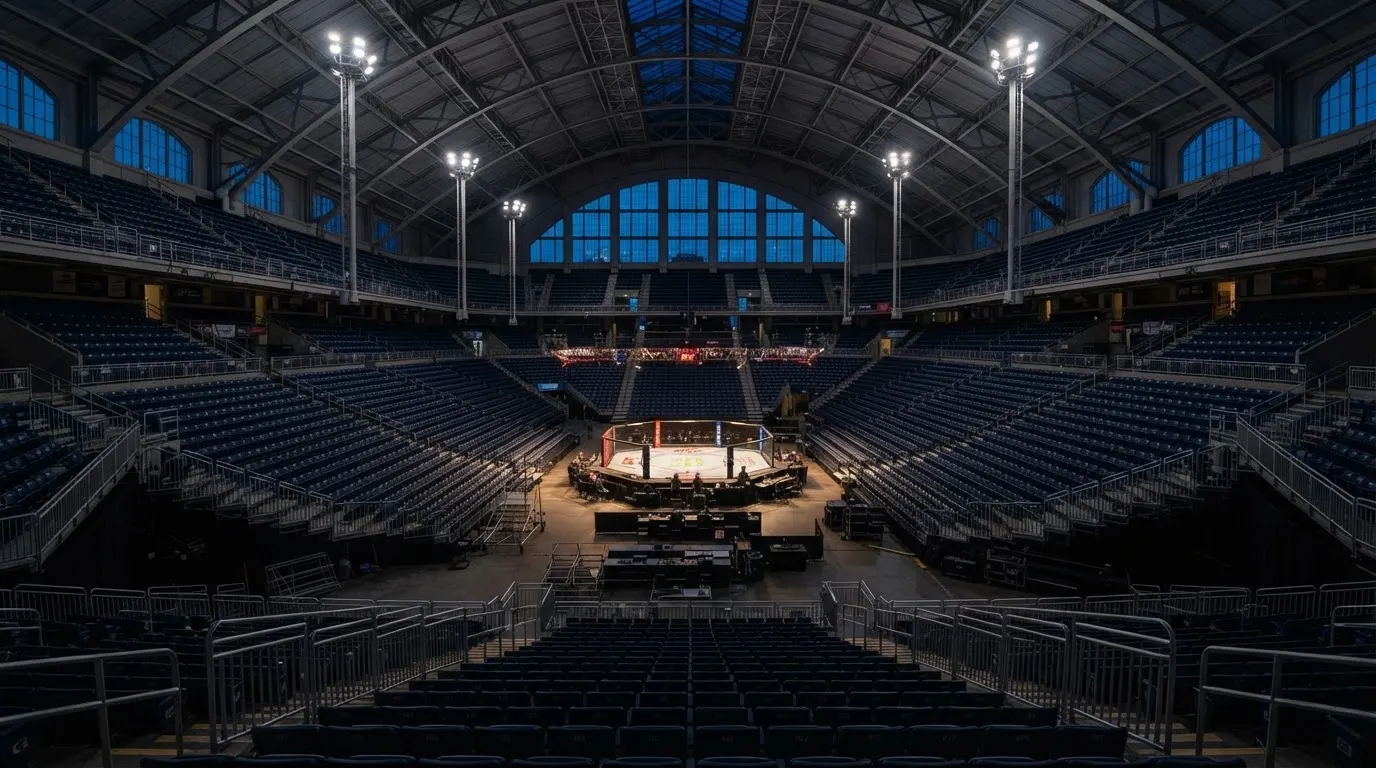
The legal frame is permissive. There is no statutory list of permitted sports or markets under the Gambling Act 2005; an operator holds a licence for a category and offers in-play markets under its own conditions and the Commission’s LCCP. What that means for the punter is that live UFC betting exists, but the controls on how aggressively the price moves, when a market is suspended and how long a suspension lasts are written into each bookmaker’s own terms. The suspension in the final minute of a round, when a price might collapse under staking, is a bookmaker decision, not a statute.
Cash out sits next to in-play as a separate mechanic. The bookmaker offers to settle the bet early at a figure it sets in real time — usually below the live price of the bet itself. The price offered reflects the margin the operator wants on top of the mathematical mid, and on a volatile UFC round that gap can be wide. A punter who cashes out a winning bet is paying the bookmaker for the certainty of walking away now rather than waiting for the judge’s scorecard; a punter who cashes out a losing bet is paying to stop the loss at a level the bookmaker chose.
Two practical consequences follow. First, the cash-out value on a UFC bet is rarely the true mid of the live price, and the difference grows the more one-sided the action looks. Second, because UFC rounds are short — a maximum of five minutes each — in-play markets open and close in bursts. A price on “fight to go the distance” can be live during round one, suspended in round two after a knockdown, and reopened in round three at a completely different number. Punsters who want to bet live should expect to see markets vanish mid-hand and not assume a suspension is a mistake.
Predictions and Strategy: Reading UFC Form Without Buying Tips
The phrase “UFC betting tips” gets used loosely. Some of what is sold under that label is genuine form analysis — striking differentials, grappling match-ups, recent finish rates — and some is a tipster’s hunch dressed up as research. Neither can tell a punter what will happen inside the cage on fight night, and any service that promises it is selling certainty that does not exist.

What a punter can do with form is narrow the field. Reach matters at heavyweight and matters less at flyweight; a five-inch reach advantage that wins at light heavyweight can be neutralised by a southpaw stance at bantamweight. Finish rate matters more than win rate when the market is method of victory — a fighter who wins eight of ten by decision creates different method-of-victory prices than one who wins eight of ten by knockout. Cardio matters disproportionately in five-round main events, which is exactly where the in-play market is thinnest and the cash-out value is widest.
The practical sequence for a punter who treats UFC form as a discipline rather than a tip sheet looks like this. Read the tale of the tape for reach, age and camp. Look at the last three opponents, not the last three wins: a six-fight win streak against journeymen is not the same as a three-fight streak against ranked opposition. Watch the weigh-in face-off, which sometimes reveals more than any pre-fight interview. Then check how the bookmaker has priced the fight, because the price is itself a piece of information — a market that has tightened overnight has usually absorbed the same news the punter would have absorbed.
What the sequence does not do is produce a winner. A fighter who has been stopped in each of his last two fights at heavyweight can still knock out the favourite in round one, and a punter who lays the favourite because of recent form is taking a calculated risk, not a guaranteed one. Bankroll discipline — staking a fixed unit per bet, walking away after a planned stop-loss — does not improve the model’s hit rate, but it does keep the punter in the game long enough for the model to work over hundreds of bets rather than tens.
Bet Types and Odds: What the Markets Actually Mean
UFC odds look like other fighting-sport odds at first glance: a moneyline, an over/under on rounds, and a handful of method-of-victory prices. Underneath, the market structure is more layered than that, and a punter who reads only the headline moneyline misses most of what is on offer.
The Moneyline
The moneyline is the simplest market: pick the fighter, the price is the return for every pound staked, the loss is the stake. In decimal odds, a favourite at 1.40 returns £1.40 for every £1 — a £10 stake returns £14, of which £4 is profit. An underdog at 4.50 returns £4.50 for every £1 — a £10 stake returns £45, of which £35 is profit. The favourite’s shorter price reflects the bookmaker’s view that the fight will go one way; the underdog’s longer price reflects the smaller chance of an upset, and the difference between the two prices on each side is where the margin sits.
Method of Victory
Method of victory is the market that makes UFC prices interesting. A fight can end by knockout, technical knockout, submission, decision (unanimous, majority or split), disqualification, or be ruled a no contest; if the UFC title bout ends in a draw, the defending champion retains the title. Each of those outcomes is its own price, and the set of prices on method of victory is where the bookmaker’s margin tends to be highest because the punter is splitting the probability across more outcomes than the simple moneyline allows. A favourite who is 1.40 on the moneyline can be 2.60 to win by knockout, 3.50 to win by submission and 4.00 to win by decision — three smaller probabilities that, added back into a single number, do not equal 1.40 because each carries its own slice of margin.
Total Rounds and Round Grouping
The over/under on total rounds sits at the standard UFC line of 1.5 rounds for three-round fights and 2.5 rounds for five-round title fights and main events. The price on over 1.5 rounds is effectively a bet that the fight will not end in round one; the price on under 1.5 rounds is a bet that it will. Round-grouping markets break the fight into specific round clusters — fight to end in round one, fight to end in rounds one or two, fight to start in round three — and the prices tighten as the cluster narrows.
The Acca and the Bet Builder
An accumulator stacks several selections into one stake; the prices multiply together. A £10 stake on two selections at 1.80 and 2.10 returns £10 × 1.80 × 2.10 = £37.80, of which £27.80 is profit. The trade-off is that every leg must win, and the more legs added, the more margin compounds inside the price. A bet builder is the same mechanic applied to a single fight — method of victory, round and over/under stacked into one price, which the bookmaker calculates for the punter. Midnite’s site shows an acca builder among its sportsbook features, and LiveScore Bet’s Bet Builder allows up to ten selections across match result, both teams to score, corners, total goals, player scoring and card markets. Betfair’s app features a Bet Builder alongside in-play markets and a 90 Minute Payout market.
Best Odds Guaranteed and the Starting Price
Best odds guaranteed is a horse racing concession, not a UFC one — Bet600 pays BOG on horse racing, paying at the starting price if the SP is bigger than the price taken; William Hill pays BOG from 8 AM on the day of the race on UK and Irish racing, on singles and multiples, excluding ante-post, tote and pari-mutuel. The mechanic does not apply to UFC markets.
The UFC Calendar: Numbered Events, Fight Nights and Where Champions Tied
The UFC has held over 750 events by 2026, eight men’s divisions and three women’s divisions, and a calendar that runs a numbered pay-per-view roughly every four to four weeks with Fight Night cards filling the gaps. The first UFC event was held on 12 November 1993 in Denver, Colorado; the promotion is owned and operated by TKO Group Holdings, and Dana White has been president since 2001.
For a British punter, the relevant texture of the calendar is the rhythm. Numbered events carry the deepest markets — full method-of-victory boards, round grouping, “fight of the night” specials — because the headline fighters attract the largest betting handle. Fight Nights run thinner, with moneylines and method of victory on the main event and a stripped-down offering on the undercard. Two named events for the rest of 2026 are already on the calendar: UFC 334 (Gane vs. Hokit) is scheduled for 14 November 2026 at Madison Square Garden in New York City, and UFC 335 (Oliveira vs. Lopes) for 12 December 2026 at T-Mobile Arena in Las Vegas.
The market depth on a UFC card matters because the longer the odds board, the more places margin can hide. A moneyline market on a Fight Night prelim might be priced 1.57 / 2.50 — a margin roughly in line with what British bookmakers charge on mainstream football. A method-of-victory board on a numbered main event carries seven or eight prices, each with its own margin, and the total overround across the board can run into double digits. The punter reading only the moneyline is paying one margin; the punter building a bet across several markets on the same card is paying several.
Championship fights add one wrinkle that does not apply to boxing: if a UFC title fight ends in a draw, the defending champion retains the title. That rule affects how “fight ends in a draw” is priced on title bouts, and a punter who backs the draw on a non-title fight should not assume the same price on a championship main event. In practice, the draw price on UFC fights is long — well into triple figures — because the ten-point must method rewards decisive rounds, and a draw on the cards is rare.
Ten Licensed Bookmakers: The Shortlist for British UFC Punters
The list below is not a ranking and not a recommendation. Each entry is a brand that holds a Gambling Commission remote operating licence for real-event betting in Great Britain, and each is described using only what the operator’s own terms state. The table that follows the list sets out the licence number, the licence holder and what each operator publishes on the page’s subject.
| Operator | Licence holder | Commission licence | What the operator’s own terms state on UFC betting |
|---|---|---|---|
| LiveScore Bet | LiveScore Betting and Gaming (Gibraltar) Limited | 056859-R-332720-005 (account 56859) | Bet Builder accepts up to ten selections across match result, both teams to score, corners, total goals, player scoring and card markets |
| BetGoodwin | Goodwin Racing Limited | 002927-R-327985-008 (account 2927) | Sports welcome offer pays £15 in free bets (£5 sports, £5 acca, £5 Sub-Cover) for a £10 qualifying bet |
| Bet600 | Tyche Tech Limited | 044731-R-323941-016 (account 44731) | Best Odds Guaranteed on horse racing: bets paid at the SP if the starting price exceeds the price taken |
| William Hill | WHG (International) Limited | 039225-R-319373-015 (account 39225) | Best Odds Guaranteed on UK and Irish horse racing from 8 AM on race day, on singles and multiples; excludes ante-post, tote and pari-mutuel |
| Hollywoodbets | Hollywoodbets International UK Limited | 053028-R-330019-013 (account 53028) | Sports welcome offer refunds the stake as a free bet up to £30 on a first qualifying losing acca (stake £10+, 3+ legs, odds 4/1+, settled within 7 days); one free bet per customer |
| Fitzdares | Fitzdares Limited | 000400-R-103839-030 (account 400) | App offers cash out, accumulators, Lucky 15s, specials and antepost markets with in-play live odds |
| Betfair | PPB Counterparty Services Limited | 039439-R-319330-013 (account 39439) | Sportsbook features in-play betting, Bet Builder, free live streaming of UK and Irish racing and football in-app, and a 90 Minute Payout market |
| DAZN Bet | DZBT Limited | 048756-R-327274-019 (account 48756) | Deposits start at £5 by debit card, Apple Pay, Paysafecard, Trustly and Skrill, and at £20 by PayPal; no processing fees |
| NetBet | Netbet Enterprises Limited | 039170-R-319343-032 (account 39170) | Daily Boosts, Profit Boosts and free bet offers; Bet Builder with instant dynamic odds and sports stats for major leagues |
| Sporting Index | Sporting Index Limited | 027343-R-308898-011 (account 27343) | Customers can switch between fixed odds and spread betting, with in-play, Bet Builder for football, auto cash-out and Multi-Markets |
A note the table cannot carry on its own: the column on the right is what each operator publishes on its own site or in its app listing. None of these rows claims a particular bookmaker offers better UFC prices than another — the Commission register does not record prices, and price snapshots age faster than this page can keep up. The punter’s job is to take the licence list as a starting point and then check the markets that matter on the night.
Overview: How UFC Markets Sit Inside the British Betting Landscape
UFC is a niche inside the British sportsbook. By handle it sits well below football, horse racing and tennis; by event density it sits well above them. A punter who walks into a British bookmaker on a Saturday in November will see the entire UFC 334 card priced alongside five Premier League fixtures, three Champions League matches and a packed horse racing schedule, and the depth of markets on each of those is calibrated to how much money the bookmaker expects to take.
The practical consequence is that UFC markets on British sites are usually priced by a small in-house trading team, and the published prices track the wider sharp market rather than leading it. A line that opens at 1.83 on the favourite and tightens to 1.78 overnight has usually followed the international sharp books, not originated with the British operator. For the punter, that means the value edge on a UFC bet, if there is one, comes from information the bookmaker has not yet absorbed — a late weight cut, a hand-wrap change, a walk-out that looked off — rather than from beating the operator at its own modelling.
What follows from the niche status is also a quieter consequence. Some mainstream British bookmakers carry only moneylines on UFC Fight Night prelims, with method of victory and round grouping on the main event only. A punter who wants to bet method of victory on every fight on the card has a narrower set of operators to choose from than a punter betting the same depth on Premier League football, and that narrower set is the one that tends to price the deeper markets tighter because it has the volume to defend them.
Three structural facts travel through every UFC market on every British site. First, the round length — each round is a maximum of five minutes with one minute’s rest, and championship fights and non-title main events are scheduled for a maximum of five rounds while other bouts are scheduled for three — shapes how much can happen inside the cage and therefore how the in-play market moves. Second, the ten-point must system applies to UFC scoring: three judges score each round, the winner receives 10 points and the loser nine or fewer, with 10-8 typical for dominant rounds, which is why method-of-victory-by-decision prices are tighter than the casual reader expects on fights expected to go the distance. Third, the bout-ending methods — submission, knockout, technical knockout, judges’ decision or disqualification, with a no-contest outcome also possible — are the universe the method-of-victory market prices, and the bookmaker’s margin spreads across each one.
Legality and Regulation: What the Gambling Commission Licence Actually Covers
UFC betting in Great Britain sits inside the Gambling Act 2005. The Gambling Commission — a non-departmental public body sponsored by the Department for Culture, Media and Sport — licenses the whole commercial market for England, Scotland and Wales under the Act. Northern Ireland is outside the Act and runs on its own older law, so a “GB licence” never regulates a Northern Ireland customer, and a punter should not assume that an operator licensed for Great Britain is licensed for them if they sit on the other side of the Irish Sea.
The point-of-consumption rule came in with the Gambling (Licensing and Advertising) Act 2014. Since then, an operator whose remote facilities are used in Great Britain needs a Commission licence wherever it is based — Gibraltar, Malta, Curaçao, the Isle of Man, anywhere. A foreign licence is not a substitute. That is why the licence holder for several of the brands in the table above is a Gibraltar company: the brand is British-facing, the holder is overseas, and the licence is still a Commission one.
There is no statutory list of permitted sports, events or markets. The Commission issues licences in categories — remote general betting standard (real events), remote general betting standard (virtual events), remote general betting limited, remote pool betting, and remote betting intermediary for betting exchanges — and the operator decides what markets to offer under its category licence. UFC betting sits under real events without any further permission. The licence category is the whole frame.
The Commission’s public register is the test of whether a brand holds a licence. It is searchable by business name, trading name, domain or Commission account number. Every brand in the comparison table above is on the register, and the licence number quoted is the one the register shows. The register should be checked at the point of betting — licences can be suspended, revoked or have conditions attached, and a licence that was current when this page was written may have changed by the time a punter reads it.
The punter-facing consequences of the licence are concrete. Minimum age is 18; name, address and date of birth are verified before the first deposit or first bet, including a bet placed with a free bet or bonus, since 7 May 2019. That means no anonymous play at a licensed British site. Credit cards are banned for gambling in Great Britain since 14 April 2020, including credit-card-funded payments through an e-wallet; debit cards and bank-based payments are not covered by the ban. A punter who tries to fund a betting account with a credit card at a licensed operator will be blocked at the cashier.
What a GB licence does not do is guarantee a price. The Commission regulates conduct, not pricing, and two licensed operators can offer the same UFC fight at materially different prices without either being wrong. The punter’s protection under a GB licence is the conduct frame — GAMSTOP coverage, the bonus cap, the vulnerability check, the dispute route — not the price frame.
Responsible Gambling: GAMSTOP, Deposit Limits and Where the Money Goes
UFC betting is fast. Five-minute rounds, frequent cards, the option to back a fighter mid-fight or cash out a position before the judges read their cards — the whole market is built for pace. The British regulatory frame is built for exactly that pace.
GAMSTOP is the national multi-operator online self-exclusion scheme. Since 31 March 2020 it has been a mandatory licence condition for online operators, and every GB-licensed operator takes part. Self-exclusion periods run six months, one year, five years, or five years with auto-renewal; after the minimum period the exclusion stays in place for a further seven years unless the customer asks GAMSTOP to remove it. A punter who has self-excluded through GAMSTOP is blocked at every licensed online bookmaker and app — not at one brand, not at the brand they bet with last week, at all of them. Betting shops run a separate self-exclusion service; GAMSTOP covers the online channel.
A financial vulnerability check, under LCCP condition 3.4.4, has been in force since 30 August 2024 and applied since 28 February 2025. The check triggers when a customer’s deposits minus withdrawals exceed £150 in a rolling 30-day period at a remote betting operator, and it is a public-record check — bankruptcy, county court judgments, similar — not a credit reference check and not an income check. Financial risk assessments, often called “affordability checks” in the press, sit on a separate staged timetable: announced in a Commission article of 7 July 2026, with no start date. A punter reading about “affordability checks in force” should know that the staged plan is the live position, not a live check.
Deposit limits sit under Remote Technical Standard 12. Operators must offer a gross deposit limit on a fixed time frame; the first changes have applied since 31 October 2025, a second phase was postponed to 30 September 2026, and whether the second phase is live now is not established. There is no state-set deposit or loss ceiling for betting: limits are the customer’s choice. A punter who wants a hard ceiling sets one at the cashier; a punter who does not set one operates under whatever default the operator applies.
Where the help is. GamCare runs the National Gambling Helpline; GambleAware funds treatment and research; the NHS runs gambling clinics across the regions; Gamblers Anonymous runs peer-support meetings. A punter whose betting has moved from a hobby to a problem can reach any of these without going through the bookmaker, and a bookmaker who spots distress in a customer’s play is required under the social responsibility code to intervene — short of closing the account, where appropriate.
The consequence the punter should hold onto is that the British framework puts the cost of safer gambling on both sides: the operator has to offer the tools and act on what it sees, and the punter has to use them. A GAMSTOP exclusion the punter does not register for protects no one. A deposit limit the punter sets at £500 and then overrides every week is not a limit.
Crypto and Anonymity: What British UFC Betting Cannot Offer
The phrase “UFC crypto betting” points at a market that does not sit inside the British licensing frame. There is no rule in the Gambling Act 2005 or the Commission’s LCCP that bans cryptocurrency deposits outright, and a licensed operator can in principle accept crypto-rail deposits that settle in pounds; what the Act and the LCCP do require, since 7 May 2019, is full identity verification before the first deposit or first bet, including with a free bet or bonus. A punter who wants anonymity — in the meaningful, end-to-end sense — does not get it at a licensed British site.
The compliance consequence runs further. Once the £150 deposits-minus-withdrawals vulnerability trigger fires, the operator runs a public-record check, and at higher spend the operator’s money-laundering duties mean source-of-funds questions are normal. A licensed operator cannot route around those duties because the deposit was in bitcoin: the duty sits on the operator, not the rail. A punter who opened a licensed British account with a self-custody wallet and then triggers the vulnerability threshold will be asked the same questions as a punter who paid by debit card.
What a licensed British operator cannot offer is therefore the marketing pitch that a non-licensed crypto sportsbook makes — “no KYC, no verification, no paper trail”. Those pitches are made by operators who are not licensed at the point of consumption in Great Britain, and the punter who uses one loses the British protections: no GAMSTOP coverage, no Commission complaints route, no approved dispute-resolution body, no British consumer redress if funds are withheld, not bound by the 10x bonus cap, not bound by the £150 vulnerability check. The 2014 Act makes providing unlicensed facilities to GB customers an offence aimed at the operator, not at the punter, but the consequence for the punter is the loss of every consumer protection that the British licence frame exists to provide.
The honest framing is that neither side is “the safe choice” by default. A licensed operator offers the conduct frame, the bonus cap, the vulnerability check and GAMSTOP, and costs the punter full verification at signup. An unlicensed crypto sportsbook offers anonymity and costs the punter the conduct frame. The punter choosing between them is making a real trade-off, not picking a safer option from a menu of equally safe ones.
Bonuses and Free Bets: How the 10x Cap Reshapes the Welcome Offer
Every welcome offer on a licensed British sportsbook now sits inside the Commission’s promotion rules, in force since 19 January 2026. Two rules do the reshaping. First, wagering requirements on bonuses are capped at 10x — a £10 bonus with a 50x wagering requirement would need £500 of qualifying bets; under the cap, no more than £100 of qualifying bets is required. Second, mixed-product promotions are banned — an offer that requires gambling on two or more product types, such as “bet on football to get free spins”, cannot be marketed at a GB-licensed operator.
What the cap does not do is cap the headline value of a bonus. The headline numbers still look generous — “£30 in free bets”, “bet £10 get £15”, “stake back as a free bet up to £30” — but the cost the punter pays to clear them has a ceiling. Whether the cap applies to free bets with no wagering condition, and any cap on the money value of a bonus, are not established: the rules cap the wagering requirement, not the bonus stake, and the operator is free to give away more bonus value as long as the turnover cost does not exceed 10x.
Three of the ten operators on the shortlist publish sports welcome offers in their terms. BetGoodwin’s sports welcome offer pays £15 in free bets (£5 sports, £5 acca, £5 Sub-Cover) for a £10 qualifying bet. Hollywoodbets’ sports welcome offer refunds the stake as a free bet up to £30 on a first qualifying losing accumulator (stake £10+, 3+ legs, odds 4/1 or greater, settled within seven days); one free bet per customer. The offers sit inside the cap because none of them attaches a high wagering requirement — the BetGoodwin free bets do not need to be wagered to be withdrawn as cash; the Hollywoodbets refund is a one-stake-back rather than a multiplier.
The consequence the punter should hold onto is the difference between a free bet and a bonus. A free bet’s stake is usually not returned with the winnings: a £10 free bet at 5.00 returns £40 in profit, not £50. A cash bonus, by contrast, is usually returned with the winnings but carries the wagering requirement that the cap now bounds. Reading “free bet” as “bonus money” is the single commonest mistake a punter makes when comparing welcome offers, and the mistake costs the punter a multiple of stake on every winning free bet they place.
The other consequence is the affiliate code. Promo codes, voucher codes and affiliate claim codes are how the marketing channel monetises the bonus, and the licensed operator is responsible for what its affiliates publish. A punter who arrives at a licensed bookmaker through a partner site is still protected by the same conduct frame — the bonus cap, the wagering cap, the vulnerability check — because the care contract is between the punter and the bookmaker, not the punter and the affiliate.
Mobile and App: Where UFC Betting Actually Happens on a Saturday Night
UFC cards run in the American evening, which is the British small hours. A punter who wants to bet method of victory on the main event is doing it from the sofa at midnight or the commute in the morning, and the device is almost always a phone. The mobile-app market for British UFC betting is therefore where the bulk of the action sits.
The mechanics of a UFC betting app are the same as the desktop product — moneyline, method of victory, round grouping, in-play, bet builder, cash out — with the addition of biometric login, push notifications for price movement, and Apple Pay or Google Pay at the cashier. DAZN Bet’s deposits start at £5 by debit card, Apple Pay, Paysafecard, Trustly and Skrill, and at £20 by PayPal, with no processing fees; that price floor is the cashier’s, not the betting floor, and a punter who wants to bet £2 on a method-of-victory market can do so as long as the bookmaker’s minimum stake is lower than the cashier’s minimum deposit.
In-play on a phone is faster than on a desktop because the punter is on the live page already. Midnite’s site shows in-play events, an acca builder, popular accas and price boosts with maximum-stake limits. Fitzdares’ app offers cash out, accumulators, Lucky 15s, specials and antepost markets with in-play live odds. Sporting Index lets customers switch between fixed odds and spread betting, with in-play, Bet Builder for football, auto cash-out and Multi-Markets. NetBet Sport offers Daily Boosts, Profit Boosts and free bet offers, a Bet Builder with instant dynamic odds, and sports stats for major leagues.
The consequence for the punter is that mobile is where the punter sees the most aggressive marketing — push notifications for odds boosts, free bet alerts, in-play price movement, the lot. The CAP Code book on advertising and the LCCP marketing conditions apply on mobile as on desktop: marketing must be socially responsible, must not be of strong appeal to under-18s, and no one who is or seems to be under 25 may be featured gambling or play a significant role. A punter who has GAMSTOP-excluded is supposed to stop receiving that marketing; a punter who has not excluded is on the receiving end of it.
The other consequence is biometric and device-level. A licensed British operator is required to verify identity before the first deposit or first bet, including via app. The verification uses the phone’s camera for document capture and the phone’s NFC for proof of address where supported. A punter who tries to set up an account on a new device will be asked to re-verify, and a punter who tries to set up a second account on the same device will be detected and blocked. The friction is the frame, and a punter who resents the friction is paying it on every licensed app because the alternative is an unlicensed app that has no such frame.
The Bookmakers in Detail
The ten operators below sit in the order the Commission register places them through the shortlist built earlier. Each write-up ends with a verdict that takes a position on what the brand suits, and each verdict looks different from the others.
LiveScore Bet — The Bet Builder on a Mid-Sized App
LiveScore Bet runs on a Gambling Commission remote licence under account 56859, held by LiveScore Betting and Gaming (Gibraltar) Limited. Its Bet Builder accepts up to ten selections across match result, both teams to score, corners, total goals, player scoring and card markets — a generous ceiling for a single bet, and one that translates cleanly into a UFC bet builder covering method of victory, round grouping and over/under.
The product reads as a football-first bookmaker that has carried its bet-builder discipline into its UFC offering. A punter who wants a same-fight multi — method of victory plus total rounds plus over 1.5 — can build it inside the app rather than stacking separate singles. The verdict: a good fit for a UFC punter who bets one card at a time and who likes a single screen to manage the bet.
BetGoodwin — The Racing-Brand Sports Welcome
BetGoodwin sits on Commission account 2927, held by Goodwin Racing Limited. Its sports welcome offer pays £15 in free bets — £5 sports, £5 acca, £5 Sub-Cover — for a £10 qualifying bet. The structure is a useful tell: the £5 acca portion nudges the punter toward an accumulator rather than a single, and the Sub-Cover portion is a separate insurance-style free bet on accumulators.
The bookmaker reads as racing-first and as a smaller challenger in the UFC space. A punter who likes horse racing and wants a small, focused welcome will find the offer tidy; a punter whose UFC betting is the centre of the action will find the UFC market depth narrower than at a mainstream bookmaker. The verdict: right for the racing-leaning punter who bets UFC as a sideline.
Bet600 — The Racing BOG Specialist
Bet600 runs on Commission account 44731, held by Tyche Tech Limited. It pays Best Odds Guaranteed on horse racing: if the starting price exceeds the price the punter took, the bet is paid at the SP. The mechanic is the core concession and it is the reason a racing punter uses the brand at all.
For a UFC punter, the BOG concession is irrelevant — BOG is a racing concession, not a fighting one. A punter whose betting splits between UFC and racing and who wants the racing side priced at SP-plus will use Bet600 for the racing; a punter whose action is UFC-only will find little here that pulls them off a mainstream bookmaker. The verdict: a racing shop with a UFC sideline, useful as a second bookmaker for the punter who also bets horses.
William Hill — The High-Street Veteran
William Hill sits on Commission account 39225, held by WHG (International) Limited. It pays Best Odds Guaranteed on UK and Irish horse racing from 8 AM on race day, on singles and multiples; ante-post, tote and pari-mutuel bets are excluded. The BOG is the headline concession; underneath, William Hill is one of the deepest mainstream British sportsbooks on UFC, with full method-of-victory boards on numbered events.
The bookmaker reads as the high-street veteran of British betting — long licence history, broad market coverage, BOG-led racing. A punter who wants a single bookmaker for racing and UFC will find the combination here. The verdict: the right choice for a punter who wants one app for racing and UFC and who values depth on numbered UFC cards.
Hollywoodbets — The Acca Insurance Welcome
Hollywoodbets runs on Commission account 53028, held by Hollywoodbets International UK Limited. Its sports welcome offer refunds the stake as a free bet up to £30 on a first qualifying losing accumulator (stake £10+, 3+ legs, odds 4/1 or greater, settled within seven days); one free bet per customer. The offer is acca-shaped, not single-shaped, and the trigger is a losing acca rather than any bet.
The bookmaker reads as a South African brand that has built a British-facing product around acca insurance. A punter who builds UFC accumulators across a card will find the offer reads as designed for them; a punter who bets singles will find the welcome offer does nothing for them. The verdict: built for the UFC acca punter, weak for the singles-only punter.
Fitzdares — The Premium-Branded Multi-Market App
Fitzdares sits on Commission account 400, held by Fitzdares Limited. Its app offers cash out, accumulators, Lucky 15s, specials and antepost markets with in-play live odds — the full multi-market toolkit. The brand positions itself as a premium-tier bookmaker rather than a mainstream one, with a customer base that skews toward racing and football rather than UFC.
For a UFC punter, Fitzdares’ offer reads as a mainstream product wrapped in a premium brand. The markets on UFC numbered events are present; the marketing push on UFC is less than at a UFC-led brand. The verdict: a fine choice for a punter who values the premium-branded bookmaker experience and bets UFC as part of a broader book.
Betfair — The Exchange Plus Sportsbook Hybrid
Betfair runs on Commission account 39439, held by PPB Counterparty Services Limited. Its sportsbook offers in-play betting, Bet Builder, free live streaming of UK and Irish racing and football in-app, and a 90 Minute Payout market — the last of those is a football-specific concession (your team goes two goals up, the single is paid out as a win) rather than a UFC one. The wider Betfair group also runs a betting exchange under a separate betting intermediary licence.
For a UFC punter, the sportsbook product is mainstream; the exchange product is the differentiator. A punter who wants to lay a favourite on the exchange rather than back the underdog on the sportsbook has the option here. The verdict: the right choice for the punter who wants sportsbook and exchange under one app, and who likes the Bet Builder discipline on UFC.
DAZN Bet — The Low-Floor Deposits and Broad Payments
DAZN Bet sits on Commission account 48756, held by DZBT Limited. Deposits start at £5 by debit card, Apple Pay, Paysafecard, Trustly and Skrill, and at £20 by PayPal; no processing fees. The £5 floor on most rails is low for the British market and matters for the punter who wants to keep a tight bankroll.
For a UFC punter, the payments profile is the differentiator; the UFC market depth is mainstream. A punter who bets in small stakes and who pays via Apple Pay will find the cashier frictionless; a punter who pays via PayPal will find the floor double the rest. The verdict: built for the small-stake UFC punter with a payment preference for Apple Pay or Paysafecard.
NetBet — The Boost-Heavy Mainstream Book
NetBet runs on Commission account 39170, held by Netbet Enterprises Limited. It offers Daily Boosts, Profit Boosts and free bet offers, a Bet Builder with instant dynamic odds, and sports stats for major leagues. The boost-led product is the centre of the offer — a punter who reads the boosts daily will find a steady supply; a punter who bets once a week will find the volume of boosts irrelevant.
For a UFC punter, NetBet reads as a mainstream bookmaker with a boost-led product on top of a deep market offering. The verdict: a good fit for the punter who bets UFC several times a month and who reads the boosts page on the day.
Sporting Index — The Fixed-Odds / Spread-Bet Hybrid
Sporting Index sits on Commission account 27343, held by Sporting Index Limited. Customers can switch between fixed odds and spread betting, with in-play, Bet Builder for football, auto cash-out and Multi-Markets. The hybrid fixed-odds / spread-bet mechanic is the differentiator; spread betting on UFC is not as deep as on football, and the bookmaker reads as a football-first hybrid.
For a UFC punter, the fixed-odds product is mainstream; the spread-bet product is the niche tool for the punter who already knows how spread betting works. The consequence is that a punter who bets UFC only at Sporting Index will use the fixed-odds rails and ignore the spread-bet rails. The verdict: built for the punter who wants a hybrid bookmaker with a football-first UFC offering and who already understands the spread-bet side.
What the Margin Costs: A Worked Example
A bookmaker’s margin is the slice of every pound staked that it keeps, on average, across all outcomes of a market. The most direct way to see it is on a two-way market, where there are only two outcomes and the two prices can be read against each other.
Take an illustrative two-way UFC fight priced at decimal odds 1.90 / 1.90, the kind of line a British bookmaker might post on a pick’em fight. The payout share of a market at odds a and b is 1 ÷ (1/a + 1/b). With both prices at 1.90, that gives 1 ÷ (1/1.90 + 1/1.90) = 1 ÷ (0.5263 + 0.5263) = 1 ÷ 1.0526 ≈ 0.95. So the payout share is roughly 95p in the pound, and the margin is roughly 5p in the pound. That is what the bookmaker keeps of every unit staked on this market, across the long run, assuming the market is correctly priced.
The reason margin is a band and not a single number is that it varies by market, by event and by bookmaker. The 5% margin on the illustrative 1.90 / 1.90 is at the cheap end for a UFC market: method-of-victory boards tend to carry a higher margin because the outcomes are more numerous and the bookmaker has more places to load the price, and in-play markets on UFC tend to carry a higher margin still because the bookmaker is repricing the market while the bet is live. A punter who bets only moneyline markets on numbered UFC cards will pay a lower margin than a punter who bets method of victory on Fight Night prelims.
The consequence is direct: a punter who places £100 on a market with a 5% margin is paying, on average, £5 of that £100 to the bookmaker before the bet is even struck. Over hundreds of bets, the cumulative cost of the margin is the difference between a model that wins at 53% and a bankroll that grows rather than shrinks, and on UFC the model that wins at 53% is hard to build because the sport is volatile enough to break even long winning runs.
The honest framing is that margin is the price of using a licensed bookmaker, and the price varies. Reading the odds and computing the margin before placing the bet is what the bookmaker does on its side; doing it on the punter’s side is the only way to know whether a price is fair for that market at that time.
Frequently Asked Questions
Where can UFC fights be bet on with a British bookmaker?
Every GB-licensed online bookmaker that lists combat sports offers UFC markets. The shortlist on this page — LiveScore Bet, BetGoodwin, Bet600, William Hill, Hollywoodbets, Fitzdares, Betfair, DAZN Bet, NetBet and Sporting Index — covers ten brands that hold a Gambling Commission remote licence and offer real-event betting. A punter’s next step is to check the Commission register for any licence changes since the figures on this page were written.
Which of the ten bookmakers offers the best UFC prices?
None of them is the best across the board. Prices on UFC markets move with the international sharp books and tighten overnight; the spread between operators on any given fight is usually inside a couple of percentage points of margin. A punter who wants the best price on a particular fight should compare the market at two or three of the licensed bookmakers on the day, and should read the method-of-victory board rather than only the moneyline.
How can a punter check that a bookmaker holds a Gambling Commission licence?
The Commission’s public register is searchable by business name, trading name, domain or account number. The licence numbers quoted on this page appear on the register against the licence holders named; a punter who wants to verify should search by the licence number and read the licence conditions attached to it. The register is the whole test — a brand that is not on the register is not licensed.
How is the return on a UFC bet worked out from the stake and the odds?
The return on a winning single is the stake multiplied by the decimal odds. A £10 stake at decimal odds 2.50 returns £25, of which £15 is profit and £10 is the stake back. The return on a winning accumulator is the stake multiplied by the product of the odds of each leg — a £10 stake on two legs at 1.80 and 2.10 returns £10 × 1.80 × 2.10 = £37.80. The return on a free bet does not include the stake: a £10 free bet at 5.00 returns £40 in profit, not £50.
What is the bookmaker’s margin and how can it be seen in the odds?
The margin is the slice of every pound staked that the bookmaker keeps on a market, on average, across all outcomes. It is the difference between 100% and the payout share, where the payout share is 1 ÷ (1/odds₁ + … + 1/oddsₙ) across all the outcomes of the market. On an illustrative two-way UFC fight priced 1.90 / 1.90, the payout share is roughly 95p in the pound and the margin is roughly 5p in the pound. The margin grows when the bookmaker loads more outcomes — Method of, Handicaps, Round Grouping — and the punter reads the margin by summing the implied probabilities of all the prices on a market and subtracting the sum from 100%.
Combat & motorsport – Darts betting
Content created by the «Darts betting» team
